

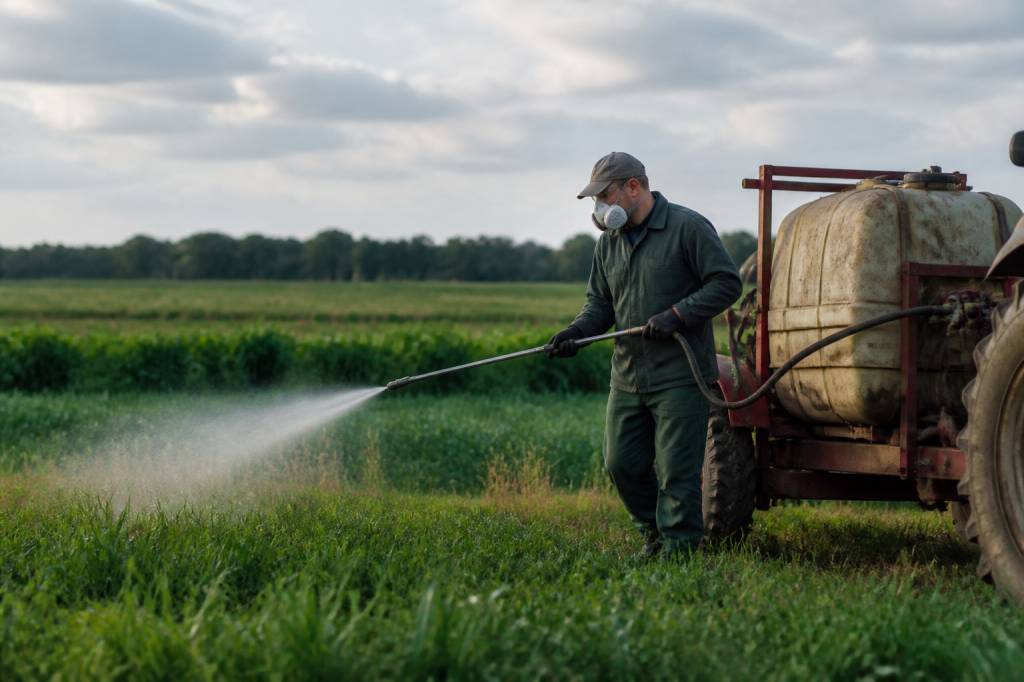
PFAS contamination is often associated with industrial sites, firefighting foams, and landfills. But agriculture is a major piece of the puzzle too. In some regions, farms are not just recipients of PFAS pollution; they can also become pathways that move these chemicals into rivers, groundwater, and even drinking water supplies.
That matters because agriculture operates on a huge scale. When a contaminant enters manure, biosolids, irrigation water, or runoff, it does not stay neatly on one field boundary. It can spread through soil, leach into aquifers, and travel downstream. For communities living near farmland, the question is no longer whether agriculture can be part of the PFAS problem, but how and to what extent.
Why PFAS show up in agricultural settings
PFAS, or per- and polyfluoroalkyl substances, are a large group of synthetic chemicals valued for their resistance to heat, water, and grease. That same persistence is what makes them so problematic in the environment. They do not break down easily, and many can move through water with surprising efficiency.
In agriculture, PFAS can enter the system through several routes. The most discussed include sewage sludge applied to land, contaminated irrigation water, pesticides and other agricultural products made with PFAS-related compounds, and atmospheric deposition from nearby sources. Once they are present, PFAS can accumulate in soil and be taken up by plants, or they can migrate into drainage systems and groundwater.
The key point is simple: farmland can act as both a sink and a source. It can receive PFAS from external inputs, then release them again over time through runoff, erosion, and leaching. Not exactly the kind of “fertilizer cycle” anyone wants.
Sewage sludge and biosolids: a major agricultural pathway
One of the most significant agricultural sources of PFAS contamination is sewage sludge, often referred to as biosolids when treated and applied to land. Biosolids are widely used as a soil amendment because they contain organic matter and nutrients. That makes them attractive from a waste management and farming perspective. The problem is that municipal wastewater also collects PFAS from households, industry, hospitals, and commercial products. Treatment plants are not designed to fully remove these compounds, so they can end up concentrated in sludge.
When biosolids are spread on fields, PFAS can enter agricultural soils directly. From there, they may persist for years, especially in the case of short-chain PFAS that are more mobile in water. Research has shown that repeated land application can create long-term contamination hotspots, particularly where sludge has been used for decades.
This pathway has become a major concern in places such as the United States, the UK, and parts of Europe, where biosolids have been promoted as a sustainable recycling practice. The sustainability argument becomes much weaker when the material being recycled contains persistent pollutants with human health implications.
Why does this matter for water? Because PFAS in sludge-amended soils do not stay put. Rain can transport them into drainage ditches, streams, and shallow aquifers. Some compounds, including PFOS and PFOA, bind more strongly to soil, but many others are far more mobile. The result can be contamination far beyond the original application site.
Manure, slurry, and farm inputs
Manure and slurry are another agricultural input worth watching. On their own, they are not typically the most concentrated PFAS sources compared with biosolids, but they can still contribute to the burden depending on what has entered the feed or water supply of the animals.
If livestock consume contaminated water, feed, or bedding, PFAS can move through the animal and into manure. That manure may then be applied to fields, creating another route back into soil and water. In other words, what starts in one part of the agricultural system can circulate through several others before it is noticed.
This is especially relevant where farms rely on water sources already impacted by industrial or municipal PFAS. In such cases, irrigation and livestock watering can become indirect contamination channels. If that water enters a closed-loop farm operation, the problem may quietly intensify over time.
There is also growing concern about additives and processing aids used in agriculture and food production. Some fluorinated substances have historically been used in pesticide formulations, grease-resistant packaging, and other agricultural materials. While regulations have tightened in many jurisdictions, legacy use and inconsistent oversight mean that PFAS-related inputs have not entirely disappeared.
Irrigation water: the hidden carrier
Water is the obvious transport medium for PFAS, and irrigation is one of the easiest ways for contamination to spread across farmland. If irrigation water is sourced from rivers, reservoirs, or groundwater affected by PFAS, every application can deposit small amounts of contamination onto soil and crops.
Over time, this repeated input can build up. In some cases, researchers have detected PFAS in produce grown with contaminated water, especially leafy vegetables and crops with high water uptake. That raises two linked concerns: food-chain transfer and continued cycling of PFAS from soil into runoff and drainage water.
Irrigation-related contamination can also be difficult to trace. Water may be drawn from multiple sources depending on season, rainfall, or farm operations. A field that appears clean in one year can become contaminated the next if the water source changes. That makes monitoring essential, not optional.
One practical issue is that farmers often have limited visibility into PFAS levels in irrigation supplies. Unlike nitrate or pesticide residues, PFAS are not routinely monitored in many agricultural water systems. So by the time contamination is detected in soil or crops, the source may have been operating for years.
Runoff, drainage, and groundwater movement
Agriculture is shaped by water movement, and PFAS move with it. When rain falls on treated fields, contaminants can be carried off the surface into nearby waterways. Drainage systems, tile drains, and ditches can speed that transport, especially in intensive farming areas with engineered water management.
Groundwater is another major concern. Some PFAS compounds are highly mobile and can leach through soil profiles into shallow aquifers. Once they reach groundwater, they may persist and spread over long distances. For rural communities that depend on private wells, this is not a theoretical issue. It is a direct drinking water risk.
Unlike many pollutants that degrade relatively quickly underground, PFAS can remain detectable for years or decades. That means contamination from agricultural land can show up long after the original application event. The lag makes these problems harder to connect and easier to underestimate.
It also complicates responsibility. If a well is contaminated, was the source a nearby industrial facility, a wastewater plant, biosolids applied ten years ago, or contaminated irrigation water? Often it is a combination. Environmental chemistry rarely offers tidy answers.
Crop uptake and the food-water connection
Although this article focuses on water, crop uptake matters because it is part of the same contamination cycle. Plants can absorb PFAS through roots when grown in contaminated soil or irrigated with affected water. Leafy greens, root vegetables, and crops with high transpiration rates are often of particular interest in studies.
Why does this relate to water contamination? Because crop uptake reflects the presence of PFAS in the soil-water system. If plants are absorbing these compounds, then water moving through the root zone is already contaminated. That same water can also carry PFAS deeper into groundwater or into drainage systems when excess irrigation or rainfall occurs.
In practical terms, food and water contamination often rise together. A farm finding elevated PFAS in crops should not only ask what is in the soil, but also what is in the water entering and leaving the system.
Which PFAS are most often involved?
Not all PFAS behave the same way in agriculture. Older long-chain compounds such as PFOS and PFOA are well known for their persistence and bioaccumulation potential. But newer short-chain PFAS and replacement chemicals can be especially mobile in water, making them more likely to spread through irrigation systems, drainage networks, and groundwater.
This distinction matters because a compound that binds strongly to soil may be easier to detect in one place, while a more mobile compound may travel farther and contaminate more wells. From a water management perspective, mobility is a serious concern. A chemical does not have to remain in one field to cause a regional problem.
Another challenge is that PFAS monitoring does not always capture the full picture. Laboratories may test for a limited list of compounds, even though hundreds or thousands of PFAS exist. That means agricultural contamination may be more extensive than what is immediately measured.
What makes agricultural PFAS contamination hard to manage?
Agriculture presents a unique challenge because it is both economically essential and spatially widespread. Unlike a single factory discharge point, farmland contamination is dispersed across large landscapes. That makes source control more complicated and remediation far more difficult.
- PFAS can be introduced through multiple pathways at once, including biosolids, irrigation water, manure, and atmospheric deposition.
- Once in soil, some PFAS can remain for long periods and continue migrating with water.
- Testing is often inconsistent, especially in rural groundwater and small-scale irrigation systems.
- Farmers may not know the PFAS history of materials applied to land years earlier.
- Cleanup options are limited and expensive, especially for large agricultural areas.
That combination creates a familiar environmental policy problem: the contamination is easy to spread, but hard to reverse. It is one thing to stop a discharge pipe. It is another to manage thousands of acres of farmland where the pollutant has already entered the soil-water cycle.
What farmers and water managers can do
There is no single fix, but several practical steps can reduce risk. First, testing matters. Soil, irrigation water, groundwater, and in some cases biosolids should be screened where PFAS exposure is plausible. Without data, decisions are mostly guesswork dressed up as planning.
Second, source control is critical. If biosolids are used, they should be carefully screened for PFAS where regulations and testing capacity allow. If irrigation water is used, its quality should be monitored regularly, especially in regions near wastewater outfalls, industrial areas, or known contaminated sites.
Third, farms can reduce spread by managing runoff and drainage more effectively. Buffer zones, constructed wetlands, and controlled drainage systems may help intercept contaminated water before it reaches streams or aquifers. These measures do not remove PFAS from the environment, but they can slow transport.
Fourth, policymakers need to support better monitoring and clearer guidance. Agricultural PFAS contamination cannot be treated as a niche issue. It belongs in water regulation, land management, food safety, and public health planning all at once.
Why this issue deserves more attention now
Agricultural PFAS contamination is not a future risk. It is happening already, and in some places it has likely been happening for years. The challenge is that the signals are subtle until they are not. A contaminated well. A farm pond with elevated PFAS. A set of sludge-amended fields with a long memory.
What makes this issue so important is the scale of the exposure pathway. Agriculture covers vast areas and depends heavily on water movement. If PFAS enter that system, they do not remain isolated. They can spread into rivers, groundwater, crops, and drinking water supplies used by rural communities.
So the next time PFAS contamination is discussed, it is worth asking a simple question: where did the water go, and what did it carry with it? In agriculture, that question can reveal the hidden routes that make PFAS such a stubborn environmental problem.