

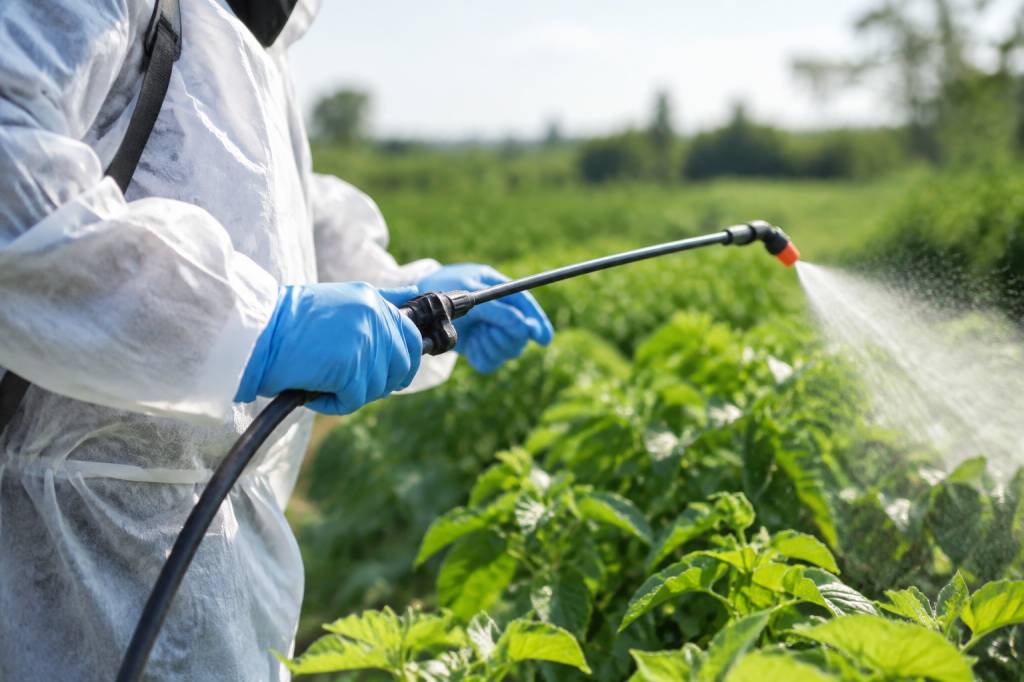
For many people, pesticides are an invisible part of the food system. They help farmers protect crops from insects, weeds and fungal diseases, yet traces can remain on food when it reaches the supermarket or our kitchen table. This raises an understandable question: how concerned should we be?
The answer is not simply “all pesticides are dangerous” or “residues are harmless”. Risk depends on the chemical, the dose, the frequency of exposure and the vulnerability of the person exposed. Regulations are designed to keep residues below levels considered safe, but monitoring data also show why good farming practices, strong oversight and sensible food preparation remain important.
For households already thinking about contaminants such as PFAS in water and food packaging, pesticides are another reminder that environmental exposure is rarely limited to a single source. Understanding where exposure occurs—and how it can be reduced—makes the issue more manageable.
What are pesticides?
The term “pesticide” covers a broad group of substances used to control organisms that can damage crops, stored food, gardens or public spaces. Common categories include:
- Herbicides: used to control weeds.
- Insecticides: designed to manage insects and other invertebrate pests.
- Fungicides: used to prevent or treat fungal diseases.
- Rodenticides: used to control rats and mice.
- Plant growth regulators: used to influence crop development or ripening.
Some pesticides are synthetic, while others are derived from naturally occurring substances. “Natural” does not automatically mean harmless, just as “synthetic” does not automatically mean dangerous. Toxicity depends on the properties of the individual substance and the level of exposure.
Pesticide residues can remain on the surface of fruit and vegetables, move into the edible parts of plants or be detected in processed foods. They may also enter soil and water through spray drift, runoff or inappropriate disposal. This is why pesticide management is both a food-safety issue and an environmental concern.
How do pesticides get into food?
Farmers may apply pesticides directly to crops during the growing season. Some products are also used after harvest to protect fruits, vegetables, grains or stored commodities from pests. Residues may therefore be present even when a food looks clean and undamaged.
Residues can also enter the food chain indirectly. Livestock may consume contaminated feed, while fish and aquatic organisms can be exposed when pesticides reach rivers, lakes or groundwater. Persistent chemicals may remain in soil or sediment for long periods, although many modern pesticides are designed to break down more quickly than older substances.
Food processing can change residue concentrations. Peeling often reduces residues found on the surface, while washing, cooking or milling may lower some residues but not others. No single preparation method removes every pesticide, and some chemicals are absorbed into plant tissue rather than remaining on the skin.
What are the potential health risks?
Health effects depend on the pesticide and the dose. Short-term, high-level exposure—usually associated with accidental ingestion, unsafe handling or occupational incidents—can cause symptoms such as nausea, dizziness, headaches, breathing difficulties or irritation of the skin and eyes. Severe poisoning can affect the nervous system and may require urgent medical treatment.
Long-term, lower-level exposure is more difficult to study. Researchers have examined possible links between certain pesticides and effects on the nervous system, reproductive health, hormone regulation, immune function and cancer risk. Evidence is not identical for every chemical, and associations observed in occupational studies cannot automatically be applied to the general population.
Children are a particular focus of research. Their bodies are still developing, they may consume more food and water in relation to their body weight, and behaviours such as frequent hand-to-mouth contact can increase exposure. Pregnant people, agricultural workers and communities living near intensively farmed areas may also require additional attention.
It is important to keep the risk question in proportion. Detecting a residue does not mean that a food will cause harm. Modern analytical equipment can identify extremely small concentrations—sometimes at levels far below those expected to produce a health effect. The relevant question is whether exposure exceeds a health-based safety threshold, not whether a laboratory can detect a molecule.
What are maximum residue limits?
In the UK, pesticide residues in food are regulated through maximum residue levels, often called MRLs. An MRL is the highest concentration of a pesticide residue legally expected to occur in food when the product has been used according to authorised agricultural practice.
MRLs are not intended to represent a toxic limit. They are set using information about how a pesticide is used, how residues behave during cultivation and processing, and toxicological studies. Risk assessors also consider dietary exposure across the population, including higher-consuming groups and children.
The UK’s Health and Safety Executive evaluates applications for pesticide products, while the Food Standards Agency contributes to food-safety monitoring and risk assessment. Imported foods must also meet UK requirements, although enforcement can be complicated when supply chains cross several countries.
European consumers may encounter similar terminology under European Union rules, where the European Food Safety Authority plays a central role in risk assessment. Regulations evolve as new scientific evidence becomes available. An approved pesticide can be restricted, reassessed or withdrawn if its risk profile changes or if safer alternatives become available.
What does monitoring tell us?
Official monitoring programmes routinely test food samples for pesticide residues. In the UK, the Working Party on Pesticide Residues publishes results from targeted sampling. These reports typically find that most tested foods either contain no detectable residues or comply with legal limits.
However, compliance should not be interpreted as proof that pesticide use has no environmental or health consequences. MRLs generally address dietary exposure to individual residues. They do not fully resolve questions about exposure to mixtures of chemicals, repeated low-level exposure or impacts on pollinators, soil organisms and aquatic ecosystems.
Monitoring also reflects the foods selected for testing and the limits of laboratory methods. A reassuring result from one category does not mean every crop, importer or growing region presents exactly the same exposure profile. Transparent testing and regular publication of results are therefore essential.
Are organic foods pesticide-free?
No. Organic farming restricts the use of synthetic pesticides, but it does not eliminate all pest-control products. Organic growers may use approved substances such as sulphur, copper compounds or biological controls. These products can still have environmental or toxicological effects if used incorrectly.
Some studies have found that organic diets can reduce exposure to certain synthetic pesticide residues. That does not mean conventional food is unsafe. Both systems are subject to standards, and the nutritional value of a food is not determined by its farming label alone.
For households with a limited budget, replacing every conventional product with an organic equivalent may not be realistic. Eating a varied diet with plenty of fruit and vegetables—whether conventionally or organically produced—remains a more practical public-health priority than avoiding produce altogether.
Practical ways to reduce exposure at home
Consumers cannot control every stage of food production, but several simple habits can reduce residues and prevent other forms of contamination.
- Wash fresh produce under running water. Rub firm fruits and vegetables with clean hands or use a suitable produce brush. Washing can remove dirt and some surface residues.
- Do not use washing-up liquid or bleach. These products are not intended for food and may leave their own harmful residues.
- Peel when appropriate. Peeling can reduce residues on the skin, although it may also remove fibre and nutrients. For many foods, washing is a good first step.
- Trim outer leaves. Removing the outer leaves of lettuce, cabbage or similar vegetables may reduce surface contamination, but wash the remaining leaves thoroughly.
- Vary the foods and brands you buy. A diverse diet reduces reliance on any one crop, producer or potential contamination pathway.
- Rinse grains and legumes. Follow the preparation instructions for rice, lentils, beans and other dried foods. Cooking can reduce some residues, although results vary by pesticide.
- Store pesticides safely. Garden products should remain in their original containers, away from food, children and pets. Never transfer them into drink bottles or unlabelled jars.
- Follow label instructions. Respect application rates, protective equipment requirements and waiting periods before harvesting home-grown produce.
For home-grown food, avoid assuming that a “natural” spray is automatically safe. Garlic mixtures, essential oils, copper products and other treatments can harm beneficial insects, aquatic life or people when misused. Integrated pest management—using crop rotation, physical barriers, resistant varieties and targeted treatment—can reduce the need for pesticides in the first place.
Can food filters remove pesticide residues?
Water filtration can be useful where pesticides have entered a private water supply, but it is not a substitute for washing food. Activated carbon filters may reduce some organic chemicals, while reverse osmosis systems can remove a broader range of contaminants. Performance depends on the specific pesticide, filter design, contact time and maintenance.
As with PFAS filtration, certification and independent performance data matter. A filter advertised as improving “taste” is not necessarily tested for pesticide removal. Users should check the manufacturer’s claims, replace cartridges on schedule and test private water supplies when contamination is suspected.
Food filters and household treatment systems also have limits. They cannot remove pesticides already absorbed into a fruit or vegetable, and poorly maintained equipment may become a source of microbial contamination. The most effective approach is to prevent pollution at source through careful application, buffer zones, proper storage and enforcement.
Why environmental impacts matter
Food safety is only one part of the pesticide debate. Runoff can carry residues into streams and groundwater, while spray drift can affect neighbouring land. Some insecticides are particularly harmful to bees and other pollinators. Fungicides and herbicides may alter soil microbial communities or affect aquatic organisms even when human dietary exposure remains below regulatory limits.
This wider perspective matters because ecosystems provide services that agriculture depends on, including pollination, natural pest control, soil formation and water regulation. Reducing unnecessary pesticide use is not about opposing farming. It is about making food production more resilient and reducing avoidable chemical pressure on the environment.
What should consumers take away?
Pesticide residues are a legitimate issue, but fear-based advice can be counterproductive. Avoiding fruit and vegetables because of headlines about residues may create a greater health risk than eating them. Washing produce, varying the diet and following safe handling practices are sensible steps for most households.
At the same time, consumers should expect robust regulation, transparent monitoring and clear information about cumulative exposure. Farmers and manufacturers need access to safer alternatives, while regulators must continue reassessing chemicals as scientific knowledge develops.
The most effective long-term solution is not a more complicated kitchen routine. It is a food system that relies less on hazardous chemicals, protects water and soil, and makes safer choices affordable and accessible. Individual action helps, but prevention at the source remains the strongest form of protection.
Useful sources: UK Food Standards Agency, Health and Safety Executive, European Food Safety Authority, World Health Organization and the United Nations Food and Agriculture Organization. These organisations publish current information on pesticide residues, risk assessment and food-safety standards.