

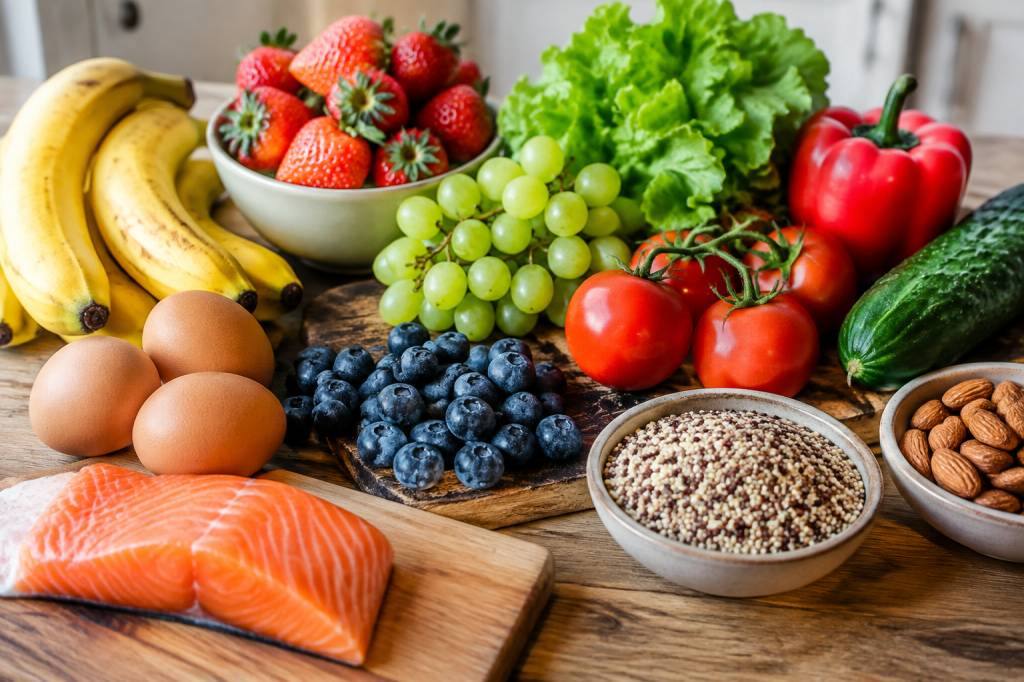
Few shopping lists attract as much attention as the Environmental Working Group’s “Dirty Dozen”. Each year, the list highlights fruits and vegetables found to carry the highest number or concentration of detectable pesticide residues. Strawberries, spinach and grapes often appear near the top, prompting a familiar question: should consumers avoid these foods?
The short answer is no. The Dirty Dozen is not a list of foods that are unsafe to eat. It is a consumer guide designed to show where pesticide residues are most frequently detected and where choosing organic may reduce exposure. Understanding what the list measures—and what it does not—matters far more than memorising its order.
What the Dirty Dozen actually tells us
The Environmental Working Group (EWG) creates its annual list using pesticide-residue data from the United States Department of Agriculture (USDA). The USDA tests conventionally grown produce after it has been prepared in the way consumers typically eat it. Depending on the food, this may include washing, peeling or removing stems.
EWG evaluates factors such as:
- The percentage of samples containing detectable pesticide residues
- The number of different pesticides found on a food
- The average concentration of residues
- The maximum residue levels detected
- The proportion of samples containing multiple residues
This approach is useful for comparing exposure patterns. However, it is not the same as a formal toxicological risk assessment. A detectable residue does not automatically mean that the food poses a health risk. Risk depends on the chemical involved, the amount consumed, how often it is eaten and how toxic the substance is at that dose.
Regulators such as the US Environmental Protection Agency (EPA), the European Food Safety Authority (EFSA) and the UK Health and Safety Executive assess pesticides by considering these factors. They establish maximum residue levels intended to protect consumers when pesticides are used according to approved instructions.
Which foods commonly appear on the list?
The exact ranking changes from year to year as new samples are tested, but several foods regularly feature among the Dirty Dozen:
- Strawberries
- Spinach and other leafy greens
- Kale, collard greens and mustard greens
- Grapes
- Peaches
- Pears
- Nectarines
- Apples
- Cherries
- Blueberries
- Green beans
- Bell and hot peppers
Soft-skinned fruits and leafy vegetables are often difficult to wash thoroughly. Their surface area, delicate structure and growing conditions can all contribute to residue detection. Pesticides may also be applied at different points during cultivation, including to manage fungal diseases, insects or weeds.
Leafy greens deserve particular attention because they can carry residues both on their leaves and in the folds where dirt and spray droplets collect. Spinach is also frequently discussed because it may contain traces of several pesticides in a single sample. Again, the presence of multiple residues is a reason to ask better questions about exposure—not proof that eating spinach is dangerous.
Detection is not the same as danger
Modern analytical laboratories can detect extremely small quantities of chemicals—sometimes at parts-per-billion levels. This sensitivity is valuable for monitoring food and water, but it can make headlines sound more alarming than the underlying evidence.
Consider the difference between hazard and risk. A chemical may have the potential to cause harm at a sufficiently high dose, which describes its hazard. Risk combines that hazard with actual exposure. A residue detected at a very low level may represent a much smaller risk than the same chemical encountered at a higher concentration or through repeated occupational exposure.
Regulatory limits are not perfect guarantees, and scientific debate continues about cumulative exposure, endocrine-disrupting chemicals and the effects of low-dose mixtures. Children, pregnant people, agricultural workers and individuals with particular health conditions may also have different vulnerabilities. These are legitimate reasons to reduce unnecessary exposure where practical.
But fear-driven advice can create a second problem: people may eat fewer fruits and vegetables because they believe conventional produce is unsafe. The health benefits of a diet rich in produce are well established. Avoiding apples, berries or leafy greens altogether would generally be a poor trade-off.
Why organic produce may help reduce exposure
Organic farming does not mean “pesticide-free”. Organic growers can use certain naturally derived and synthetic substances, provided they meet organic standards. Copper-based fungicides, for example, are permitted in some systems. Organic agriculture also uses non-chemical methods such as crop rotation, mechanical weed control, biological pest management and protective barriers.
Research consistently indicates that organic food tends to have lower levels of synthetic pesticide residues than conventionally grown food. A large review published in the British Journal of Nutrition found that organic crops were less likely to contain detectable pesticide residues and that residue concentrations were generally lower when residues were present.
That does not mean every organic strawberry is residue-free, or that every conventional strawberry exceeds safety limits. It means that choosing organic can be a practical way to reduce dietary exposure, particularly for foods eaten frequently and those that repeatedly appear on high-residue lists.
Budget remains an important part of the decision. Organic food is often more expensive, and access varies widely. A safer food strategy should not assume that every household can afford an entirely organic diet.
Smart choices for different budgets
Consumers can use the Dirty Dozen as a prioritisation tool rather than a pass-or-fail test. If buying organic for everything is unrealistic, consider focusing on the foods your household eats most often.
- Choose organic versions of high-residue foods that you eat daily or several times a week.
- Buy conventional produce when it is more affordable rather than skipping fruits and vegetables.
- Use frozen organic berries or vegetables when fresh options are expensive. Freezing preserves much of their nutritional value.
- Compare local, seasonal produce with imported options, while remembering that “local” does not automatically mean organic.
- Vary the types of fruit and vegetables you eat to avoid relying heavily on one crop or one possible residue profile.
This approach also reduces food waste. Buying organic produce and allowing it to spoil in the refrigerator is not a particularly effective environmental strategy. Plan portions, freeze what you cannot eat quickly and use imperfect-looking produce in soups, sauces or smoothies.
Washing can remove some residues—but not all
Under running water, gently rubbing produce can remove dirt, bacteria and some pesticide residues from the surface. The US Food and Drug Administration recommends washing fruits and vegetables under running water before eating, cutting or cooking them. Even produce with a peel should be washed first, because contaminants can transfer from the surface to the flesh during cutting.
These simple steps are useful:
- Wash your hands before handling produce.
- Rinse fruits and vegetables under cool running water.
- Rub firm produce such as apples, peppers and cucumbers with clean hands or a produce brush.
- Remove outer leaves from lettuce, cabbage and similar vegetables.
- Dry produce with a clean towel or paper towel where practical.
- Keep raw produce away from raw meat, poultry and seafood during food preparation.
Do not use soap, bleach or household cleaning products on food. They may leave harmful residues and are not designed for consumption. Commercial produce washes are not necessarily more effective than water, and some residues are systemic: they can be absorbed into the plant and will not simply rinse away.
Peeling can reduce surface residues, but it also removes fibre and nutrients. For many foods, washing well and eating the skin may offer greater nutritional value than peeling automatically.
The environmental dimension of pesticide exposure
The Dirty Dozen focuses on food, but pesticide use has consequences beyond the plate. Depending on the chemical and application method, pesticides can move through soil, surface water and groundwater. Runoff from agricultural land may carry residues into streams and reservoirs, particularly after heavy rainfall.
Some pesticides are persistent or mobile. Others break down relatively quickly but can still affect non-target organisms during that period. Aquatic invertebrates, fish, amphibians and pollinators may be exposed through contaminated habitats or food chains.
This is where pesticide discussions overlap with concerns about PFAS. PFAS are a large group of highly persistent fluorinated chemicals, and certain PFAS have been used in specialised pesticide formulations or may occur as environmental contaminants associated with manufacturing and agricultural applications. Not every pesticide is a PFAS, and the terms should not be used interchangeably. However, both issues demonstrate why chemical safety must be assessed across the entire lifecycle: production, application, environmental transport, persistence and disposal.
For drinking-water providers, agricultural chemicals are one part of a wider monitoring challenge. Treatment processes that reduce conventional pesticides may not be equally effective against highly persistent PFAS. Testing, source-water protection and appropriate treatment technologies are therefore essential rather than optional extras.
What about the Clean Fifteen?
Alongside the Dirty Dozen, EWG publishes the “Clean Fifteen”, a list of produce with comparatively fewer detectable pesticide residues in its analysis. Foods often included in this group are avocados, sweet corn, pineapples, onions, papayas, asparagus, cabbage, kiwis and mushrooms, although the ranking changes with each annual dataset.
The name can be misleading. “Clean” does not mean free of pesticides, and foods on the list are not automatically safer in every circumstance. The list simply indicates lower residue detection compared with other tested produce. It should be treated as a shopping aid, not a scientific certification.
There is also a practical limitation: testing programmes differ by country. A list based on USDA data may not accurately describe produce sold in the United Kingdom, where farming practices, authorised pesticides, food imports and monitoring systems can be different. UK consumers should also consult the Food Standards Agency and official pesticide-residue surveillance reports.
A balanced way to use the list
The most useful message is simple: eat a varied diet rich in fruit and vegetables, wash produce properly and use organic options strategically if reducing pesticide exposure is a priority.
Do not treat the Dirty Dozen as a list of foods to fear. Treat it as a prompt to ask more informed questions. How often does your family eat this food? Is an organic option affordable? Can you choose a seasonal alternative? What does the evidence say about the particular pesticide involved? And how are agricultural chemicals being monitored in the soil and water around us?
Those questions lead to better decisions than a dramatic headline. They also keep the focus where it belongs: on transparent data, proportionate risk assessment, healthier food systems and stronger protection for people, farm workers and ecosystems.
Consumers cannot solve pesticide pollution through shopping choices alone. Effective regulation, safer agricultural practices, robust residue testing and investment in clean-water protection are equally important. The contents of a shopping basket matter—but so do the policies governing what reaches it.