

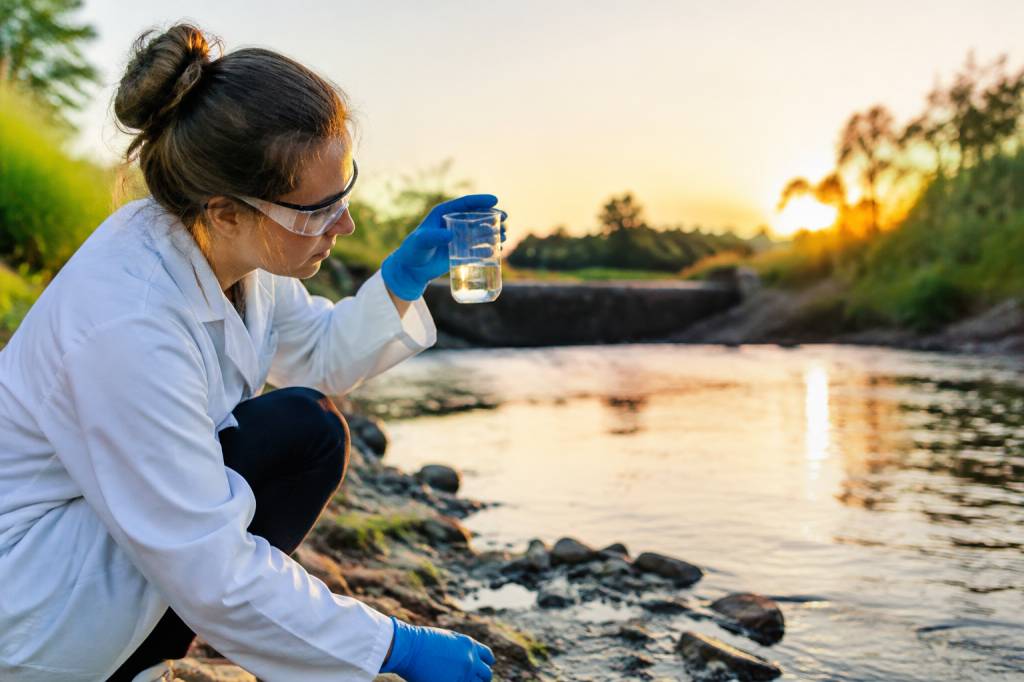
Pesticides help protect crops, control weeds and manage pests. But after they are applied, some can travel beyond the field: into streams, groundwater and, in certain circumstances, drinking-water sources. The amount that reaches water depends on the chemical, how and where it is used, the weather, the soil and the safeguards in place.
For UK households, the key questions are practical ones: which pesticides are monitored, how can contamination happen, and what can filtration actually remove? The answers are more nuanced than “pesticides are present” or “the water is safe”. Different substances behave differently, and effective treatment depends on identifying the specific contaminant.
What counts as a pesticide?
“Pesticide” is an umbrella term for products used to control unwanted organisms. It includes herbicides for weeds, insecticides for insects and fungicides for plant diseases. Some products break down relatively quickly; others can persist in soil or sediment, or produce breakdown products that also need to be considered.
That distinction matters because water testing does not look for one universal pesticide. Laboratories test for particular substances, often selected according to local land use, past detections and regulatory requirements. A result showing no detection for one group does not necessarily mean that every possible pesticide has been tested.
Many UK water-quality discussions focus on the drinking-water standard. In England, Wales and Scotland, the standard for an individual pesticide in drinking water is generally 0.1 micrograms per litre (µg/L), with a total of 0.5 µg/L for pesticides detected. Lower limits apply to certain substances, including aldrin, dieldrin, heptachlor and heptachlor epoxide. These are regulatory limits, not a description of how much pesticide is typically present in tap water.
How pesticides reach rivers and groundwater
Water contamination can occur through several routes. Rain soon after application may wash pesticides from fields into ditches and streams. Water can also carry them through soil into groundwater, while spills, incorrect disposal, or pesticide use near drains can create more direct pathways.
Local conditions make a difference. Sloping land, compacted soils and heavy rainfall can increase surface runoff. Sandy or fractured ground may allow some chemicals to move downward more readily. A pesticide that binds strongly to soil may be less likely to travel dissolved in water, but it can move with eroded soil and settle in river sediment.
Imagine a field beside a small stream after several hours of intense rain. If the soil is bare, saturated or compacted, some of the water may run off before it can soak in. Any pesticide present on plants or soil may travel with that runoff. This does not mean every rainfall event causes a pollution incident; it illustrates why timing, ground cover and buffer strips matter.
Groundwater contamination can be less visible. Some substances move slowly through the ground and may be detected long after the original application. This is one reason water companies and regulators monitor sources over time, rather than relying on a single sample.
What does pesticide pollution mean for water quality?
For rivers, lakes and streams, the concern is not limited to drinking water. Pesticides can affect organisms that were never intended to be exposed, including aquatic insects, plants and fish. The risk depends on the substance, concentration, duration of exposure and sensitivity of the species. Mixtures can complicate the picture because waterways may receive several chemicals from different sources.
For drinking-water supplies, water companies assess raw water and treat it before it reaches consumers. If monitoring identifies a pesticide above the applicable standard, the company and relevant authorities investigate and take steps to manage the supply. These can include adjusting treatment, blending water from different sources where appropriate, or temporarily changing the source. The specific response depends on the substance and local system.
A detection is not automatically evidence of an immediate health effect. Nor does meeting a legal standard mean that a substance has been shown to be beneficial. Standards provide a framework for protecting public health and managing water quality; they should be interpreted alongside the chemical involved, measured level and exposure context.
How the UK monitors and controls pesticides
Drinking-water quality is regulated separately across the UK. In England and Wales, the Drinking Water Inspectorate (DWI) oversees public water supplies; Scotland and Northern Ireland have their own regulatory arrangements. Water companies carry out sampling and treatment, while regulators check compliance and publish information about water quality and enforcement.
Environmental monitoring is also important. The Environment Agency in England, Natural Resources Wales, the Scottish Environment Protection Agency and the Northern Ireland Environment Agency monitor and regulate water environments within their respective jurisdictions. Their programmes help identify pollution pressures, although the substances tested and sampling locations vary.
Pesticide approval and use are controlled through UK regulatory systems. Rules can change as evidence develops, and a product’s approval does not mean it can be used anywhere or in any way. Farmers and other users must follow product labels and relevant requirements, including rules intended to prevent spray drift, runoff and pollution of watercourses.
For a household concerned about its supply, the most useful first step is to check the water-quality information published by its supplier. In England and Wales, the DWI website also provides regulatory information and reports. Private water supplies are different: owners may have responsibilities for testing and should contact their local authority about risk-based sampling and advice.
Can household filters remove pesticides?
Some treatment technologies can reduce certain pesticides, but no filter should be assumed to remove every pesticide. Performance depends on the chemical’s properties, the filter design, water conditions, contact time and maintenance. A product that reduces one substance may perform differently against another.
-
Granular activated carbon (GAC): Carbon can adsorb many organic chemicals, including some pesticides. Its performance depends on the pesticide and how long water contacts the carbon. Once the media becomes exhausted, removal can decline, so replacement or regeneration schedules matter.
-
Carbon block filters: These combine carbon treatment with a compact filter format. Check whether the specific model has been independently tested for the pesticide or class of pesticides you are concerned about. A general claim such as “improves taste” does not establish pesticide removal.
-
Reverse osmosis (RO): RO membranes can reduce a range of dissolved substances, including some pesticides, but rejection varies by compound and system. RO units also need servicing, and their performance should be supported by relevant test data rather than broad marketing claims.
-
Other treatment media: Ion exchange and specialist adsorbents may be appropriate for particular contaminants, but they are not universal pesticide filters. A qualified water-treatment professional can help interpret test results and choose a suitable system.
Boiling is not a reliable way to remove pesticides. It is used to address certain microbiological risks when instructed by public-health authorities, but it does not destroy all chemical contaminants and can concentrate some non-volatile substances as water evaporates.
How to choose a filter responsibly
Start with evidence, not the most dramatic claim on a product page. Ask your water supplier or testing laboratory what was detected, at what concentration, and whether the result relates to a specific pesticide or a broader screening method. If you have a private supply, use an accredited laboratory and explain the land uses around the source.
Then check whether the filter has been independently tested for the contaminant in question. Look for clear information about test conditions, expected reduction, flow rate, cartridge life and maintenance. Certification standards can provide useful evidence, but verify that the certification covers the actual contaminant and model—not simply the general filter category.
Installation and upkeep are part of treatment. A poorly fitted unit can allow water to bypass the media; an overdue cartridge may not perform as intended. Follow the manufacturer’s instructions, keep records of replacements and retest where the risk or test results justify it. A filter is a point-of-use measure, not a substitute for managing pollution at its source.
Reducing pesticide pollution before it reaches water
The most effective long-term approach is prevention. Farmers can reduce losses through careful product selection, correct application rates, weather-aware timing and measures that slow or intercept runoff. Vegetated buffer strips beside watercourses, cover crops and improved soil structure can help limit soil and chemical movement, although effectiveness varies with site conditions.
Other users have a role too. Pesticides should never be poured into drains, toilets or watercourses. Follow the label for storage, application and disposal, and avoid spraying when wind or rain could carry the product away from its target. If you see a suspected spill or pollution incident, report it to the relevant environmental regulator in your part of the UK.
These actions do not eliminate every risk, but they address the problem upstream. Treatment plants and household filters can reduce exposure in some circumstances; preventing pesticides from entering water in the first place protects ecosystems and makes drinking-water treatment less demanding.
What readers can take away
Pesticides can reach UK water through runoff, drainage, spills and movement through soil. Their effects depend on the chemical and the exposure, and monitoring results need to be interpreted in context. Public water supplies are regulated and treated, while private supplies may require additional attention from their owners.
If you are considering a home filter, identify the contaminant first and choose a system with credible, substance-specific performance data. Activated carbon and reverse osmosis can be useful for some pesticides, but neither is a universal solution. Clear testing, careful maintenance and pollution prevention remain the strongest combination for protecting water quality.