

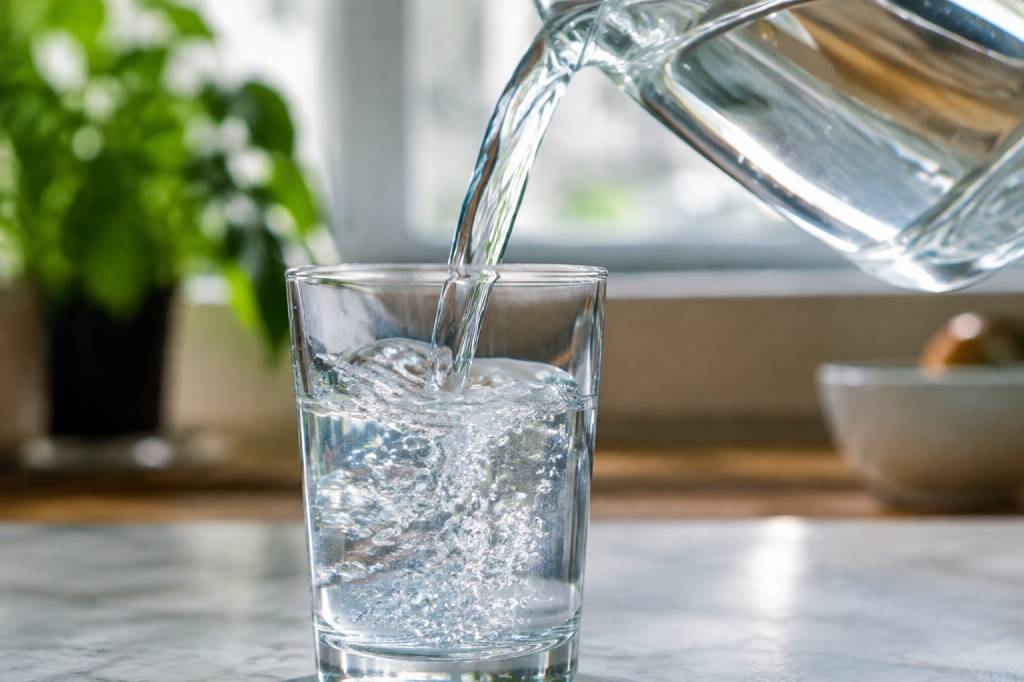
Safe drinking water depends on more than appearance. Clear water can still contain microorganisms capable of causing serious illness, including bacteria, viruses and protozoan parasites. This is why water disinfection remains a fundamental part of public health protection, whether treatment takes place in a municipal plant, a private well system or an emergency shelter.
But disinfection is not a universal solution for every contaminant. Chlorine, ultraviolet light and boiling can inactivate many pathogens, yet they do not reliably remove chemicals such as PFAS. Understanding what each method can—and cannot—do is essential for choosing the right treatment approach.
What does water disinfection mean?
Water disinfection is the process of reducing or inactivating disease-causing microorganisms. It is different from sterilisation, which aims to eliminate all forms of microbial life. In drinking-water treatment, the objective is to make water safe enough for consumption under defined public-health standards.
Disinfection is usually applied after several other treatment steps. A conventional water-treatment plant may first remove larger particles through screening and sedimentation, then use coagulation and filtration to reduce suspended matter. Disinfection is often the final barrier against pathogens before water enters the distribution network.
The effectiveness of any disinfectant depends on several factors:
- The type and concentration of microorganisms present
- The temperature and pH of the water
- The amount of organic matter and suspended solids
- The contact time between the disinfectant and the water
- The disinfectant dose and, where relevant, the remaining residual in the pipe network
In practical terms, treatment is not simply a matter of adding a chemical or switching on a lamp. Water quality determines how well the process works.
Why disinfection is essential for public health
Untreated or poorly treated water can transmit infections such as cholera, dysentery, hepatitis A, giardiasis and cryptosporidiosis. Outbreaks are more likely when sewage enters rivers, groundwater or storage tanks, particularly after flooding, infrastructure failures or extreme rainfall.
Public water suppliers therefore monitor indicators such as Escherichia coli and coliform bacteria. These organisms are not necessarily the most dangerous pathogens themselves, but their presence can indicate faecal contamination and a potential health risk.
Disinfection has transformed public health. The introduction of filtered and disinfected drinking water in the early twentieth century sharply reduced waterborne disease in many countries. The process is less visible than hospitals or medicines, but its protective effect is often far greater because it reaches entire populations at once.
Chlorination: reliable protection with important limits
Chlorine is one of the most widely used drinking-water disinfectants. It may be added as chlorine gas, sodium hypochlorite or calcium hypochlorite. In water, these compounds form hypochlorous acid, a powerful antimicrobial agent that damages essential components of microorganisms.
One of chlorine’s main advantages is that it can leave a residual. A small amount remains in the water as it travels through pipes, helping to control microbial regrowth and protect against contamination within the distribution system. This is especially valuable in large networks where water may travel considerable distances before reaching a tap.
However, chlorine performance is strongly affected by pH. Hypochlorous acid is more effective than the hypochlorite ion, and the balance between the two changes as pH rises. Treatment operators must therefore monitor pH as well as disinfectant concentration.
Chlorine can also react with naturally occurring organic matter to form disinfection by-products, including trihalomethanes and haloacetic acids. These compounds are regulated in many jurisdictions because long-term exposure above permitted levels may present health concerns. Modern treatment systems manage this risk by controlling organic matter before disinfection and carefully adjusting chlorine doses.
A noticeable swimming-pool smell does not necessarily mean that water contains too much chlorine. The odour can result from chloramines, which form when chlorine reacts with nitrogen-containing substances. In a well-managed drinking-water system, disinfectant levels are controlled and routinely tested.
Chloramine: longer-lasting residuals
Some water suppliers use chloramine, usually formed by combining chlorine with ammonia. Chloramine is a weaker disinfectant than free chlorine, but it remains stable for longer in many distribution systems and tends to produce lower concentrations of certain regulated disinfection by-products.
Its use requires careful management. Chloramine can promote nitrification in distribution networks if conditions are not properly controlled. It may also be unsuitable for some industrial processes, aquariums and medical applications. Consumers using treated water for these purposes should follow specific guidance rather than relying on a household filter designed only for taste and odour.
Ultraviolet light: powerful, chemical-free inactivation
Ultraviolet, or UV, disinfection uses short-wave light—typically at around 254 nanometres—to damage the genetic material of microorganisms. Once their DNA or RNA is disrupted, many bacteria, viruses and parasites can no longer reproduce or cause infection.
UV treatment does not add chemicals to water and does not create a disinfectant residual. This makes it attractive for private wells, bottled-water production and some municipal applications. It is particularly effective against organisms such as Cryptosporidium that can be relatively resistant to normal chlorine doses.
There are practical limitations. UV light must reach the microorganisms, so cloudy water or high levels of suspended particles can shield them. Water treated with UV should therefore be properly filtered first. The lamp also requires regular cleaning and replacement, and the system needs a dependable electricity supply.
Because UV leaves no residual, it cannot protect water from contamination after treatment. A cracked storage tank or poorly maintained pipe can reintroduce microorganisms even when the UV unit itself is working correctly.
Ozone: highly reactive and effective
Ozone is a form of oxygen made by passing oxygen or air through an electrical discharge. It is a strong oxidant that can inactivate bacteria and viruses, break down some organic compounds and improve taste and odour.
Ozonation is often used in advanced water-treatment plants, sometimes alongside biological filtration or activated carbon. It can be effective against a broad range of contaminants, but the equipment is more complex and energy-intensive than basic chlorination.
Ozone also decomposes quickly, meaning it does not provide lasting protection in distribution pipes. If a residual disinfectant is required, a secondary treatment such as chlorination may be added. Ozone can also react with bromide in source water to form bromate, a regulated by-product. Careful monitoring is therefore essential.
Boiling: the most accessible emergency method
Boiling is one of the simplest ways to inactivate many pathogens when a safe public supply is unavailable. The UK Health Security Agency and other public-health authorities commonly advise bringing water to a rolling boil during emergency situations, then allowing it to cool in a clean, covered container.
Boiling is effective against bacteria, viruses and parasites, but it does not remove chemicals, heavy metals, nitrate or PFAS. In fact, evaporation can slightly concentrate non-volatile contaminants if water is boiled for a long time and its volume is reduced.
Boiled water should be stored safely. Use clean containers with tight-fitting lids, avoid touching the water with hands or used utensils, and refrigerate it where possible. Boiling is a short-term protective measure—not a substitute for repairing a contaminated supply.
Household filters: useful, but not all-purpose
Household treatment devices vary widely. A jug containing activated carbon may improve taste and reduce chlorine, while a reverse-osmosis system can remove a much broader range of dissolved substances. A ceramic filter may remove particles and some microorganisms, but it does not necessarily disinfect water unless it includes an additional treatment stage.
Consumers should examine independent performance claims rather than relying on marketing language. Look for certification appropriate to the contaminant of concern, follow replacement schedules and remember that a filter can become a source of bacterial growth if it is neglected.
For microbial safety, the most robust household systems often combine stages—for example, sediment filtration followed by activated carbon and UV. For chemical contaminants, the appropriate technology may be completely different.
Disinfection does not remove PFAS
This distinction is particularly important for readers concerned about per- and polyfluoroalkyl substances, commonly known as PFAS. PFAS are a large group of persistent chemicals used in applications including firefighting foams, stain-resistant materials, non-stick products and some industrial processes.
Standard drinking-water disinfection methods do not reliably destroy or remove PFAS. Chlorination, chloramine, UV treatment, ozone and boiling are designed primarily to control microorganisms or oxidise selected organic compounds. PFAS are chemically persistent and generally remain in the water after these treatments.
Activated carbon, ion-exchange resins and reverse osmosis are among the technologies used to reduce PFAS concentrations. Their performance depends on the specific PFAS, the water chemistry, the treatment design and the condition of the media or membrane. A treatment unit must be selected and maintained for PFAS removal specifically; a device that removes chlorine is not automatically effective against PFAS.
This is why water safety often requires a treatment train rather than a single process. Filtration can address particles and chemical contaminants, while disinfection controls pathogens. Neither job should be confused with the other.
Choosing the right method for the water source
The best treatment depends on whether the water comes from a regulated public supply, a private well, a rainwater system or an emergency source. Start with testing rather than guesswork.
- Public mains water: check the supplier’s water-quality reports and use additional treatment only for a defined concern, such as taste, lead from plumbing or PFAS.
- Private wells: test regularly for bacteria, nitrate, metals and locally relevant contaminants. Flooding or nearby agricultural and industrial activity may change the risk profile.
- Rainwater: consider contamination from roofs, storage tanks, animal waste and atmospheric deposition. Filtration and disinfection may both be necessary.
- Emergency water: follow official boil-water or do-not-drink advisories. Boiling addresses pathogens but not chemical contamination.
- PFAS-affected supplies: use a certified treatment technology designed and maintained for PFAS reduction, and verify performance through testing.
Good treatment depends on good maintenance
Even a well-designed system can fail when maintenance is overlooked. UV lamps lose effectiveness over time, activated-carbon cartridges become saturated, membranes foul and storage tanks accumulate sediment. A device that has not been serviced may offer reassurance without providing meaningful protection—a particularly unhelpful form of optimism.
Keep records of filter changes, disinfectant testing and laboratory results. Follow the manufacturer’s instructions, but also check whether performance claims have been independently certified. If water develops an unusual taste, odour or appearance, stop using it for drinking until the cause has been investigated.
Safe drinking water is achieved through multiple barriers: protecting the source, removing particles and chemicals where necessary, disinfecting against pathogens, maintaining the distribution network and monitoring the finished water. Understanding the role of each step helps households and water professionals make decisions based on evidence rather than assumptions.