

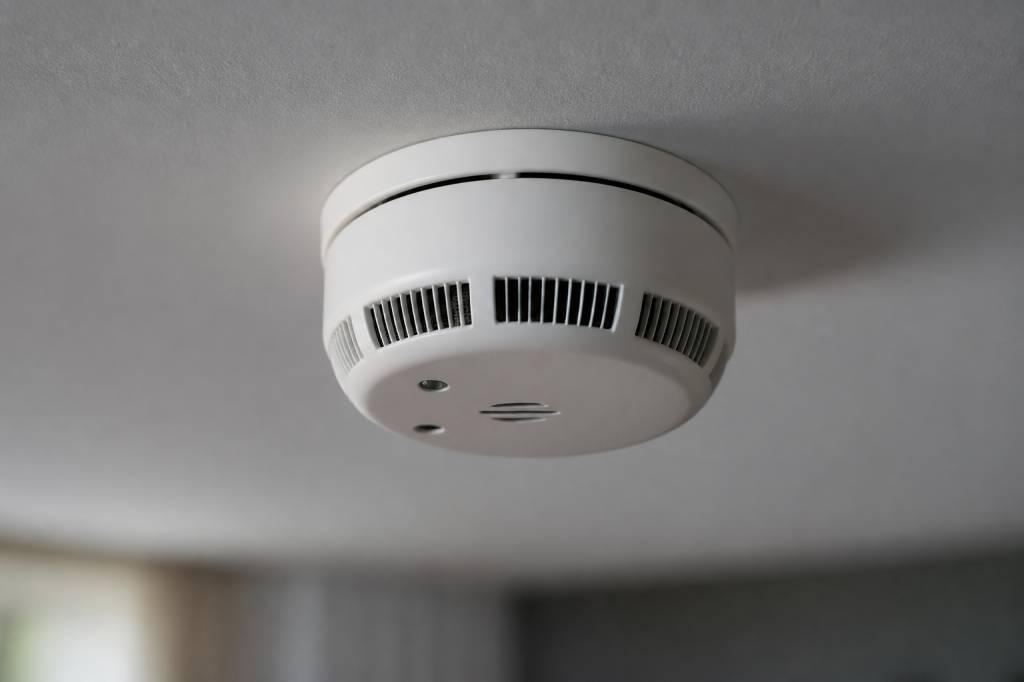
If you have a smoke detector in your home, office, or rental property, there is a good chance it contains a tiny amount of americium. That may sound alarming at first. After all, americium is a radioactive element. But the reality is more nuanced: in the small quantities used in smoke alarms, it is carefully engineered to improve fire safety without posing a meaningful risk in normal use.
So what exactly is americium, why is it used in some smoke detectors, and why should anyone outside the fire safety industry care? The short answer: because understanding how these devices work helps you use, replace, and dispose of them responsibly. And in an age where consumers are increasingly concerned about chemical exposure, waste, and environmental impacts, even small household items deserve a closer look.
What is americium?
Americium is a synthetic radioactive element, meaning it does not occur naturally in any significant amount and is produced artificially in nuclear reactors. The most common isotope used in smoke detectors is americium-241, often written as Am-241. It emits alpha particles, a type of radiation that is relatively easy to block. In practical terms, alpha particles cannot penetrate the outer layer of skin and are stopped by a sheet of paper or even a few centimetres of air.
That does not mean americium should be handled casually. Radioactive materials always demand care, and americium is no exception. But in a smoke detector, the isotope is sealed inside the unit in an extremely small amount, typically around 0.9 microcuries or roughly 0.3 micrograms in older ionisation models. That is a tiny quantity, designed to stay contained for the lifetime of the device.
The key point is that americium is not there to make the alarm “radioactive” in a dramatic sense. It is there because its physical properties make it useful for detecting smoke particles quickly.
How does an americium smoke detector work?
Not all smoke detectors use americium. The two main types are ionisation smoke alarms and photoelectric smoke alarms. Americium is used in ionisation models.
Inside an ionisation alarm, the americium emits alpha particles into a small chamber. These particles ionise the air, creating a weak electric current between two electrodes. When smoke enters the chamber, it disrupts the flow of ions and reduces the current. The alarm detects that change and sounds the warning.
This technology is effective at detecting fast-flaming fires, which can generate smaller smoke particles and spread quickly. In the past, ionisation alarms were common in homes because they were inexpensive and responsive. However, many fire safety experts now recommend photoelectric alarms, or dual-sensor alarms, because they are generally better at detecting smouldering fires, which can produce more smoke before flames appear.
So if you are wondering whether the americium itself “senses” the smoke, the answer is no. It is the ionised air inside the chamber that gets disrupted when smoke is present. The americium is simply the source that makes the ionisation process possible.
Why was americium used in smoke detectors in the first place?
Americium became popular in smoke alarms because it offers a reliable way to detect fire early and at low cost. The device can run for years with minimal power consumption, which made it an attractive choice for battery-operated alarms.
Its main advantages are straightforward:
- It helps detect certain fires very quickly.
- It requires very little energy.
- It is stable when sealed properly inside the device.
- It allowed manufacturers to build affordable alarms for widespread domestic use.
In the context of fire safety, that was a major benefit. The public health logic was simple: if a tiny radioactive source could help save lives by detecting fires earlier, the trade-off was acceptable. And for decades, it was.
Still, technology evolves. As alarm design improved and concerns about disposal and mixed waste streams increased, many manufacturers shifted toward photoelectric and dual-sensor models. In some markets, ionisation alarms are now less common than they once were.
Is americium in a smoke detector dangerous?
For a properly functioning smoke alarm, the answer is generally no. The americium is enclosed in a sealed chamber, and the amount used is extremely small. Under normal household conditions, you are not exposed to harmful levels of radiation from the device.
The risks increase only if the detector is damaged, deliberately dismantled, or disposed of improperly in a way that exposes the internal components. Even then, the danger is usually limited, but it is not something to ignore. The safest approach is simple: do not open or tamper with a smoke detector.
There is also an important distinction between risk and hazard. Americium is a hazardous material by definition because it is radioactive. But the risk from a sealed smoke detector in everyday use is very low. That distinction matters, especially when public debate tends to treat the word “radioactive” as automatically synonymous with “unsafe.”
Think of it this way: the chemistry and engineering of the device are designed so that the americium does its job quietly inside a sealed box. If that box is intact, the system is highly controlled.
What happens if a smoke detector is broken?
If a detector is cracked, crushed, or otherwise damaged, the first step is not panic. The americium source is still likely to be enclosed, but the unit should be treated as electronic waste with a radioactive component. Avoid touching broken internal parts. Keep children and pets away. Wash your hands after handling the outer casing, just to be safe.
If the detector was severely damaged, especially during building renovation, demolition, or a house fire, check local disposal guidance. In many cases, smoke alarms with americium should be returned through designated hazardous waste or manufacturer take-back schemes, rather than placed in normal household trash.
Why does this matter environmentally? Because poor disposal can create unnecessary contamination risks and complicate waste processing. Radioactive household items may be small, but once they enter the wrong waste stream, they can become a compliance headache for councils, waste operators, and recycling systems.
That is particularly relevant in the UK and across Europe, where waste segregation and electronic waste rules are increasingly strict. Even low-level radioactive components need appropriate handling pathways.
How should you dispose of an americium smoke detector?
Disposal rules vary by country and local authority, so the safest advice is to check official guidance before throwing one away. Some general principles apply almost everywhere:
- Do not burn smoke detectors.
- Do not open the casing.
- Do not place them in mixed recycling unless your local authority specifically says they are accepted.
- Use household hazardous waste collection points or electronic waste drop-off facilities where available.
- Follow manufacturer instructions if a return programme exists.
If you are replacing an older alarm, you may be dealing with an ionisation model that contains americium. Newer photoelectric alarms do not use radioactive material. That makes replacement a good opportunity to upgrade fire safety and simplify disposal at the same time.
One practical tip: before removing an old alarm, take a photo of the model number and check the manufacturer’s site. Some brands provide specific instructions for disposal, return labels, or mail-back options. It only takes a minute, and it can prevent a waste issue later.
Should you replace ionisation alarms with photoelectric ones?
In many cases, yes. Photoelectric smoke alarms use a light beam and sensor to detect smoke, rather than a radioactive source. They are often better at identifying smouldering fires, such as those caused by overheated wiring, upholstered furniture, or electrical faults.
Why does that matter? Because smouldering fires can produce toxic smoke long before they burst into flames. Early warning is critical, especially at night when people are asleep and response times are slower.
Many fire safety organisations now recommend using either photoelectric alarms or dual-sensor alarms, which combine both technologies. This can provide broader coverage across different fire types.
That said, if you already have a functioning ionisation smoke detector, the most important thing is still to keep it installed, tested, and powered. A detector that is working is far better than a sophisticated one sitting in a drawer. Fire safety, unlike style trends, is not the place for “maybe later.”
Why americium matters beyond the smoke alarm itself
The story of americium smoke detectors touches on several bigger issues: public health, risk communication, consumer safety, and waste management. A household device can be a surprisingly useful case study in how society balances convenience, cost, and environmental responsibility.
First, it shows how small amounts of hazardous material can be used safely when tightly controlled. That is an important lesson in environmental science and regulatory oversight. Not every hazardous substance is dangerous in every context. Exposure, containment, and end-of-life handling determine the real-world risk.
Second, it highlights the importance of product design. A detector that is safer to use and easier to dispose of reduces pressure on waste systems and lowers the chance of accidental misuse. That is a meaningful improvement, even if the change is not visible on the wall.
Third, it reminds consumers that “set and forget” is not a good strategy for home safety devices. Smoke alarms should be tested regularly, batteries replaced when needed, and units changed at the end of their service life. Most manufacturers recommend replacing the whole alarm after around 10 years, depending on the model.
What you can do as a homeowner or tenant
If you want to be practical about americium smoke detectors, focus on three things: know what you have, keep it working, and dispose of it properly when the time comes.
- Check whether your alarm is ionisation, photoelectric, or dual-sensor.
- Test alarms monthly using the manufacturer’s test button.
- Replace expired alarms, even if they still seem functional.
- Use the correct disposal route for units containing americium.
- Consider upgrading older ionisation models to photoelectric or dual-sensor alarms.
If you manage rental property, this becomes even more important. Landlords and building managers have both a legal and ethical responsibility to ensure alarms are suitable, maintained, and replaced on schedule. A working smoke detector is one of the simplest and most cost-effective life-saving measures available.
The bottom line on americium smoke detectors
Americium in smoke detectors is a good example of a technology that can sound unsettling but is actually highly controlled and widely useful. In ionisation alarms, americium-241 helps detect smoke by ionising air inside a sealed chamber. The amount used is tiny, and when the device is intact, the risk to users is very low.
What matters most is awareness. If your alarm contains americium, handle it responsibly at the end of its life. If you are replacing an old unit, consider upgrading to a newer photoelectric or dual-sensor model. And if you are unsure how to dispose of a detector, check your local waste authority or manufacturer guidance before tossing it in the bin.
In environmental health, the details matter. A tiny radioactive source in a plastic case may not be a major exposure concern in daily life, but it is still a material that deserves proper management. That is how we keep homes safer, waste streams cleaner, and risk where it belongs: under control.