

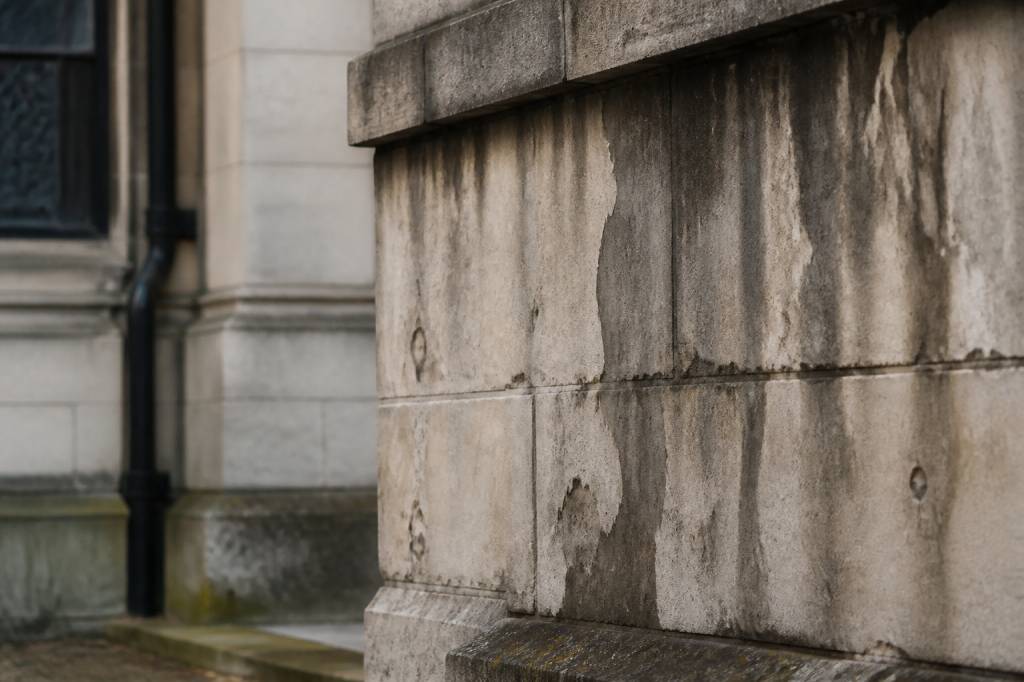
Acid rain is often discussed as an environmental issue, but its impact is not limited to forests, lakes, or wildlife. It also leaves a very visible mark on the built environment. Buildings, bridges, monuments, and even everyday surfaces can slowly degrade when exposed to acidic precipitation over time. The damage is usually gradual, which makes it easy to overlook until repairs become expensive.
So what exactly happens when rain becomes acidic? Why are some materials more vulnerable than others? And what can property owners, engineers, and conservation teams do to slow the damage? Let’s break it down clearly.
What acid rain is and why it forms
Acid rain is a broad term used for precipitation that has become more acidic than normal because of air pollution. Rain is naturally slightly acidic, typically with a pH around 5.6, due to the presence of carbon dioxide in the atmosphere. When sulfur dioxide (SO2) and nitrogen oxides (NOx) are released into the air, they react with water vapor, oxygen, and other atmospheric compounds to form sulfuric and nitric acids. The result is rainfall, snow, fog, or even dry particles with a lower pH than expected.
These pollutants mainly come from fossil fuel combustion: power plants, industrial facilities, vehicle exhaust, and some heating systems. Regulations in many countries have reduced emissions significantly over the past few decades, but acid deposition remains a concern in regions near industrial activity or heavy traffic. In other words, the problem has improved, but it has not disappeared.
It is also worth noting that “acid rain” is only part of the story. Acid deposition can happen through wet deposition, such as rain or snow, and dry deposition, where acidic gases and particles settle onto surfaces. Buildings are exposed to both.
Why buildings are vulnerable
Buildings are not all affected in the same way. Damage depends on the materials used, the age of the structure, the local climate, air pollution levels, and how much maintenance the building receives. A modern steel-framed office block will not respond to acid rain in the same way as a limestone cathedral or a historic sandstone façade.
Materials that are particularly vulnerable include:
- Limestone and marble, which contain calcium carbonate
- Sandstone and some other porous stones
- Concrete, especially when cracks allow deeper penetration
- Metals such as steel, copper, bronze, and zinc
- Painted and coated surfaces, where acid exposure can weaken protective layers
The main issue is chemical reaction. Acidic water can dissolve mineral components in stone and concrete, while metal surfaces may corrode faster when acidic moisture is present. Over time, this can weaken structural elements or simply ruin a building’s appearance. For heritage buildings, that aesthetic damage is not cosmetic trivia; it can mean the loss of historical detail that cannot be replaced.
How acid rain damages stone surfaces
Stone buildings, especially those made from limestone and marble, are often the most visibly affected. These stones contain calcium carbonate, which reacts with acids. When sulfuric or nitric acid comes into contact with the surface, the reaction can dissolve the outer layer of the stone, creating a roughened texture and gradually eroding carvings, ornamentation, and inscriptions.
This is why older statues and memorials often lose fine detail. A face that once had sharp contours may become softened. Lettering on gravestones can fade. Decorative flourishes on facades can blur into the stone around them.
Gypsum formation is another issue. When sulfuric acid reacts with calcium carbonate, it can produce calcium sulfate, commonly in the form of gypsum. Gypsum is more soluble and can flake away or form a crust that traps dirt. That dark, crusty layer seen on many older urban buildings is not just soot; it often reflects a combination of pollution, moisture, and chemical alteration of the stone surface.
In a wet climate, the damage can be especially persistent. Water helps carry acidic compounds into porous stone, and repeated cycles of wetting and drying can accelerate decay. If the stone is already cracked or weathered, the process speeds up further. Buildings do not need dramatic storms to suffer; a steady drip of acidic exposure is enough.
What happens to metal, concrete, and coatings
Acid rain also affects materials that are often thought to be more resilient than stone. Metals, for example, can corrode more rapidly in acidic conditions. Iron and steel are vulnerable to rust when moisture and oxygen are present, and acidity can make protective oxide layers less stable. Copper and bronze can develop patina, which is not always harmful, but acidic pollution can alter that surface layer and cause uneven degradation.
Concrete is another material that deserves attention. It is alkaline by nature, which helps protect reinforcing steel embedded inside it. But when acid rain penetrates the surface, it can neutralize that alkalinity. Once the protective environment around steel reinforcement is compromised, corrosion can begin. That may sound like a slow-moving problem, and it usually is, but structural damage from corrosion is one of the biggest long-term risks for infrastructure.
Paints and sealants are not immune either. Acidic exposure can break down protective coatings, especially if the surface is already aging or has been poorly maintained. Once a coating fails, the underlying material becomes more exposed, creating a cycle of faster deterioration. Think of it as the building equivalent of a raincoat with a small tear: not a disaster today, but a problem if ignored.
Signs of acid rain damage you can actually see
Many people first notice acid rain damage through changes in appearance rather than structural failure. Common signs include:
- Surface roughening or pitting on stone
- Loss of carved detail on façades or monuments
- Black crusts or discolored patches on exposed walls
- Rust stains on metal elements
- Flaking, cracking, or spalling in concrete
- Paint peeling or premature coating failure
- Mortar erosion between masonry units
These signs are often mistaken for “normal aging,” which is part of the challenge. Buildings naturally weather over time, so the damage may not be immediately attributed to air pollution or acidic deposition. But in polluted environments, deterioration tends to be faster and more severe than it would be in cleaner air.
Historic buildings often show the most dramatic evidence because they were built before modern pollution controls existed. In cities that experienced heavy industrial activity in the 19th and 20th centuries, many stone monuments and façades suffered decades of accelerated decay. Even today, legacy pollution can continue to affect vulnerable structures.
Is acid rain still a serious building issue?
Yes, though the scale varies by region. In North America and parts of Europe, emissions of sulfur dioxide have fallen substantially since the adoption of cleaner fuel standards and emission controls. That has reduced the intensity of acid rain compared with the peak pollution periods of the past. However, nitrogen oxides remain an important source of acidic deposition, and local hotspots still exist near traffic corridors, power generation sites, and industrial zones.
Climate factors matter too. Urban areas with frequent rain, high humidity, or freeze-thaw cycles often see faster material degradation because water can repeatedly enter pores and cracks. In some cases, acid deposition combines with particulate pollution, salt exposure, and mechanical weathering to create a multi-layered problem. Building damage rarely has a single cause.
There is also a growing concern about how changing climate conditions may interact with pollution. Intense rainfall events can increase wash-off and surface erosion, while prolonged dry periods can allow acidic particles to accumulate before being mobilized by the next storm. The chemistry of damage may be slow, but the environmental context keeps evolving.
How to reduce damage before it becomes expensive
Prevention is always cheaper than restoration, especially for masonry and heritage structures. The good news is that many measures are practical and well-established.
- Use acid-resistant or low-porosity materials in new construction where appropriate
- Apply breathable protective sealants to vulnerable stone and concrete surfaces
- Maintain gutters, drains, and roof systems to prevent water from concentrating on façades
- Inspect and repair cracks early, before acidic moisture can penetrate deeper
- Clean surfaces using methods suited to the material, not aggressive treatments that cause further erosion
- Install corrosion-resistant metals or protective coatings in exposed areas
- Monitor air quality and deposition levels around sensitive buildings
One important point: not every surface should be sealed blindly. Some historic masonry needs to “breathe,” and an inappropriate coating can trap moisture inside the material, making the problem worse. Restoration teams usually need to balance water resistance with vapor permeability. In other words, protecting a building is not the same as wrapping it in plastic and hoping for the best.
For public buildings, museums, and heritage sites, routine inspections are essential. Early signs such as discoloration, fine cracking, or salt deposits may indicate that environmental exposure is beginning to take a toll. Addressing those issues early can preserve both structural integrity and historical value.
Why maintenance matters as much as materials
Even the best material will suffer if it is neglected. A building with blocked drainage, damaged flashing, or failed sealants is much more likely to experience acid-related deterioration. Water is the carrier, and once it gets into the wrong places, acidic compounds can do their work more effectively.
Maintenance should focus on keeping surfaces dry where possible, preventing standing water, and reducing repeated exposure to polluted runoff. This is especially relevant for older buildings with intricate stonework, ledges, and decorative elements that trap moisture. These details are beautiful, but from a maintenance perspective, they are also prime locations for damage accumulation.
Regular cleaning can help too, but it should be done carefully. Abrasive cleaning methods may remove the damaged outer layer and freshen the appearance temporarily, but they can also strip away protective patina or weaken the material. When dealing with heritage stone or metal, conservation-grade methods are often essential.
What building owners and communities should watch for
If you manage a building, especially one made from stone or concrete, it helps to think long-term. Acid rain damage rarely announces itself loudly. Instead, it shows up in patterns: a little more surface loss each year, a little more corrosion, a little more staining.
Useful questions to ask during inspections include:
- Are there areas where water regularly runs down the same surface?
- Has mortar started to crumble or wash out?
- Are metal fixings showing rust or pitting?
- Is the stone losing detail or becoming powdery?
- Have protective coatings worn unevenly?
For local authorities and conservation groups, monitoring can be even more valuable when paired with air quality data. If deposition levels rise or stay elevated near a building cluster, targeted intervention becomes easier to justify. Evidence-based maintenance is far more effective than emergency restoration after visible failure.
Looking ahead: cleaner air, better protection
The good news is that acid rain is not an unsolved problem. Emission controls have already demonstrated that cleaner air leads to less environmental damage. That same logic applies to buildings: reduce the pollutants in the atmosphere, and the rate of material decay falls too.
Still, exposure will not disappear overnight, and many structures built during periods of higher pollution are carrying the legacy of past emissions. For architects, engineers, conservation specialists, and property owners, the message is straightforward. Materials matter, maintenance matters, and air quality policy matters. When these three align, buildings last longer and heritage is better preserved.
Acid rain may not be the most dramatic environmental threat on a daily news cycle, but its effects are visible, cumulative, and costly. The next time you see a weathered stone façade or a rust-streaked bridge, it is worth asking whether the damage is just age—or the slow fingerprint of polluted air.