

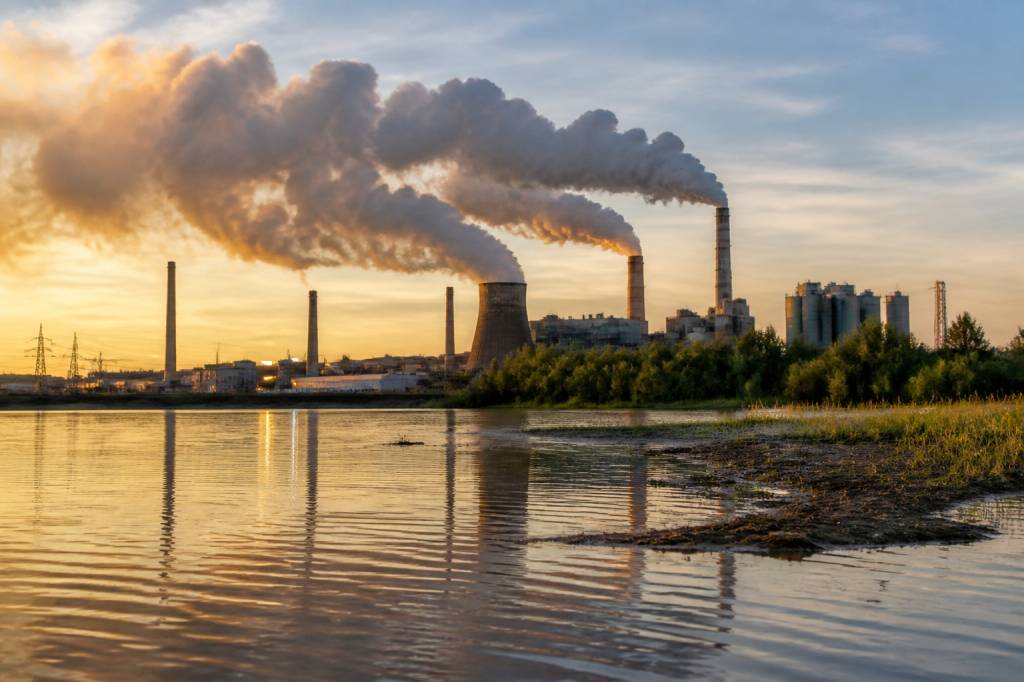
When people talk about water pollution, the conversation usually jumps straight to what is in the water: PFAS, heavy metals, nitrates, pathogens, microplastics. That matters. But there is another layer that is often ignored: the carbon footprint created by the systems used to clean, move, and treat that water.
That matters too. Water treatment is not carbon-neutral. From pumping groundwater to running high-pressure membranes and replacing spent filters, every stage can consume energy, materials, and chemicals. In other words, the same infrastructure designed to protect public health can also add to greenhouse gas emissions if it is poorly designed or inefficiently operated.
For environmental readers, this creates a difficult but important question: how do we reduce pollution in water without increasing pollution in the atmosphere? The answer is not simple, but the major emission sources are becoming clearer.
Why water pollution and carbon emissions belong in the same conversation
Water quality and climate impact are closely connected. A polluted source water supply often requires more intensive treatment, and more intensive treatment usually means more energy, more consumables, and more waste. If a river is heavily contaminated by agricultural runoff, industrial discharge, or PFAS, the treatment plant may need extra coagulation, advanced oxidation, activated carbon, reverse osmosis, or other energy-demanding processes to make the water safe.
This creates a carbon cost. In some cases, the carbon impact of treating polluted water can be significant enough that a utility must weigh water safety against emissions reduction. That does not mean treatment should be reduced. It means the system should be designed intelligently, with the full environmental footprint in mind.
The same logic applies to filtration systems used in homes, businesses, and industrial sites. A filter that performs well but is replaced too often, requires frequent shipping, or depends on high electricity input may have a larger carbon footprint than expected. The best system is not simply the one that removes the most contaminants. It is the one that does so efficiently, reliably, and with minimal lifecycle impact.
Main carbon emissions sources in water pollution control
Several stages in the water pollution and filtration chain contribute to emissions. Some are obvious, others less so.
- Electricity used for pumping, treatment, and distribution
- High-energy treatment methods such as reverse osmosis and advanced oxidation
- Production of filtration media, membranes, and replacement cartridges
- Transportation of chemicals, parts, and waste materials
- Sludge handling, membrane disposal, and incineration of contaminated waste
- Leakage and loss in aging water networks, which force more production and pumping
Each of these sources may look small in isolation. Together, they can make a substantial contribution to operational emissions. That is especially true in regions where water treatment depends on fossil-fuel-based electricity or where utilities must treat highly contaminated water with advanced technologies.
Energy use in pumping and distribution
Pumping is one of the biggest hidden emissions sources in water systems. Water does not move itself. It must be extracted, transported, pressurised, filtered, and delivered. Every step requires energy.
Groundwater extraction can be particularly energy-intensive when aquifers are deep or depleted. In drought-prone areas, utilities may need to pump from greater depths or move water over long distances. That means more electricity, more wear on equipment, and more emissions if the power grid is carbon-heavy.
Distribution is another major factor. Leaky pipes waste treated water and force utilities to treat and pump more than is actually delivered to consumers. It is one of the least glamorous parts of the water sector, but also one of the most important. Fixing leaks can reduce both water losses and carbon emissions at the same time. A rare two-for-one deal in environmental policy.
Advanced treatment technologies and their carbon cost
Not all water treatment systems are equal in terms of emissions. Conventional filtration methods may have a relatively modest energy profile, while advanced systems can require considerably more power.
Reverse osmosis, for example, is highly effective for removing dissolved contaminants, including many PFAS compounds. But it works by forcing water through a semipermeable membrane under high pressure. High pressure means high electricity demand. In large-scale applications, that energy use can become a major part of the plant’s carbon footprint.
Activated carbon systems, including granular activated carbon and powdered activated carbon, can be less energy-intensive to operate than pressure-based membrane systems, but they still have environmental costs. Producing activated carbon often involves high-temperature processing of raw materials such as coal, coconut shells, or wood. Transport, regeneration, and eventual disposal all add emissions.
Advanced oxidation processes, ultraviolet treatment combined with oxidants, and electrochemical treatment methods can also be power-hungry. These are valuable tools, especially when dealing with persistent contaminants or complex mixtures, but they should be deployed with a clear understanding of their lifecycle emissions.
The footprint of filtration media and replacement parts
People often think of filters as passive objects. In practice, they are part of a global supply chain.
Manufacturing a filter housing, membrane module, or carbon cartridge requires raw materials, processing energy, and transport. If a product is imported over long distances, the emissions from shipping become part of the equation. If replacement intervals are short, the footprint increases further.
For households using point-of-use systems, this can be especially relevant. A small under-sink filter might seem low-impact, but if cartridges are replaced every few months and each one is packaged in plastic, shipped internationally, and discarded after use, the cumulative footprint can be larger than expected.
This is why durability matters. A longer-lasting system with replaceable but efficient components is often better than a cheap unit that needs constant replacement. In environmental terms, “buying less often” is not just a consumer habit. It is emissions reduction.
Waste from saturated filters and contaminated media
Filtration does not make pollutants disappear. It transfers them from water into a solid medium that then needs to be managed safely.
This is especially important with PFAS. Once activated carbon, ion exchange resin, or a membrane has captured PFAS, the spent material becomes a waste stream that may be classified as contaminated. Depending on the handling method, this waste can be sent for regeneration, incineration, landfill, or specialised disposal.
Each route has carbon implications.
- Regeneration can reduce material demand but requires energy and transport
- Incineration can destroy some contaminants but may release emissions and requires strict controls
- Landfilling may be cheaper but can create long-term environmental risks
- Specialised disposal often involves additional logistics and processing energy
The climate question here is not separate from the pollution question. A treatment method that captures contaminants efficiently but creates an unsustainable waste burden may solve one problem by worsening another.
Industrial water pollution and embedded emissions
Carbon emissions linked to water pollution are not limited to treatment plants. Industrial wastewater can carry a high environmental cost from the start.
Manufacturing sectors that use solvents, fluorinated compounds, dyes, metals, or surfactants often require intensive effluent treatment before discharge. If the pollutant load is high, the treatment requirement rises. That can mean more chemicals, more sludge, more heating, more separation, and more electricity.
PFAS-related contamination is a good example. Industrial sites, fire training areas, and manufacturing facilities can release persistent compounds that remain in the environment for decades. Because PFAS are so resistant to breakdown, the treatment response often relies on energy-intensive or material-intensive methods. The result is a double burden: long-lived pollution in water and additional emissions from the effort to remove it.
This is why pollution prevention remains one of the most climate-friendly strategies available. If contaminants never enter the wastewater stream, the need for downstream energy-intensive treatment is reduced. The cleanest water is often the water that was never contaminated in the first place.
How filtration systems can reduce emissions, not just contaminants
There is good news here. Water filtration does not have to be an emissions problem. In many cases, the right system can lower both contamination risks and environmental impact.
Efficiency starts with matching the technology to the contamination profile. Using reverse osmosis for a problem that could be solved with a lower-energy option is wasteful. Using a simple filter where a more robust barrier is needed is ineffective. The point is not to use the “greenest sounding” option. It is to use the right option.
Some practical ways filtration systems can lower carbon emissions include:
- Using targeted treatment instead of over-treating entire water streams
- Choosing systems with long service life and lower replacement frequency
- Regenerating or recycling filtration media where feasible
- Reducing backwashing and maintenance inefficiencies
- Pairing treatment plants with low-carbon electricity sources
- Monitoring water quality closely to avoid unnecessary treatment steps
Monitoring is especially important. A system that treats water based on real-time contamination data can avoid excessive energy use. If contaminant levels drop, treatment intensity can sometimes be reduced. If they rise, the system can respond quickly. That is smarter both environmentally and financially.
Lifecycle thinking: the part that often gets missed
One of the most useful concepts in this discussion is lifecycle assessment. Instead of focusing only on emissions during operation, lifecycle thinking considers the full chain: raw material extraction, manufacturing, transport, installation, use, maintenance, and disposal.
This approach often changes the picture. A system that looks efficient on paper may have a high embodied carbon footprint because of the materials used to manufacture it. Another system may be slightly more energy-intensive during operation but last much longer and generate less waste overall.
For water utilities, regulators, and procurement teams, this matters. Choosing filtration technology based only on contaminant removal performance can be shortsighted. The more complete question is: how much pollution does this system remove, and at what carbon cost?
What utilities and consumers can do now
The path forward is not to stop treating water. That would be absurd, and dangerous. The goal is to make treatment cleaner, smarter, and more accountable.
For utilities and operators, that means investing in energy-efficient pumps, reducing leakage, improving process control, and selecting treatment technologies based on both contaminant profile and carbon intensity. It also means tracking emissions with the same seriousness used for water quality compliance.
For businesses, it means assessing whether water treatment systems are oversized, underused, or based on outdated assumptions. It also means asking suppliers for lifecycle data, replacement schedules, and disposal options.
For households, the most practical steps are simpler:
- Choose filtration systems suited to the actual water issue
- Replace cartridges on schedule, not too early and not too late
- Look for durable systems with transparent performance data
- Dispose of used filters according to local guidance
- Support policies that reduce pollution at the source
That last point is crucial. Carbon emissions linked to water pollution are not just a treatment problem. They are a prevention problem. The less contamination we create, the less energy we need to spend cleaning it up.
The bigger picture for water, climate, and PFAS
Water pollution is often discussed as a health issue, and rightly so. But it is also a climate issue. The technologies used to remove contaminants like PFAS, metals, and industrial chemicals can be energy-intensive and material-heavy. If we ignore that reality, we risk solving one environmental problem while quietly intensifying another.
The best strategy is integrated thinking. Prevent pollution where possible. Treat water efficiently where necessary. Design filtration systems with lifecycle emissions in mind. And measure success not only by what comes out of the tap, but by the environmental cost of getting it there.
That is the challenge, and also the opportunity. Cleaner water should not require a dirtier planet.