

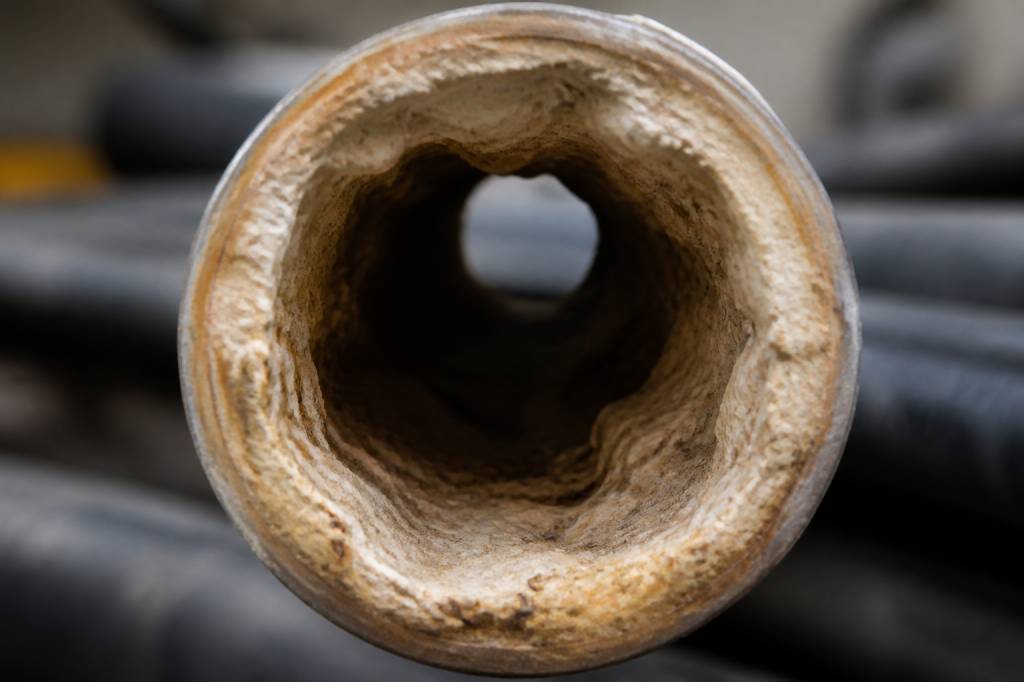
When people talk about “scale” in water systems, they usually mean one thing: mineral deposits that slowly coat pipes, heaters, kettles, membranes, and fixtures. But water chemistry is rarely that simple. In many systems, the real story is a balance between alkaline scale formation and acidic corrosion — two opposite processes that can damage infrastructure, reduce efficiency, and affect water quality in very different ways.
If you’ve ever seen a white crust on a kettle element, cloudy spots on glassware, or stubborn deposits inside a boiler, you’ve seen the visible side of scaling. What you don’t see is the cost: higher energy use, shorter equipment lifespan, more maintenance, and in some cases, conditions that make water treatment less reliable.
Understanding alkaline and acid scale starts with understanding pH, hardness, alkalinity, and how these factors interact. The good news? Once you know what causes these problems, there are practical treatment solutions that can significantly reduce risk.
What is alkaline scale, and why does it form?
Alkaline scale is a hard deposit that forms when dissolved minerals in water precipitate out and stick to surfaces. It is most commonly associated with hard water, especially when calcium and magnesium are present at elevated levels. Under alkaline conditions, these minerals are more likely to form insoluble compounds such as calcium carbonate, which is the classic “limescale” found in domestic and industrial systems.
The chemistry is straightforward, but the outcome can be frustrating. When water is heated, carbon dioxide is driven off, the equilibrium shifts, and calcium carbonate becomes less soluble. The result is precipitation. Add high pH, high alkalinity, and heat, and you have the perfect recipe for scale.
Common places where alkaline scale appears include:
In industrial systems, even a thin layer of scale can matter. A deposit just a few millimetres thick can reduce heat transfer efficiency enough to increase energy consumption noticeably. In other words, scale is not just an aesthetic issue — it is a performance issue.
What causes alkaline scaling in water systems?
Several water chemistry factors influence whether scale will form. The most important are hardness, alkalinity, pH, temperature, and concentration. When these variables move in the wrong direction at the same time, the risk rises quickly.
Hardness refers mainly to dissolved calcium and magnesium. The more of these minerals present, the greater the potential for scale.
Alkalinity is the water’s ability to neutralize acid, usually linked to bicarbonates, carbonates, and hydroxides. High alkalinity supports the formation of carbonate scale.
High pH encourages precipitation of minerals, especially calcium carbonate and magnesium hydroxide. In practical terms, alkaline water can be more scale-forming than neutral water.
Temperature matters because heating water often lowers the solubility of calcium carbonate. This is why kettles and boilers are frequent victims.
Evaporation and concentration also play a role. As water evaporates in cooling towers or recirculating systems, dissolved minerals become more concentrated, increasing the chance of deposition.
A useful way to think about it is this: scale forms when water is no longer able to “hold onto” its dissolved minerals. Once the balance tips, minerals leave solution and cling to the nearest surface.
How acid scale differs from alkaline scale
The phrase “acid scale” can be confusing because acidic water is more often associated with corrosion than with mineral scale. But in practice, acid-related deposits can still form in systems where aggressive water chemistry mobilizes metals, degrades protective layers, or causes insoluble residues to accumulate.
Unlike alkaline scale, which is usually calcium- and magnesium-based, acid-related deposits may involve corroded iron, copper, or other metal compounds. These can create rust-coloured sludge, bluish-green staining, or deposits that appear after acidic water has attacked plumbing surfaces.
Acidic water does not typically create hard carbonate scale. Instead, it tends to:
This distinction matters because the treatment approach is different. If the problem is true alkaline scaling, you need scale prevention or removal strategies. If the issue is acidic corrosion, you need pH correction and corrosion control. Treating one as the other often leads to expensive guesswork.
What are the risks of scale in water treatment and plumbing?
Scale may start small, but it rarely stays that way. Over time, deposits build up, narrow pipe diameters, reduce flow, and make equipment work harder. In commercial and industrial systems, this can have real operational consequences.
Key risks include:
There is also an indirect health and safety angle. In building water systems, scaling can interfere with disinfection, harbour microbial growth in biofilms, and compromise the reliability of temperature-controlled systems. In hospitals, schools, food processing plants, and public facilities, that is not a trivial concern.
How to identify a scale problem early
One of the most effective ways to manage scale is to catch it before it becomes severe. Early warning signs are usually easy to spot if you know what to look for.
Signs of alkaline scale include:
Signs of acid-related corrosion or deposit formation include:
Water testing is the most reliable way to confirm the cause. A proper analysis should include pH, hardness, alkalinity, conductivity, dissolved minerals, and, where relevant, dissolved metals. Without testing, treatment can become little more than educated guesswork with a budget.
Water treatment solutions for alkaline scale
There is no single universal fix, because the right treatment depends on the water chemistry, system type, and scale severity. Still, several proven approaches are widely used.
Water softening is one of the most common solutions for hard water scale. Ion exchange softeners replace calcium and magnesium ions with sodium or potassium ions, reducing the mineral content that drives scale formation. This is especially effective in domestic and light commercial settings.
pH adjustment can be useful in systems where high pH is a major contributor to scale. Carefully lowering pH may improve mineral solubility, but this must be done with precision. Overcorrecting can shift the problem toward corrosion.
Antiscalant dosing is common in industrial water treatment, particularly in reverse osmosis systems and cooling towers. Antiscalants interfere with crystal growth, helping keep minerals in solution for longer.
Reverse osmosis pre-treatment may include softening, antiscalants, and filtration. Because membranes are highly vulnerable to fouling, scale prevention is essential.
Regular descaling remains important where deposits already exist. Mechanical cleaning, acid-based descalers, and system flushing can remove buildup, though the method must be matched to the equipment and materials involved.
Blended treatment strategies often work best. For example, a business might combine softening with routine monitoring and a maintenance plan. In water treatment, “set it and forget it” is usually a fantasy.
Treatment options for acid-related corrosion and deposits
If the main issue is acidic water, the priority is not softening alone. You need to stabilise the water so it stops attacking pipes and fittings.
Useful approaches include:
It is worth noting that corrosion control is a balancing act. Water that is too acidic can damage infrastructure, while water that is overly alkaline can encourage scaling. The goal is stable, non-aggressive chemistry, not extremes in either direction.
Why regular monitoring matters more than one-off treatment
Water chemistry changes over time. Seasonal shifts, source water changes, plumbing upgrades, and equipment demand can all alter the balance. A treatment strategy that works beautifully in January might be less effective by summer.
That is why monitoring is central to scale control. For most systems, routine checks should include:
For industrial operations, more advanced monitoring can include scale indices, membrane performance data, and corrosion probes. The point is not to collect numbers for the sake of it. The point is to spot drift before drift becomes damage.
A simple example: a building manager notices that a hot water system is taking longer to heat and energy bills are creeping up. A test reveals increasing hardness and rising pH after a change in water supply. Catching that shift early allows treatment adjustment before scale becomes a costly maintenance problem.
Choosing the right solution for your system
The best treatment depends on the problem you actually have. That sounds obvious, but many systems are treated too broadly or too late. A good diagnosis saves time, money, and frustration.
Ask these questions first:
For homes, softeners or point-of-use scale prevention can be enough. For commercial buildings, centralised treatment and monitoring may be more appropriate. For industrial plants, the answer often involves a tailored combination of pretreatment, chemical dosing, and ongoing control.
If you are uncertain, lab testing and expert water treatment advice are well worth the investment. A few targeted tests can prevent a great deal of expensive trial and error.
What a practical scale control strategy looks like
In real-world settings, successful scale control usually follows a few simple principles:
That approach is especially important in water systems where treatment performance, energy efficiency, and water quality are closely linked. A small chemistry imbalance can cascade into bigger operational problems if ignored.
And while no water system is immune to mineral deposits, many are far more manageable than they first appear. In most cases, scale is not a mystery. It is a signal — one that tells you the water chemistry needs attention.
By understanding the difference between alkaline scaling and acid-driven corrosion, you can choose the right treatment, protect equipment, and keep water systems running efficiently for longer.