

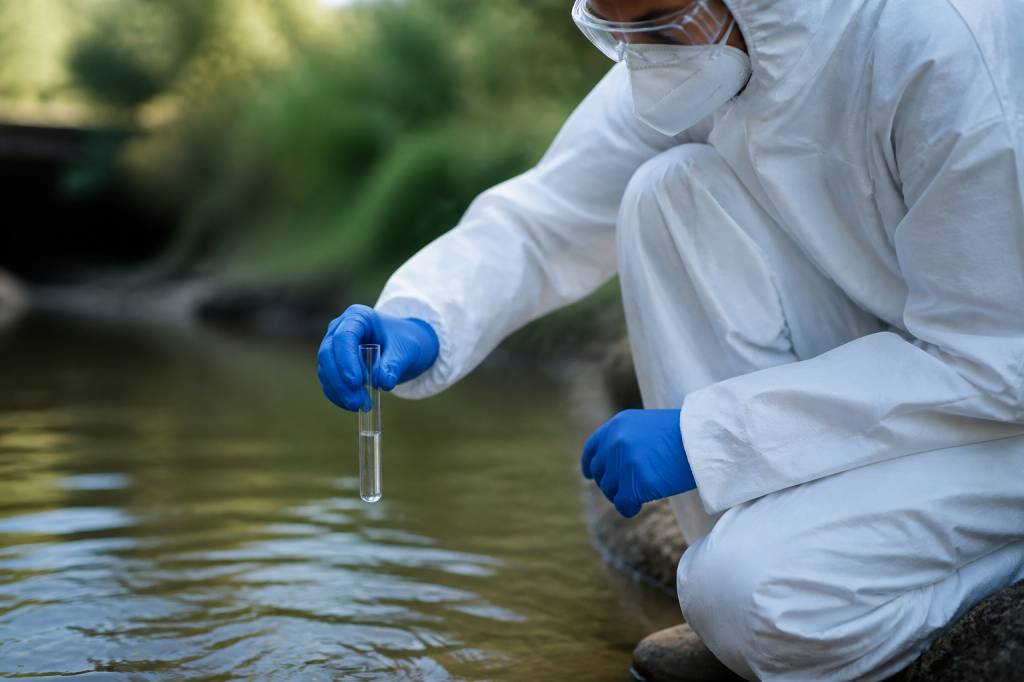
“PFA chemical” is a phrase people increasingly encounter when searching for information about persistent fluorinated substances. But it can refer to two very different things: PFAS, the large family of per- and polyfluoroalkyl substances linked to environmental and health concerns, or PFA, a specific fluoropolymer used in industrial equipment and laboratory applications.
The distinction matters. A PFA fluoropolymer is not the same as the PFAS compounds commonly detected in drinking water, food packaging and human blood. Both involve carbon–fluorine chemistry, but their properties, uses and exposure pathways are different.
What does PFA mean?
PFA usually stands for perfluoroalkoxy alkane, also called perfluoroalkoxy polymer. It is a fluoropolymer: a high-performance plastic made by combining carbon atoms with fluorine atoms and other chemical groups.
Like other fluoropolymers, PFA is valued for its resistance to:
- High temperatures
- Strong acids and bases
- Solvents and other aggressive chemicals
- Corrosion
- Sticking and surface friction
PFA is often described as a melt-processable alternative to PTFE, better known by the brand name Teflon. In simple terms, it shares many of PTFE’s chemical-resistant properties but can be processed using conventional plastic-manufacturing techniques.
This makes PFA useful in demanding environments where ordinary plastics would degrade quickly. It may be formed into tubing, pipes, valves, bottles, linings, laboratory vessels and components for semiconductor manufacturing.
PFA and PFAS: why the terms are confused
The confusion comes from the names. PFA is a specific fluoropolymer, while PFAS stands for per- and polyfluoroalkyl substances, a broad group containing thousands of human-made chemicals.
PFAS are defined by their carbon–fluorine structures. This bond is one of the strongest in organic chemistry, which helps explain why many PFAS resist heat, water, oil and chemical reactions. It also explains why some of them persist in the environment for years or even decades.
PFA belongs to the wider world of fluorinated polymers, but it should not automatically be treated as equivalent to soluble PFAS such as:
- Perfluorooctanoic acid, or PFOA
- Perfluorooctanesulfonic acid, or PFOS
- Perfluorohexanesulfonic acid, or PFHxS
- Perfluorononanoic acid, or PFNA
- Perfluorobutanoic acid, or PFBA
These smaller PFAS can move through water, soil and living organisms. PFA, by contrast, is a stable polymeric material. Under normal conditions, it generally does not behave like a small, mobile PFAS molecule.
That does not mean every fluoropolymer product is risk-free. Manufacturing, overheating, degradation, disposal and contamination with processing chemicals all need to be considered. The precise product, its additives and the conditions in which it is used are important.
Where is PFA used?
PFA is selected when a material must withstand extreme chemical or thermal conditions. Its applications are particularly common in industries where contamination could damage products or compromise safety.
Laboratories and research facilities
Laboratory containers, sample bottles, tubing and reaction vessels may be made from PFA because the material is chemically inert and relatively easy to clean. This is useful when researchers are analysing trace levels of metals, organic compounds or PFAS themselves. A container that leaches chemicals into a sample could distort the results, so material selection is critical.
Semiconductor manufacturing
Semiconductor production requires extremely pure chemicals and ultrapure water. PFA tubing, valves and tanks are used in parts of the manufacturing process because they can resist aggressive chemicals while minimising contamination.
Chemical processing
Industrial facilities may use PFA-lined pipes, pumps and vessels to handle corrosive substances. The fluoropolymer acts as a protective barrier between the chemical and the underlying equipment.
Pharmaceutical and biotechnology manufacturing
Some pharmaceutical and biotechnology processes use PFA components where chemical resistance and low contamination are priorities. However, materials must still be assessed for suitability, sterilisation requirements and potential extractables.
Food and drinking-water equipment
In certain specialised applications, fluoropolymer components may come into contact with food, beverages or water. Regulatory approval depends on the exact material, manufacturing process, intended temperature and duration of contact. “Fluoropolymer” is not, by itself, a substitute for product-specific safety testing.
How are PFAS released into the environment?
When people discuss “harmful PFAS,” they are usually referring to individual compounds or mixtures that can escape during production, use or disposal. Releases may occur through:
- Industrial emissions and wastewater discharges
- Firefighting foams used at airports, military sites and industrial facilities
- Landfill leachate
- Wastewater treatment plant discharges
- Contaminated biosolids applied to agricultural land
- Weathering of consumer products and industrial materials
- Releases from contaminated soil and groundwater
PFAS contamination can travel considerable distances. Some compounds move readily through groundwater and can reach drinking-water sources. Others attach to soil or sediment, where they may remain for long periods before being transported elsewhere.
Short-chain PFAS are often more mobile in water than long-chain compounds. They may be less likely to accumulate in human tissue, but their greater mobility can make them difficult to remove from contaminated water. In environmental chemistry, reducing bioaccumulation does not necessarily make a contaminant easy to manage.
What are the health risks associated with PFAS?
Health effects depend on the specific PFAS, the amount and duration of exposure, the route of exposure and individual factors such as age and overall health. Scientists continue to investigate many compounds, and the evidence is stronger for some PFAS than for others.
Research on better-studied compounds, particularly PFOA and PFOS, has associated exposure with several potential health effects:
- Changes in cholesterol levels
- Reduced antibody response to some vaccinations
- Effects on liver enzymes
- Changes in immune-system function
- Pregnancy-related effects, including reduced birth weight
- Developmental effects
- Increased risk of certain cancers for specific compounds and exposure patterns
The International Agency for Research on Cancer has classified PFOA as carcinogenic to humans and PFOS as possibly carcinogenic to humans. These classifications describe the strength of evidence that a substance can cause cancer; they do not predict the risk faced by every individual at every exposure level.
The US Agency for Toxic Substances and Disease Registry has also reported associations between PFAS exposure and effects involving the immune, cardiovascular, developmental and endocrine systems. Regulatory agencies continue to update their assessments as new studies become available.
One important point is that PFAS are not all interchangeable. A finding related to PFOA cannot automatically be applied to every fluorinated substance. At the same time, the lack of extensive data for a newer PFAS does not prove that it is harmless. This is one reason regulators are increasingly considering groups of PFAS rather than regulating only one compound at a time.
How can people be exposed?
For most people, exposure can occur through a combination of drinking water, food, household dust and consumer products. The relative importance of each pathway varies by location and lifestyle.
Drinking water can be a major source for communities near airports, military facilities, industrial sites or areas where PFAS-containing firefighting foam was used. Private wells are a particular concern because they may not be routinely monitored.
Food can become contaminated through packaging, processing equipment, contaminated soil or polluted water. Fish caught in contaminated rivers and lakes may contain PFAS, although concentrations vary widely between species and locations.
Indoor dust can contain chemicals released from treated textiles, carpets, furniture and other consumer goods. Young children may have higher exposure through hand-to-mouth behaviour.
Consumer products can include some stain-resistant fabrics, grease-resistant food packaging, outdoor clothing and specialised industrial materials. Regulations have restricted or phased out several historically important PFAS, but replacement chemicals and legacy contamination remain issues.
Does PFA itself pose a health risk?
It is important not to overstate the evidence. Solid PFA fluoropolymer is generally considered chemically stable during its intended use. It is not expected to dissolve in water in the same way as PFOA or PFOS, and normal contact with a finished PFA component is not equivalent to drinking PFAS-contaminated water.
Potential concerns arise under specific circumstances:
- Manufacturing may involve processing aids or other PFAS that can be released into wastewater or the workplace.
- Extreme overheating can cause fluoropolymer decomposition and hazardous fumes.
- Improper disposal may contribute to long-term environmental waste problems.
- Products may contain additives, residues or contamination not evident from the polymer name alone.
- Small particles or degradation products may require further assessment, particularly in occupational settings.
Anyone working with PFA at high temperatures or in industrial processing should follow the manufacturer’s safety data, ventilation requirements and workplace exposure controls. Heating fluoropolymer-coated equipment beyond its recommended operating range is not a harmless experiment. The fumes can be dangerous, even if the material is stable under normal conditions.
How are PFAS removed from drinking water?
Conventional drinking-water treatment is not always designed to remove PFAS. Boiling water does not destroy these chemicals and may increase their concentration as water evaporates.
Technologies that can reduce PFAS levels include:
- Granular activated carbon: Often effective, particularly for longer-chain PFAS, but performance depends on the carbon type, water chemistry and replacement schedule.
- Ion-exchange resins: Can target a range of PFAS and are used in some municipal and industrial systems.
- Reverse osmosis: Uses a semi-permeable membrane to remove many PFAS, although it produces a concentrated waste stream and requires maintenance.
- High-pressure membrane systems: May achieve significant removal but can be energy-intensive.
Household filters can help, but only when they are independently tested and correctly maintained. Look for certification or performance data that specifically covers PFAS reduction. A filter marketed as improving taste or reducing chlorine is not necessarily designed to remove PFAS.
For private well owners, testing is the first practical step. Contact an accredited laboratory and check local guidance on sampling, because PFAS can contaminate bottles, tubing and handling materials used during collection. If contamination is found, treatment should be selected according to the compounds present, their concentrations and the household’s water demand.
What is changing in PFAS regulation?
Regulation is developing rapidly because PFAS contamination is widespread, persistent and difficult to reverse. In the United Kingdom, drinking-water standards and monitoring requirements are shaped by national legislation, guidance from the Drinking Water Inspectorate and wider international scientific assessments.
The European Union has also considered broad restrictions on PFAS under the REACH framework. In the United States, the Environmental Protection Agency has introduced enforceable limits for several PFAS in public drinking water and continues to develop reporting and cleanup requirements.
These measures reflect a shift away from asking only whether a single chemical is safe at a particular concentration. Regulators are increasingly examining total PFAS exposure, essential uses, safer alternatives and the entire life cycle of fluorinated products.
For businesses, compliance involves more than checking a supplier’s product label. Organisations may need to map PFAS use, review wastewater and waste streams, assess fire-suppression systems, test materials and keep documentation on restricted substances. For consumers, the most useful questions are equally practical: What exactly is in the product? Is the claim independently verified? And what happens to it at the end of its useful life?
The key message about “PFA chemicals”
PFA and PFAS are related terms, but they do not mean the same thing. PFA is a durable fluoropolymer used for its resistance to heat and chemicals. PFAS describes a broad family of fluorinated substances, some of which can persist in the environment, accumulate in people and affect health.
The greatest public-health concern usually involves mobile, bioavailable PFAS released into water, soil, air or food—not ordinary contact with an intact PFA component used within its design limits. Nevertheless, responsible manufacturing, safe handling, appropriate disposal and independent testing remain essential.
Understanding the chemistry is the first step. The next is identifying the specific substance, measuring real-world exposure and choosing controls that address the source rather than simply moving contamination from one place to another.