

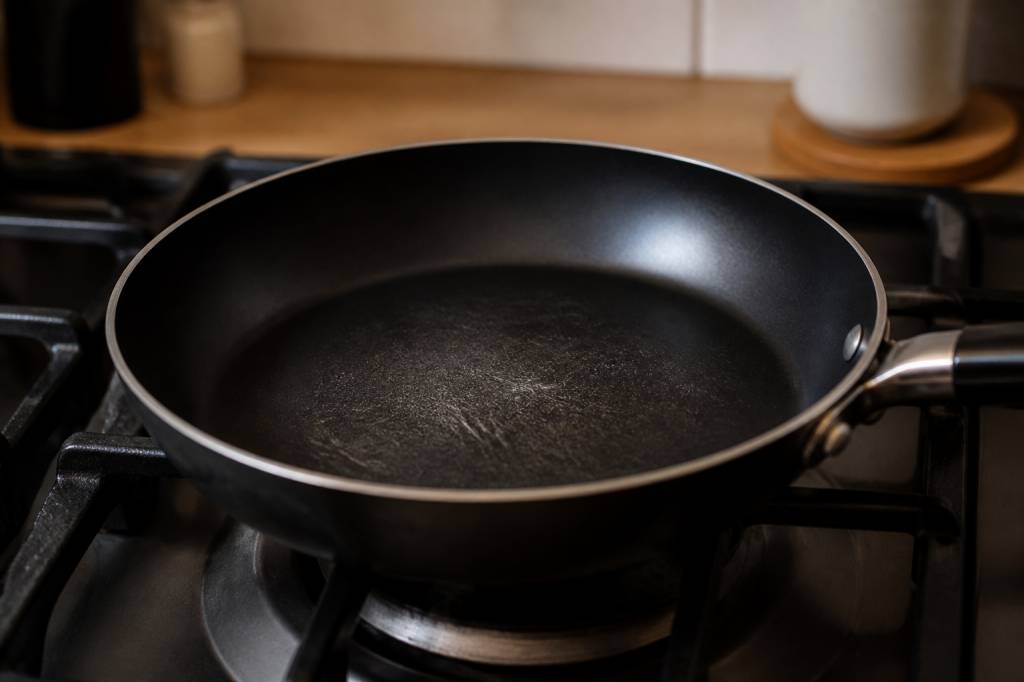
Non-stick pans make cooking easier: less oil, fewer stuck-on ingredients and faster clean-up. But growing concern about “forever chemicals” has made many consumers question what their cookware is made of—and whether a smooth, slippery coating could pose a risk to human health or the environment.
The short answer is not as simple as “all non-stick pans are dangerous”. Most concerns relate to the wider group of chemicals known as PFAS, how non-stick coatings are manufactured, what happens when cookware is overheated, and how products are discarded. Understanding those distinctions can help consumers make informed choices without unnecessary alarm.
What are PFAS?
PFAS, or per- and polyfluoroalkyl substances, are a large family of synthetic chemicals. There are thousands of individual PFAS compounds, and they have been used since the middle of the twentieth century because they resist heat, oil, water and chemical degradation.
These properties make PFAS useful in products ranging from firefighting foams and waterproof textiles to food packaging and industrial equipment. They also explain why PFAS are often called “forever chemicals”: many persist in the environment for years or decades, while some can remain in the human body for extended periods.
Research has associated exposure to certain well-studied PFAS, including PFOA and PFOS, with effects such as increased cholesterol, reduced vaccine response and developmental or immune-system concerns. The strength of the evidence varies by compound and outcome, but public health agencies agree that reducing unnecessary exposure is sensible.
It is important, however, to distinguish between different PFAS. A chemical used historically during the manufacture of a coating is not necessarily present in the same form in a finished pan. “PFAS-free” and “PFOA-free” are also not interchangeable claims.
Why are PFAS associated with non-stick pans?
Traditional non-stick cookware is commonly coated with polytetrafluoroethylene, or PTFE. You may recognise PTFE by the brand name Teflon, although Teflon is a trademark and not a generic term for every non-stick product.
PTFE is a fluoropolymer made from carbon and fluorine atoms. Chemically, it belongs to the broader PFAS family under some regulatory and scientific definitions. Its highly stable structure gives it the low-friction, non-stick properties consumers expect.
Historically, PFOA was used as a processing aid in the manufacture of some fluoropolymer coatings. PFOA has since been phased out or heavily restricted in many countries because of its persistence and toxicity profile. Modern products may be labelled “PFOA-free”, but that label only addresses one chemical. It does not automatically mean the product contains no fluorinated substances.
Some manufacturers now offer cookware described as “PFAS-free” or “fluoropolymer-free”. These claims can be useful, but terminology is not always consistent. Consumers should check the manufacturer’s definition and look for independent certification where available.
Are non-stick pans dangerous during normal use?
When a modern PTFE-coated pan is used correctly and the coating is intact, exposure from the pan itself is generally considered low. PTFE is a stable material at ordinary cooking temperatures, and small particles accidentally swallowed from a scratched coating are not expected to be absorbed significantly by the body.
That does not mean cookware should be treated carelessly. The main household concern is overheating.
Empty pans can heat up very quickly, particularly on a powerful hob. At sufficiently high temperatures, PTFE can begin to degrade and release fumes. The exact temperature depends on the pan, the heat source and how long the pan is heated, but degradation becomes a concern at temperatures well above typical simmering or frying conditions.
At extreme temperatures, fumes from overheated fluoropolymer coatings can cause temporary flu-like symptoms in people, sometimes referred to as “polymer fume fever”. Birds are especially sensitive to these fumes; even a small overheated pan can be dangerous or fatal to pet birds because of their highly efficient respiratory systems.
The practical message is straightforward: do not preheat a non-stick pan while it is empty, avoid very high heat and ventilate the kitchen when cooking. If a pan has been accidentally overheated and produces smoke or fumes, turn off the heat, leave the area and ventilate it. Do not add water to a dangerously hot pan, as this can create splattering and burns.
Does a scratched pan release PFAS into food?
Scratches are a sign that a pan should be replaced, but they do not necessarily mean that a large dose of PFAS has entered your meal. The coating may shed small flakes when damaged, and those particles are generally considered unlikely to pass through the intestinal wall in significant amounts.
Nevertheless, a badly worn surface is no longer performing as intended. A damaged coating can make food stick, expose the underlying metal and increase the risk of overheating. Scratches may also be difficult to clean properly, particularly around raised or peeling edges.
To extend the life of a non-stick pan:
- Use wooden, silicone or plastic utensils rather than metal tools.
- Wash the pan with a soft sponge instead of abrasive scouring pads.
- Avoid stacking pans directly on top of one another unless you use protective layers.
- Do not cut food inside the pan.
- Replace cookware when the coating is visibly peeling, blistering or extensively scratched.
A single minor mark is not a reason to panic. A surface that is flaking across the cooking area is a clear signal that replacement is sensible.
The environmental problem starts before the pan reaches your kitchen
For many PFAS experts, the largest concern is not occasional use of an intact pan. It is the life cycle of fluorinated chemicals: their manufacture, industrial emissions, waste handling and persistence after release.
PFAS pollution has been detected in soil, rivers, groundwater and sediments around industrial sites, airports, military facilities and locations where firefighting foams were used. Once contamination reaches drinking-water sources, removing it can be technically difficult and expensive. Activated carbon, ion exchange and high-pressure membrane systems can reduce PFAS concentrations, but treatment produces concentrated waste streams that must also be managed.
Cookware is only one small part of this wider issue. A single household pan is unlikely to be the main source of PFAS contamination in a local water supply. However, millions of fluorinated products contribute to demand for persistent chemicals, and poorly managed waste can create long-term environmental challenges.
Non-stick pans should not normally be placed in household recycling. Their coatings and mixed-material construction can interfere with metal recycling processes. Check your local council or waste authority for disposal guidance. Some recycling centres accept scrap metal cookware, while others require it to go into general waste.
What about “PFOA-free” and “PFAS-free” labels?
Marketing language can be confusing. “PFOA-free” usually means that PFOA was not intentionally used, or is below a specified detection limit. It does not necessarily mean that the pan is free from PTFE or other fluorinated compounds.
“PFOS-free” is similarly narrow. Both PFOA and PFOS have received extensive regulatory attention, but they are only two members of a much larger chemical family.
A “PFAS-free” claim should ideally explain whether it excludes:
- All intentionally added PFAS.
- Fluoropolymers such as PTFE.
- Processing aids and residual chemicals.
- Only selected substances, such as PFOA and PFOS.
If the information is unclear, contact the manufacturer or choose a product with transparent material specifications. Independent certification can provide additional reassurance, although no label replaces careful reading of the manufacturer’s documentation.
PFAS-free alternatives to traditional non-stick cookware
Consumers who want to avoid fluoropolymer coatings have several options. Each material has advantages and limitations, so the best choice depends on cooking habits and maintenance preferences.
- Stainless steel: Durable, widely recyclable and free from synthetic non-stick coatings. Food may stick if the pan is not preheated correctly or if insufficient oil is used.
- Cast iron: Long-lasting and naturally capable of developing a low-stick seasoned surface. It is heavy and requires drying and occasional oiling to prevent rust.
- Carbon steel: Lighter than cast iron and suitable for high-heat cooking once seasoned. Acidic foods can affect the seasoning, especially in newer pans.
- Glass or ceramic cookware: Useful for particular cooking methods, although ceramic-coated pans vary considerably in durability. “Ceramic” does not always mean completely free from fluorinated coatings, so check the product specification.
- Enamelled cookware: A durable option for pots and some pans, provided the enamel remains intact and is used according to the manufacturer’s instructions.
Be cautious with the phrase “ceramic non-stick”. Some products use a ceramic-like coating rather than solid ceramic, and formulations differ between manufacturers. The material description should be specific about whether PTFE or other PFAS are present.
How to reduce exposure in everyday cooking
For people who already own non-stick cookware, replacing every pan immediately is not necessarily required. A measured approach can reduce potential exposure and avoid unnecessary waste.
- Reserve non-stick pans for low- or medium-heat cooking.
- Never leave an empty pan heating unattended.
- Use extraction ventilation or open a window when practical.
- Keep birds away from the kitchen during cooking and especially during any overheating incident.
- Replace pans with significant damage or peeling.
- Follow the manufacturer’s temperature and cleaning instructions.
- Choose stainless steel, cast iron or another alternative for high-temperature searing.
It is also worth remembering that dietary exposure to PFAS can come from multiple sources, including contaminated drinking water and food packaging. If you live near a known contaminated site, consult local water-quality information and public health guidance rather than focusing only on cookware.
What regulations mean for consumers
Regulation of PFAS is evolving. Authorities in the UK, the European Union and elsewhere are assessing groups of PFAS rather than regulating only one chemical at a time. Restrictions may affect manufacturing, imports, food-contact materials, waste and environmental releases.
These measures reflect a central difficulty: replacing one restricted PFAS with a similar compound may not solve the underlying persistence problem. Effective policy needs transparency across the supply chain, reliable testing and safer alternatives that do not simply shift the risk elsewhere.
Consumers should be wary of claims that suggest a product is completely “chemical-free”. Every manufactured material is made from chemicals. The more useful questions are: which substances are present, how stable are they during intended use, what evidence supports their safety and what happens when the product becomes waste?
A practical way to assess your next pan
Before buying, consider how you cook. If you regularly use very high heat, a well-made stainless-steel, cast-iron or carbon-steel pan may be a more suitable choice than PTFE-coated cookware. If you want an easy-release surface for eggs or delicate fish, look for a clearly documented PFAS-free alternative and understand that its coating may have a shorter lifespan.
Check the product’s care instructions, material description and warranty. Avoid relying solely on prominent front-of-pack language such as “green”, “healthy” or “non-toxic”. A credible manufacturer should be able to explain what “free from” means and identify the coating technology used.
Non-stick pans are not automatically a household health emergency. Used at moderate temperatures, kept in good condition and replaced when damaged, modern cookware presents a different risk profile from the industrial PFAS contamination affecting some communities. At the same time, the persistence of PFAS means that manufacturing decisions and disposal practices deserve serious attention.
The most sensible approach is informed, not fearful: avoid overheating, question vague labels, choose alternatives where they suit your cooking and support stronger controls on persistent chemicals throughout the product life cycle.