

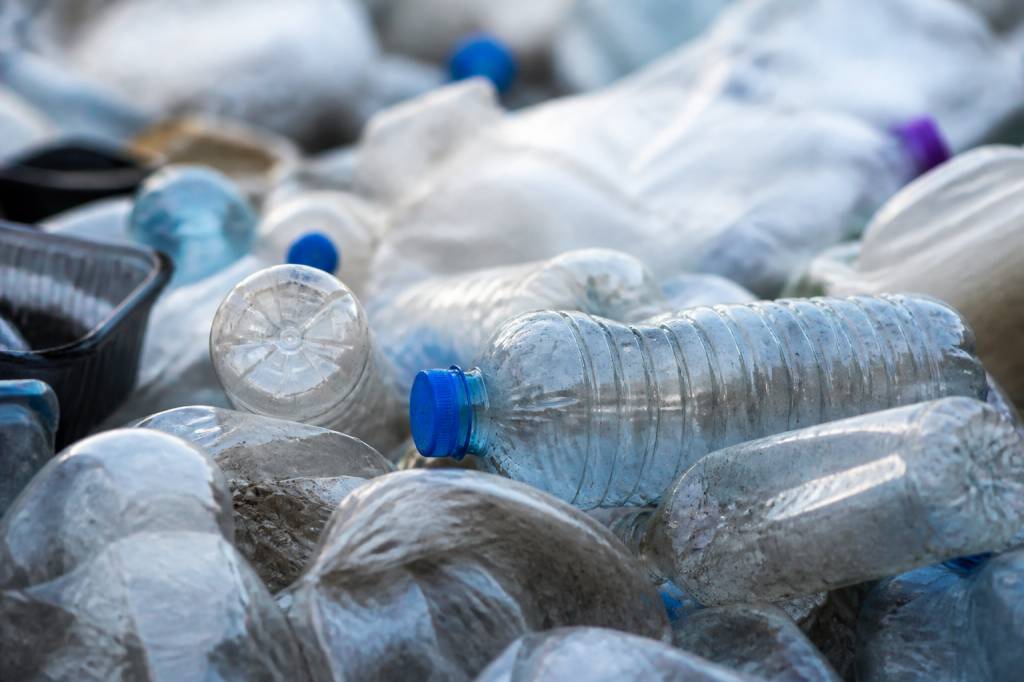
Plastic is often treated as a single material. It is not. Different plastics contain different polymers, additives, coatings and processing chemicals—and some of these substances belong to the large family of per- and polyfluoroalkyl substances, better known as PFAS.
PFAS plastic has attracted growing attention because it can combine two persistent environmental problems: the long lifespan of plastic and the exceptional chemical stability of fluorinated compounds. But what exactly does “PFAS plastic” mean? Can PFAS migrate from plastic into drinking water? And what does this mean for human health?
The answers are more nuanced than a simple “plastic is dangerous” message. Some fluorinated plastics are relatively stable and are used precisely because they resist heat, chemicals and water. Other PFAS may be present as processing aids, surface treatments or impurities, with a greater potential to escape into the environment.
Understanding that distinction is essential for making sensible decisions about water quality, consumer products and pollution control.
What is PFAS plastic?
PFAS refers to a very large group of synthetic chemicals containing carbon-fluorine bonds. These bonds are among the strongest in organic chemistry, which helps explain why many PFAS resist heat, oil, water and degradation.
The term “PFAS plastic” can describe several different situations:
- Fluoropolymers, such as polytetrafluoroethylene (PTFE), used in non-stick coatings, seals, membranes and industrial equipment.
- Plastic products treated with a PFAS-based coating to make them grease-resistant, waterproof or stain-resistant.
- Plastic manufacturing processes that use PFAS as processing aids or surfactants.
- Plastic waste or industrial materials that contain PFAS and can release them during use, disposal or recycling.
These categories matter because not all PFAS behave in the same way. A high-molecular-weight fluoropolymer embedded in a solid component is not automatically equivalent to a small, mobile compound such as perfluorooctanoic acid (PFOA) or perfluorooctanesulfonic acid (PFOS).
However, “contained in plastic” does not necessarily mean “environmentally irrelevant”. Manufacturing residues, breakdown products, low-molecular-weight fractions and surface treatments may be more mobile than the main polymer itself.
Why are fluorinated plastics used?
Fluorinated materials offer properties that ordinary plastics cannot always provide. They can tolerate aggressive chemicals, high temperatures and intense mechanical stress. This makes them useful in applications where failure could be costly or dangerous.
Examples include:
- Pipe linings, valves, gaskets and seals in water-treatment and chemical-processing facilities.
- Membranes and components used in filtration systems.
- Medical devices and laboratory equipment.
- Electrical cables and industrial insulation.
- Non-stick coatings and grease-resistant packaging.
In a treatment plant, for example, a fluoropolymer seal may prevent a corrosive chemical from damaging a critical valve. That application is very different from a disposable food wrapper treated with a PFAS coating. Risk depends on the chemical identity, the product design, the exposure pathway and the conditions of use.
This is why regulators and scientists increasingly assess PFAS as groups while also examining individual substances and specific product categories. A broad label is useful for identifying the scale of the problem, but it cannot replace chemical and exposure data.
How can PFAS from plastic reach water?
PFAS can enter water through several routes. Direct migration from a product is one possibility, but it is not the only one—and often not the most important.
Manufacturing and industrial discharge
Facilities that produce fluorinated chemicals, plastics, coatings, textiles, electronics or firefighting equipment may release PFAS in wastewater or atmospheric emissions. If treatment is inadequate, these compounds can reach rivers, groundwater or public sewer systems.
Industrial sites may also use fluoropolymer components and PFAS-containing processing chemicals. Accidental releases, leaks and contaminated stormwater can create localised pollution. Communities near manufacturing areas, airports, military bases and certain waste facilities have therefore received particular scrutiny.
Landfill leachate
PFAS-containing plastics do not simply disappear when they are thrown away. In a landfill, rainwater can move through layers of waste and form leachate. This liquid may carry PFAS and other contaminants towards groundwater or into treatment systems.
Landfill leachate treatment is challenging because conventional biological processes are not designed to destroy most PFAS. Some treatment methods transfer PFAS from one waste stream to another rather than eliminating it. The result can be concentrated PFAS residues requiring careful disposal.
Recycling and reprocessing
Recycling can reduce plastic waste, but it does not automatically remove chemical contaminants. If PFAS-containing materials enter a mixed recycling stream, they may be transformed into new products or generate contaminated dust, wastewater or residues during processing.
Recycled plastic used for food contact, household goods or water-related applications therefore requires appropriate chemical controls and traceability. A circular economy must be circular for materials—not for persistent pollution.
Migration from products
Some PFAS can migrate from treated plastic or packaging into water, food or other liquids. Migration tends to depend on factors such as temperature, contact time, acidity, the type of liquid and the chemical formulation.
For instance, prolonged exposure to heat may increase the release of certain residual chemicals from a material. Abrasion, ageing and ultraviolet light can also change a product’s surface. Yet migration data are product-specific, and results from one plastic should not be assumed to apply to every fluorinated material.
What does PFAS plastic mean for drinking-water quality?
The presence of fluorinated plastic in a water system does not automatically mean that the water contains unsafe levels of PFAS. A properly manufactured component may release very little under its intended conditions of use. The key question is whether measurable PFAS enters the water and, if so, at what concentration.
Water suppliers assess this through sampling and laboratory analysis. Testing may target specific compounds such as PFOA and PFOS, or use broader analytical approaches that capture additional PFAS. However, no single test identifies every PFAS compound, and some complex polymers or unknown substances are difficult to measure directly.
When investigating a possible source, water professionals typically consider:
- The material composition of pipes, tanks, seals, membranes and fittings.
- The age and condition of the equipment.
- Water temperature, pH, pressure and chemical treatment.
- Whether the component is intended for direct contact with drinking water.
- Upstream industrial, landfill or firefighting-related contamination.
- Results from targeted and broader PFAS testing.
It is also important to distinguish between a source inside a treatment system and contamination entering at the source-water stage. Replacing one suspect fitting may help in a localised situation, but it will not resolve a polluted aquifer or river.
Potential effects on human health
People are exposed to PFAS through several routes, including drinking water, food, indoor dust and consumer products. For communities with contaminated water, drinking and cooking can become significant exposure pathways because PFAS can remain in the body for extended periods.
Research on some well-studied PFAS has associated exposure with effects including changes in cholesterol levels, reduced antibody response to certain vaccines, liver effects and impacts on development. The strength of evidence varies by compound and health outcome. Scientists are also investigating possible links with immune, metabolic, reproductive and endocrine effects.
These findings should be interpreted carefully. An association in a population study does not prove that every exposure will cause illness, and risk depends on dose, duration, age, individual vulnerability and the specific PFAS involved. Nevertheless, persistence and widespread exposure are strong reasons to reduce avoidable contact.
Children, pregnant people, workers handling PFAS-containing materials and communities near known contamination may require particular attention. Public-health advice should come from local authorities and competent health agencies, especially where water monitoring has identified elevated concentrations.
Can ordinary plastic bottles contain PFAS?
Most conventional polyethylene terephthalate (PET) drinking-water bottles are not inherently made from PFAS. The phrase “plastic bottle” alone does not demonstrate PFAS contamination. Packaging may, however, include different components such as caps, labels, adhesives, inks or barrier coatings, and formulations can vary between products.
Some fluorinated high-density polyethylene containers have also been used for chemical storage. In certain manufacturing processes, fluorination can improve barrier performance, but it has raised concerns about PFAS formation or migration. The regulatory status and safety of such products depend on the exact process and intended use.
Consumers should avoid drawing conclusions from appearance. A shiny surface, a waterproof label or a plastic-like texture cannot reveal whether PFAS are present. Product documentation, regulatory compliance information and independent testing are more reliable sources.
What role can water filtration play?
Filtration can reduce PFAS in drinking water, but performance depends on the technology and the operating conditions. The most established options include:
- Granular activated carbon, which can be effective for many longer-chain PFAS when properly designed and maintained.
- Ion-exchange resins, which can remove a broad range of charged PFAS under suitable conditions.
- Reverse osmosis, which can achieve high removal rates, although it produces a concentrated reject stream and requires energy and maintenance.
Boiling water does not destroy PFAS. In fact, evaporation may slightly increase concentrations if water volume is reduced. Basic pitcher filters may also have limited or unverified performance. Anyone purchasing a domestic treatment device should check independent certification, the list of contaminants tested, flow rate, cartridge life and disposal instructions.
Most importantly, treatment systems do not make contamination disappear. Activated carbon and ion-exchange media capture PFAS but eventually become spent. They must be replaced and managed correctly to prevent the chemicals from returning to the environment.
How regulators are responding
Regulation is developing because PFAS have been used in thousands of applications and can move across national borders. In the United Kingdom, drinking-water requirements and guidance are set within a regulatory framework that includes monitoring responsibilities for water companies. The Drinking Water Inspectorate has also published information concerning PFAS parameters and risk assessment.
In the European Union, restrictions under REACH and proposals for broader PFAS controls are shaping how these substances may be used in products and industrial processes. In the United States, the Environmental Protection Agency has established national drinking-water standards for selected PFAS and is expanding reporting and cleanup requirements.
Regulatory approaches differ, but several principles are becoming clearer:
- PFAS should be assessed across their full life cycle, from manufacture to disposal.
- Products intended for drinking-water contact need robust chemical controls.
- Monitoring should not focus only on two well-known compounds.
- Manufacturers should provide transparent information about fluorinated materials and processing aids.
- Pollution prevention is preferable to relying exclusively on treatment at the tap.
What should consumers and water professionals do?
For households, the most useful steps are practical rather than alarmist. Follow local water-quality advice, use certified filtration where testing shows a need, and replace cartridges on schedule. If contamination is suspected, request information from the water supplier or environmental regulator instead of relying on internet claims about a particular type of plastic.
For building managers and water professionals, material selection should form part of a wider source-control strategy. Components in contact with drinking water should have appropriate approval and documentation. Procurement teams should ask suppliers whether fluoropolymers, PFAS-based coatings or fluorinated processing aids are used, especially in membranes, seals, tanks and flexible tubing.
Routine monitoring is equally important. A single clear test result provides only a snapshot. Sampling plans should consider changes in water chemistry, equipment replacement, nearby industrial activity and potential contamination pathways.
The wider lesson for plastic and water policy
PFAS plastic illustrates a broader problem in chemical management: a product can perform well technically while creating costs elsewhere. A coating that keeps packaging grease-resistant may increase persistence in waste. A durable industrial seal may protect equipment but require specialised end-of-life handling. A filtration membrane may improve water treatment while generating a concentrated waste stream.
Good policy therefore asks more than whether a material works. It asks whether it is necessary, whether safer alternatives exist, how it will be monitored and what happens after disposal.
PFAS are not an argument to abandon every plastic product. They are an argument for precision: identify the substances, measure realistic exposure, control releases and design materials with their entire life cycle in mind. When it comes to water quality, that approach is far more useful than treating all plastics—or all PFAS—as identical.