

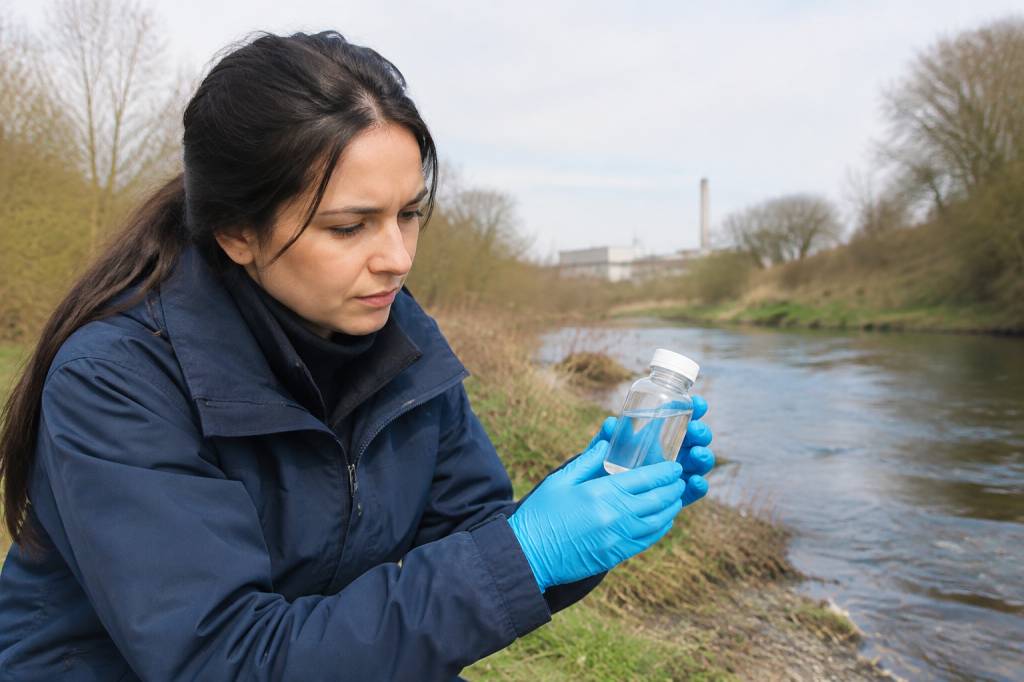
PFAS are often described as “forever chemicals”, but the phrase can make a complex pollution problem sound deceptively simple. These synthetic substances are used in products ranging from waterproof clothing to food packaging, and some persist for years in the environment. Once they enter rivers, groundwater or drinking-water sources, removing them can be difficult and costly.
Campaigners, including Pesticide Action Network UK (PAN UK), have drawn attention to chemicals found in UK waters and the risks they may pose. The phrase “dirty dozen” is sometimes used in public discussion to describe a group of concerning contaminants. It is not, by itself, an official PFAS classification or a single legal list. That distinction matters: the PFAS group includes thousands of related substances, while monitoring programmes test for selected chemicals.
So what do PFAS findings mean for water quality, and what should households and decision-makers take from them? The answer lies in understanding how these substances travel, what the evidence can—and cannot—tell us, and where stronger prevention is needed.
What are PFAS, and why are they in water?
Per- and polyfluoroalkyl substances (PFAS) are a large family of manufactured chemicals. Their strong carbon–fluorine bonds give many PFAS useful properties, including resistance to heat, oil and water. Those same bonds can also make some members of the group exceptionally persistent.
PFAS have been used in products and industrial processes such as non-stick coatings, stain-resistant fabrics, firefighting foams and some food-contact materials. Their use varies by substance and application, and restrictions have changed over time. But historic use can leave a long environmental legacy: a chemical no longer used in a particular product may still remain in soil, sediment or groundwater.
PFAS can reach water through industrial discharges, waste sites, landfill leachate, the use of firefighting foams, and the washing or disposal of treated products. Rain can carry contamination from land into streams, while substances that seep underground may affect aquifers used for public or private water supplies.
It is not always possible to identify a single source from a test result. A water sample shows what was present at a particular place and time; tracing the pollution may require investigation of nearby industries, land use, drainage and historic activities.
What does “the dirty dozen” tell us?
A memorable label can help bring attention to pollution, but it should not blur important scientific distinctions. PFAS are not pesticides, and a list of selected chemicals is not necessarily a complete picture of contamination. PAN UK’s wider work on chemical pollution and water quality sits within a broader public debate about substances that can harm ecosystems or complicate drinking-water treatment.
There is no single “dirty dozen” that represents every PFAS found in UK water. Testing commonly focuses on a defined set of substances, such as well-studied PFOS and PFOA, or uses a combined measure for a specified group. Other PFAS may be present but not included in a particular analysis. Different laboratories and monitoring programmes may also use different methods and detection limits.
This means a report of “no PFAS detected” needs careful reading. It may mean that none of the tested substances were found above the method’s reporting limit—not that every PFAS has been ruled out. Likewise, detecting a chemical does not automatically mean that the water exceeds a legal limit or that a person’s health has been harmed.
Why detection is not the same as danger
Risk depends on more than whether a chemical is present. Scientists consider the substance, its concentration, how often people are exposed, how long exposure lasts, and the health evidence available for that particular PFAS. The same principles apply when assessing potential effects on wildlife.
Research has linked exposure to certain PFAS with health concerns, including effects on cholesterol, immune response and liver function. Some PFAS have also been associated with developmental effects and particular cancers. The strength of evidence differs between substances, and findings for one chemical should not be assumed to apply equally to every member of the PFAS family.
Drinking water is one possible route of exposure, alongside food, indoor dust and consumer products. For communities relying on a contaminated source, water may be an important route to investigate. But a laboratory result alone cannot reveal an individual’s total exposure or predict a specific health outcome.
Clear communication is therefore essential. People deserve timely information about test results, what substances were measured, how concentrations compare with relevant standards, and what action is being taken. Reassurance without data is not useful; nor is alarm without context.
How PFAS affect water quality and ecosystems
PFAS contamination can be difficult to manage because some substances move readily through water and persist for long periods. Conventional treatment processes do not necessarily remove them effectively. The level of removal depends on the treatment technology, the PFAS involved and the design and operation of the plant.
Some advanced methods, including activated carbon and ion exchange, can reduce concentrations of certain PFAS. Reverse osmosis can also remove many PFAS, although it produces a concentrated waste stream that must be managed safely. Treatment does not make the pollution disappear: it transfers PFAS into spent filters, brine or other residual materials that need appropriate disposal or destruction.
In the environment, PFAS can be found in surface water, groundwater, soils and wildlife. Their presence may expose aquatic organisms and can allow contamination to move through food webs. The ecological consequences depend on the chemicals and concentrations involved, as well as the sensitivity of affected species.
That is why clean-up at one water treatment plant is only part of the response. Preventing further releases and identifying contaminated sites are central to protecting rivers, aquifers and the communities that depend on them.
What UK monitoring and standards can—and cannot—show
Water companies and regulators monitor drinking-water quality, while environmental bodies investigate pollution in rivers and groundwater. The details differ across the UK, and standards or guidance may apply to particular groups of PFAS rather than to every substance in the family. Readers should check current information from the relevant regulator for their nation and water supplier.
A regulatory value is a practical tool for managing risk. It is not a declaration that any concentration below it is automatically harmless in every circumstance, nor does an exceedance by itself explain the source or duration of exposure. Regulators use standards alongside sampling, risk assessment and remedial action.
Monitoring also has limits. Testing is targeted, and results depend on where and when samples are taken. A single sample may miss seasonal changes or a short-lived release. A short list of routinely tested PFAS can also leave less-studied substances outside the picture.
For the public, the most useful reports make these limits visible. They identify the chemicals tested, the sampling location and date, the analytical method, the detection limit and the relevant benchmark. Without those details, two headline figures may appear comparable when they are not.
What households can do
If you are concerned about your tap water, start with your water supplier’s published quality information or contact the supplier directly. In the UK, public water supplies are monitored under regulatory requirements, but the exact advice and responsible bodies vary by nation. For a private water supply, ask the local authority about testing and the appropriate laboratory methods.
A few practical steps can help you get a clearer answer:
-
Check whether the result relates to drinking water, river water or another type of sample. These are not interchangeable.
-
Ask which PFAS were tested and whether the report gives individual concentrations or a combined total.
-
Look for the sampling date, detection limits and the standard or guidance used for comparison.
-
Follow advice from your water supplier or public-health authority rather than relying on social-media claims or unverified home tests.
Household filtration may reduce some PFAS when the system is appropriately designed and maintained, but performance varies. Look for independent evidence that a specific product has been tested for the substances of concern, follow replacement instructions and check how used cartridges should be disposed of. A filter should not be treated as a substitute for investigating a contaminated source.
Prevention is better than endless treatment
Filtering contaminated water can protect people, but it can also be expensive and generate concentrated waste. The more sustainable approach is to prevent avoidable releases, phase out non-essential uses of persistent PFAS, and require safer alternatives where they can perform the same function.
That requires action across the supply chain. Manufacturers can disclose where PFAS are used and assess alternatives; regulators can strengthen controls and monitoring; water companies can share results in accessible formats; and governments can investigate contaminated sites and ensure that polluters are held accountable.
Researchers also need better tools to measure a wider range of PFAS and understand how they behave together. Monitoring more substances is valuable, but it should go hand in hand with reducing emissions. A longer list of chemicals in a report is not progress if the pollution continues to enter waterways.
Turning concern into useful action
The “dirty dozen” framing draws attention to a real concern: chemical pollution can threaten water quality long after a substance has been released. But the phrase should prompt better questions, not replace careful evidence. Which chemicals were measured? At what concentrations? Where did they come from? What does the relevant regulator advise?
PFAS contamination is not a reason to assume every UK tap is unsafe. It is a reason to demand transparent monitoring, explainable standards and credible action where contamination is found. The clearest public information—supported by sound science and prompt investigation—helps communities understand the risk without either minimising it or overstating what a single test can prove.
Protecting water means tackling pollution at its source as well as treating it downstream. That is the difference between managing a difficult legacy and preventing the next one.