

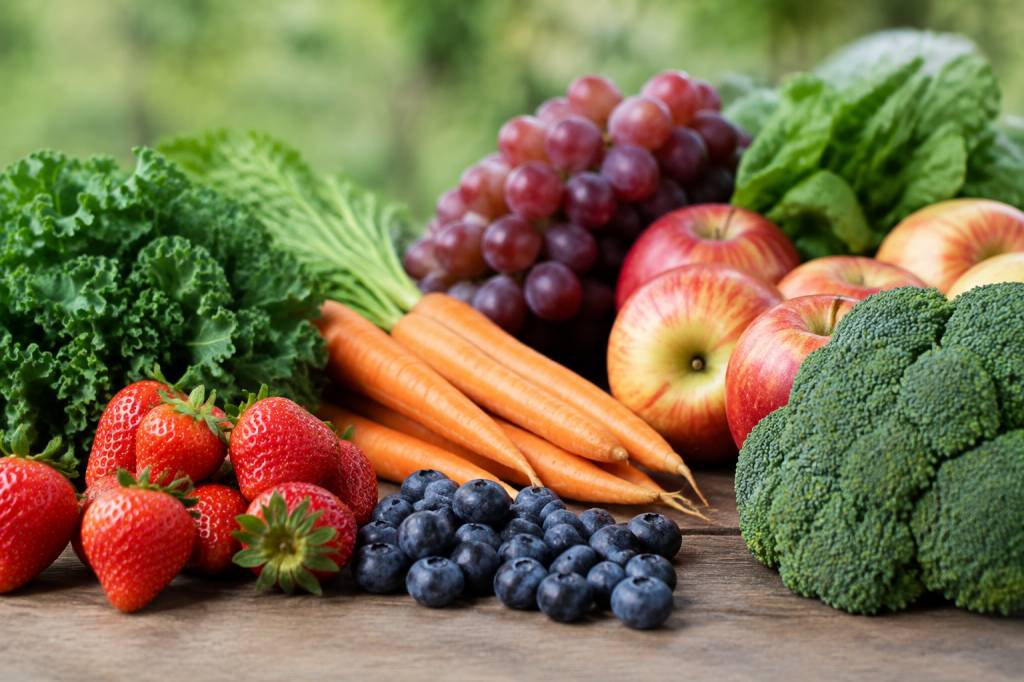
The “Dirty Dozen” is one of the most recognisable food lists in the United States. Published each year by the Environmental Working Group (EWG), it highlights conventionally grown fruit and vegetables that tested positive for pesticide residues in government testing. The list can prompt shoppers to choose organic produce—but it is not a measure of PFAS contamination, nor does it tell you that the foods on it are unsafe to eat.
That distinction matters. Pesticide residues and per- and polyfluoroalkyl substances (PFAS) are different groups of chemicals, with different uses, routes into the food supply and health evidence. Understanding what the Dirty Dozen does—and does not—reveal helps put the list in perspective without losing sight of the wider questions about chemical exposure.
What is the Dirty Dozen?
The EWG compiles the Dirty Dozen from pesticide-residue testing conducted by the US Department of Agriculture (USDA) and, for some foods, the US Food and Drug Administration. The USDA washes and, where appropriate, peels produce before testing it in a way intended to reflect how people typically eat it. The EWG then ranks foods using factors such as how many pesticide residues were detected and the number and concentration of residues found.
In the 2024 edition, the list included strawberries, spinach, kale and other greens, grapes, peaches, pears, nectarines, apples, bell and hot peppers, cherries, blueberries and green beans. Its exact contents can change from year to year as testing results and the ranking method are updated.
The list is a consumer guide, not a regulatory classification. A food appearing on it does not mean every sample contains pesticide residues, that every detected chemical exceeds a legal limit, or that eating the food is known to cause harm. It means that, within the tested produce, these foods ranked relatively high under EWG’s chosen criteria.
Residue detection is not the same as risk
Laboratory tests can detect very small quantities of chemicals. Detecting a pesticide residue tells us that the substance was present in the sample; it does not, by itself, tell us whether the amount poses a health risk. Risk assessment also considers the chemical, the dose, how often a person is exposed and how the body responds.
In the US, the Environmental Protection Agency (EPA) sets legal pesticide tolerances for food. These limits are based on assessments of potential exposure and health effects. USDA monitoring reports whether tested foods comply with those tolerances, as well as documenting residues that fall below them. Results from one country should not automatically be treated as representative of another: permitted pesticides, farming practices and monitoring programmes differ.
That does not make questions about pesticide exposure irrelevant. People can encounter multiple pesticides through food and other routes, and scientists continue to study the effects of long-term and combined exposures. The key is to avoid turning a residue ranking into a simple label of “safe” or “dangerous”. The Dirty Dozen does not provide that kind of answer.
What the list can tell shoppers
For some consumers, the list is a practical way to think about where to spend a limited organic-food budget. If you are particularly concerned about pesticide residues, you might choose organic versions of foods that appear on the list when they are affordable and available. The list can also encourage useful questions about how food is grown and tested.
But it should not become a reason to eat less fruit and vegetables. Produce—whether conventional or organic—contributes important nutrients, and health authorities consistently recommend eating a varied diet. If organic strawberries are out of reach, conventional strawberries are still a nutritious choice. Rinsing produce under running water can remove dirt and some surface residues, although it will not remove every pesticide and does not make washing equivalent to choosing an organic product.
A practical approach is to wash produce, vary the foods you buy, and choose organic where it makes sense for your household. A list can inform a decision; it should not make healthy food feel like a risk to avoid.
Organic does not mean pesticide-free
Organic farming restricts the use of many synthetic pesticides, but it does not ban all pesticides. Organic growers may use approved substances, including certain naturally derived pesticides, under applicable standards. Organic certification also covers production and handling requirements; it is not a guarantee that food contains no chemical residues.
Nor does organic certification mean a product has been tested for PFAS. Those are separate questions. A shopper choosing organic may reduce exposure to some pesticide residues, but the label alone cannot establish whether a crop, soil or water source has been affected by PFAS.
That distinction can get lost when “organic” is treated as shorthand for “chemical-free”. All farming takes place within environments where chemicals, both natural and human-made, may be present. The useful question is more specific: which substances were used or detected, at what levels, and what does the evidence say about exposure?
Where PFAS fit into the picture
PFAS are a large family of persistent chemicals used in a range of industrial and consumer applications. Some have also been used as active ingredients or in formulations of certain pesticides, while PFAS contamination can reach agricultural land through other routes, including contaminated water, soil or materials applied to land. The term covers many substances, and their behaviour and toxicity are not identical.
There is an important difference between a pesticide residue and PFAS in food. A pesticide-residue survey may test for a defined panel of agricultural chemicals; it does not necessarily test for PFAS. A food’s position on the Dirty Dozen therefore cannot be used to infer that it contains PFAS—or that it is free of them. The list was not designed to answer that question.
PFAS can move through the environment and persist for long periods. Depending on the source and local conditions, they may enter crops through contaminated soil or irrigation water. Researchers have documented PFAS in some food and agricultural settings, but findings from a particular site or study cannot be applied to every crop or supermarket product. Testing scope, sampling methods and the specific PFAS measured all matter.
For the same reason, seeing “fluorinated” in the name or description of a pesticide should not automatically be taken to mean that it is a persistent PFAS of concern. Chemical classification can depend on molecular structure and regulatory definitions. The science and policy discussions around PFAS and fluorinated substances continue to develop, so precise terminology is essential.
Why monitoring and transparency matter
Food-safety monitoring is strongest when it asks clear questions and explains its limits. A pesticide-residue programme can help identify which chemicals are present in sampled foods and whether legal tolerances are exceeded. PFAS monitoring requires targeted methods and a clearly defined set of compounds. One type of testing cannot stand in for the other.
It also matters where samples come from. A crop grown near a known contamination source may face different conditions from the same crop grown elsewhere. Information about growing region, irrigation water and soil can help investigators understand a finding. Without that context, a single result may attract attention but tell consumers little about the broader food supply.
Public agencies, food producers and researchers can improve confidence by publishing what was tested, how samples were collected and what the results mean. For PFAS in particular, monitoring is challenging because there are many compounds and analytical methods continue to evolve. Clear reporting is more useful than a headline that treats all PFAS as interchangeable.
What can consumers do?
There is no need to overhaul your shopping basket because of the Dirty Dozen. A few measured steps can help you make informed choices while keeping a varied diet at the centre of the conversation:
-
Wash fruit and vegetables under clean, running water before eating or preparing them. Scrubbing firm produce with a clean brush can help remove dirt and some surface residues.
-
Eat a range of produce rather than relying on a narrow selection. Variety supports a balanced diet and reduces dependence on any single food source.
-
Use the Dirty Dozen as one optional shopping guide, not as a safety ranking. Check the edition and remember that the underlying tests are from the United States.
-
Choose organic when it suits your budget and priorities, while recognising that organic certification does not guarantee the absence of pesticide residues or PFAS.
-
Look for information from food-safety agencies and environmental authorities when assessing a local contamination concern. Local water and land monitoring may be more relevant than a national produce ranking.
A useful list, with clear limits
The Dirty Dozen draws attention to pesticide residues in commonly eaten produce and can help consumers think about their preferences. Its value depends on reading it accurately: it ranks foods according to a particular analysis; it does not diagnose health risk, compare every farming system, or test for PFAS.
PFAS in food deserve careful investigation, especially where contamination of soil or water is suspected. But answering that question requires dedicated testing and transparent reporting—not assumptions based on a pesticide-residue list. For shoppers, the most evidence-based response is to keep eating a variety of fruit and vegetables, wash produce, and use reliable, locally relevant information when deciding what to buy.
Sources and further reading
-
Environmental Working Group: Shopper’s Guide to Pesticides in Produce — methodology and annual Dirty Dozen editions.
-
USDA Agricultural Marketing Service: Pesticide Data Program — information on the federal pesticide-residue testing programme.
-
US Environmental Protection Agency: Pesticide tolerances — how legal residue limits are established and assessed.
-
European Food Safety Authority: Per- and polyfluoroalkyl substances (PFAS) — background on PFAS and food-safety assessment.