

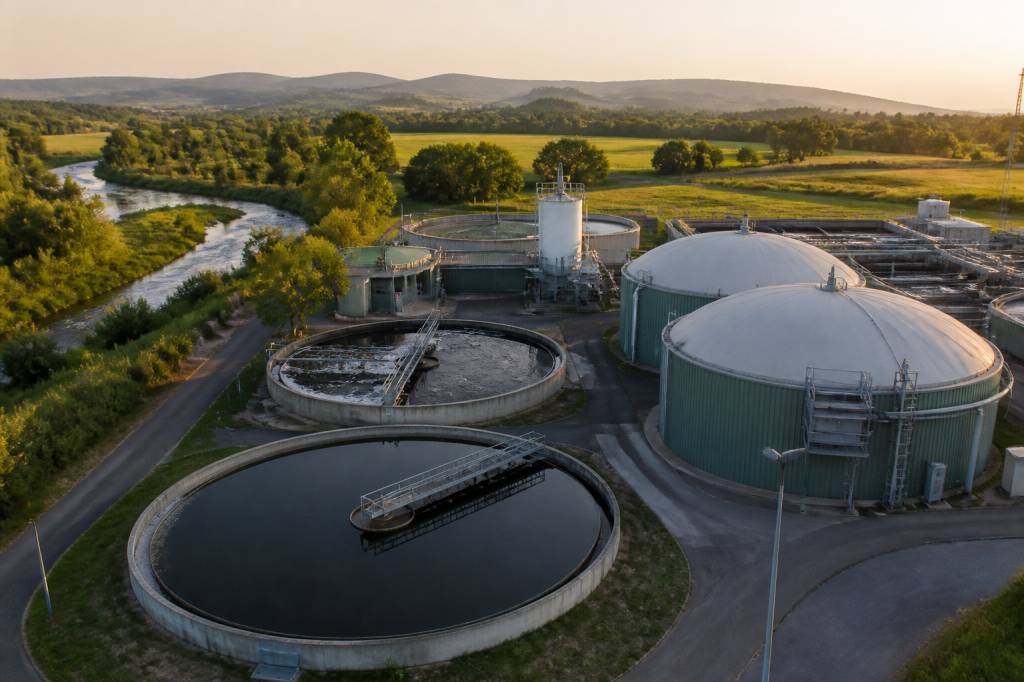
Per- and polyfluoroalkyl substances (PFAS) are often described as “forever chemicals” because many of them resist heat, water, oil and biological degradation. That persistence creates a difficult problem for water utilities: conventional wastewater treatment can remove PFAS from the water stream, but it rarely destroys them. Instead, PFAS may move into sludge, biosolids or other residual materials.
Anaerobic digestion is sometimes presented as a promising tool for reducing PFAS pollution. The reality is more nuanced. Anaerobic digestion can improve wastewater treatment, reduce the volume of residual solids and support better control of PFAS-containing waste. However, current evidence does not show that standard anaerobic digestion reliably destroys the most persistent PFAS compounds.
So how can these systems still help? The answer lies in understanding where PFAS travel through a treatment plant, what anaerobic digestion can realistically achieve and how it can be combined with targeted technologies such as activated carbon and high-pressure membranes.
What is anaerobic digestion?
Anaerobic digestion is a biological process that breaks down organic matter in the absence of oxygen. It is widely used at wastewater treatment plants to process sewage sludge, also known as biosolids.
Inside a sealed digester, communities of microorganisms convert biodegradable organic material into:
- Biogas, composed mainly of methane and carbon dioxide;
- A stabilised solid material called digestate;
- A smaller quantity of residual organic matter;
- Water containing dissolved nutrients and contaminants.
The methane-rich biogas can be captured and used to generate heat or electricity. This can lower a treatment plant’s reliance on fossil fuels and reduce the climate impact associated with sludge management.
But PFAS are not ordinary organic pollutants. Their carbon-fluorine bonds are among the strongest in industrial chemistry. The microorganisms that digest food waste, sewage and other organic material generally cannot break those bonds under normal operating conditions.
Where do PFAS go during wastewater treatment?
PFAS enter wastewater through many routes, including domestic products, industrial discharges, landfill leachate, firefighting foam residues and contaminated stormwater. Once they reach a treatment plant, their behaviour depends on the specific PFAS compound, its chain length and the chemistry of the wastewater.
Some PFAS remain dissolved in the water. Others attach to suspended solids or organic material. Long-chain compounds tend to associate more readily with solids than many short-chain compounds, although this is not a universal rule.
Primary and secondary wastewater treatment can therefore redistribute PFAS rather than eliminate them. A portion may leave with treated effluent, while another portion becomes concentrated in sludge. This distinction matters because removing PFAS from water is not the same as destroying it.
When sludge is sent to an anaerobic digester, PFAS-containing solids enter the digestion process. The digester reduces the amount of biodegradable material, but the PFAS mass may remain largely unchanged. Because the total solids volume decreases, the concentration of some contaminants can even increase in the digestate.
In other words, anaerobic digestion can make sludge easier to handle without making PFAS disappear. That may sound like a small distinction, but it is central to responsible PFAS management.
Does anaerobic digestion destroy PFAS?
For most regulated and widely studied PFAS, the answer is: not reliably under conventional conditions.
Research has examined both mesophilic digestion, typically operated at approximately 35°C, and thermophilic digestion, often operated at approximately 50–55°C. These processes can transform organic matter efficiently, but the temperatures and microbial conditions are not generally severe enough to break down the strongest PFAS bonds.
Some studies have observed changes in PFAS concentrations during digestion. These changes may result from several mechanisms:
- PFAS may move between the liquid and solid phases;
- Precursor chemicals may transform into terminal PFAS compounds;
- Sampling and measurement differences may affect apparent removal;
- PFAS may become associated with the digestate rather than being destroyed;
- Short-chain compounds may behave differently from long-chain compounds.
Precursors deserve particular attention. These are chemicals that can break down into persistent PFAS over time. If anaerobic conditions transform a precursor into a more stable PFAS, measurements may show a reduction in the original substance while the overall long-term risk remains.
This is why a lower concentration of one PFAS in digested sludge should not automatically be interpreted as chemical destruction. A complete mass balance—tracking PFAS in the feed sludge, digestate, liquid fraction, off-gas and downstream streams—is needed before claiming genuine removal.
How digestion can still reduce pollution risks
Although anaerobic digestion is not a stand-alone PFAS destruction technology, it can contribute to a broader pollution reduction strategy in several important ways.
It stabilises and reduces sludge volume
Digestion breaks down a significant share of the biodegradable material in sludge. This reduces the volume that must be transported, stored or treated further. Lower volumes can reduce the number of opportunities for contaminated material to escape into the environment.
However, volume reduction is not contaminant destruction. If PFAS remain in the digestate, the material still requires careful management and monitoring.
It supports controlled waste handling
Raw sludge is biologically active and can generate odours, methane and other gases. Anaerobic digestion takes place in enclosed vessels, allowing operators to control the process and capture biogas.
A controlled system is preferable to unmanaged decomposition, particularly when wastewater residuals contain industrial contaminants. It provides a defined point at which PFAS sampling, containment and treatment decisions can be integrated into the plant’s operating plan.
It produces renewable energy
Captured biogas can power boilers, combined heat and power units or upgraded biomethane systems. This does not remove PFAS, but it can reduce the greenhouse gas emissions associated with sludge treatment and disposal.
Climate and chemical pollution are different problems, yet they often occur in the same infrastructure. A treatment plant that recovers energy while improving contaminant control can deliver multiple environmental benefits—provided PFAS are not simply transferred into an inadequately managed digestate.
It can be part of a treatment train
The strongest application for anaerobic digestion is as one stage in a wider treatment train. Digestion can handle organic loading and sludge stabilisation, while other processes target PFAS in water or residual solids.
Possible complementary technologies include:
- Granular activated carbon, which adsorbs many PFAS from water;
- Powdered activated carbon, used in selected treatment configurations;
- Ion exchange resins, which can be effective for specific PFAS profiles;
- Reverse osmosis and nanofiltration, which physically separate PFAS from water;
- Foam fractionation, which concentrates surface-active PFAS for further treatment;
- High-temperature or electrochemical destruction methods under controlled conditions.
Each technology creates a residual stream. Activated carbon, for example, becomes PFAS-laden and must be regenerated or disposed of safely. Membranes generate a concentrated reject stream. Digestion does not solve those residuals, but it can be incorporated into a facility-wide plan that tracks them from the point of entry to final treatment.
A practical example: a wastewater plant receiving landfill leachate
Consider a municipal wastewater treatment plant that accepts leachate from a landfill. Landfill leachate can contain a mixture of PFAS, precursor compounds, pharmaceuticals, metals and high levels of organic matter.
The plant may send its primary and secondary sludge to an anaerobic digester. The digester produces biogas and reduces the biodegradable solids burden. Yet PFAS associated with the sludge may remain in the digestate, while dissolved PFAS may pass into the liquid return stream generated during dewatering.
If that return stream is sent back to the head of the plant, PFAS can recirculate through the treatment process. This can increase the internal loading even when the final effluent concentration appears relatively stable.
A more robust approach would include:
- Testing incoming leachate and identifying major PFAS sources;
- Monitoring PFAS in influent, effluent, sludge, digestate and return liquors;
- Installing targeted treatment for high-strength liquid streams;
- Assessing whether digestate can legally and safely be used on land;
- Preventing industrial discharges from overwhelming the municipal system;
- Maintaining a documented PFAS mass balance.
This example illustrates the central principle: anaerobic digestion can improve process management, but it must not become a reason to overlook PFAS transfers between wastewater, sludge and liquid sidestreams.
What happens to PFAS in digestate?
Digestate management is one of the most important issues for any treatment plant dealing with PFAS. Depending on local rules and contaminant levels, digestate may be applied to land, composted, incinerated, sent to landfill or processed through additional treatment.
Land application is particularly sensitive because PFAS can persist in soil and potentially migrate into groundwater or be taken up by plants. The UK, European Union and United States are developing increasingly detailed approaches to PFAS monitoring, but regulatory requirements differ by jurisdiction and continue to evolve.
Operators should not assume that meeting standards for conventional parameters—such as nutrient content, pathogens or organic stability—means that digestate is suitable for unrestricted use. PFAS require separate consideration, including analysis of both individual compounds and broader indicators such as total oxidisable precursor measurements or extractable organic fluorine, where appropriate.
Testing also has limitations. PFAS analysis can be affected by contamination from sampling equipment, laboratory materials and field conditions. A credible monitoring programme therefore needs validated methods, appropriate quality controls and laboratories experienced in trace-level PFAS analysis.
Can advanced anaerobic systems do more?
Researchers are investigating whether modified anaerobic conditions could improve the transformation of certain PFAS precursors. Ideas include longer retention times, co-digestion with different organic wastes, microbial enrichment and combinations with chemical or thermal processes.
These approaches remain an area of active research. A laboratory observation is not automatically a plant-scale solution. Full-scale systems must also account for energy use, operational reliability, by-products, worker safety and the fate of fluorinated transformation products.
Thermal treatment deserves careful wording as well. Anaerobic digestion itself is a biological process and should not be confused with high-temperature destruction technologies. Incineration or other thermal systems may destroy some PFAS under suitably controlled conditions, but incomplete combustion can create additional risks. Temperature, residence time, oxygen availability, equipment design and emissions controls all matter.
What should water professionals ask?
Before adding or expanding anaerobic digestion at a facility affected by PFAS, decision-makers should ask five practical questions:
- Which PFAS and precursor compounds are entering the plant?
- Are PFAS being measured in both water and solid streams?
- Could digestion increase concentrations in digestate or return liquors?
- What is the approved end use or disposal route for the digestate?
- Which downstream technology will treat PFAS that digestion does not remove?
The answers should be based on site-specific data rather than assumptions. A plant receiving mainly domestic wastewater may have a very different PFAS profile from one receiving industrial effluent, landfill leachate or firefighting-training runoff.
The role of source control
The most effective PFAS treatment is often preventing unnecessary PFAS from entering the wastewater system in the first place. Industrial pretreatment, product substitution, spill prevention and restrictions on fluorinated firefighting foams can reduce the burden placed on treatment plants.
Source control also makes anaerobic digestion easier to manage. If the incoming sludge contains fewer persistent contaminants, the digestate is less likely to present a long-term disposal challenge. This is a straightforward principle, but it is frequently overlooked: treatment plants cannot compensate indefinitely for uncontrolled contamination upstream.
A realistic role for anaerobic digestion
Anaerobic digestion has a valuable role in modern wastewater management. It stabilises sludge, recovers renewable energy, reduces organic solids and creates a controlled environment for monitoring residuals. Those benefits can support a broader programme to reduce PFAS pollution.
But standard anaerobic digestion should not be marketed as a proven PFAS destruction process. In most cases, PFAS persist through digestion or are redistributed among the digested solids, liquid streams and downstream waste products.
The most responsible strategy is to combine digestion with source control, systematic PFAS monitoring, targeted water treatment and secure management of contaminated residuals. Used in that way, anaerobic digestion becomes part of the solution—not because it makes “forever chemicals” vanish, but because it helps treatment plants operate more efficiently, track contaminant pathways and integrate safer technologies around them.