

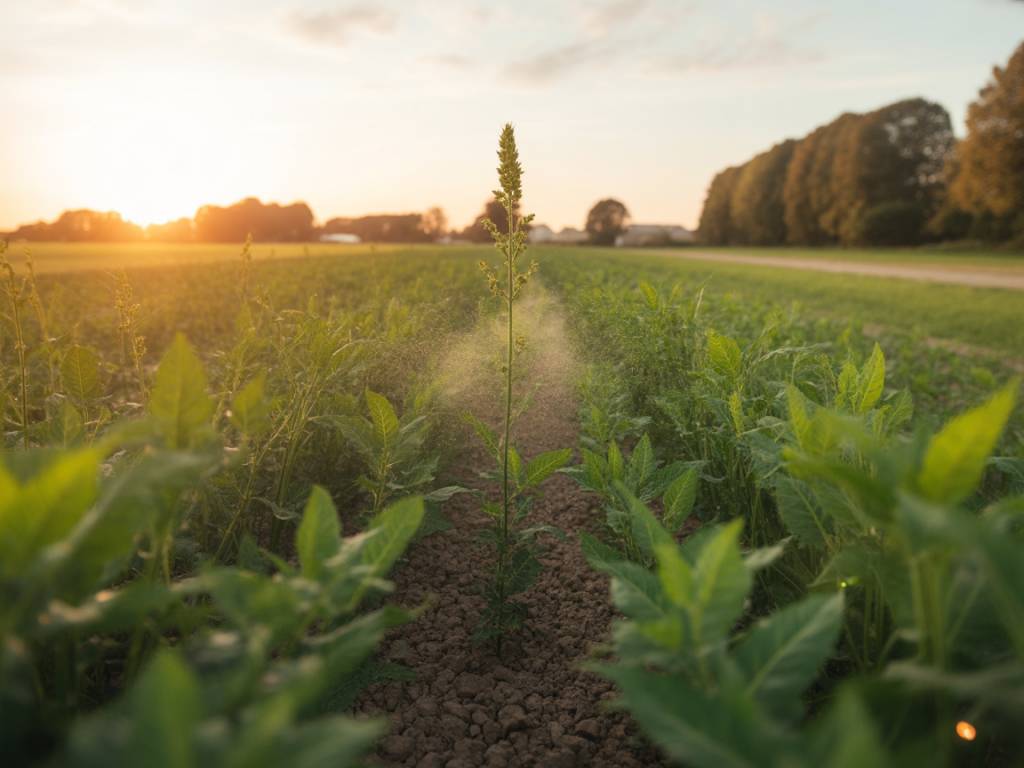
Weedkiller on your morning toast. It sounds alarming — and yet, according to official UK monitoring data, low levels of glyphosate turn up routinely in bread, oats and breakfast cereals bought from ordinary supermarkets. Whether that matters for your health is where things get complicated, and fiercely debated. This article cuts through the noise: what the most recent UK residue data actually shows, what the science says about health risks, and what practical steps you can take to reduce your exposure today.
What Is Glyphosate and Why Does It End Up in UK Food?
Glyphosate is a broad-spectrum herbicide and the active ingredient in Roundup. It is the most widely used pesticide in the world and plays a central role in UK arable farming. It works by blocking the shikimate pathway — an enzyme route found in plants, fungi and bacteria, but not in mammals. That selective mechanism is one reason regulators have historically viewed it as relatively low-risk to humans. But it also means it can disrupt gut microorganisms that share the same biochemical pathway.
In UK agriculture, glyphosate is applied to:
- Cereals – wheat, barley and oats, sometimes as a pre-harvest desiccant to speed up crop drying
- Oilseed rape – both pre-sowing weed control and pre-harvest
- Beans and pulses – used as a desiccant to dry the crop evenly before harvest
- Non-agricultural land – roadsides, railways, amenity green spaces and field margins
Because glyphosate is applied directly to the edible parts of crops in the pre-harvest desiccation window, residues can transfer into food at measurable levels. The foods most consistently flagged by monitoring programmes are:
- Wholegrain and white bread, rolls and flour
- Porridge oats, granola and oat-based snacks
- Breakfast cereals — especially those with a wheat or oat base
- Crackers and cereal bars
- Imported pulses, lentils and soya-containing products
Glyphosate in UK Food: What the Latest Monitoring Data Shows
Official residue surveillance in the UK is run under the statutory programme overseen by the Health and Safety Executive (HSE) and reported by the Expert Committee on Pesticide Residues in Food (PRiF). Inspectors purchase food from normal retail outlets and test for hundreds of pesticides, including glyphosate and its main metabolite AMPA.
The key findings from published data covering the most recent reporting cycles (up to 2022–2023) are:
- Glyphosate is among the most frequently detected residues in cereal and cereal-based categories. Detection is routine, not exceptional.
- The vast majority of positive samples remain below Maximum Residue Levels (MRLs). UK MRLs are largely harmonised with former EU levels and are designed to keep lifetime dietary exposure within toxicological reference values.
- A small proportion of samples exceed MRLs each year — often imported produce where different application rates apply. These cases typically trigger regulatory investigations and, in some instances, product withdrawals.
- Oat-based products are a persistent hotspot. PRiF reports have repeatedly highlighted glyphosate residues in porridge oats, oat biscuits and cereal bars, reflecting widespread pre-harvest use on oat crops.
- Infant foods are subject to stricter limits and are monitored separately. Residues in baby cereals and infant foods are generally very low or below the quantifiable limit — but the detection rate confirms that glyphosate enters the food chain broadly.
These official results align with independent testing by NGOs across the UK and Europe, including urine biomonitoring studies showing measurable glyphosate in the general population — evidence that dietary exposure is real, not theoretical.
Health Risks: What the Science Actually Says
This is where glyphosate becomes genuinely contested. Different expert bodies, reviewing broadly the same evidence base, have reached strikingly different conclusions.
The Cancer Question
In 2015, the International Agency for Research on Cancer (IARC) — the WHO’s cancer research body — classified glyphosate as « probably carcinogenic to humans » (Group 2A). This was based on:
- Limited epidemiological evidence of carcinogenicity in humans, particularly non-Hodgkin lymphoma in occupationally exposed farm workers
- Sufficient evidence of carcinogenicity in experimental animals
- Mechanistic evidence including genotoxicity and oxidative stress markers in cell and animal studies
Critically, IARC assesses hazard — whether a substance can cause cancer under any circumstances — not the risk at typical dietary exposure levels.
By contrast, the European Food Safety Authority (EFSA) and the European Chemicals Agency (ECHA) declined to classify glyphosate as a carcinogen in subsequent reviews, arguing the full dataset — including unpublished industry studies reviewed under regulatory rules — did not support that classification. The UK’s own regulatory review, completed post-Brexit by the HSE, similarly concluded that glyphosate does not meet the criteria for carcinogen classification under current UK REACH.
This divergence reflects genuine scientific disagreement about how to weigh different study types, not simply a pro- or anti-industry split.
Beyond Cancer: Other Health Concerns
The debate does not stop at cancer. Emerging and contested research has examined:
- Gut microbiome disruption — Glyphosate inhibits the shikimate pathway found in many gut bacteria. Some animal studies suggest it alters microbiome composition at environmentally relevant doses, with potential downstream effects on immune function and metabolism.
- Endocrine disruption — A number of studies have identified hormone-disrupting effects in cell models and animal experiments, though regulators have not accepted this as established at dietary exposure levels.
- Developmental and reproductive toxicity — Some academic studies have raised concerns, particularly regarding formulated products (glyphosate combined with surfactants like POEA), which appear more toxic than the active ingredient alone.
The honest answer is that certainty is elusive. Safety thresholds set by regulators assume a particular reading of the evidence. For widespread chemicals with chronic low-level exposure profiles — like glyphosate and, on this site’s usual beat, PFAS — many independent scientists advocate a more precautionary approach, especially for children, pregnant people and those with high cereal consumption.
Is « Below the Legal Limit » the Same as Safe?
Regulators consistently describe residues within MRLs as « not a health concern ». That statement is technically precise — but it deserves unpacking.
MRLs are primarily trade and enforcement tools, not pure health thresholds. They are set to reflect what residues would be expected if farmers followed label instructions correctly — so-called Good Agricultural Practice. Regulators then cross-check those levels against health-based reference values:
- ADI (Acceptable Daily Intake) — the dose considered safe for lifetime daily exposure, typically set with a 100-fold safety margin below the lowest observable effect level in animal studies
- ARfD (Acute Reference Dose) — the safe amount for a single day or meal
Dietary exposure modelling then estimates whether typical and high-end consumers stay below these values. The current ADI for glyphosate in the UK is 0.5 mg/kg body weight/day — and aggregate dietary exposure estimates generally sit well below this figure for most consumer groups. The concern among independent researchers is not that any single exposure breaches these thresholds, but that safety factors may not adequately capture mixture effects, vulnerable populations or longer-term low-dose impacts not well-represented in the original toxicology studies used to set those figures.
Glyphosate and PFAS: The Wider Picture of Chronic Chemical Exposure
Readers of this blog will recognise familiar themes. Like PFAS, glyphosate raises questions that the current regulatory framework was not fully designed to answer:
- Chronic low-level exposure — Most risk is not from a single large dose but from daily, repeated consumption of small amounts across multiple food sources.
- Mixture effects — Real-world diets contain glyphosate alongside PFAS, other pesticides, heavy metals and food additives. Safety assessments typically evaluate each chemical in isolation.
- Vulnerable groups — Children eating large quantities of oat-based cereals, or people with diets heavily weighted towards cereals and pulses, may sit at the higher end of exposure distributions.
- Data gaps — Long-term epidemiological data on dietary glyphosate exposure in the general population remains limited compared to data on occupationally exposed agricultural workers.
How to Reduce Your Glyphosate Exposure: Practical Steps
You do not need to abandon cereals or grow your own wheat. But there are some evidence-informed, realistic steps that can meaningfully reduce your dietary glyphosate load:
- Choose certified organic cereals and oats. Organic certification prohibits glyphosate use. Studies consistently find lower or undetectable glyphosate residues in organic grain products compared to conventional equivalents.
- Vary your grain sources. Relying heavily on a single type of cereal — particularly wheat or oats — concentrates your exposure from those specific crops. Rotating with rice, corn, millet or quinoa reduces that concentration.
- Rinse pulses and legumes thoroughly. While glyphosate binds to the grain itself and rinsing will not eliminate residues, it can reduce surface contamination, particularly for dried legumes.
- Filter your drinking water. Glyphosate has been detected in UK surface and groundwater. A quality activated carbon or reverse osmosis filter significantly reduces any contribution from tap water to overall exposure.
- Prioritise organic choices for children’s foods. Children have higher food intake relative to body weight and are at a more vulnerable developmental stage. Organic infant cereals and oat-based snacks are a proportionate precaution.
- Check PRiF monitoring reports. The Expert Committee on Pesticide Residues in Food publishes annual data at food.gov.uk. Keeping an eye on which food categories are flagged year to year helps you make targeted choices without wholesale dietary overhaul.
The Regulatory Outlook for Glyphosate in the UK
Glyphosate’s UK approval was renewed in 2022 for a further five years, with the HSE’s assessment concluding that it meets safety standards when used correctly. The UK has diverged from the EU on several pesticide decisions since Brexit, and glyphosate is a test case: the EU renewed its authorisation until 2033 in late 2023 after protracted debate, despite opposition from several member states.
Pre-harvest use as a desiccant — the practice most directly linked to residues in food — remains under scrutiny. Some UK retailers have moved to restrict or label products from suppliers that use pre-harvest applications, but this is voluntary and not yet industry-wide. Pressure from consumer groups and some food companies means the practice may face tighter guidance in coming years, even if outright prohibition remains politically unlikely in the short term.
Understanding glyphosate in UK food — the latest data, the health risks and the practical steps to reduce exposure — is not about panic. It is about making informed choices in a food system where chemical monitoring is real, the science is genuinely contested, and the precautionary options are both affordable and achievable.