

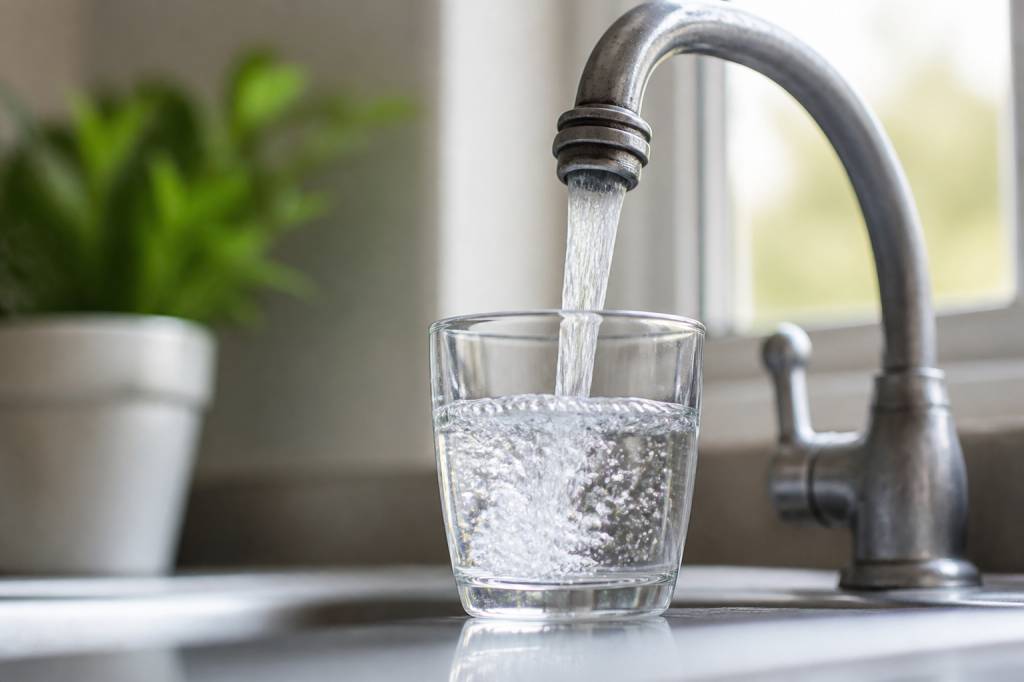
When people think about drinking water contamination, PFAS often grabs the headlines. But there is another legacy issue that still affects millions of homes: lead pipes. Unlike a modern contaminant that enters the supply through industry or agriculture, lead in tap water is usually a plumbing problem. The good news is that exposure can often be reduced quickly, even before a full pipe replacement happens.
Why does this still matter? Because lead is a neurotoxin, and no safe level of exposure has been identified for children. In adults, it has been linked to high blood pressure, kidney damage, and cardiovascular problems. In pregnancy, lead can cross the placenta and affect fetal development. The risk is not dramatic in the Hollywood sense. It is quieter than that: a small amount, repeated over time, can still have serious consequences.
Why lead pipes remain a problem
Lead was widely used in water service lines, solder, and some plumbing materials for decades. Even where lead pipes are no longer installed, many older homes and buildings still have them in place. In some areas, the pipe connecting the water main to a property is owned by the utility; in others, it is the homeowner’s responsibility. Either way, if that service line is made of lead, it can leach into drinking water as water moves through the plumbing.
Lead enters water mainly through corrosion. That means the water itself eats away at materials in the pipe or fittings, especially if the water is acidic, soft, or low in protective minerals. Changes in water chemistry, utility treatment, or even home plumbing work can disturb the system and increase lead release. So yes, your water may have tested fine last year and still be different today. Plumbing likes surprises; health departments do not.
One particularly frustrating fact is that lead has no taste, smell, or color at levels that matter for safety. You cannot detect it by pouring a glass and looking suspiciously at it. Testing is the only reliable way to know whether lead is present.
Who is most at risk?
Everyone should avoid lead exposure, but some groups are more vulnerable than others. Children are especially sensitive because their brains and nervous systems are still developing. Even low levels of lead exposure have been associated with reduced IQ, behavioral issues, and learning difficulties.
Pregnant people also need to be careful, because lead stored in bones can be released during pregnancy and lactation. That means exposure is not only a current issue; it can also reflect older exposure patterns in the body. Infants fed formula mixed with contaminated tap water are another concern, since they consume more water relative to their body weight than adults do.
Adults are not off the hook either. Chronic exposure can contribute to hypertension, kidney issues, and reproductive effects. For households with older plumbing, the practical question is not “Is there a problem?” but “How much exposure can we reduce right now?”
How lead gets into tap water
Lead usually does not come from the water source itself. It tends to enter after the water reaches the distribution system or your home. Common sources include:
The amount of lead that leaches into water depends on several factors, including water chemistry, pipe age, stagnation time, and temperature. Water that has sat in pipes overnight often contains more lead than water that has been flushed through the system. Hot water can also dissolve metals more readily than cold water, which is why using hot tap water for cooking is a bad habit worth breaking.
How to check whether your home may have lead pipes
If your home was built before the late 1980s, lead plumbing components are possible. Homes built much earlier, especially before the 1950s, are at higher risk. But age alone does not tell the full story, because renovations and partial replacements can complicate things.
Useful signs include a service line that looks dull gray and soft rather than metallic and rigid. A simple scratch test can sometimes reveal a shiny silver color beneath the surface, but this should be done carefully and only if you know what you are looking at. When in doubt, ask your water utility or a licensed plumber for help identifying the service line material.
Many utilities now maintain lead service line maps or records, though these are not always complete. Some companies can also tell you whether your neighborhood is known to contain lead lines. If your local utility offers free or low-cost water testing, take advantage of it. This is one of those rare public health services that is worth accepting without delay.
Testing your water: what to know
Testing is the most direct way to assess exposure, but not all tests are equal. A single sample can be useful, yet lead levels can vary depending on when and how the water is collected. First-draw samples, which are taken after water has been sitting in the pipes for several hours, often show the highest levels. Flushed samples can help determine what comes out after water has run for a while.
If possible, use a certified laboratory or a test kit recommended by a public health authority. DIY kits can be a starting point, but they are less reliable than laboratory testing. If a result shows elevated lead, do not wait for a perfect answer before acting. Even if the number is below the legal limit, there may still be room to reduce exposure further.
It is also worth noting that regulatory thresholds are not the same as health-based safety thresholds. In many places, legal limits are based on what can be achieved in distribution systems, not on a true “safe” level for children. That distinction matters.
Immediate ways to reduce exposure at home
If you suspect or know there is lead in your plumbing, several short-term steps can make a real difference.
First, use cold water for drinking, cooking, and preparing infant formula. Cold water dissolves less lead than hot water, and it is easier to boil or heat later if needed. Never use hot tap water directly for food or beverages.
Second, flush the tap before use. If water has been sitting in the pipes for several hours, let it run cold for a short period before filling a glass or cooking pot. The exact time depends on the length of your plumbing, but if you know your home has lead service lines, longer flushing may be necessary after extended stagnation. In some households, especially those with long pipe runs, it may take a minute or more to move out standing water.
Third, clean faucet aerators regularly. Tiny particles and sediment can collect there, and lead-bearing debris can accumulate over time. Unscrewing and rinsing the aerator occasionally is a small task with a big payoff.
Fourth, consider using bottled water temporarily if testing shows elevated lead and you cannot yet install a filter or replace the pipe. This is not a long-term environmental solution, of course, but it can be a sensible stopgap for infants, pregnant people, or anyone with higher risk.
Do water filters help?
Yes, but only if the filter is designed to remove lead and is used correctly. Not every pitcher or tap attachment will do the job. Look for products certified to NSF/ANSI Standard 53 for lead reduction, or NSF/ANSI Standard 58 for reverse osmosis systems. Certification matters because marketing claims do not always match performance.
Before buying a filter, check:
Maintenance is critical. A filter that is not changed on schedule may lose effectiveness or even become a source of contamination itself. If the package says replace the cartridge every two months, that is not a friendly suggestion from the manufacturer’s marketing department. It is the difference between protection and false confidence.
For households with infants, a certified filter or bottled water is often recommended when lead exposure is possible. If formula is involved, this is especially important because babies consume proportionally more water than adults.
What utilities and governments can do
Individual actions matter, but the real solution is removal of lead sources. Corrosion control treatment can reduce lead release in the short term, but it does not eliminate the pipe itself. In practice, that means the best long-term fix is full replacement of lead service lines, not partial replacement or repeated flushing campaigns.
Partial pipe replacement can sometimes make lead release worse in the short term, because disturbing the plumbing may release accumulated particles. That is why replacement work should be done carefully and with proper follow-up testing. Utilities also need to maintain effective corrosion control, keep public records transparent, and inform residents promptly when lead risk is identified.
Some countries and municipalities have accelerated replacement programmes, while others are still mapping their infrastructure. Progress is often slower than it should be, largely because buried pipes are expensive to replace and hard to inventory. But the health case is straightforward: every lead pipe left in place is a continuing source of exposure.
Practical steps if you live in an older home
If you are not sure where to start, focus on the most actionable steps first. You do not need to become a plumbing expert overnight.
If you rent your home, the landlord or property manager may be responsible for plumbing repairs or fixture replacement. In that case, document your concerns in writing and keep copies of any test results. If your local health department offers support, use it. Lead exposure is not something to handle in silence.
Why this issue still deserves attention
Lead in drinking water is a reminder that environmental health is often shaped by old infrastructure as much as new pollution. The pipe may be hidden, but the risk is real. And because lead exposure can affect children before anyone notices a visible problem, prevention matters more than waiting for symptoms.
The encouraging part is that there are clear, practical ways to lower risk right now. Test the water. Use cold water. Flush the tap. Choose a certified filter. Push for full lead service line replacement. None of these steps is complicated, but together they can significantly reduce exposure while communities work toward a permanent fix.
In the end, safe water should not depend on guesswork, luck, or whether your plumbing predates disco. If your home may have lead pipes, a few deliberate actions today can protect health for years to come.