

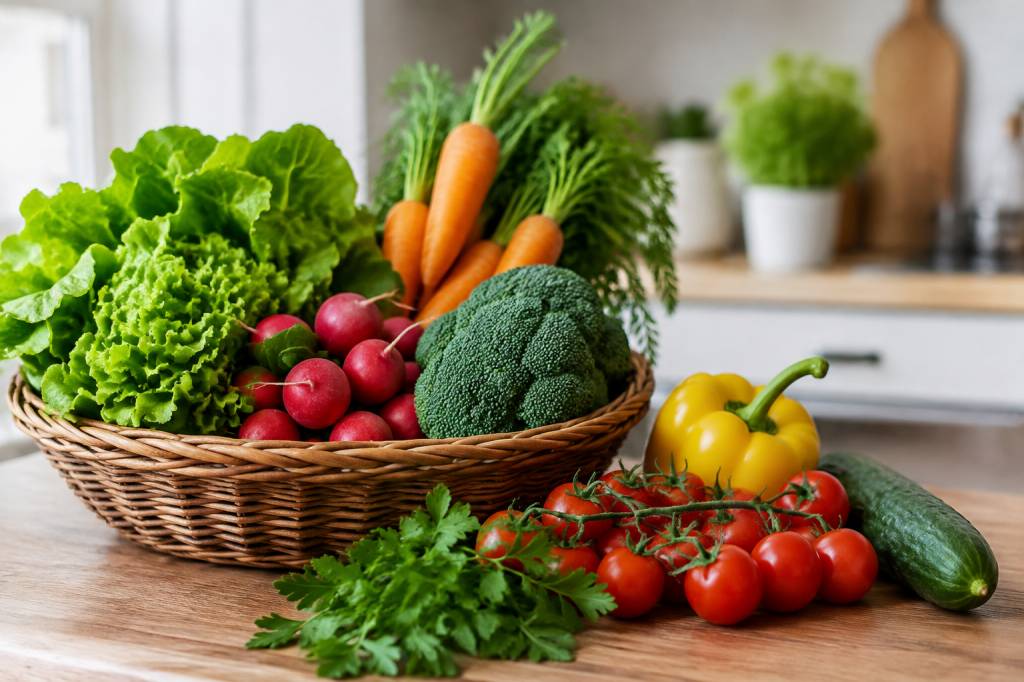
Organic vegetables can contain pesticides. That may sound surprising, given that organic food is often marketed as a more natural choice, but “organic” does not mean “grown without pesticides.” It means the farm follows a set of production standards that restrict which pesticides can be used and how they are applied.
For shoppers, the distinction matters. A residue detected on a vegetable does not automatically mean it is unsafe, and an organic label does not guarantee that a crop has never encountered a pesticide. Here’s what organic certification does—and does not—tell you, how pesticide residues are assessed, and what you can do at home.
What does “organic” mean?
Organic certification is a regulated production system, not simply a description of a food’s ingredients. In the UK, certified organic farms must meet standards covering matters such as soil management, crop rotation, biodiversity and the use of agricultural inputs. The rules are intended to reduce reliance on synthetic chemicals and support farming practices that work with natural processes.
Organic growers can still use pesticides when they are permitted under the relevant organic standards. These include certain substances derived from plants, minerals or microorganisms, as well as some other approved products. Whether a particular substance is allowed depends on the rules that apply and the specific use. “Natural,” in this context, is not the same as “risk-free.”
By contrast, conventional farming can use a broader range of authorised pesticides, including synthetic ones. Those products are also subject to legal controls, including approval conditions and maximum residue limits for food. The practical difference is therefore not “pesticides versus no pesticides,” but which substances are allowed, under what conditions, and how the crop is produced.
Can organic vegetables have pesticide residues?
Yes. Residues can be found on organic vegetables for several reasons. An approved pesticide may have been used on the crop. A substance may have drifted from a nearby field, or traces may have been present in soil, water or dust. Contamination can also happen during harvesting, transport, storage or processing.
A laboratory finding does not necessarily identify how a substance got there. It also does not, by itself, show that the food poses a health risk. Scientists assess residues in relation to the amount detected, the pesticide involved, how much of the food people typically eat, and the substance’s toxicological properties.
It is also important to distinguish between a pesticide being used and a residue being detected. Some substances break down over time, while others may remain at very low levels. Testing methods can detect increasingly small quantities, but detecting a chemical is not the same as proving that it is present at a harmful level.
Are organic pesticides safer?
It is tempting to assume that a pesticide from a natural source is automatically safer than a synthetic alternative. That assumption is too simple. A substance’s risk depends on its properties, the dose, the route and frequency of exposure, and how it is handled—not just on where it came from.
Organic standards limit the substances farmers may use, but they do not make every permitted product harmless in every circumstance. Some natural pesticides can affect non-target organisms, including beneficial insects, if used improperly. Some can also be hazardous to people at particular doses. The point of regulation and farm guidance is to manage these risks, not to claim that any pesticide is entirely without risk.
Nor does the word “synthetic” tell the whole story. Approved conventional pesticides are assessed for specific uses, and farmers must follow conditions designed to control exposure and residues. The relevant question is not simply whether a chemical is natural or manufactured, but whether its use is authorised, properly managed and supported by evidence.
What do residue limits tell shoppers?
Food regulators set maximum residue limits, often shortened to MRLs, for particular pesticide-and-crop combinations. These limits are based on authorised agricultural uses and are designed to ensure that residues remain within legally defined levels. Monitoring programmes test food to check compliance.
An MRL is not a line separating “poisonous” food from “safe” food. It is a legal limit linked to good agricultural practice and dietary assessments. If a sample exceeds its MRL, authorities investigate and may take action. An exceedance does not automatically mean that eating a portion would cause harm, just as a result below the limit is not a guarantee of zero exposure.
In the UK, the Health and Safety Executive regulates pesticides, while food residue monitoring is carried out through government programmes. Their findings can help identify patterns, check whether products comply with the rules and guide enforcement. Shoppers who want current detail can look for the latest UK pesticide-residue monitoring reports rather than relying on an old headline or a single social-media post.
Does organic produce have fewer residues?
Studies and monitoring reports often find that organic food is less likely than conventional food to contain residues of certain synthetic pesticides. That is consistent with organic standards restricting their use. But the results vary by crop, location, season, pesticide and testing method. Organic produce can still have residues, and conventional produce does not automatically have them.
Be cautious with claims that one category is always “clean” and the other is always “contaminated.” A residue survey is a snapshot of the samples tested. It cannot prove that every organic vegetable is residue-free, or that every conventionally grown vegetable contains pesticide residues. It also cannot establish the health effect of a particular shopping basket without considering the amounts consumed and the chemicals involved.
Organic choices may matter to people who want to support particular farming practices or reduce their exposure to some synthetic pesticide residues. Those are reasonable preferences. They are not the same as evidence that all organic vegetables are safer in every respect or that conventional vegetables are unsafe to eat.
Could pesticides be linked to PFAS?
PFAS are a large group of persistent chemicals used in a range of industrial and consumer applications. Some pesticide-related products have been discussed in connection with PFAS, but this does not mean that all pesticides contain PFAS, or that all PFAS contamination comes from farming. The details depend on the substance, its chemical structure, its use and the source of contamination.
Organic certification should not be treated as a guarantee that food or farmland is free from PFAS. PFAS may reach the environment through sources unrelated to pesticide application, including industrial releases, contaminated water or historic pollution. Where there is a specific concern about PFAS in food or soil, the useful evidence comes from targeted testing and investigation—not from assuming that an organic label settles the question.
This is one reason broad claims such as “organic means chemical-free” are misleading. All food is made of chemicals, and farming takes place within a wider environment. Certification can tell you something meaningful about production standards, but it cannot certify that every ingredient, residue or environmental contaminant is absent.
How can you reduce residues at home?
Simple food-handling steps can help remove dirt and some surface residues. They are useful for organic and conventional vegetables alike, but they cannot remove every pesticide, particularly substances that have been absorbed into the plant.
- Wash vegetables under clean running water before preparing or eating them.
- Rub firm produce, such as potatoes and cucumbers, with clean hands or a suitable produce brush.
- Remove damaged or outer leaves from vegetables such as lettuce and cabbage.
- Peel produce when appropriate, while remembering that peeling can also remove fibre and nutrients found in or near the skin.
- Wash your hands, knives and chopping boards to avoid transferring dirt or residues to other foods.
- Do not use soap, bleach or household cleaning products on food. They are not intended for washing vegetables and may leave harmful residues of their own.
Washing is not a reason to skip basic food safety. It also is not a way to turn a vegetable into a residue-free product. The most practical advice is to prepare produce carefully and eat a varied diet rather than relying on one “perfect” crop.
Should you buy organic vegetables?
That depends on your priorities and budget. You might choose organic to support production standards that restrict many synthetic pesticides, encourage particular approaches to soil and biodiversity, or align with your personal preferences. You might choose conventional vegetables because they are more affordable or available. Both can be part of a healthy diet.
Price matters. If buying organic means eating fewer vegetables overall, it may be more useful to choose the produce you can afford and keep eating a range of fruit and vegetables. A balanced diet is not improved by avoiding nutritious food because of an exaggerated fear of residues.
If you are choosing organic, look for a recognised certification mark and check that the product is genuinely certified. In the UK, labels may identify an approved organic control body. The label gives more confidence that production has been checked against organic standards than a vague phrase such as “natural” or “grown with care.”
Questions worth asking at the supermarket
-
Does organic mean pesticide-free? No. Organic standards allow certain pesticides and cannot prevent every instance of environmental or handling-related contamination.
-
Does a detected residue mean a vegetable is dangerous? Not necessarily. The substance and concentration matter, as do exposure and the relevant safety assessments.
-
Are natural pesticides always safer? No. “Natural” describes a source, not a complete assessment of hazard or risk.
-
Is conventional produce unsafe? Not simply because it is conventional. Authorised pesticides and food residues are subject to regulation and monitoring.
-
Can washing remove every residue? No, but washing under running water can remove dirt and some residues from the surface.
-
Does organic certification guarantee food is free from PFAS? No. PFAS contamination can have sources beyond pesticide use and requires specific evidence to assess.
The clearest way to think about organic vegetables is that they are produced under a different set of rules, not outside the world of pesticides and environmental contaminants. Organic standards restrict many pesticide uses, but they do not promise zero residues. For shoppers, the best choices are informed ones: check the label, look to credible monitoring data, wash produce properly and keep vegetables on the menu.