

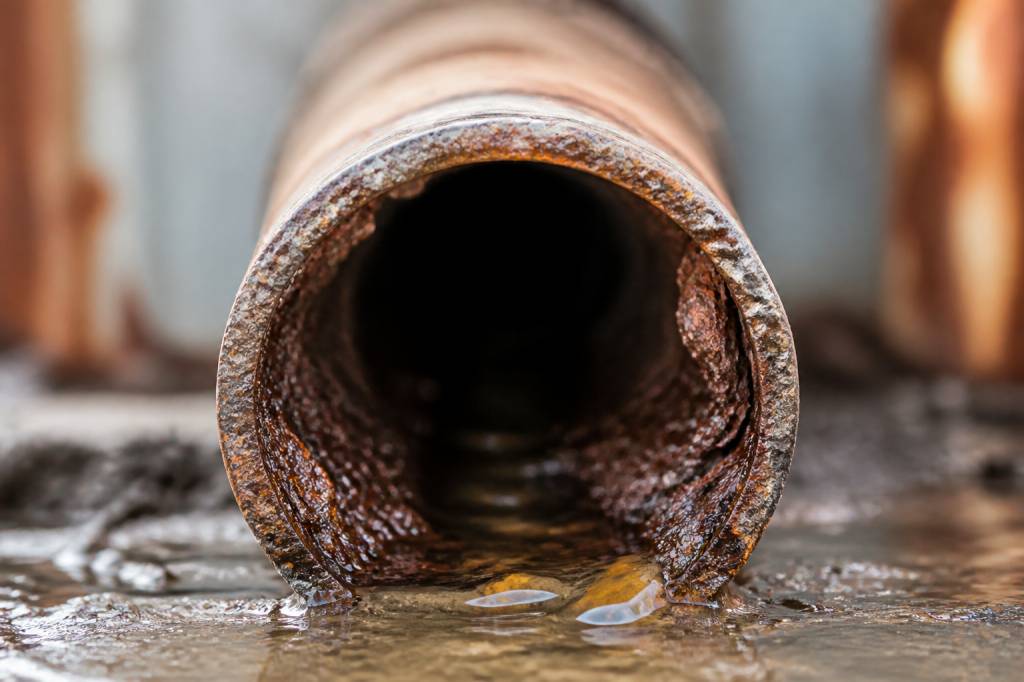
When people talk about PFAS in drinking water, the usual suspects are industrial discharges, firefighting foam, landfill leachate, and contaminated groundwater. But there is another piece of the puzzle that gets less attention than it should: the condition of the pipes carrying that water.
Corroded pipes do not usually create PFAS out of thin air. PFAS are synthetic chemicals, and they enter water systems from external sources. Still, corrosion matters because it can weaken infrastructure, change how contaminants move through a system, and in some cases contribute to the release of PFAS-containing materials. In other words, old pipes may not be the original source, but they can absolutely influence the final quality of the water that reaches your tap.
For utilities, regulators, and homeowners, that distinction is important. If a water system is dealing with corrosion and PFAS at the same time, solving one problem without addressing the other can leave real gaps in protection.
Why corrosion matters in a PFAS conversation
Corrosion is the gradual deterioration of metal pipes and fittings caused by chemical reactions with water, oxygen, and minerals. It is a common problem in aging distribution networks, especially where pipe materials, water chemistry, and maintenance practices are not well matched.
On its own, corrosion can cause discoloured water, lead and copper release, leaks, and infrastructure failure. But in a PFAS context, corrosion becomes more significant for a few reasons:
- It can damage pipe walls and joints, increasing the chance of leaks and intrusion from contaminated surrounding soil or groundwater.
- It can alter water chemistry, which affects how contaminants interact with pipe surfaces and treatment systems.
- It can dislodge scale and sediment that may contain accumulated contaminants.
- It can expose non-metal components such as seals, coatings, gaskets, and linings that may contain fluorinated materials.
That last point is often overlooked. Some plumbing components use fluoropolymer-based materials because they resist heat and chemical attack. Those materials are not the same thing as PFAS contamination in drinking water, but they belong to the same broad family of fluorinated chemistry. Under certain conditions, especially in older or poorly maintained systems, the materials used to protect pipes can become part of the problem.
How PFAS enter drinking water systems in the first place
Before looking at pipes, it helps to understand the main routes by which PFAS get into water supplies. These chemicals have been used for decades in industrial processes and consumer products because they repel heat, oil, grease, and water. The downside is that they are extremely persistent. Once released into the environment, they do not easily break down.
Common PFAS sources include:
- Firefighting foams used at airports, military bases, and industrial sites
- Industrial manufacturing and waste handling
- Landfill leachate
- Contaminated wastewater and biosolids
- Groundwater already impacted by historic releases
Once PFAS enter groundwater or surface water, they can move through a water supply network and reach consumers unless they are removed by treatment. This is where pipe condition starts to matter. A well-maintained system with stable hydraulics and proper treatment performs very differently from a corroded, aging network with sediment buildup and leaks.
The corrosion-PFAS connection: direct and indirect pathways
The link between pipe corrosion and PFAS contamination is not one single mechanism. It is a set of indirect and sometimes overlapping pathways.
First, corrosion can worsen leak risk. When pipes degrade, cracks and pinhole leaks become more likely. If those pipes run through soil or groundwater that already contains PFAS, contaminated water can enter the system through negative pressure events or damaged sections. That means the pipe is not introducing PFAS, but it is providing an easier route for contamination.
Second, corrosion can disturb deposits inside pipes. Over time, minerals and particles accumulate on pipe walls. These deposits can act like a sponge for contaminants. If the chemistry of the water changes, or if corrosion products begin to flake off, previously trapped substances can be released back into the flowing water. PFAS can sometimes behave unpredictably in these systems, especially where multiple contaminants are present.
Third, corrosion can affect treatment effectiveness. Water treatment plants and point-of-entry filters are designed to remove PFAS using technologies such as activated carbon, ion exchange, or reverse osmosis. But if corrosion introduces high levels of iron, manganese, or other particulates, it can reduce the efficiency of filters and increase maintenance demands. A filter that is technically capable of PFAS removal is only useful if the rest of the system does not overwhelm it.
Fourth, some pipe materials and fittings may contain fluorinated components. Gaskets, valve seats, coatings, linings, and sealants can be manufactured with materials that include PFAS-related chemistry. If these materials degrade, wear out, or are improperly selected for a system, they may contribute low-level contamination or complicate remediation efforts.
Are corroded pipes a major source of PFAS?
In most cases, no. The primary PFAS problem still comes from upstream contamination sources. Corroded pipes are not usually the original source the way a firefighting foam spill or industrial discharge can be. That said, dismissing pipe corrosion as irrelevant would be a mistake.
Why? Because drinking water safety is not only about source water. It is also about what happens between the treatment plant and the kitchen tap. A utility may successfully reduce PFAS at the plant, only to have aging distribution infrastructure introduce new issues downstream. It is a little like cleaning your kitchen and then serving dinner on a dirty plate. The water may be treated, but the system delivering it can still undermine the result.
For smaller systems and private supplies, the risks can be even more pronounced. Rural homes with well water often rely on older plumbing, mixed materials, and limited testing. If PFAS contamination is present in the aquifer and pipes are corroded or poorly maintained, the household may face both source contamination and distribution-related problems.
What corrosion can look like in real-world systems
Corrosion does not always announce itself dramatically. Sometimes the warning signs are obvious, but often they are subtle and easy to ignore until the damage is already done.
Typical indicators include:
- Rust-coloured or cloudy water
- Metallic taste
- Reduced water pressure
- Frequent leaks or pipe bursts
- Blue-green staining from copper corrosion
- Visible scale or sediment in fixtures
None of these signs prove PFAS contamination. But they do indicate a system that deserves closer attention. If a network already has corrosion problems, it is reasonable to ask whether it has also been tested for PFAS, especially in areas near airports, firefighting training grounds, manufacturing sites, landfills, or wastewater facilities.
Anecdotally, utilities sometimes focus on one visible crisis at a time. A burst main gets repaired, people get their water back, and the deeper question of what the damaged pipe may have been exposing the system to is left for another day. That may be understandable from an operational standpoint, but it is not enough from a public health perspective.
Why old infrastructure can make PFAS harder to manage
PFAS treatment is not a set-and-forget solution. It requires monitoring, replacement of media, and a system that can handle changing water quality. Corroded infrastructure adds complexity in several ways.
For example, iron-rich water caused by corrosion can foul granular activated carbon systems. Sediment can reduce flow through filters. Pipe degradation can create pressure fluctuations that make system performance less predictable. In homes, corroded plumbing may affect under-sink filters or whole-house systems by shortening cartridge life or reducing contact time.
There is also the issue of legacy materials. Older pipework may contain solder, coatings, or joint compounds that were installed long before PFAS regulations existed. As systems age and parts are replaced piecemeal, utilities can end up with a patchwork of materials, each with different chemical behaviour. That makes long-term contamination control more difficult, not less.
What utilities should be doing
A sensible response to PFAS contamination cannot stop at sampling and treatment. Infrastructure condition needs to be part of the risk assessment. That means integrating corrosion control with contamination management rather than treating them as separate departments that only talk during emergencies.
Useful actions include:
- Testing source water, treated water, and selected points in the distribution network for PFAS
- Mapping corrosion-prone areas and older pipe segments
- Reviewing pipe materials, linings, gaskets, and sealants for fluorinated components
- Maintaining optimal water chemistry to limit corrosion
- Monitoring pressure changes and leakage rates
- Pairing PFAS treatment with regular infrastructure inspection
Utilities should also be transparent with the public. If a system has both corrosion issues and PFAS detections, people deserve a clear explanation of what is being done, what the risks are, and how often results are being checked. Trust is not built by silence. It is built by data.
What homeowners can check
Households cannot redesign the municipal network, but they can reduce exposure and spot warning signs early. If you live in an older property or an area known for PFAS contamination, it is worth taking a few practical steps.
- Ask your water supplier for recent PFAS test results
- Check whether your home has older lead, copper, or galvanized steel plumbing
- Look for discoloured water, low pressure, or recurring leaks
- Consider certified PFAS-reduction filters if testing or local advisories indicate a risk
- Replace ageing filters on schedule rather than when convenient
- Test private wells regularly if you rely on one
If your water is already cloudy or rusty, do not assume a PFAS filter alone will solve everything. It may still remove the target chemicals, but you should also address the underlying plumbing condition. Water quality is a chain, and it is only as strong as the weakest link.
The bigger lesson: water quality is infrastructure quality
PFAS contamination is often discussed as a chemical problem, which it is. But it is also an infrastructure problem, a monitoring problem, and a maintenance problem. Corroded pipes sit right at the intersection of all three.
They can undermine treatment, increase leak pathways, and complicate the movement of contaminants through a system. They can also hide a larger issue: a water network that has been asked to do too much for too long with too little investment.
That is why addressing PFAS in drinking water should never be limited to a single technology or a single sampling round. The best protection comes from combining source control, robust treatment, corrosion management, and transparent monitoring. If one of those pieces is missing, the system is less secure than it looks on paper.
Clean water depends on more than chemistry. It depends on pipes that are sound, materials that are appropriate, and infrastructure that is maintained with the same seriousness as the contamination problem itself. When those pieces come together, the chances of PFAS reaching the tap go down. When they do not, even a well-run treatment system can be put under avoidable pressure.