

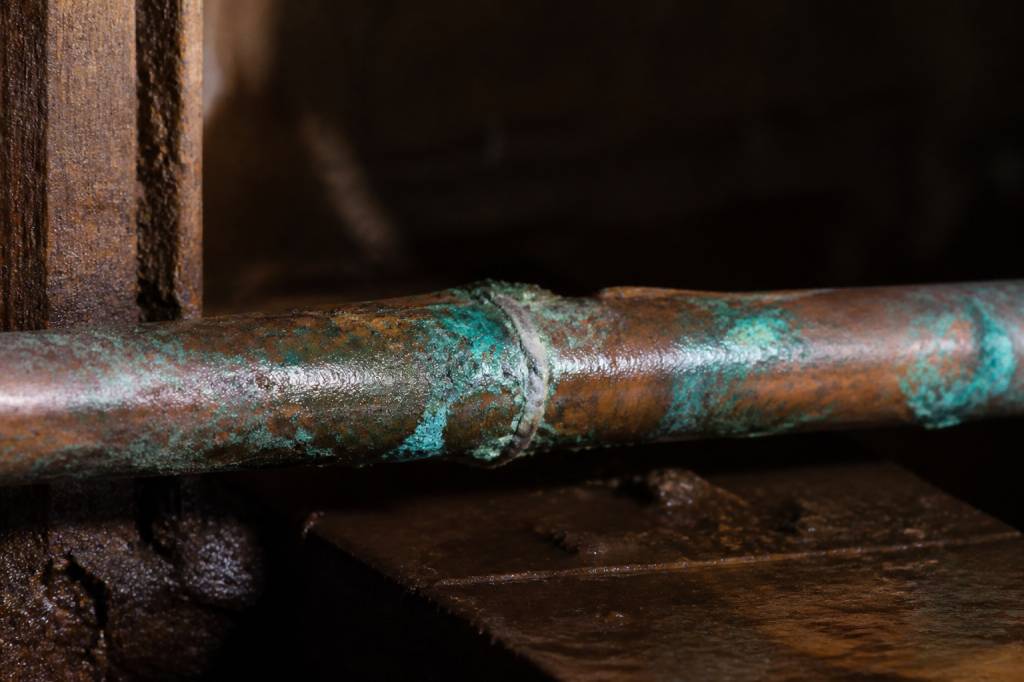
Copper plumbing has a reputation for being durable, reliable, and relatively low-maintenance. In many homes, it has served quietly for decades without much attention. But when copper starts to corrode, it can do more than stain a pipe or shorten its lifespan. It can change the chemistry of the water flowing through it, affect taste and appearance, and in some cases introduce health concerns that homeowners do not notice until the damage is already underway.
Why does this matter on a water-focused environmental blog? Because water quality is shaped not only by what enters a supply from rivers, aquifers, or treatment plants, but also by what happens inside the building. A clean water source can still become compromised by aging plumbing, aggressive water chemistry, or poor system maintenance. Copper corrosion is a good example of how infrastructure and water chemistry interact in ways that are easy to ignore and hard to reverse.
What copper corrosion actually is
Copper corrosion is the gradual breakdown of copper pipe surfaces caused by chemical reactions between the metal and water. Over time, copper atoms leave the pipe wall and enter the water, while the pipe surface forms corrosion products such as copper oxide, copper carbonate, or sometimes greenish-blue deposits. In plain terms: the pipe starts to dissolve, very slowly, into the water system.
This process is not random. It is driven by water quality conditions such as pH, alkalinity, dissolved oxygen, temperature, chloride levels, and flow rate. Water that is too acidic, too soft, or too low in alkalinity is often more corrosive. High chloride concentrations can also accelerate damage. In other words, the same copper pipe can behave very differently depending on the water running through it.
That is why corrosion is often described as a chemistry problem as much as a plumbing problem. If the water is “aggressive,” copper may become a source of contamination rather than a passive delivery material.
How corrosion affects water quality
The most direct effect of copper corrosion is elevated copper in drinking water. Copper is an essential nutrient in small amounts, but too much can cause unpleasant and sometimes harmful effects. Water with elevated copper can develop a metallic taste, blue-green staining, and visible discoloration. It may also leave deposits in sinks, tubs, and toilets.
For many households, the first clue is aesthetic. A showerhead turns green. A faucet leaves blue stains in a sink. The hot water smells odd. People often blame cleaning products or “old pipes” in a vague way, but the underlying issue is frequently corrosion chemistry.
Health concerns arise when copper concentrations become high enough. According to public health guidance in many countries, short-term exposure to elevated copper can cause nausea, vomiting, stomach cramps, and diarrhea. Infants and young children may be more vulnerable. People with certain genetic conditions affecting copper metabolism can also be at higher risk.
It is important to keep this in perspective: copper is not the same type of contaminant as lead or PFAS, and the risk profile is different. But from a water quality standpoint, the mechanism is familiar. A plumbing system that looks solid on the outside can still create chemical exposure at the tap.
Why copper pipes corrode in the first place
Several factors can push copper plumbing toward corrosion:
- Low pH water: Acidic water tends to be more corrosive and can dissolve copper more readily.
- Low alkalinity: Water with little buffering capacity cannot resist pH changes well, making corrosion more likely.
- High chloride levels: Chlorides can destabilize protective films on pipe surfaces.
- High dissolved oxygen: Oxygen supports oxidation reactions that contribute to corrosion.
- Stagnation: Water sitting in pipes overnight or during periods of low use can accumulate higher copper levels.
- High temperature: Hot water systems often corrode faster than cold water systems.
- Improper installation: Mixing incompatible metals, poor soldering, or dead-end piping can all make conditions worse.
One of the less obvious triggers is water treatment changes. For example, a shift in disinfectant chemistry or source water can alter corrosivity. A water utility may make a change to improve microbial safety, only to discover that the new chemistry interacts differently with household plumbing. This is one reason corrosion control is such a critical part of water management.
What corrosion looks like at the tap
Corrosion does not always announce itself loudly. Sometimes there are no obvious signs until a water test reveals elevated copper. But there are a few clues that suggest a problem:
- Blue or green staining around fixtures or in sinks
- Metallic or bitter taste in drinking water
- Pinholes or leaks in copper pipes
- Discoloration in hot water after stagnation
- Sediment or cloudy water from taps that have not been used for several hours
It is worth noting that the first water out of the tap after an overnight stagnation period is often the most contaminated. That is because water sitting in contact with pipe surfaces has more time to pick up dissolved metals. If you are using tap water for drinking or cooking, flushing the tap for a short period may reduce exposure. But flushing is a workaround, not a fix. If corrosion is active, the plumbing system still needs attention.
How copper corrosion is measured
Testing matters because copper corrosion is not something you can reliably diagnose by sight alone. Water quality labs usually measure dissolved copper in milligrams per litre or parts per million. In many regulatory frameworks, action levels or guideline values are set to identify when water may no longer be safe or when intervention is required.
However, a single test can be misleading. Copper levels vary with time of day, stagnation time, seasonal water chemistry, and whether the sample was taken from cold or hot water. A sample drawn after six hours of stagnation may show a very different concentration than a flushed sample. That is why corrosion investigations often use multiple samples and, in some cases, pipe loop testing or system-wide water chemistry analysis.
For homeowners, the simplest next step is often a certified drinking water test that includes copper, pH, and other relevant indicators. Without those basic numbers, you are guessing. And guessing is rarely a great water strategy.
Health and household impacts beyond copper levels
Copper corrosion affects more than the water itself. It can also damage the plumbing system and increase maintenance costs. Repeated corrosion can lead to pinhole leaks, which may cause hidden water damage, mould growth, and expensive repairs. In older buildings, that can mean replacing sections of pipe, repairing walls, and dealing with the aftermath of leaks that went unnoticed for months.
There is also the issue of trust. Once people notice metallic-tasting water or see stains, they may stop using tap water for drinking altogether. That can push households toward bottled water, which has its own environmental footprint and waste burden. So a corrosion problem inside the home can have ripple effects far beyond plumbing.
For families already concerned about contaminants such as PFAS, lead, or nitrates, copper corrosion adds another layer of uncertainty. The overall message is simple: water quality is cumulative. A single issue may be manageable, but multiple small problems can create a much larger exposure picture.
How water utilities manage corrosion control
Corrosion control is one of the most important but least visible parts of drinking water treatment. Utilities can adjust water chemistry to make it less aggressive toward metal pipes. Common approaches include:
- pH adjustment: Raising pH can reduce corrosivity
- Alkalinity control: Adding buffering capacity helps stabilize water chemistry
- Orthophosphate dosing: This can form a protective film on pipe surfaces
- Source water blending: Mixing waters with different chemistries can reduce corrosive effects
- Monitoring and sampling: Ongoing testing helps detect shifts before they become widespread problems
The goal is not to eliminate every trace of copper from the system. Copper is a useful material and, when water chemistry is managed correctly, it can perform well for a long time. The real objective is stability. Water that is stable and non-corrosive is far less likely to leach metals from pipes or fixtures.
Corrosion control also requires careful coordination with regulatory compliance. A change that improves one parameter may worsen another. For example, optimizing for disinfection while ignoring corrosion can create unintended consequences. Effective water management means balancing microbial safety, metal release, and infrastructure durability at the same time.
What homeowners can do
If you suspect copper corrosion in your home, there are practical steps you can take.
- Test your water for copper, pH, and related indicators
- Check for blue-green stains or metallic taste, especially in the morning
- Use cold water for drinking and cooking, since hot water can leach more metals
- Flush taps after long periods of stagnation if you are waiting for a permanent fix
- Inspect visible plumbing for signs of leaks, corrosion, or poor connections
- Consult a qualified plumber or water treatment specialist if results are elevated
Point-of-use filtration may help in some situations, but the right system depends on the source of the problem. A filter designed for particulate removal may not address dissolved copper. In many homes, the best solution is a combination of plumbing repair, water chemistry correction, and targeted filtration at the tap. The important part is not buying a filter and hoping for the best. The important part is matching the solution to the actual contaminant.
When copper corrosion signals a bigger infrastructure issue
Copper corrosion should also be seen as a warning sign. If water is corrosive enough to damage copper pipes, what is it doing to other materials in the system? What about brass fittings, solder joints, water heaters, or fixtures that contain different metals? Corrosive water does not usually stop at one component.
In older homes, corrosion may reveal broader weaknesses in plumbing design or maintenance. In newer developments, it can point to treatment mismatches, water chemistry changes, or installation practices that were never fully stress-tested. Either way, the lesson is the same: building-level water quality cannot be separated from the condition of the system delivering it.
This is especially relevant in the context of environmental health. We often focus on source pollution, but the built environment can amplify or reduce exposure. A well-managed plumbing system acts like a final barrier. A neglected one can become part of the contamination chain.
Why this issue deserves more attention
Copper corrosion is not the most dramatic water story. It does not usually make headlines like industrial spills or emerging contaminants. But it affects millions of homes, often quietly. And quiet problems are exactly the ones that persist.
From a public health perspective, corrosion control is one of the most cost-effective ways to improve drinking water safety. From a household perspective, it can prevent stains, leaks, taste issues, and unnecessary concern. And from an environmental perspective, it helps reduce waste, repairs, and reliance on bottled water when the tap should be safe in the first place.
If your water tastes metallic, leaves blue stains, or seems to change after sitting in the pipes, copper corrosion is worth investigating. The fix may be simple. It may also require a deeper look at water chemistry or plumbing condition. Either way, the evidence is worth collecting before the problem gets worse.
Because when water starts interacting with metal in the wrong way, the issue is no longer just plumbing. It becomes a water quality question, a health question, and a management question all at once. And those are never questions worth leaving unanswered.