

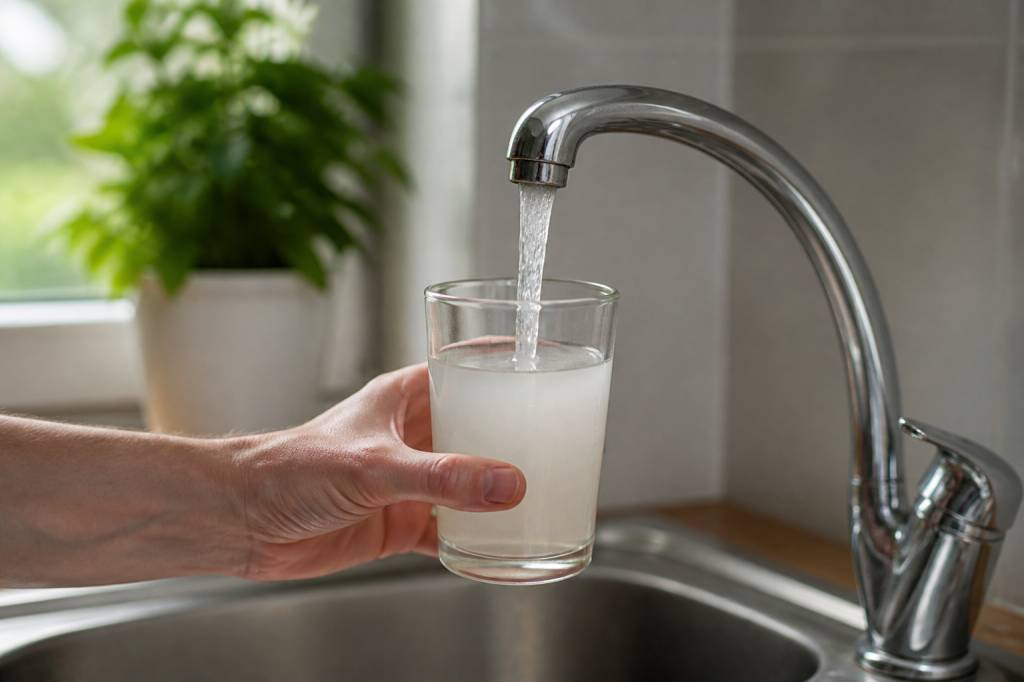
Turning on the tap and seeing cloudy water can be unsettling. Is it air? Is it dirt? Is it safe to drink? In most cases, cloudy tap water is not an emergency, but it is worth understanding what is happening before you shrug it off. Water should usually run clear, so when it looks milky, hazy, or full of tiny particles, something has changed in the plumbing, the local supply, or the treatment process.
The good news is that cloudy water is often caused by something relatively harmless, such as trapped air. The less reassuring news is that it can also point to sediment, corrosion, bacteria in a stagnant system, or an issue with your home’s filtration or water heater. And while cloudiness itself is not the same as contamination, it can sometimes be a sign that your water quality deserves a closer look.
What cloudy tap water actually is
Cloudy water is usually described as water that looks white, milky, hazy, or filled with fine suspended matter. The appearance may be constant, or it may appear only when you first turn on the tap. Sometimes it clears after a few seconds. Sometimes it does not.
That difference matters. If water looks cloudy because of dissolved air, it typically clears quickly. If it remains cloudy, or if the water has a smell, unusual taste, or visible particles, the cause may be more complicated.
Cloudiness can come from:
In other words, cloudy water is a symptom, not a diagnosis.
The most common causes of cloudy water from the tap
Let’s start with the least worrying explanation. In many homes, cloudy water is simply air.
Trapped air in the water supply
If the water looks white or milky but clears within a minute or two, trapped air is the most likely cause. This often happens after maintenance on the mains, a recent plumbing repair, or changes in water pressure. Cold water can hold more dissolved air than warm water, so as water exits the tap and pressure drops, microbubbles form.
A simple test helps: fill a glass and let it sit. If the cloudiness rises from the bottom and disappears within a few minutes, that is usually air. If it clears from the top down, that pattern also points to bubbles rather than contamination.
Sediment from pipes or the water main
Older plumbing systems can shed rust, scale, or mineral deposits into the water. This is more common if you have old galvanized steel pipes, if your home has been vacant, or if local utility work has disturbed the supply line.
Usually, sediment causes a gritty feel, discoloration, or visible specks rather than a uniform milky appearance. Still, it may also make water look dull or cloudy, especially when stirred up after the tap has not been used for a while.
Hard water minerals
Water with a high mineral content can create haze, scaling, and residue. Calcium and magnesium are not typically harmful at normal levels, but they can make water look less clear and can leave deposits on fixtures, kettles, and shower screens.
If your cloudiness comes with white spots on glassware or crusty build-up around taps, hard water may be part of the story.
Corroded plumbing
Corrosion inside pipes, fittings, or storage tanks can release particles and metals into water. In homes with aging plumbing, this may show up as cloudiness plus a metallic taste, orange staining, or occasional brown water. Corrosion can also increase the risk of lead exposure if lead-bearing components are present.
This is one reason cloudy water should not be ignored when it is persistent or paired with other warning signs. The issue may not be the cloudiness itself, but what the cloudiness is carrying with it.
Water heater problems
If the cloudiness appears mainly in hot water, your water heater deserves attention. Sediment can accumulate at the bottom of a tank, especially in hard water areas. Over time, this buildup can circulate into hot taps. Corrosion in the tank can also contribute to discoloured, murky water.
Try comparing hot and cold water from the same tap. If only the hot water is cloudy, the heater is a likely suspect.
Changes in municipal treatment or pressure
Public water systems sometimes alter treatment processes, flush mains, or adjust pressure. Any of these can temporarily change how water looks. After heavy maintenance, water may contain more fine air bubbles or loose sediment from pipes.
If several neighbours notice the same problem at the same time, the issue may be in the local supply rather than in your home. In that case, your water provider should be able to tell you whether maintenance or a known incident is responsible.
Private wells and local groundwater issues
If your home uses a private well, cloudy water may indicate sediment intrusion, bacterial growth, pump issues, or changes in groundwater conditions. Wells are more vulnerable to local contamination than treated municipal supplies because they are not continuously monitored in the same way.
Well owners should be especially cautious if cloudiness appears after heavy rainfall, flooding, or nearby construction. Those conditions can introduce sediment or pollutants into the system.
Is cloudy tap water dangerous?
Not always. But it is a mistake to assume cloudiness is harmless just because it often is. The risk depends on the cause.
Air bubbles are not dangerous. Hard water is usually more of a nuisance than a health threat. But sediment, corrosion, microbial contamination, and industrial pollutants are a different matter. Cloudiness can sometimes be an early sign of a broader water quality problem.
For example, if a pipe is corroding, it may release not only rust but also lead or copper depending on the materials involved. If a well is contaminated, cloudy water may reflect suspended particles or biological growth. And if a filtration system is failing, water may appear cloudy because it is no longer removing the contaminants it was designed to trap.
That is especially relevant for households concerned about chemical contamination, including PFAS. While PFAS themselves do not usually make water visibly cloudy, a change in water clarity can prompt a useful question: what else might have changed in the supply? In areas with known pollution, a visual issue may be a signal to test properly rather than rely on appearance alone.
Health risks to pay attention to
Most cloudy water cases are not immediately dangerous, but certain signs deserve quick action.
Be more cautious if the cloudy water is accompanied by:
Infants, pregnant people, older adults, and anyone with a weakened immune system should be especially careful when water quality changes unexpectedly. If you have any reason to suspect contamination, do not wait for the water to “look normal again” on its own.
How to check what is causing the cloudiness
You do not need a laboratory to do a first-pass investigation. A few simple checks can narrow down the cause quickly.
Use the glass test
Fill a clear glass with cold water and leave it on a counter. Watch how the cloudiness changes over a few minutes.
Compare hot and cold water
If only hot water is cloudy, focus on the water heater or hot-water plumbing. If only cold water is affected, the source may be the main supply or cold-side pipes.
Check multiple taps
If one tap is cloudy and another is not, the problem is probably local to that fixture or branch of plumbing. If every tap in the house is affected, the issue may be wider.
Ask neighbours or your water supplier
If nearby homes are also seeing cloudy water, call your water utility. They may be flushing mains, repairing infrastructure, or aware of a temporary supply issue. A company that supplies water should be able to tell you whether the problem is widespread, temporary, or known.
Look at the timing
Does the cloudiness happen only first thing in the morning? After long periods of non-use? After rain? After the kettle has been running hot all day? Patterns matter. They often point to stagnation, sediment, or pressure changes.
How to fix cloudy tap water
The right fix depends on the cause. There is no single switch to flip, unfortunately. Water systems are annoyingly multi-layered in that way.
If it is trapped air
Run the tap for a short time and wait. Air-related cloudiness often resolves on its own. If the problem follows plumbing work, it may disappear within hours or a day. If it keeps recurring, ask whether your water provider has recently worked on the mains or altered pressure.
If it is sediment
Flush the affected tap for a few minutes to see whether the water clears. Remove and clean aerators on taps, which can trap debris. If sediment keeps returning, have a plumber inspect your pipes, and contact the utility if the issue appears to originate outside the home.
If it is hard water
A water softener or appropriate filtration system may reduce mineral-related haze and scale. This is mainly about improving aesthetics, protecting appliances, and reducing build-up. It is not always necessary for health reasons, but it can make a major difference to day-to-day water quality.
If it is corrosion or aging plumbing
This needs a proper inspection. A licensed plumber can identify damaged pipes, corroded tanks, and fixtures that may be releasing particles into your water. In older homes, it is also wise to check whether lead-containing components are present. If there is any possibility of lead, testing is essential.
If it is the water heater
Drain and flush the tank if recommended by the manufacturer, or ask a qualified technician to inspect it. If the tank is old or heavily scaled, replacement may be the better option. Hot-water cloudiness that keeps returning is often a sign the heater needs maintenance.
If you use a private well
Test the water. Do not rely on appearance alone. A cloudy well sample can indicate sediment, bacteria, or chemical contamination. Wells should be tested regularly, and any sudden change in water appearance should prompt an extra check.
If you want a long-term solution
For households dealing with repeated cloudiness or broader water quality concerns, point-of-use filtration can help. The right system depends on the problem you are trying to solve.
Be careful, though: not every filter is designed for every contaminant. A basic jug filter will not solve rust, and a sediment filter will not remove dissolved chemicals. Matching the filter to the problem is the point.
When to stop drinking the water
If the water is only briefly cloudy and clears quickly, it is usually not necessary to panic. But if the cloudiness persists, worsens, or comes with other signs like smell, taste, staining, or illness, switch to an alternative source until you know more.
If public health authorities issue an advisory, follow it. If a boil-water notice is in place, boiling may address microbial risks, but it will not remove chemical contaminants such as PFAS or heavy metals. That distinction matters. Boiling is not a universal fix, despite its heroic reputation.
A practical way to think about cloudy water
Cloudy tap water is often a plumbing or pressure issue, not a sign of severe contamination. Still, it is worth investigating because water is one of the few things we put directly into our bodies every day without much thought. That makes it easy to dismiss small changes that actually matter.
The safest approach is simple: observe the pattern, identify whether it is hot or cold water, check whether neighbours are affected, and test if the problem persists. If the issue is recurring, a plumber, utility provider, or water quality specialist can help pinpoint the cause. And if you live in an area with known pollution concerns, including PFAS, a proper test is the only reliable way to know what is in your water.
Clear water does not guarantee safe water. But cloudy water is a useful nudge that something deserves attention. In water quality, the tap is rarely trying to be dramatic. It is usually trying to tell you something.