

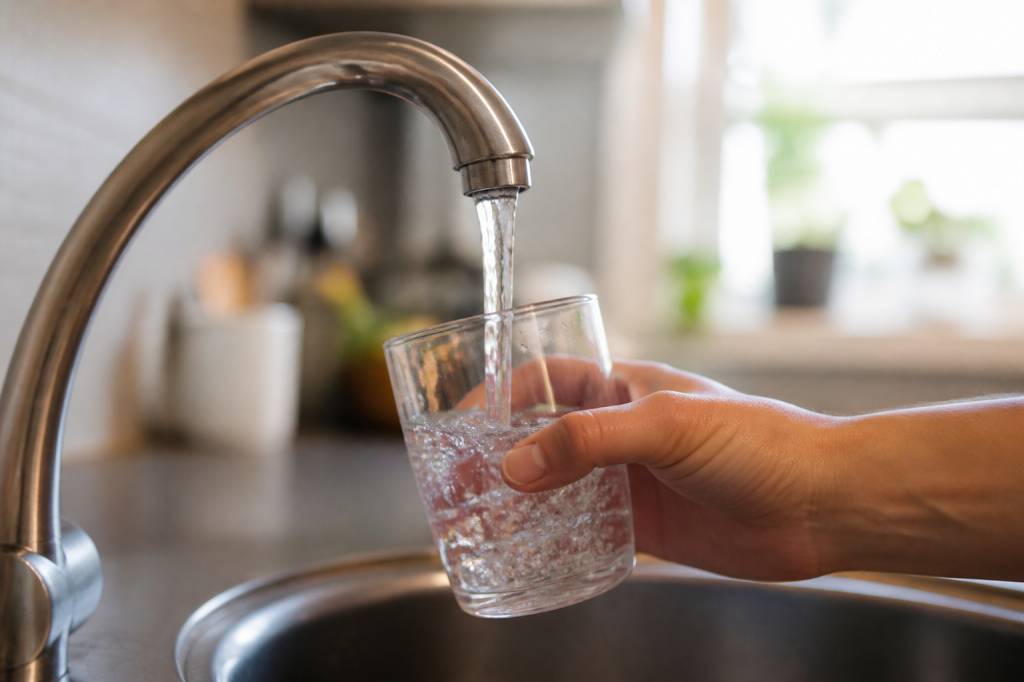
Chlorine has been the backbone of drinking water disinfection for more than a century. It kills bacteria, suppresses pathogen growth in distribution systems, and helps keep water safe as it travels through pipes. But when the conversation turns to PFAS, the picture changes quickly. Chlorine may be excellent at controlling microbes, yet it is not a meaningful solution for PFAS contamination.
That distinction matters. Many people assume that if a water utility adds chlorine, it must be “treating” all contaminants in the water. In reality, chlorine and PFAS interact very differently. One is a disinfectant; the other is a family of highly persistent synthetic chemicals. Mixing chlorine with water can improve microbial safety, but it does not remove the so-called “forever chemicals” that are now drawing intense scientific and regulatory attention.
What chlorine actually does in drinking water
Chlorine is used to inactivate bacteria, viruses, and other pathogens. It works by oxidising cell structures and disrupting essential biological functions. That is why chlorination remains a standard step in municipal water treatment and emergency water management. It is effective, relatively inexpensive, and leaves a residual disinfectant that helps protect water in transit.
In practice, chlorine plays two main roles:
That residual is especially important in long distribution systems, older pipe networks, and areas where water may sit in pipes for extended periods. From a public health perspective, chlorination is a success story. But PFAS are not microbes. They do not die, break apart, or become harmless simply because chlorine is present.
Why chlorine does not solve PFAS contamination
PFAS are prized by industry for being extremely stable. That same chemical stability is what makes them environmentally persistent. Their carbon-fluorine bonds are among the strongest in organic chemistry, which means they resist heat, oxidation, and many conventional treatment processes.
Chlorine is a strong disinfectant, but it is not designed to break those bonds under normal drinking water conditions. In other words, chlorination does not meaningfully degrade most PFAS compounds. If PFAS are already present in source water, the addition of chlorine generally leaves them in the water.
This is an important point for households and water utilities alike. A water sample can test as microbiologically safe while still containing PFAS at levels that raise health concerns. Safety against pathogens and safety against chemical contaminants are related, but not identical, goals.
Some advanced oxidation processes can attack certain pollutants under specific conditions, but standard chlorination is not considered an effective PFAS treatment method. For practical purposes, chlorine should be seen as a disinfection tool, not a PFAS removal tool.
Can chlorine change PFAS chemistry at all?
Short answer: under normal drinking water treatment conditions, not in a way that solves the problem. PFAS are a large class, and their behaviour varies depending on chain length, functional groups, and surrounding water chemistry. Some experimental approaches may alter specific compounds under controlled conditions, but these are not the same as routine chlorination in a waterworks.
There is also a broader issue: even if a treatment step were to transform one PFAS, that does not automatically mean the result is safer. Transformation can produce shorter-chain PFAS or other fluorinated byproducts that may still be persistent and mobile in water. So the key question is not simply “Does chlorine change PFAS?” but “Does it reduce overall exposure and risk?” With standard chlorination, the answer is generally no.
The real effects of chlorine on water quality
Although chlorine does not remove PFAS, it can influence overall water quality in other ways. Some are beneficial, while others are less welcome. Water treatment is often a balancing act: one intervention improves one parameter while nudging another in the wrong direction.
Potential effects of chlorination on water quality include:
That last point is often overlooked. Water is not just “clean” or “dirty”; it is chemically dynamic. pH, alkalinity, organic matter, hardness, and pipe materials all affect how chlorine behaves and how the treated water feels, tastes, and ages in the network.
Disinfection byproducts: the trade-off nobody wants to ignore
When chlorine reacts with natural organic matter in water, it can form disinfection byproducts (DBPs), including trihalomethanes (THMs) and haloacetic acids (HAAs). These compounds are regulated in many countries because long-term exposure has been associated with health risks.
This creates a familiar water treatment dilemma. Utilities must disinfect water effectively, but they also need to minimise byproduct formation. If source water has high levels of organic material, more chlorine may mean more DBPs. If chlorine doses are too low, microbial safety can suffer. Water quality management is rarely as simple as “add more treatment.”
PFAS are not formed by chlorination in the same way DBPs are, but the presence of PFAS adds another layer of concern. A system may be meeting microbial standards while still facing chemical contamination from legacy industrial use, fire-fighting foams, landfill leachate, or contaminated runoff. That is why water treatment strategies increasingly need to target multiple risks at once.
Why source water matters so much
If PFAS enter a water supply before treatment, chlorination will not make them disappear. That means the source is critical. Surface water near industrial sites, military training areas, airports, wastewater discharges, and landfills may face higher PFAS risk. Groundwater can also be affected, sometimes for decades after the original contamination event.
Here is the uncomfortable reality: PFAS are often invisible to standard water testing unless they are specifically analysed. A water sample may look, smell, and taste fine while still containing detectable PFAS. Chlorine won’t change that. It may even give a false sense of reassurance if consumers assume “treated” equals “PFAS-free.”
That is one reason regular monitoring is so important. Public water suppliers need treatment data, but they also need contaminant data. Without both, it is difficult to assess the full picture of water quality.
What happens when chlorine meets PFAS-containing water?
In a practical sense, chlorine and PFAS can coexist in the same water supply without any dramatic reaction. The chlorine disinfects the water. The PFAS remain dissolved. The result is water that may be safer from a microbiological standpoint, but not necessarily from a chemical exposure standpoint.
That can be frustrating for consumers. A home may receive water that passes disinfection standards, yet the underlying PFAS issue remains untouched. If you are trying to reduce PFAS exposure, chlorine is not the barrier you want to rely on. It was never built for that job.
It is also worth noting that chlorination can sometimes complicate downstream treatment strategies. In some systems, pre-chlorination may interact with organics in ways that affect subsequent filtration or membrane performance. Treatment trains are interconnected, and one step can influence the efficiency of the next.
Better treatment options for PFAS removal
Because chlorine is not a PFAS solution, utilities and households often look to targeted treatment methods. The most effective technologies generally focus on physical removal rather than chemical destruction, although both approaches are developing rapidly.
Common PFAS treatment options include:
Each technology has strengths and limits. Activated carbon is widely used, but performance depends on PFAS type, competing contaminants, and carbon replacement schedules. Reverse osmosis can be highly effective, but it is not always practical for whole-community systems due to cost and waste disposal concerns. Ion exchange can be powerful, yet resin selection and operating conditions matter.
For homeowners, point-of-use systems certified for PFAS reduction are often the most realistic option. For utilities, the choice depends on source-water quality, treatment goals, regulatory requirements, and lifecycle costs. There is no universal fix, but there are far better options than chlorine when PFAS removal is the goal.
How water utilities manage both disinfection and PFAS risk
Utilities are under pressure to do two things at once: keep water microbiologically safe and reduce chemical exposure. That often means combining treatment steps rather than depending on a single process.
A typical strategy might include source protection, coagulation and filtration, activated carbon, membrane treatment, and carefully managed chlorination at the end of the process. In this model, chlorine remains essential, but it is used for disinfection, not as a PFAS remedy.
Utilities also have to watch for distribution-system issues. If chlorination is reduced too much in an effort to minimise byproducts, microbial regrowth risk can increase. If it is increased, taste issues and byproduct formation can rise. Water treatment is a constant negotiation between competing priorities. PFAS just make that negotiation more urgent.
What consumers should ask about their water
If you are concerned about PFAS, don’t stop at asking whether your water is chlorinated. That question only tells you about one part of the treatment process. The more useful question is whether your water supplier monitors PFAS and what treatment barriers are in place to reduce them.
Questions worth asking include:
For private well owners, the responsibility is even more direct. Wells are often not chlorinated in a continuous treatment system, and PFAS testing is typically not automatic. If contamination is suspected, lab testing and targeted treatment are the only reliable ways to know what is in the water.
Why this issue matters now
PFAS regulation is tightening in many places, and water systems are being pushed to account for contamination that was not fully understood for decades. At the same time, chlorine remains indispensable for disinfection. The challenge is not to replace chlorination, but to understand its limits.
That nuance is easy to miss in public debate. Chlorine is sometimes criticised because of byproducts, while PFAS are sometimes treated as if any water treatment step should remove them automatically. Science is less convenient than that. Chlorine solves one problem very well and another almost not at all.
For water quality professionals, that means designing systems with multiple barriers. For consumers, it means reading water reports carefully and not assuming that “treated” water is PFAS-free. For policymakers, it means recognising that disinfection standards and chemical contaminant standards must be addressed together, not in isolation.
In the end, chlorine is a vital part of safe drinking water, but it is not a shield against PFAS. If anything, the contrast between the two highlights a larger truth about modern water management: the water that reaches the tap is only as safe as the whole treatment chain behind it.