

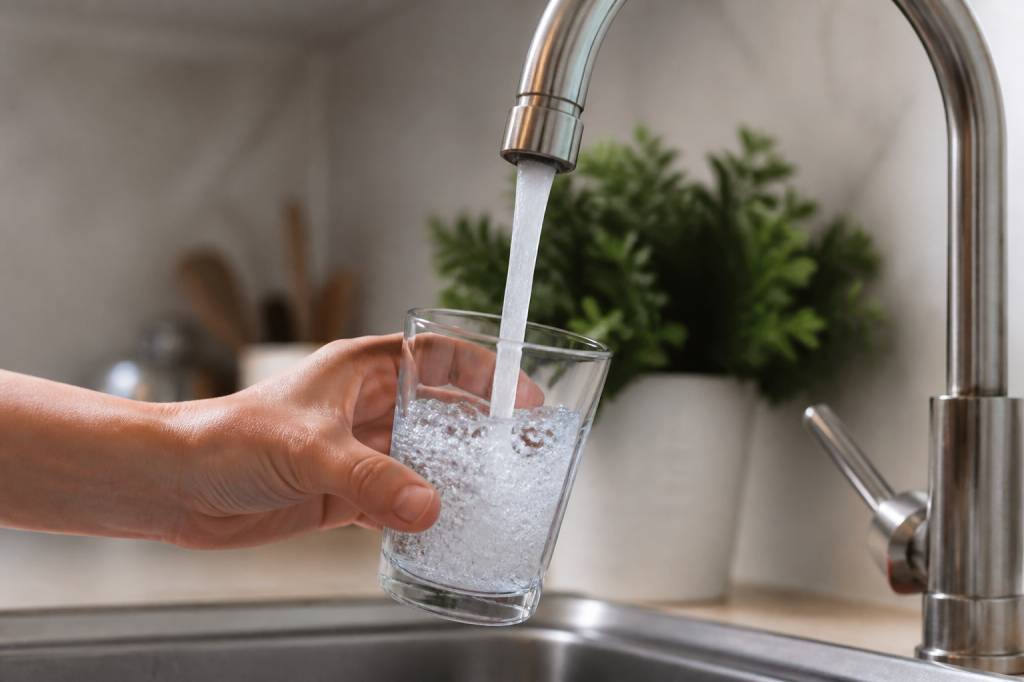
Chlorine has been used in drinking water for more than a century, and for good reason: it kills harmful microbes and has helped prevent countless outbreaks of waterborne disease. In many public water systems, it remains the main line of defence between treated water and the tap. But if you’ve ever filled a glass and noticed that familiar swimming-pool smell, or tasted a faint chemical edge, you’ve probably wondered: is chlorine in drinking water something we should worry about?
The short answer is that chlorine plays a vital role in public health, but it also comes with trade-offs. At the levels typically used in drinking water, it is considered safe by regulators. Still, some people dislike the taste and odour, and others have questions about potential long-term effects or about the by-products chlorine can form when it reacts with organic matter. Understanding the difference between disinfection risk and exposure concerns matters, especially if you’re trying to make informed choices about your water at home.
Why chlorine is added to drinking water
Chlorine is a disinfectant. Water treatment plants add it to kill or inactivate bacteria, viruses, and other microorganisms that can cause serious illness. This step is one of the major public health successes of modern sanitation. Before widespread chlorination, contaminated water supplies were a common source of typhoid, cholera, and dysentery.
What makes chlorine particularly useful is that it leaves a small residual disinfectant in the distribution system. That residual helps protect water as it travels through miles of pipes before reaching homes, schools, and workplaces. Without it, water could become re-contaminated after treatment. In other words, chlorine is not just about what happens in the treatment plant; it’s also about what happens in the network between the plant and your tap.
Different systems may use chlorine gas, sodium hypochlorite, or chloramines. Each has its own advantages and drawbacks, but all are used for the same basic purpose: to keep drinking water microbiologically safe.
Is chlorine in drinking water harmful?
At regulated levels, chlorine in drinking water is generally considered safe for most people. Water utilities aim to maintain a concentration high enough to disinfect effectively, but low enough to avoid excessive taste and minimise unwanted chemical formation. In the UK, as in many countries, drinking water standards are designed to keep chlorine levels within safe limits.
That said, “safe” does not always mean “invisible” or “unnoticeable.” Some people are more sensitive to chlorine taste and smell than others. If you’ve ever opened a tap and immediately thought, “That smells like a public swimming pool,” you’re not imagining things. Chlorine is volatile, which means it can evaporate from water and become noticeable even at low concentrations.
From a health perspective, the main concern is not usually the chlorine itself at normal drinking-water levels, but the disinfection by-products that can form when chlorine reacts with natural organic matter in water. These include compounds such as trihalomethanes (THMs) and haloacetic acids (HAAs). Regulators monitor these carefully because long-term exposure to elevated levels has been associated in some studies with health risks.
It is important to keep the risk in perspective. The immediate danger from untreated water is far greater than the potential risk posed by regulated chlorinated water. That is why public health agencies continue to support disinfection. The challenge is to manage both safety and chemical exposure as effectively as possible.
What are the possible health concerns?
For most healthy adults, drinking chlorinated water within regulatory limits does not pose a major health problem. However, there are a few issues worth understanding.
First, people with asthma or chemical sensitivities sometimes report irritation from chlorine smell, especially in highly chlorinated water or when vapours are present during showering. This is more often a comfort or sensitivity issue than a confirmed toxicological one, but it can still matter in everyday life.
Second, the by-products formed during chlorination have been studied for decades. Some research has found associations between long-term exposure to certain disinfection by-products and adverse outcomes, including increased bladder cancer risk in some populations. The evidence is complex, and associations do not always prove causation, but the concern is serious enough that water utilities are expected to control these compounds.
Third, chlorine can contribute to dryness or irritation for some people when used in bathing or washing. This is not unique to drinking water, but it is one reason people often look for filtration solutions that improve both taste and household comfort.
For vulnerable groups, including infants, people with compromised immune systems, or those with specific medical conditions, water quality is especially important. In these cases, seeking advice from a healthcare professional or local water authority can be sensible if there are specific concerns about tap water quality.
Why does chlorinated water taste and smell different?
Taste is often the first thing people notice. Chlorine gives water a distinct, sharp flavour that many describe as metallic, medicinal, or simply “chemical.” This is partly due to chlorine itself and partly due to interactions with other compounds in the water system.
Temperature, plumbing materials, and how long water has been sitting in the pipes can all affect taste. If water has been sitting in a glass or a jug for a while, free chlorine may dissipate and the taste may soften. That’s why some people find that refrigerated water tastes better: colder water can reduce the perception of chlorine and other volatile compounds.
There’s also a difference between free chlorine and combined chlorine. Free chlorine is more effective as a disinfectant and often more noticeable in taste and smell. Combined chlorine, often associated with chloramines, tends to have a milder taste but may still be detectable. This is one reason the “best” treatment approach depends on the specific water supply and local water quality goals.
How chlorine relates to PFAS concerns
At first glance, chlorine and PFAS may seem like separate issues. One is a disinfectant, the other a class of persistent synthetic chemicals. But they are connected in a broader water-quality sense: both can affect consumer confidence, and both push people to think more carefully about what is in their tap water.
Chlorine does not remove PFAS. In fact, PFAS are highly stable and generally require specific treatment technologies such as activated carbon, ion exchange, or reverse osmosis. If your concern is only taste and odour, chlorine is the issue. If your concern is also chemical contaminants like PFAS, you need a filter designed for that purpose.
This distinction matters because not all filters solve the same problem. A jug filter that improves taste may reduce some chlorine, but it may do little or nothing for PFAS. On the other hand, a properly certified reverse osmosis system can reduce a wider range of contaminants, including many PFAS compounds, while also improving taste.
Practical ways to reduce chlorine taste at home
If the main issue is taste or smell, there are several practical options. The right choice depends on your budget, your water source, and whether you want to address only chlorine or a broader set of contaminants.
- Let water stand in an open container for a short time. Free chlorine can dissipate naturally, especially at room temperature.
- Chill your drinking water. Cold water often tastes less chlorinated and more refreshing.
- Use a pitcher filter certified to reduce chlorine taste and odour. These are convenient and inexpensive, though performance varies.
- Install an activated carbon filter at the tap or under the sink. Carbon is effective at reducing chlorine and can improve taste significantly.
- Consider reverse osmosis if you want broader contaminant reduction, including chlorine and certain chemicals such as PFAS.
One important note: boiling water can remove chlorine, but it is not a universal solution. It takes time and energy, and it may not be practical for regular use. Also, boiling does not address chemical contaminants like PFAS, and it may concentrate certain substances if water evaporates significantly.
Which water treatment solutions work best?
Activated carbon is one of the most common solutions for reducing chlorine taste and odour. Carbon filters work by adsorption, trapping chlorine and other organic compounds as water passes through the filter media. They are widely used in jugs, faucet-mounted systems, and under-sink units. For households mainly bothered by taste, carbon is often enough.
Reverse osmosis systems provide a more comprehensive treatment approach. They force water through a semi-permeable membrane that removes a wide range of dissolved contaminants. These systems are especially relevant if you’re also concerned about PFAS, nitrates, heavy metals, or other persistent pollutants. Many systems include pre- and post-carbon stages, meaning they can also reduce chlorine before water reaches the membrane and improve taste at the end.
Distillation is another option, though less common in everyday homes. It can remove many contaminants, but it is slow, energy-intensive, and not always the most practical method for routine drinking water use.
When choosing a filter, certification matters. Look for products tested to recognised standards for the specific contaminants you want to reduce. A filter that claims to improve taste is not automatically the same as one certified for PFAS reduction or broader chemical removal.
What should you look for in a filter?
If you’re shopping for a water treatment system, ask a few simple questions before buying:
- What contaminant am I trying to reduce: chlorine, PFAS, both, or something else?
- Is the filter independently certified for that purpose?
- How often does the cartridge need replacing?
- What is the flow rate, and will it meet your household needs?
- Does the system treat all the water you use, or only drinking water at one tap?
These details matter because a filter that performs well in one household may be inconvenient in another. A large family, for example, may prefer an under-sink system over a small pitcher that needs constant refilling. If you cook frequently, a point-of-use system might be enough. If you want improved water quality for showering as well as drinking, a whole-house solution may be worth considering, though those systems are usually more expensive and less targeted.
Can chlorine be reduced without compromising safety?
This is the key question. The answer is yes, but only with careful water management. Municipal utilities sometimes use alternative disinfectants, adjust dosing, or optimise treatment to minimise chlorine taste and by-product formation while keeping water safe. At home, the goal is different: reduce the chlorine you actually consume or taste, without interfering with the safety of the supply.
Point-of-use filters are a good compromise because they treat water just before you drink it, leaving the wider distribution system untouched. That means the utility can still maintain disinfection throughout the pipes, while you get better-tasting water at the tap.
It’s a practical example of shared responsibility: the utility protects the public supply, and the household tailors the final step to its own needs.
When should you be concerned?
Most of the time, chlorine taste alone is not a sign of a dangerous water problem. In fact, a noticeable chlorine smell often means disinfection is working. But there are a few situations where it makes sense to investigate further:
- If the chlorine taste is suddenly much stronger than usual.
- If your water has an unusual odour, colour, or cloudiness.
- If you receive a local water quality notice from your utility.
- If you live in an older property with plumbing that may affect water quality.
- If you are also concerned about PFAS, lead, or other contaminants.
In those cases, checking local water reports and consulting your water supplier is a sensible first step. Public utilities usually publish water quality data, including disinfectant levels and other monitored parameters. If you suspect a household plumbing issue, a home water test may also be useful.
The bigger picture: safe water should also be acceptable water
Drinking water has to do more than meet a chemical standard. It also has to be pleasant enough that people actually drink it. If the taste is off, many households turn to bottled water, which brings its own environmental burden through plastic waste, transport emissions, and cost.
That’s why improving tap water matters beyond convenience. A well-chosen treatment system can reduce chlorine taste, improve confidence in water quality, and lower reliance on bottled water. For households also dealing with broader contamination concerns, including PFAS, the right filter can be part of a more informed and sustainable approach to daily water use.
Chlorine will likely remain part of drinking water treatment for the foreseeable future, and that is not a bad thing. It protects public health. But if the taste bothers you, or if you want an added layer of protection against unwanted chemicals, there are effective solutions available. The key is to choose a system that matches the problem you actually want to solve.