

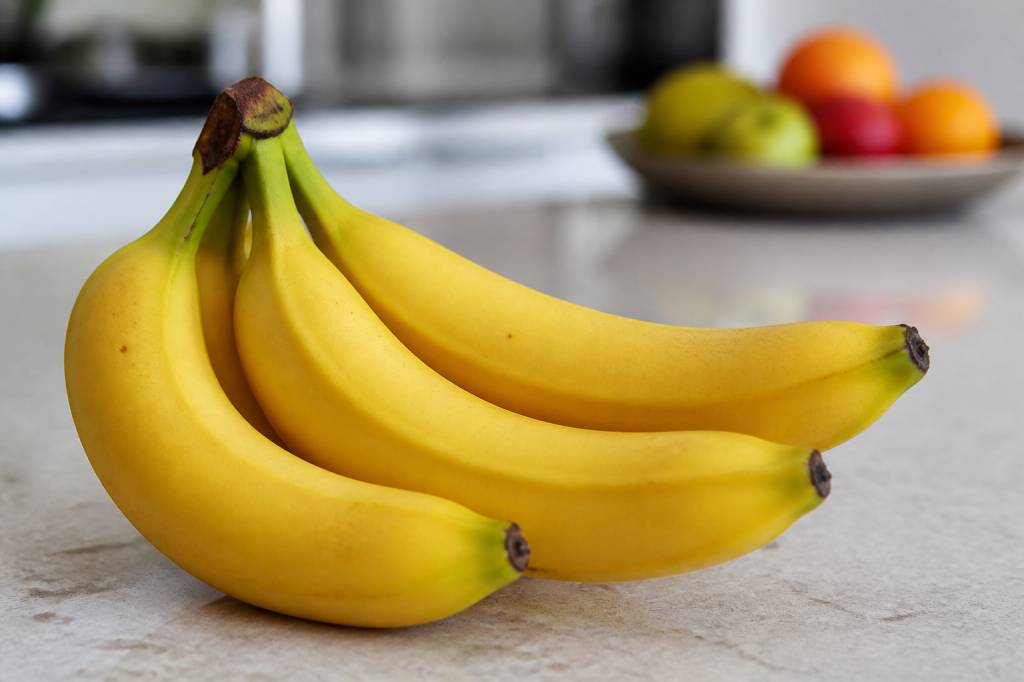
So, are bananas radioactive?
Short answer: yes, slightly. But before anyone starts eyeing their fruit bowl with suspicion, it’s important to understand what that actually means. Bananas contain a naturally occurring radioactive isotope called potassium-40, and because potassium is essential to human health, bananas are naturally rich in it. That makes them mildly radioactive in the same way that many foods, soils, and even our own bodies are mildly radioactive.
The word radioactive can sound alarming, especially in a world where chemical exposure, water contamination, and environmental toxins are already legitimate public concerns. But not all radiation is created equal, and not every radioactive material poses a meaningful risk. In the case of bananas, the science is reassuring: the radiation is extremely low, unavoidable in nature, and nowhere near harmful in normal dietary amounts.
What makes bananas radioactive?
The key player is potassium. Bananas are known for being a source of this mineral, which helps regulate fluid balance, muscle function, and nerve signals. Most potassium is stable, but a tiny fraction exists as potassium-40, a naturally radioactive isotope.
Potassium-40 undergoes radioactive decay at a very slow rate. That decay is what makes bananas technically radioactive. The amount is tiny, though. You would need an extraordinary amount of bananas to get anywhere near a dose that matters from a health perspective.
This is one of those cases where the technical truth and the practical reality look very different. Yes, bananas emit radiation. No, they are not secretly hazardous. Your body also contains radioactive isotopes naturally, because biology and geology are not exactly radiation-free zones.
How much radiation is in a banana?
The amount is commonly expressed using the so-called “banana equivalent dose,” a playful unit that helps people compare radiation exposure in intuitive terms. One banana is roughly equivalent to 0.1 microsieverts of radiation, though estimates vary slightly depending on banana size and potassium content.
To put that in context:
- A chest X-ray delivers around 100 microsieverts.
- A transatlantic flight exposes you to more cosmic radiation than a banana ever will.
- The average person receives around 2,000 to 3,000 microsieverts per year from natural background radiation.
In other words, you would have to eat an absurd number of bananas before the radiation became relevant. Even then, your body regulates potassium carefully, so the limiting factor would be potassium itself, not radiation. If you tried to eat enough bananas to matter radiologically, you’d run into far bigger problems long before radiation entered the picture.
Why the banana equivalent dose became famous
The banana equivalent dose was never meant to be a precise medical measurement. It was created as a communication tool. Radiation is hard for most people to visualize, and the concept of microsieverts means little without context. Bananas offered a simple comparison that made the invisible a little more relatable.
That said, the idea has been both useful and misunderstood. It is useful because it shows how small certain exposures are. It is misleading if people assume every radiation source can be reduced to “banana units” in a scientifically rigorous way. Radiation risk depends on several factors: type of radiation, duration of exposure, route of exposure, and whether the isotope is inside or outside the body.
So while the banana comparison is fun, it should be treated as a teaching tool, not a replacement for proper risk assessment. Science communication works best when clarity does not come at the expense of accuracy.
Should we be worried about eating radioactive foods?
In general, no. Many foods contain naturally occurring radioactive isotopes because they come from soil, water, and the atmosphere. Potassium-40 is the best-known example, but it is not the only one.
Common foods can contain small amounts of natural radioactivity:
- Bananas contain potassium-40.
- Brazil nuts can contain traces of radium and potassium.
- Potatoes, beans, and carrots also contain natural radioactive isotopes in tiny amounts.
- Seafood can contain low levels of naturally occurring radionuclides from the marine environment.
These levels are generally very low and part of normal background exposure. The human body evolved in a world with natural radiation, and our physiology can handle these small exposures without issue.
The real concern is not naturally occurring radioactivity in food, but unnaturally high exposure from contaminated sites, industrial releases, poor waste management, or nuclear incidents. That is where environmental monitoring and regulation matter most.
Natural radiation vs. harmful exposure
It helps to separate two very different concepts: natural background radiation and harmful radiation exposure. Natural background radiation comes from cosmic rays, rocks, soils, food, and even our own tissues. Harmful exposure involves much higher doses, or certain types of radiation delivered in ways that damage cells faster than the body can repair them.
Radiation damage depends on dose and context. A tiny amount in a banana is not remotely comparable to exposure from a serious industrial accident or improper handling of radioactive waste. The comparison is like confusing a kitchen knife with a chainsaw because both are sharp.
This distinction matters beyond bananas. Public debate often lumps all “radiation” together, but risk assessment requires precision. A useful question is not “Is it radioactive?” but “How much, what type, and under what conditions?”
Does cooking or ripening change the radiation in bananas?
Not in any meaningful way. Cooking a banana does not make it more radioactive, and ripening does not suddenly turn it into a radiation source. The potassium content may shift slightly as the fruit changes texture and sugar composition, but the underlying presence of potassium-40 remains part of the banana’s natural chemistry.
The same applies to most foods. Heating, freezing, or blending does not create dangerous radiation. Radioactivity is determined by the atoms present, not by whether the banana has been baked into bread or sliced into a smoothie.
So if you prefer your bananas green, spotted, or caramelized, the radiation story stays the same: tiny, natural, and not something to worry about.
How bananas compare with other everyday exposures
Bananas are a useful gateway into a broader idea: we live surrounded by low-level radiation all the time. It sounds unsettling until you realize that exposure is part of life on Earth.
Here are a few everyday comparisons:
- Living at higher altitude increases exposure to cosmic radiation.
- Some building materials contain naturally occurring radioactive elements.
- Soil composition varies, which means natural background radiation varies by region.
- Medical imaging, like X-rays and CT scans, can involve much higher doses than food ever could.
This is why risk communication matters. People are often more frightened by the word “radiation” than by the actual magnitude of exposure. A measured, evidence-based approach is far more useful than alarmism.
What this says about environmental health literacy
Bananas are a surprisingly good example of why environmental health literacy is so important. The public is regularly exposed to confusing claims about chemicals, toxins, contaminants, and radiation. Some of those claims are valid warnings. Others are oversimplified or misleading.
In environmental health, context is everything. A substance can be harmless in one setting and dangerous in another. The same principle applies to water contaminants, industrial chemicals, and PFAS. People need clear explanations about exposure, concentration, persistence, and actual risk.
The banana story is useful because it reminds us that “natural” does not automatically mean “safe,” and “radioactive” does not automatically mean “dangerous.” That kind of nuance is essential when discussing environmental contaminants of any kind.
Why the banana question keeps coming back
There is a reason the question “Are bananas radioactive?” never disappears. It is memorable, a little funny, and it gives people a concrete way to think about invisible science. But it also touches on a deeper issue: many of us are uneasy when we cannot see, smell, or taste a hazard.
That unease is understandable. Contaminants like PFAS, heavy metals, and radionuclides can all be invisible until testing reveals them. People want practical answers: Is this real? How much is there? What does it mean for my health?
Bananas are a good reminder that risk is not about the presence of a substance alone. It is about dose, exposure pathway, persistence, and biological effect. Once you understand that framework, it becomes easier to interpret everything from food safety headlines to water quality reports.
Should you keep eating bananas?
Absolutely. Bananas are nutritious, convenient, and widely accessible. They provide potassium, fiber, vitamin B6, and natural energy. The tiny amount of potassium-40 they contain is not a reason to avoid them.
If anything, the banana example is a good reason to trust the dose-response principle in toxicology and environmental health: the dose makes the poison. A banana’s radioactivity is so low that it is part of the background noise of everyday life.
Unless you are planning to eat an entire orchard’s worth in one sitting, bananas are not a radiation concern. They are just fruit.
The bigger lesson behind a radioactive banana
So, are bananas radioactive? Yes, but only in the most scientifically unexciting way possible. They contain a naturally occurring isotope, emit a tiny amount of radiation, and pose no meaningful health risk when eaten as part of a normal diet.
The real value of this question is not the banana itself, but what it teaches us about interpreting risk. Whether we are talking about food, water, soil, or industrial contaminants, the same principles apply: measure carefully, compare fairly, and avoid panic when the numbers are tiny.
If a banana can teach us anything, it is that not every scary-sounding fact is a scary fact. Sometimes it is just science doing what science does: making the invisible measurable, and the misunderstood a little clearer.