

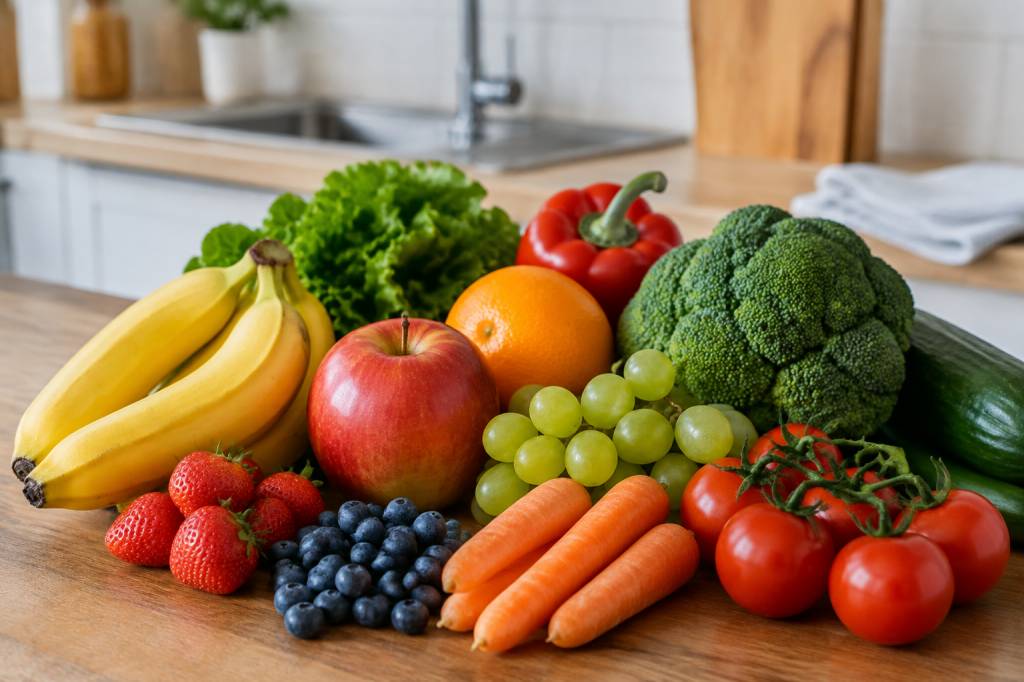
A bright apple, a handful of berries or a bag of salad can make an easy, healthy meal. But many shoppers also wonder what may be left on the surface of their fruit and vegetables after pesticides have been used. Should you wash produce differently? Is organic always safer? And what does it mean when a food sample contains a pesticide residue?
The answers are more nuanced than a simple “safe” or “unsafe” label. Pesticides help protect crops from insects, weeds and disease, but residues can remain on food. UK rules set limits for those residues, and public monitoring checks whether products comply. Understanding how those systems work can help you make sensible choices without losing sight of the nutritional value of fruit and vegetables.
What pesticide residues are
Pesticides are substances used to control pests, weeds or plant diseases. The term covers several groups, including insecticides, herbicides and fungicides. Depending on the crop and the product, a pesticide may be applied to leaves, soil or seeds, or used after harvest to help prevent spoilage.
A residue is a small amount of a pesticide, or a substance produced as it breaks down, that remains in or on food. Residues may be found on the surface, within the edible part, or both. Their presence does not automatically mean a food is dangerous: the important questions include which substance was detected, how much was present and how that amount compares with the legal limit.
For consumers, it can help to distinguish between a residue being detectable and a health risk being demonstrated. Modern laboratory tests can find very small quantities. A result reported as a detection tells us that a substance was measured above the test’s reporting threshold; it does not, on its own, tell us that eating the food would cause harm.
How UK residue limits work
In the UK, maximum residue levels, or MRLs, set the legal limits for pesticide residues in specific foods. They are established for individual pesticide-and-crop combinations. The limits are based on authorised use and scientific assessments, including evidence about how pesticides behave in food and the amounts people might consume.
An MRL is not a line between “completely safe” and “poisonous.” It is a regulatory limit designed to make sure residues remain within permitted levels when pesticides are used correctly. Separate health-based assessments consider whether estimated exposure is likely to pose a risk. A sample above its MRL is a compliance concern and may prompt investigation or action, but it does not automatically mean that every person who ate the food will become ill.
The UK’s Pesticides Residues in Food programme, known as PRiF, publishes monitoring results and reports on samples of food tested for residues. Samples are selected to check compliance and help identify patterns; they are not a complete test of every item sold in every shop. For current findings, consult the latest PRiF reports and advice from the UK’s Health and Safety Executive.
What monitoring results can and cannot tell us
Residue surveys are useful because they show which substances are being detected, whether results exceed legal limits and where further checks may be needed. They can also help regulators track changes over time. But a survey result needs context: the number and type of foods sampled, the country of origin, the method used and the relevant reporting limits all matter.
Finding several residues in one sample can sound alarming. Scientists and regulators assess each substance against its own legal and health-based criteria, while also researching how mixtures might behave. Assessing combined exposure is complex because substances may have different effects, act through different biological pathways and be consumed in varying amounts. This remains an active area of research, rather than a reason to assume that every mixture causes harm.
News headlines sometimes describe a food as “covered in chemicals” after one or more residues are detected. That language can obscure the difference between a trace measurement and a meaningful health risk. Look for the actual results, the applicable limits and the regulator’s interpretation before drawing a conclusion.
Does washing fruit and vegetables help?
Yes. Rinsing produce under clean, running water can remove dirt, some microorganisms and some surface residues. Rub firm produce gently with your hands or a clean produce brush. Wash items even if you plan to peel them, so dirt and contaminants are less likely to transfer from the outside to the flesh as you cut.
- Rinse fruit and vegetables under running water rather than soaking them in a bowl of standing water.
- Rub firm items such as apples, cucumbers and potatoes while rinsing.
- Remove outer leaves from vegetables such as lettuce and cabbage, then rinse the remaining leaves.
- Dry produce with a clean cloth or paper towel if appropriate.
- Wash your hands, knives and chopping boards before preparing food.
Washing is helpful, but it cannot remove every pesticide. Some products are designed to be absorbed by a plant or can move beneath the surface. Peeling may reduce residues on certain foods, but it can also remove fibre and nutrients. There is no household method that reliably removes all residues from every crop.
Do not wash produce with soap, detergent, bleach or household disinfectants. These products are not intended for food and may leave harmful residues of their own. Commercial produce washes are not necessary for routine home preparation; clean running water and careful handling are practical choices.
Organic and conventionally grown produce
Organic farming restricts the use of many synthetic pesticides, but it does not mean that crops are never treated. Organic standards allow certain substances, including some pesticides from natural sources, under specified conditions. Organic produce can also acquire residues through environmental contamination, drift from nearby fields or handling and transport.
Conventionally grown produce is subject to pesticide rules too. A pesticide must be authorised for use, and residues in food are expected to comply with the applicable MRLs. Organic and conventional systems differ in their permitted methods, but “organic” and “residue-free” are not interchangeable terms.
If organic food fits your budget and preferences, it can be one option. If it does not, buying conventional fruit and vegetables is still a sound way to support a healthy diet. Worrying about residues should not lead you to avoid produce altogether: the benefits of eating a varied range of fruit and vegetables are well established.
Should you avoid particular foods?
Lists that rank produce by pesticide residues can attract attention, but they often rely on testing methods or assumptions that differ from official risk assessments. A list may count how many substances were detected without explaining their concentrations, the legal limits or how much of the food people typically eat. Detection counts alone cannot tell you which foods pose the greatest health risk.
If you want to reduce potential exposure, variety is a practical strategy. Rotate the fruits and vegetables you buy rather than eating the same few items every day. Choose seasonal produce when it is convenient, rinse food before eating and follow food-safety guidance. These steps are manageable and do not require keeping a complicated list beside your shopping bag.
For infants, children and people with specific medical concerns, dietary advice should come from a qualified health professional or a relevant public health authority. Children may have higher exposure relative to body weight because they eat more food in proportion to their size, which is one reason regulators assess different age groups when evaluating pesticide risks.
Pesticides, PFAS and the wider environment
Pesticides and PFAS are different groups of chemicals, although the topics can overlap. Some pesticides contain fluorinated compounds, and research has raised questions about how certain chemicals and their breakdown products move through soil and water. PFAS are a broad family of substances known for their persistence; not every pesticide is a PFAS, and not every PFAS is used as a pesticide.
For food, the presence of a pesticide residue is assessed under pesticide rules. PFAS contamination may be considered under separate monitoring and regulatory frameworks, depending on the substance and the food. Keeping these issues distinct matters: the right test, legal standard and health assessment depend on the chemical being investigated.
The environmental picture is also wider than what remains on a harvested crop. Depending on the substance and how it is used, pesticides can move into soil, surface water or groundwater, and may affect non-target organisms. Protecting water and ecosystems therefore involves responsible use, effective controls and monitoring beyond the supermarket shelf.
Practical choices for everyday shopping
You do not need to make food shopping stressful to make informed choices. A few simple habits can support both a varied diet and careful food preparation:
- Buy a range of fruits and vegetables, including fresh, frozen and canned options.
- Rinse fresh produce under running water before preparing or eating it.
- Peel only when you prefer to or when a recipe calls for it; peeling is not a complete residue solution.
- Check reliable sources, such as PRiF reports and UK government guidance, when a residue story appears in the news.
- Do not discard food solely because a headline reports a detectable residue without explaining the level or regulatory assessment.
- Follow storage and handling advice to reduce food waste and prevent foodborne illness.
Frozen and canned fruit and vegetables count towards a healthy diet too. They can be convenient, affordable and available year-round. Processing may change the amount of particular residues, but the effect varies by food and substance; it is better not to assume that one format is always “cleaner” than another.
What consumers should take away
Pesticide residues are monitored because they matter, but a detection is not the same as proof of harm. UK MRLs provide legal limits, while risk assessments consider likely exposure and health evidence. Public monitoring helps identify non-compliance and emerging patterns, though no sampling programme tests every item on sale.
For most shoppers, the most useful response is straightforward: eat a varied diet, rinse fresh produce with clean running water, handle food hygienically and check credible sources when you have questions. Organic produce is an option, not a guarantee of zero residues, and conventional produce is regulated too.
Fruit and vegetables offer important health benefits. With clear information and sensible preparation, consumers can make informed choices without letting pesticide headlines push nutritious food off the plate.