

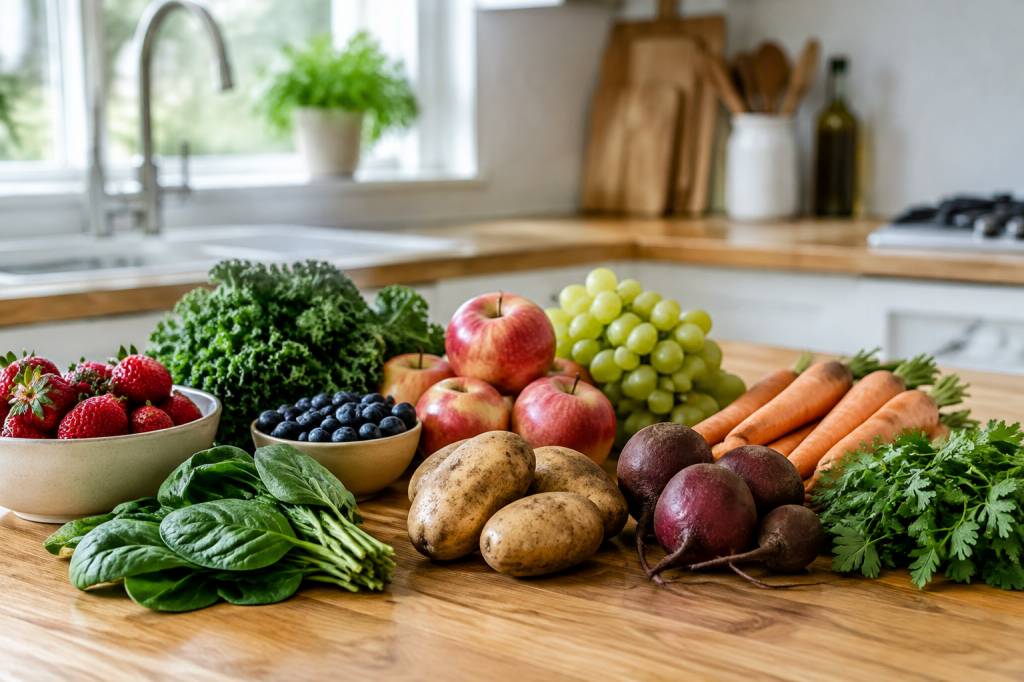
The “Dirty Dozen” is often presented as a shopping guide: buy these fruits and vegetables organic, and you will reduce your exposure to pesticide residues. But the list is not a measure of how toxic a food is, nor is it a ranking of the most polluted water or farms. Understanding what it does—and does not—tell us can help shoppers make informed choices without losing sight of the bigger environmental picture.
What is the Dirty Dozen?
The Dirty Dozen is an annual list published by the Environmental Working Group (EWG), a US-based environmental organisation. It identifies 12 types of conventionally grown produce with relatively frequent or varied pesticide residues in the samples tested by the US Department of Agriculture (USDA).
Strawberries, spinach, leafy greens and grapes have appeared on recent editions, although the rankings can change from year to year. EWG analyses USDA testing data, including the number of pesticide residues detected and, in some cases, the amount found. Its guide is intended to help consumers who want to reduce dietary pesticide exposure decide where organic choices may make the most difference.
The list is not a government safety ranking. USDA testing records residues; the Environmental Protection Agency (EPA) sets legal limits, known as tolerances, for pesticide residues on food. A detection does not automatically mean a sample exceeds a legal limit or presents a known health risk. It means a residue was found using the testing methods applied.
What the list can—and cannot—tell you
A food appearing on the Dirty Dozen does not mean it is unsafe to eat. Nor does a place near the top prove that the food contains the most dangerous pesticide. The list combines different substances and crops into one consumer-friendly ranking, while the health effects of a residue depend on factors such as the chemical, dose, duration of exposure and a person’s age and health.
That distinction matters. Laboratory tests can detect very small quantities, and “detected” is not the same as “harmful.” At the same time, pesticide safety is a legitimate public-health and environmental issue. Some pesticides can affect human health or wildlife, particularly with repeated exposure or when they enter the environment. The key is to interpret residue data carefully rather than treating a simple list as a complete risk assessment.
The guide also reflects the foods and samples included in USDA testing. It cannot represent every farm, growing season, country of origin or production method. Rankings may shift when testing coverage or the mix of samples changes. Think of the Dirty Dozen as a prompt to ask questions, not a definitive map of pesticide risk.
Does buying organic reduce pesticide exposure?
Organic farming restricts the use of many synthetic pesticides, but it does not mean “no pesticides.” Organic growers may use approved substances to manage pests and disease, and residues can sometimes be found on organic produce through drift, handling or environmental contamination. Organic standards and permitted products also vary by country.
Studies comparing organic and conventional foods generally find that choosing organic can reduce exposure to some synthetic pesticide residues. However, evidence that this difference leads to specific health outcomes is more complex. Research has associated some pesticide exposures with health concerns, but results vary by chemical, level of exposure and study design. A residue comparison alone cannot establish that one shopping choice will prevent a particular illness.
For many households, cost and availability are practical constraints. If buying every item organic is unrealistic, the Dirty Dozen can be one way to prioritise. But it is not a reason to avoid fruit and vegetables. A varied diet rich in produce has well-established benefits, and eating conventional produce is generally a better choice than skipping vegetables altogether.
Why pesticide use matters for water quality
Pesticides do not stay neatly within a field. Rain and irrigation can carry some compounds off farmland into ditches, streams and rivers. Others can move through soil and, depending on their chemical properties and local conditions, reach groundwater. Wind can also carry spray beyond the intended area.
What happens next depends on the pesticide, soil type, rainfall, farming practices and the design of local water systems. Some substances break down relatively quickly; others persist longer. Pesticides can harm aquatic organisms, including insects and plants that support wider food webs. Their presence in water can also create challenges for drinking-water providers, which may need to monitor and treat sources to meet regulatory standards.
There is an important limitation: a produce residue ranking is not a water-quality survey. The Dirty Dozen measures pesticide residues on sampled foods. It does not tell us whether the farms supplying those foods have contaminated nearby rivers, or whether a household’s tap water contains pesticides. Water monitoring requires separate sampling and analysis, and results can vary between catchments and over time.
Still, the connection is worth understanding. The way food is grown can affect water quality, while the food ranking offers only a narrow snapshot of one part of the production chain. Better evidence about runoff, groundwater and drinking-water sources comes from local monitoring and transparent reporting—not from produce rankings alone.
Practical steps for shoppers
You do not need a perfect shopping basket to make useful choices. A few straightforward habits can reduce exposure and support better-informed decisions:
- Wash fresh produce under clean running water before eating or preparing it. Washing can remove dirt and some surface residues, but it does not eliminate every pesticide.
- Rub firm produce gently with your hands or use a clean produce brush. Avoid washing fruit and vegetables with soap or household cleaning products.
- Remove damaged or outer leaves when appropriate, and peel produce if that suits the food and your preferences. Peeling may reduce some residues, but it can also remove fibre and nutrients.
- Choose organic versions of particular foods if reducing exposure to some synthetic pesticide residues is a priority and the price is manageable.
- Buy a range of fruits and vegetables rather than relying on a small number of favourites. Variety supports a balanced diet and avoids making one list the sole basis for food choices.
- Follow local advice about drinking water if your water supplier or public-health authority reports a pesticide concern. A food guide cannot confirm whether your tap water is affected.
How to read pesticide claims with care
When you see a claim about residues, check what was tested and how the result is described. Was the sample a single item or part of a larger set? Does the report give actual concentrations, or only the share of samples with a detection? Were the results compared with legal limits? These details help distinguish a measurement from an interpretation.
It is also useful to separate hazard from risk. A chemical’s hazard describes its potential to cause harm under some conditions. Risk considers the likelihood of harm at a particular level of exposure. A detected residue tells us something about exposure, but it does not, on its own, answer the full risk question.
For water concerns, look for information from your local water company, environmental regulator or public-health authority. In the UK, drinking-water quality is monitored under regulatory requirements, and suppliers publish information about the quality of the water they provide. If you are concerned about a private water supply, contact your local authority for advice on testing and appropriate treatment.
A useful guide, not a verdict
The Dirty Dozen can help shoppers think about pesticide residues and decide where organic produce fits into their budget. Its value is in raising questions—not in labelling particular foods dangerous or predicting the quality of local water.
For a clearer picture of environmental impact, pesticide residue testing needs to sit alongside research on farming practices, runoff, groundwater and aquatic ecosystems. For everyday decisions, washing produce, eating a varied diet and checking reliable local water-quality information are sensible steps. The best response to a complicated issue is not to fear the shopping list, but to understand what the evidence actually shows.