

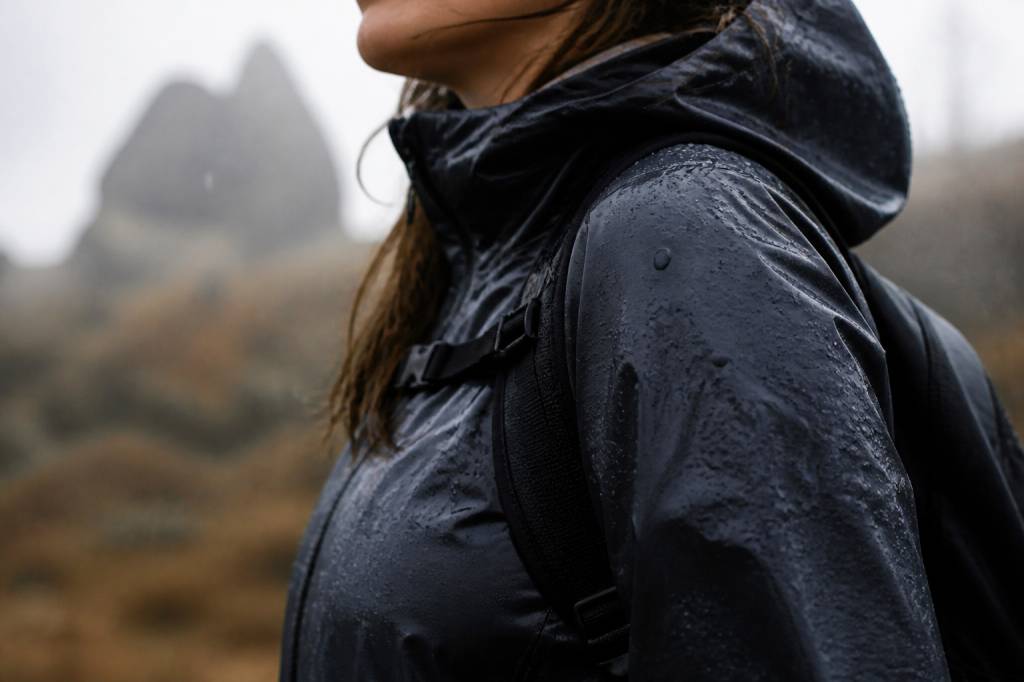
PFAS are often associated with drinking water, non-stick cookware and firefighting foams. But these persistent chemicals can also be found in everyday clothing—particularly garments designed to resist water, oil, stains or heat.
That does not mean every waterproof jacket or pair of outdoor trousers poses the same level of risk. It does mean consumers should understand where PFAS may be used, how exposure can occur, and what choices can reduce unnecessary contact. As evidence develops, the focus is shifting from individual “problem chemicals” to the wider class of thousands of per- and polyfluoroalkyl substances.
What are PFAS and why are they used in clothing?
PFAS are a large group of synthetic chemicals containing strong carbon-fluorine bonds. This structure gives them exceptional resistance to water, oil, grease and heat. The same properties that make PFAS useful in industrial applications also make them extremely persistent in the environment.
In clothing, PFAS have traditionally been used to provide durable water and stain resistance. They may be applied to fabrics, membranes, coatings, threads or trims. Common examples include:
- Rain jackets and waterproof hiking gear
- Ski clothing and snowboarding equipment
- Outdoor trousers and technical workwear
- Water-resistant shoes and boots
- Stain-resistant uniforms, carpets and upholstery textiles
- Some motorcycle clothing and protective equipment
A well-known example is the use of fluorinated durable water repellent finishes, often described as DWR treatments. These finishes help rain form droplets that roll off a fabric rather than soaking into it. Some products use long-chain PFAS, such as PFOA or PFOS, while newer formulations may contain shorter-chain PFAS or other fluorinated substances.
This distinction matters, but it should not be misunderstood. Replacing one regulated PFAS with another compound that is less studied does not automatically remove the environmental concern. Short-chain PFAS may move more readily through water, while some replacement substances have limited toxicological data.
How can PFAS leave clothing?
PFAS are not necessarily locked permanently into fabric. Depending on the chemical, textile construction and manufacturing process, they may migrate from clothing during production, use, washing or disposal.
For consumers, possible exposure routes include:
- Skin contact: Chemicals present on the fabric surface may come into contact with skin, although the amount absorbed through skin varies widely and is not always well characterised.
- Hand-to-mouth transfer: Residues can move from clothing to hands and then be swallowed, a pathway that may be more relevant for young children.
- Inhalation: Dust and fibres released during wearing, drying or handling may be inhaled, particularly in poorly ventilated environments.
- Ingestion through food contact: Some garments, gloves or treated textiles used around food may contribute to indirect exposure if chemical residues transfer to food or food-contact surfaces.
- Environmental release during washing: Washing can release textile fibres and chemical residues into wastewater. Wastewater treatment does not reliably remove all PFAS, allowing some compounds to reach rivers, sludge or other environmental compartments.
It is important to keep the risk in proportion. For most people, drinking contaminated water and consuming contaminated food are considered more significant PFAS exposure pathways than ordinary contact with a single item of clothing. However, exposure is cumulative. A waterproof jacket is one part of a broader chemical environment that may include household dust, food packaging and contaminated water.
Does wearing PFAS-treated clothing cause harm?
Scientists are still working to quantify the health risks associated specifically with PFAS in clothing. Evidence from human and animal studies has linked exposure to certain PFAS with effects including altered immune response, changes in cholesterol levels, impacts on liver function and developmental or reproductive concerns. Some PFAS, including PFOA, have also been classified as carcinogenic or potentially carcinogenic by international health agencies.
However, the presence of PFAS in a garment does not tell us how much of the chemical reaches the body. Risk depends on several factors:
- The specific PFAS involved
- The concentration and form of the chemical
- Whether it is bound to the fibre or present as a surface treatment
- How often and how long the garment is worn
- Whether the clothing is washed, heated or damaged
- The wearer’s age, health and level of vulnerability
Children may deserve particular attention because they have more frequent hand-to-mouth behaviour, greater exposure to household dust relative to body weight, and developing immune and organ systems. Workers who manufacture, treat, repair or repeatedly handle fluorinated textiles may also face higher occupational exposure than the average consumer.
The practical message is not to panic about every technical garment. It is to avoid assuming that “waterproof” means chemically harmless, and to ask whether PFAS-based performance is genuinely necessary for a particular product.
How can consumers identify PFAS in clothing?
Labelling is one of the biggest challenges. In many markets, manufacturers are not required to list every chemical used during textile production. A label may say “water repellent”, “stain resistant” or “oil resistant” without explaining whether PFAS are involved.
When shopping, look for clearer claims such as:
- “PFAS-free”
- “PFC-free”
- “Fluorocarbon-free”
- “Made without intentionally added PFAS”
- “Fluorine-free durable water repellent”
These terms are not always identical. “PFC-free” is commonly used in the outdoor industry, but it may be less precise than “PFAS-free”. Some companies use “PFAS-free” to mean that no PFAS were intentionally added, rather than guaranteeing that laboratory testing found none at any concentration.
Consumers can also check the manufacturer’s chemical policy or contact customer service. Useful questions include:
- Does this product contain intentionally added PFAS?
- Is the waterproof membrane fluorinated?
- Has the finished product been tested for total organic fluorine or specific PFAS?
- Does the claim apply to the entire product, including zips, coatings, thread and trims?
- Which independent standard or certification supports the claim?
Be cautious with vague marketing language. “Eco-friendly”, “green” and “sustainable” do not necessarily mean PFAS-free. A garment may be made from recycled fibres and still contain a fluorinated water-repellent finish.
Are PFAS-free waterproof clothes effective?
In many cases, yes. Textile manufacturers now use alternatives including tightly woven fabrics, polyurethane membranes, silicone treatments, waxes and hydrocarbon-based water repellents. Some brands have redesigned entire product ranges to eliminate intentionally added PFAS.
Performance can vary. A PFAS-free rain jacket may not repel oil as effectively as a fluorinated finish, and some alternative treatments may require more frequent reproofing. For ordinary rain protection, however, oil resistance is rarely essential. If a jacket is being used for a weekend walk, does it really need to repel cooking oil, engine fluids and industrial grease?
Durability is another consideration. A fluorine-free treatment may wear down with washing and abrasion. Following care instructions can extend the life of the garment and reduce the need for replacement. Reproofing products should also be checked carefully, because some older waterproofing sprays may contain fluorinated substances.
What regulations apply?
Regulation is developing, but it is not yet uniform across countries or product categories.
In the European Union, several PFAS are already restricted under chemicals legislation, including significant controls on PFOS and PFOA. A broader proposal to restrict PFAS as a group is being assessed under the REACH framework. The proposal has generated extensive scientific and industry debate because PFAS are used in many applications, from textiles to medical equipment and semiconductor manufacturing. Any final restriction is likely to include specific exemptions or transition periods.
The European Union has also introduced restrictions affecting PFAS in certain consumer products, including textiles and other materials, with implementation depending on the substance and product category.
In the United Kingdom, individual PFAS are regulated through existing chemicals controls, but there is not yet a single comprehensive ban covering the entire PFAS group in all textile products. The UK’s regulatory approach continues to evolve, and consumers should distinguish between legal requirements and voluntary industry commitments.
In the United States, state-level action has become particularly important. Several states have adopted or proposed restrictions on intentionally added PFAS in apparel, outdoor gear, cosmetics, food packaging and other products. The details differ: some laws target clothing generally, while others focus on outdoor apparel or require disclosure and reporting.
Because rules change, consumers and businesses should check current guidance from the relevant environmental regulator rather than relying on an old product label or online claim.
What happens when PFAS clothing is washed?
Washing a PFAS-treated garment does not necessarily remove the chemicals. It may redistribute them, release residues into wastewater or contribute to fibre pollution. Household wastewater treatment plants are not designed to eliminate every PFAS, particularly highly mobile short-chain compounds.
To reduce environmental emissions from clothing care:
- Wash garments only when necessary and follow the lowest effective temperature recommended by the manufacturer.
- Do not use more detergent than required; excessive detergent does not make technical clothing safer.
- Consider a washing machine filter designed to capture synthetic fibres, while recognising that fibre filters do not remove dissolved PFAS.
- Avoid washing heavily contaminated workwear with ordinary household laundry.
- Do not burn unwanted PFAS-treated textiles, because uncontrolled combustion can create hazardous emissions.
- Repair and reuse garments where possible, then use established textile collection or disposal services.
One important point: washing an item repeatedly is not a reliable method for making it PFAS-free. If the chemical is part of a durable coating or membrane, it may remain present throughout the garment’s useful life.
Practical steps for reducing exposure
Consumers do not need to abandon outdoor clothing. A more realistic approach is to make informed choices and reduce unnecessary use.
- Choose PFAS-free or fluorine-free products when buying rainwear, sportswear and stain-resistant textiles.
- Prioritise products from companies that publish chemical management policies and testing information.
- Use waterproof clothing for its intended purpose rather than wearing treated garments indoors or in warm conditions.
- Wash hands after handling heavily treated workwear or waterproofing products.
- Keep children away from unnecessary stain-resistant sprays and avoid applying such products in enclosed spaces.
- Do not assume a higher price means a safer chemical profile; verify the manufacturer’s claims.
- Replace damaged waterproof coatings only with products clearly identified as fluorine-free where possible.
For people working with fluorinated textiles, stronger controls may be necessary. Employers should provide information, ventilation, appropriate protective equipment and laundering arrangements based on occupational risk assessments. Workers should not be expected to take contaminated clothing home for washing.
The wider environmental cost of PFAS-treated textiles
The issue extends beyond the person wearing the garment. PFAS can move through the textile supply chain, from chemical production and fabric treatment to factory wastewater, consumer washing and final disposal. Once released, many PFAS persist for years or decades and can travel through water and air.
Textile manufacturing regions may face particular pressures where wastewater controls are limited. Landfill disposal can also allow persistent chemicals to migrate into leachate, while incineration requires carefully controlled conditions and effective pollution controls.
This is why product-level choices matter, but they are not enough on their own. Stronger regulation, transparent supply chains, improved wastewater treatment and safer textile design are essential. Consumers can ask questions, but manufacturers and policymakers control most of the chemistry upstream.
A better question than “Is this jacket toxic?”
PFAS exposure from clothing is not a simple yes-or-no issue. The more useful questions are: Which PFAS, if any, were used? How much is present? Can it migrate? Is the performance necessary? Is there a safer alternative? And what happens to the garment at the end of its life?
A waterproof jacket is not automatically dangerous, just as a “green” label is not automatically reassuring. Look for specific, verifiable information; favour products made without intentionally added PFAS; and remember that good environmental decisions often begin with buying fewer, longer-lasting items.
The technology to make effective outdoor clothing without deliberately adding PFAS already exists. The next step is making transparent chemical information and safer design the standard—not the exception.