

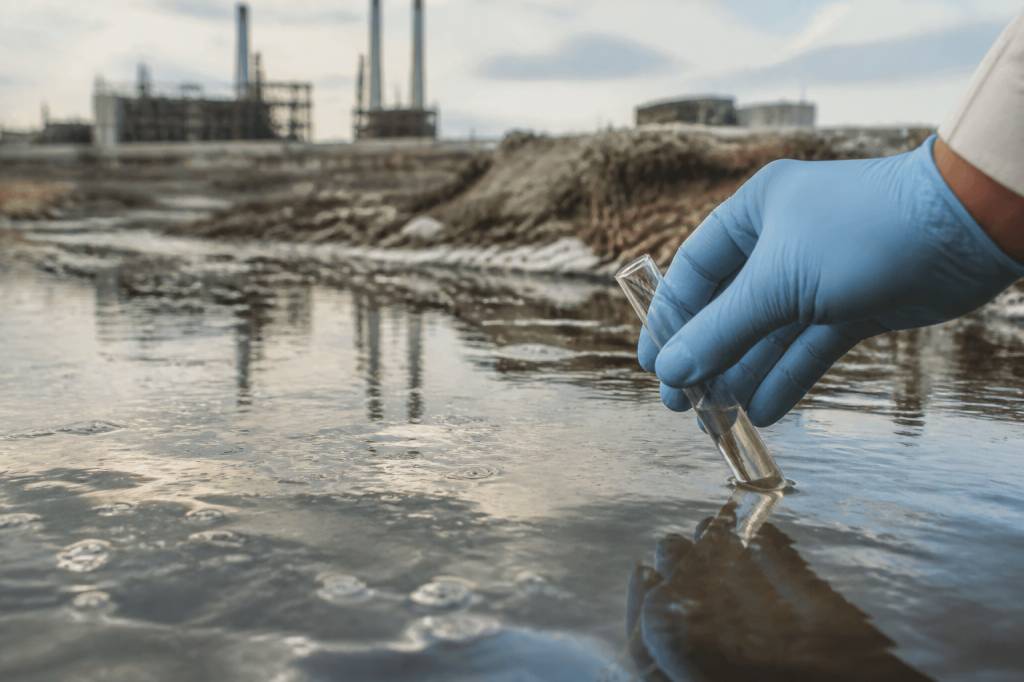
Per- and polyfluoroalkyl substances (PFAS) are often described as “forever chemicals” because many of them resist heat, oil, water and biological degradation. That durability made PFAS useful in industrial processes and everyday products. It also means that once released, they can persist in soil, travel through rivers and aquifers, and remain in the environment for years or decades.
But PFAS are not a single chemical. They are a large family containing thousands of related compounds, with different structures, uses and toxicological profiles. Understanding the most important names on a PFAS chemicals list is essential for interpreting water-quality results, assessing health risks and choosing an effective treatment method.
What are PFAS chemicals?
PFAS are synthetic chemicals characterised by chains of carbon atoms bonded to fluorine. The carbon–fluorine bond is one of the strongest in organic chemistry, which explains both their industrial performance and their environmental persistence.
PFAS have been used in applications including:
- Firefighting foams, particularly aqueous film-forming foams used at airports, military sites and industrial facilities
- Non-stick cookware and stain-resistant treatments
- Waterproof clothing, carpets, upholstery and outdoor equipment
- Food packaging, grease-resistant paper and some cosmetics
- Electronics, semiconductors and specialised manufacturing processes
- Chrome plating and other industrial operations
The term PFAS includes long-chain and short-chain compounds, as well as substances that can break down into other PFAS in the environment. Some are found directly in water samples, while others act as precursors that transform over time.
This distinction matters. Testing for only one or two well-known compounds may provide an incomplete picture of contamination. A water source can contain a mixture of established PFAS, replacement chemicals and degradation products.
Key compounds on a PFAS chemicals list
Although thousands of PFAS have been identified, a relatively small group appears frequently in scientific studies, regulatory assessments and drinking-water monitoring programmes.
Perfluorooctanoic acid (PFOA)
PFOA is one of the best-known PFAS. It was historically used in the production of fluoropolymers, including materials associated with non-stick coatings. PFOA is highly persistent and has been detected in drinking water, soil, wildlife and human blood.
Long-term exposure has been associated in epidemiological studies with increased cholesterol, changes in immune response, effects on fetal development and certain cancers, including kidney and testicular cancer. These associations do not mean that every exposed person will develop illness, but they have contributed to strict regulatory action in many countries.
Perfluorooctane sulfonic acid (PFOS)
PFOS was widely used in firefighting foams, stain-resistant products and industrial applications. Like PFOA, it is persistent and can accumulate in the body and in wildlife.
Research has linked PFOS exposure with effects on the immune system, liver function, cholesterol levels and developmental outcomes. PFOS is listed under the Stockholm Convention on Persistent Organic Pollutants, reflecting international concern about its persistence, long-range transport and potential harm.
Perfluorohexane sulfonic acid (PFHxS)
PFHxS has been used as a replacement for some longer-chain PFAS, including in firefighting foams and surface treatments. It can remain in the human body for a long time and has been detected in groundwater and drinking-water sources.
Studies have examined possible links between PFHxS exposure and thyroid function, immune effects, developmental outcomes and neurobehavioural changes. As with other PFAS, researchers continue to investigate how exposure levels, age and combined chemical mixtures influence risk.
Perfluorononanoic acid (PFNA)
PFNA is a long-chain perfluoroalkyl carboxylic acid. It has been used in specialised industrial applications and can occur as an environmental contaminant or breakdown product.
Available research has associated PFNA with altered lipid levels, immune effects, developmental concerns and possible effects on the liver. It is less frequently discussed by the public than PFOA or PFOS, but it remains relevant when evaluating a broad PFAS contamination profile.
Perfluorobutanoic acid (PFBA)
PFBA is a shorter-chain PFAS that has been used in some industrial and commercial applications. Shorter-chain compounds are often less likely to accumulate in human tissue than long-chain PFAS, but this does not make them harmless.
They can move more easily through soil and groundwater, making them difficult to contain. Short-chain PFAS may also be harder to remove using some conventional water-treatment methods.
GenX chemicals and HFPO-DA
GenX is a trade name associated with a technology developed as an alternative to PFOA in fluoropolymer production. One important compound in this group is hexafluoropropylene oxide dimer acid, commonly abbreviated as HFPO-DA.
“Replacement” does not automatically mean “risk-free”. GenX chemicals have been detected in surface water and drinking-water sources, and toxicological studies have raised concerns about effects on the liver and other organs. Their shorter environmental history also means that long-term human data are more limited than for PFOA and PFOS.
FOSA and precursor compounds
Perfluorooctane sulfonamide, or FOSA, is an example of a PFAS-related compound that can occur as a precursor. Some precursors can transform into more persistent acids such as PFOS or PFOA under environmental conditions.
This is one reason why a single water sample may not tell the whole story. A site with relatively low concentrations of final degradation products could still contain precursor chemicals capable of generating additional PFAS over time.
Why are PFAS a health concern?
Exposure mainly occurs through contaminated drinking water and food, but dust, consumer products and some occupational settings can also contribute. People living near industrial facilities, airports, military bases, wastewater-treatment plants or sites where firefighting foam was used may face a higher risk of exposure.
PFAS are particularly concerning for three reasons:
- Persistence: many PFAS do not break down easily in the environment.
- Mobility: several compounds can travel through soil and groundwater into wells, rivers and reservoirs.
- Bioaccumulation: some PFAS can remain in the human body for years and accumulate in animals and food chains.
Health effects depend on the specific compound, the dose, duration of exposure and individual factors such as age and pregnancy. The strongest evidence for certain PFAS points to changes in cholesterol, reduced vaccine antibody response, altered liver enzymes, pregnancy-related effects and increased risk of some cancers.
Children and developing fetuses may be more vulnerable because their organs and immune systems are still developing. This does not mean that a detected PFAS concentration will inevitably cause harm. Risk assessment must consider the measured level, the exposure pathway and the relevant health guidance.
One practical difficulty is that people are usually exposed to a mixture rather than a single chemical. In addition, PFAS can be present at very low concentrations. Modern laboratories can detect parts per trillion, a unit that is difficult to visualise. One part per trillion is roughly equivalent to one second in 32,000 years. Tiny concentrations can still matter when exposure is continuous and the chemicals persist in the body.
How PFAS contaminate drinking water
PFAS contamination often begins at a specific source but can spread far beyond the original site. Firefighting foam used during training exercises is a well-known example. Foam can soak into soil, reach groundwater and create a plume that migrates with underground water flow.
Other common pathways include:
- Industrial discharge from facilities that manufacture or use PFAS
- Landfill leachate from treated products and household waste
- Wastewater-treatment effluent, since conventional plants are not designed to destroy most PFAS
- Contaminated biosolids applied to agricultural land
- Runoff from airports, military sites and training grounds
- Atmospheric transport and deposition over land and surface water
Private wells can be particularly vulnerable because they may not be routinely monitored by public-water authorities. A household may have clear, odourless water that appears perfectly normal while containing PFAS that cannot be detected without laboratory analysis. Unfortunately, PFAS do not announce themselves with a suspicious smell or a dramatic change in colour.
How PFAS are measured in water
Testing typically uses advanced analytical techniques such as liquid chromatography combined with tandem mass spectrometry. Results may be reported for individual compounds, a defined group of PFAS or a broader measurement known as total organic fluorine.
These approaches are not interchangeable. A targeted test may identify compounds such as PFOA, PFOS, PFHxS and PFNA, but miss unknown or less commonly monitored substances. A total fluorine measurement can indicate the presence of fluorinated organic material without identifying each chemical or confirming its toxicity.
When commissioning a test, it is sensible to ask:
- Which PFAS compounds are included in the panel?
- What are the laboratory detection limits?
- Is the laboratory accredited for drinking-water analysis?
- Will the results distinguish individual PFAS from a combined total?
- Could precursors or replacement chemicals be present at the site?
A single sample provides useful information, but repeated testing may be needed to understand seasonal changes, treatment performance or the movement of a contamination plume.
PFAS regulation in the UK and beyond
Regulation is evolving because scientific evidence, analytical methods and the list of chemicals of concern continue to develop. PFOA and PFOS have already been subject to significant restrictions internationally, while other PFAS are increasingly being assessed as a group rather than one compound at a time.
In England, drinking-water standards and monitoring requirements are set through the regulatory framework overseen by the Drinking Water Inspectorate. The UK also uses legally binding restrictions and environmental controls for certain persistent chemicals. Scotland, Wales and Northern Ireland have their own regulatory arrangements, although the scientific concern is shared across the UK.
The European Union has taken a particularly broad approach in several areas. The EU Drinking Water Directive includes monitoring requirements for PFAS, and proposals under REACH have sought to restrict a wide range of PFAS uses. In the United States, the Environmental Protection Agency has introduced national drinking-water limits for PFOA and PFOS and limits for certain other PFAS.
Limits are not identical between jurisdictions. A result below one country’s threshold may be above another authority’s health-based guidance. For this reason, water-quality results should be interpreted using the standard that applies to the location, source and intended use of the water.
Can PFAS be removed from drinking water?
Yes, but treatment must be selected carefully. Conventional coagulation, sedimentation and biological treatment generally remove PFAS poorly. Boiling water does not destroy PFAS and may increase their concentration if some water evaporates.
The most established treatment options are:
- Granular activated carbon: effective for many long-chain PFAS, particularly when the system is correctly sized and maintained. Filters require replacement before they become saturated.
- Reverse osmosis: capable of removing a broad range of PFAS, including many short-chain compounds. It produces a concentrated waste stream that must be managed responsibly.
- Ion-exchange resins: can provide strong removal performance, although efficiency depends on the resin, competing contaminants and the PFAS mixture.
- Advanced treatment technologies: processes such as electrochemical oxidation, plasma and specialised destruction methods are being researched to break PFAS down rather than simply transfer them into spent media.
Household treatment systems should be certified or independently tested for the specific PFAS claims they make. A device that reduces chlorine or improves taste is not necessarily designed to remove PFAS. Look for validated performance data, a clear replacement schedule and information about the relevant compounds.
What should households and site owners do?
If PFAS contamination is suspected, start with a laboratory test rather than purchasing the first filter advertised online. Identify potential sources, check whether the water comes from a private well or a regulated public supply, and contact the appropriate environmental or drinking-water authority.
Where results show elevated PFAS, practical steps may include using an independently certified filter for drinking and cooking, avoiding untreated well water for infant formula, and arranging follow-up sampling. Site owners should investigate the source, map groundwater movement and prevent further releases where possible.
PFAS management is not simply a question of removing one famous chemical from one water sample. It requires broader monitoring, transparent reporting and treatment strategies that account for mixtures, precursors and replacement compounds. The more complete the chemicals list, the more reliable the risk assessment—and the better the chance of protecting both public health and water ecosystems.
Reliable sources for further information
- UK Drinking Water Inspectorate
- World Health Organization: PFOS and PFOA in drinking-water
- US Agency for Toxic Substances and Disease Registry: PFAS
- US Environmental Protection Agency: PFAS
- Stockholm Convention on Persistent Organic Pollutants