

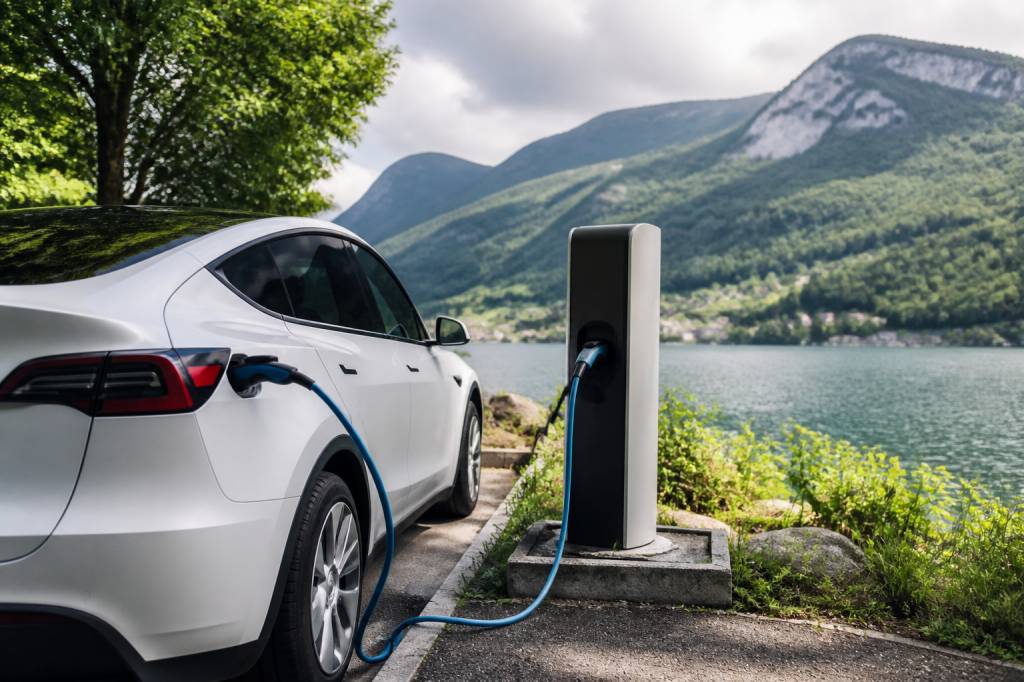
Are electric cars actually better for the environment?
Short answer: usually yes, but not in every situation, and not for every impact. That matters, because the environmental debate around electric vehicles (EVs) is often reduced to a simple slogan: zero tailpipe emissions, problem solved. Real life is messier than that.
Electric cars do not emit exhaust gases while driving, which means no carbon dioxide, no nitrogen oxides, and no tailpipe soot from the vehicle itself. That is a major environmental advantage, especially in cities where air pollution is a direct public health issue. But if we want an honest answer, we need to look beyond the tailpipe and examine the full lifecycle: manufacturing, battery production, electricity generation, driving, maintenance, and end-of-life recycling.
So, are EVs better for the environment? In most cases, yes. But the size of that benefit depends heavily on how they are made and how they are charged. Let’s break it down.
Why tailpipe emissions are only part of the story
Traditional petrol and diesel cars burn fuel continuously, releasing greenhouse gases and air pollutants every time they are driven. Electric cars avoid that direct emissions source entirely. This alone makes them a big improvement for urban air quality.
That matters more than many people realise. Road transport is a major source of nitrogen dioxide and fine particulate pollution, both of which are linked to asthma, heart disease, and premature death. For people living near busy roads, the difference between a combustion engine and an EV is not abstract. It is cleaner air outside their home, school, or workplace.
Still, an EV is not magically “clean” just because it has no exhaust pipe. Its environmental footprint begins long before it reaches the road. Batteries require energy-intensive manufacturing and materials such as lithium, nickel, cobalt, manganese, and graphite. Those materials must be mined, processed, and transported, all of which carry environmental and social costs.
That is where the lifecycle approach becomes essential.
The manufacturing footprint is higher, but not the whole picture
Compared with a conventional car, an electric car usually starts life with a larger carbon footprint because battery production is energy-intensive. Several lifecycle studies, including assessments from the International Energy Agency and the European Environment Agency, have found that EV manufacturing typically produces more emissions upfront than building a comparable petrol car.
That does not mean the EV is worse overall. It means the environmental debt is paid earlier. Once the car is on the road, the lower emissions during use generally compensate for the higher manufacturing impact.
How quickly that happens depends on a few things:
- the size of the battery
- the efficiency of the vehicle
- the carbon intensity of the electricity used for charging
- how many miles the vehicle is driven over its lifetime
In simple terms: a large SUV with a huge battery charged on a coal-heavy grid will deliver smaller climate benefits than a compact EV charged on a low-carbon grid. Not all electric cars are equal, and not all electricity is equally clean.
What happens when an EV is charged?
This is where the environmental answer changes depending on geography. Charging an electric vehicle on a grid powered mostly by renewable energy or nuclear power results in much lower emissions than charging on a grid dominated by coal or gas.
The good news is that grids in many countries are getting cleaner over time. In the UK, for example, the electricity mix has shifted significantly away from coal in recent years, which improves the climate performance of EVs. That means the environmental benefit of driving electric improves as the power system decarbonises.
There is also a practical advantage: unlike petrol or diesel vehicles, EVs can become cleaner without changing the car itself. If the grid gets greener, every EV plugged into it gets greener too. That is a powerful feature of electrification.
Does that mean an EV charged from a fossil-fuel-heavy grid is pointless? No. Even then, electric drivetrains are typically much more efficient than internal combustion engines. A conventional engine wastes a large share of energy as heat. Electric motors convert far more of the energy from the battery into motion.
How do EVs compare with petrol and diesel cars?
On climate emissions, most studies find that electric cars outperform petrol and diesel cars over their full lifetime, even when battery manufacturing is included. The advantage is largest in countries with cleaner electricity and for drivers who cover substantial annual mileage.
A common estimate is that EVs can reduce lifecycle greenhouse gas emissions by around half or more compared with a conventional car, though the exact figure varies widely by region and vehicle type. In some cases, the emissions reduction can be even greater. In others, it is more modest. But the direction of travel is consistent: electric is generally better.
Beyond carbon, EVs have another environmental edge: they eliminate tailpipe pollution at the point of use. That improves local air quality immediately, which is something climate-only comparisons can overlook. Reducing exposure to roadside pollution has real health benefits, especially for children, older adults, and people with respiratory conditions.
However, there is a less glamorous side to road transport that applies to both electric and petrol cars: tyre and brake wear. EVs are often heavier because of their batteries, which can increase tyre abrasion if the vehicle is driven aggressively or fitted with unsuitable tyres. Tyre wear contributes to microplastic pollution and particulate matter. Regenerative braking reduces brake dust, which is a positive, but it does not eliminate the issue entirely.
So yes, EVs solve some pollution problems, but not all of them.
Mining and materials: the environmental trade-off
This is one of the most debated parts of the EV story. Batteries require minerals, and mining has environmental consequences. Land disturbance, water use, chemical pollution, and biodiversity loss can all be associated with extraction and processing.
Cobalt has drawn particular scrutiny because of supply chain concerns and human rights issues in some regions. Lithium extraction has also raised concerns about water use and impacts on local ecosystems, especially in areas already facing water stress. Nickel mining can be highly damaging if poorly managed.
These concerns are real. Pretending otherwise would make environmental communication less credible, not more. The solution is not to ignore the problem, but to improve mining standards, reduce material intensity, diversify battery chemistries, and expand recycling.
There is also an important comparison to keep in mind: petrol and diesel vehicles depend on an enormous supply chain of oil extraction, refining, transport, and combustion. That system is not clean either. Oil spills, methane leakage, air pollution, and carbon emissions are built into fossil fuel mobility. The question is not whether EVs have impacts. It is whether those impacts are lower and more manageable than the alternatives. In most cases, they are.
What about battery recycling?
Battery recycling is one of the most promising parts of the EV transition. Today, a growing industry is developing ways to recover valuable materials from used batteries, reducing the need for virgin mining and lowering the environmental footprint of new batteries.
Recycling systems are not yet perfect, and availability varies by country. But the technology and policy frameworks are improving. As EV numbers grow, so does the incentive to build a circular battery economy.
That matters for two reasons. First, recovered materials can reduce the environmental burden of future battery production. Second, better recycling reduces the risk of batteries becoming waste. End-of-life management is critical if EVs are to deliver long-term environmental gains rather than create a new waste problem.
Battery life is also longer than many people assume. EV batteries are designed to last for years and often retain useful capacity well beyond the first vehicle’s ownership period. Some are repurposed for stationary energy storage before they are finally recycled. That extends the value extracted from the materials already mined.
Are electric cars always the greenest option?
Not necessarily. The greenest car is often the one you do not need to build, buy, and power in the first place.
If a household can replace many car journeys with walking, cycling, public transport, or shared mobility, that usually delivers a bigger environmental benefit than switching from one private car to another. An electric car is cleaner than a petrol car, but it is still a car: it uses resources, space, infrastructure, and raw materials.
This is the part of the discussion that often gets lost. Climate-friendly transport is not only about swapping engines. It is about reducing unnecessary vehicle dependence altogether.
That said, many people do need a car, especially in rural areas or places with limited public transport. For those drivers, an EV is usually the better choice environmentally, particularly if they can charge at home or use low-carbon electricity.
How much does driving style matter?
Quite a lot. Efficient driving can extend range and reduce electricity use, which improves environmental performance. Rapid acceleration, high speeds, and poor tyre maintenance all increase energy consumption.
Unlike combustion cars, EVs are especially efficient in stop-start traffic because they recover some energy through regenerative braking. That makes them well suited to urban driving. Long motorway trips at high speed, however, reduce range and increase electricity use. Physics is stubborn like that.
Charging habits also matter. If you can charge during periods when the grid is cleaner, you can reduce emissions further. Smart charging systems are becoming more common, helping align EV charging with lower-carbon electricity availability.
So, are electric cars better for the environment?
For most drivers and most regions, yes. Electric cars generally produce lower lifecycle greenhouse gas emissions than petrol or diesel cars, and they eliminate tailpipe pollution entirely. That makes them a strong environmental improvement, especially as electricity grids decarbonise and battery recycling improves.
But the most accurate answer is not “EVs are clean” or “EVs are a scam.” It is this: electric cars are part of the solution, not a complete solution on their own.
They are better than combustion cars in most environmental comparisons, but their benefits depend on how they are manufactured, where they are charged, and how long they are used. The cleanest transport system is still one that prioritises fewer car miles, cleaner energy, longer-lasting products, and better urban planning.
That is the nuanced view. And in environmental reporting, nuance is not a weakness. It is the difference between a slogan and the truth.
Key takeaways
- Electric cars have no tailpipe emissions, which improves air quality in cities.
- Their manufacturing footprint is higher upfront, mainly because of battery production.
- Over a full lifecycle, EVs usually emit less greenhouse gas than petrol or diesel cars.
- The cleaner the electricity grid, the greater the environmental benefit of driving electric.
- Mining, tyre wear, and battery disposal still create environmental impacts that need managing.
- The greenest transport choice is often avoiding unnecessary car travel altogether.
If you are trying to make a low-impact transport choice, the best option will depend on your location, driving patterns, and access to charging. But if the question is whether electric cars are better for the environment than fossil-fuel vehicles, the evidence points clearly in that direction.