

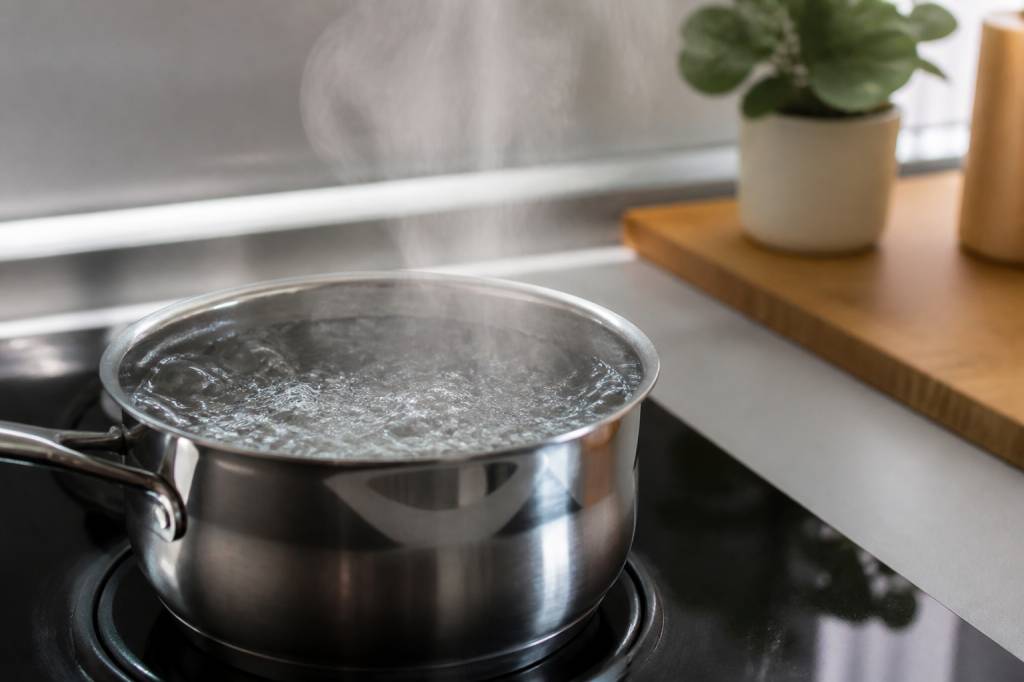
Does boiling water make it safe from PFAS?
Short answer: no. Boiling water can kill bacteria, viruses, and other microbes, but it does not remove PFAS. In some cases, it can actually make the concentration slightly higher because some water evaporates while the PFAS remain behind. That is an important distinction, especially if you are trying to protect your household from “forever chemicals” in drinking water.
PFAS, or per- and polyfluoroalkyl substances, are a large group of synthetic chemicals used in products such as non-stick coatings, food packaging, stain-resistant fabrics, firefighting foams, and some industrial processes. They are called “forever chemicals” because many of them break down extremely slowly in the environment and can accumulate in water, soil, wildlife, and human bodies.
If your first instinct is to boil tap water “just to be safe,” you are not alone. It is a common habit in homes around the world, often passed down as a simple fix for water concerns. But PFAS do not behave like germs. Heat does not destroy them in a normal kitchen pot. The chemistry is the problem.
Why boiling does not work for PFAS
Boiling water is effective against biological contaminants because high temperatures damage cell structures and deactivate pathogens. PFAS are different. They are stable chemical compounds with strong carbon-fluorine bonds, among the most durable in organic chemistry. Those bonds are not broken by boiling water on a stovetop.
Think of it this way: boiling is excellent at making water microbiologically safer, but PFAS are not alive, so there is nothing to “kill.” They remain dissolved in the water unless a treatment method physically removes them or chemically breaks them down under advanced conditions.
Even more importantly, boiling can slightly increase PFAS concentration. As water evaporates, the volume decreases, but the PFAS stay in the remaining liquid. The result is simple: less water, same amount of contaminant. Not exactly the upgrade most people are hoping for.
What boiling can and cannot do
Boiled water has a legitimate role in household safety, but its limits matter. Here is the practical breakdown:
- Boiling can reduce microbiological risks such as bacteria, viruses, and parasites.
- Boiling does not remove PFAS from water.
- Boiling does not remove heavy metals like lead or arsenic.
- Boiling does not remove nitrates, salts, or many dissolved chemicals.
- Boiling may concentrate PFAS if some water evaporates.
This is why “boiled = safe” is a dangerous oversimplification. Safe from microbes? Sometimes, yes. Safe from PFAS? No.
How PFAS enter drinking water
PFAS contamination in water usually starts far away from your kitchen. These chemicals can reach water supplies through industrial discharge, landfill leachate, wastewater treatment effluent, and firefighting foam used at airports, military bases, and training sites. Once in the environment, PFAS can move through soil into groundwater or into rivers and reservoirs used for drinking water.
Because PFAS are persistent and mobile, they can spread widely. Communities sometimes discover contamination years after the source has been active. That delay is part of what makes PFAS so difficult to manage: by the time they are detected, they may already be present in both the water system and the surrounding ecosystem.
For households, the key issue is this: if your supply is contaminated, boiling at home will not solve it. You need a treatment method that is designed to remove PFAS at the point of use or, better yet, at the supply level.
What treatment methods actually help
To reduce PFAS in drinking water, the most reliable household options are filtration systems that are specifically certified or tested for PFAS reduction. Not every filter on the market is up to the task. A basic pitcher filter may improve taste or reduce chlorine, but that does not mean it removes PFAS.
The main technologies that can help are:
- Activated carbon filtration – Can reduce many PFAS, especially longer-chain compounds, depending on design, contact time, and maintenance.
- Reverse osmosis (RO) – Often highly effective because it removes a wide range of dissolved contaminants, including many PFAS.
- Ion exchange – Used in some systems to target PFAS and other anionic contaminants.
Each technology has strengths and limitations. Activated carbon can be effective, but performance depends heavily on the type of PFAS, flow rate, and how often the cartridge is changed. Reverse osmosis is usually more effective across a broader range of PFAS, but it is also more expensive, wastes some water, and may require professional installation. Ion exchange can be highly useful in certain setups, especially at larger scales.
If you are choosing a system for home use, look for independent certification or third-party testing. Marketing claims are not the same as verified performance. “Reduces contaminants” sounds reassuring, but it should be backed by evidence for the specific PFAS compounds you are concerned about.
Should you boil water if PFAS are present?
That depends on the reason you are boiling it. If local authorities issue a boil-water notice because of microbial contamination, then boiling is appropriate for that issue. But if the concern is PFAS, boiling is not a solution. In a home where both microbial contamination and PFAS are possible, boiling may help with germs while leaving chemical contamination untouched.
That makes it essential to separate different water safety problems instead of assuming one method handles everything. Water quality is not a single checkbox. It is a layered issue, and each contaminant requires the right response.
A useful question to ask is: what am I trying to remove? If the answer is bacteria after a flooding event, boil the water as directed. If the answer is PFAS, use a treatment technology proven to reduce them. The two concerns are not interchangeable.
How to know if your water may contain PFAS
PFAS contamination is not always visible, and taste or smell are not reliable indicators. Water can look crystal clear and still contain PFAS. That means testing is the only way to know with confidence whether your supply is affected.
Here are practical steps you can take:
- Check whether your local water utility publishes PFAS monitoring data.
- Review reports from environmental regulators or public health authorities.
- Ask whether your home uses private well water, which can be more vulnerable to nearby contamination sources.
- Consider independent water testing if you live near an airport, military site, industrial area, or landfill.
Private wells deserve special attention. Unlike public systems, they are not always monitored routinely for PFAS. If your home relies on a well, the responsibility for testing and treatment often falls on the homeowner.
Why “just boil it” can create false reassurance
One of the biggest risks around household water safety is false confidence. Boiling feels proactive. It gives the impression that you have “done something.” But with PFAS, that something is not enough.
This matters because false reassurance can delay real action. A family may keep boiling water for months or years, believing they have solved the problem, while PFAS exposure continues. For people who already have elevated health concerns, that delay matters.
It is also important for households with children, pregnant people, and individuals with underlying health conditions. Exposure reduction is especially valuable for groups that may be more vulnerable to environmental contaminants. While no home fix can eliminate all risk, using the right treatment method is far better than relying on boiling alone.
What the science says about PFAS exposure and health
Research has associated certain PFAS with a range of health concerns, including effects on cholesterol, immune response, thyroid function, liver health, and some reproductive outcomes. Scientists are still studying how different PFAS behave in the body, and risk can vary depending on the compound, dose, and length of exposure.
This is one reason public health agencies focus on lowering exposure wherever possible. Drinking water is a major pathway, and for some communities, it can be one of the most important sources. Reducing PFAS at the tap is a practical step, even as broader regulation and cleanup efforts continue.
There is no magic kitchen workaround for these compounds. If there were, environmental scientists would have long since retired the boiling pot as the ultimate water treatment device. Unfortunately, chemistry refuses to be that convenient.
How to reduce PFAS in your home water supply
If you want a realistic home strategy, start with the following approach:
- Test your water if PFAS contamination is suspected.
- Use a treatment system that is independently verified for PFAS reduction.
- Replace filters on schedule, since exhausted filters can stop performing effectively.
- Match the technology to your water source, whether it is municipal water or a private well.
- Keep track of local water quality updates and regulatory changes.
Maintenance matters more than many people think. A good filter installed incorrectly, or a cartridge left in place too long, may not perform as expected. In other words, even the best technology needs a little human attention. Water does not self-manage, despite our best hopes.
What about bottled water?
Some people switch to bottled water when they hear about PFAS contamination. That may feel reassuring, but it is not a universal fix. Bottled water is not automatically PFAS-free, and quality varies by brand and source. In addition, bottled water generates plastic waste, which creates another environmental burden.
If you are using bottled water as a temporary measure during a contamination investigation, that can make sense. As a long-term strategy, though, a verified home filtration system is often more sustainable and more cost-effective.
Practical takeaways for households
The most important point is simple: boiling water does not make PFAS go away. It is effective for microbes, not for forever chemicals. If PFAS are a concern in your area, the safest approach is to test, verify, and treat with a method designed for chemical removal.
If you are unsure where to begin, start with your water utility or local environmental authority. If you use a private well, arrange testing through a reputable laboratory. Then choose a filter or treatment system based on actual performance data, not general claims.
Water safety can be technical, but the core message is straightforward. Boiling water may help in certain emergencies, but PFAS require a different response. The goal is not just water that is hot enough. It is water that is truly safer to drink.