

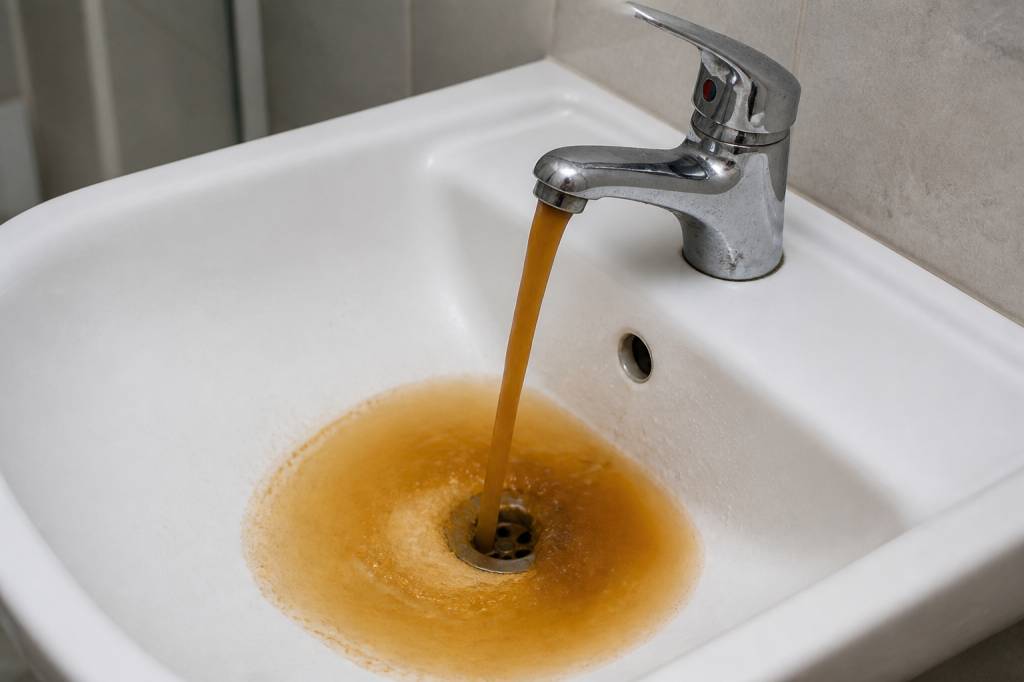
If brown water comes out of your tap, it is hard not to react with a mix of surprise and concern. Is it dirt? Rust? Something more serious? The short answer is that discoloured water is often caused by sediment, corrosion, or disturbances in the water supply system. The longer answer matters more, because while brown water is not always dangerous, it should never be ignored.
For households already worried about contaminants such as PFAS, any change in water quality can feel like one more reason to question what is actually coming through the pipes. That concern is reasonable. Water should be clear, odourless, and predictable. When it is not, the issue may be temporary and harmless, or it may signal a plumbing problem, a supply disruption, or a need for filtration.
Why does brown water come out of the tap?
Brown or reddish water is usually caused by suspended particles in the water, not by the water itself changing colour. In many cases, these particles are iron, manganese, rust, or sediment. When water moves through old pipes, loosens deposits in mains, or stirs up material in a hot water system, the result can be cloudy, tea-coloured, or muddy-looking water.
Common causes include:
If the brown water appears only when you run hot water, the problem is often linked to the hot water tank or heater. If it affects both hot and cold taps, the issue is more likely in the property plumbing or the wider supply network.
A useful clue is timing. Did the water turn brown after nearby roadworks? After a power cut? After returning from holiday? After heavy rain? Those details can point to the source faster than a water test alone.
Is brown tap water dangerous?
In many cases, brown water is not an immediate health emergency. If the cause is rust or sediment, the water may be unpleasant and unsuitable for drinking until the issue is resolved, but it is not necessarily toxic. That said, “not necessarily toxic” is not the same as “fine to drink.”
There are three reasons to take it seriously.
First, discoloured water can indicate plumbing degradation. Corrosion in pipes may release metals such as iron, and in older systems there may be a risk of lead if lead service lines or lead-containing solder are present. Lead is a major concern because there is no safe level of exposure, especially for children and pregnant people.
Second, brown water can signal a disruption in the distribution system. After main repairs or pressure changes, contaminants from the network may be mobilised. Utilities often advise flushing taps before use after such events for a reason: the water may carry loosened particles that were previously sitting in the system.
Third, discolouration can hide other issues. Brown water does not automatically mean bacterial contamination, but if the colour is combined with a bad smell, unusual taste, or a sudden change in clarity, it becomes more important to investigate. Water quality problems rarely arrive with a polite label explaining themselves.
Health effects depend on the cause. Iron and manganese can affect taste and appearance and, at elevated levels, may cause staining or gastrointestinal discomfort in some people. Lead exposure, by contrast, can affect neurological development, kidney function, and cardiovascular health. That is why identifying the source matters more than guessing.
When brown water is more likely to come from your plumbing
If the problem is limited to one property, the source is often local rather than municipal. Home plumbing is a frequent culprit, especially in older houses.
Signs the problem may be inside your home:
Inside a home, the likely causes include rusted pipework, failing water heaters, or sediment buildup in a tank. In some cases, a domestic system may also harbour a biofilm, which is a layer of microorganisms that can build up in plumbing. While biofilm is not always visible, it can contribute to taste, odour, and water quality issues.
If your home is older, it is worth checking whether any part of the plumbing contains legacy materials. Many homeowners assume the public network is the only risk, but the last few metres before the tap can matter just as much as the treatment plant.
When the issue comes from the wider water supply
If multiple homes in the area are affected, the problem may be in the public distribution system. Water mains are not immune to ageing, pressure fluctuations, or maintenance work. When pipes are repaired or flushed, sediment can become dislodged and temporarily affect water colour.
Weather can also play a role. Heavy rainfall can increase turbidity in source water, especially where treatment systems are already under strain. In some regions, changes in groundwater chemistry can increase iron and manganese levels, which then show up at the tap as brown or yellow water.
Water suppliers usually monitor these issues, but householders are often the first to notice a change. If a neighbour’s tap is also brown, it is worth contacting the water company promptly. The sooner the issue is reported, the faster they can determine whether it is a local fault, a broader network problem, or a temporary disturbance.
What should you do if brown water comes out of your tap?
The first step is simple: do not assume it is safe to drink until the cause is known. Brown water is not something to casually ignore, especially if it persists.
Practical steps to take:
If the water is brown only at first and then clears, flushing may temporarily help, but that does not solve the underlying cause. Persistent discolouration deserves a proper diagnosis.
It is also a good idea to stop using the water for drinking, cooking, or making baby formula until you know what is causing the change. Boiling does not remove sediment, rust, heavy metals, or PFAS. In fact, boiling can concentrate some contaminants if water evaporates.
Can brown water contain PFAS?
Brown water itself is not a typical sign of PFAS contamination. PFAS are invisible, odourless, and tasteless, which is part of what makes them difficult to detect without testing. So if you see brown water, you are probably dealing with a different issue, such as corrosion or sediment.
However, the two concerns can overlap in a broader water quality context. A household dealing with visible discolouration may also want reassurance about invisible contaminants. If there are known PFAS issues in the area, or if the home relies on a private well near a contamination source, testing becomes even more important.
This is where a practical mindset helps. Brown water tells you something is wrong with the water system. PFAS concerns tell you that appearance alone is not enough to judge safety. Both points lead to the same lesson: test first, then treat appropriately.
What water filtration solutions can help?
The right filtration solution depends on the cause. No single filter fixes everything, and anyone promising otherwise is selling more optimism than science. Still, several options can help improve water quality at the tap.
For sediment and rust:
For iron and manganese:
For lead and other heavy metals:
For PFAS:
It is important to match the filter to the contamination. A basic jug filter may improve taste, but it will not reliably solve brown water caused by rust, and it will not necessarily protect against PFAS. A whole-house sediment filter can reduce particle load, but it will not remove all chemical contaminants. Treatment should be targeted, not hopeful.
Should you install a whole-house or point-of-use filter?
If the water issue is mainly discolouration from sediment or rust, a whole-house filter can be a sensible first line of defence. It protects every tap and can reduce strain on appliances such as dishwashers, washing machines, and boilers. That matters because sediment does not just affect what you drink; it can also shorten the life of your plumbing and fixtures.
If your main concern is drinking water quality at the kitchen tap, a point-of-use system may be more cost-effective. Reverse osmosis and certified activated carbon filters are commonly used for reducing contaminants in water intended for consumption.
In some homes, the best approach is both: a whole-house sediment filter to handle visible particles and a point-of-use system for drinking water contaminants. That combination is especially relevant where the water supply has multiple concerns, such as rust, hard water, and known PFAS exposure.
How to choose a filtration system without getting overwhelmed
Water filtration can get technical fast, but the decision is easier if you focus on a few basics.
Look for:
Be wary of vague claims. “Cleans all water problems” is not a technical specification. A good filter should state clearly what it removes, under what conditions, and how often it needs maintenance. If a company cannot explain that plainly, the filter may be doing more for marketing than for your water.
When to test your water
Testing is the fastest way to move from guesswork to facts. If brown water is recurring, if your home is older, if you rely on a private well, or if you live in an area with known contamination issues, testing should be part of the response.
Consider testing for:
Laboratory testing is usually more reliable than visual checks alone. Clear water is not always clean, and brown water is not always dangerous in the same way. Testing tells you which problem you are actually facing.
A practical mindset for a common but worrying problem
Brown tap water can look alarming, but the cause is often manageable once identified. Sometimes it is a temporary disturbance after pipe works. Sometimes it is a sign of corrosion in the home. Sometimes it points to a water quality issue that needs immediate attention.
The key is not to normalise it. Water that changes colour is asking for attention, and the answer may be as simple as flushing the system or as important as replacing old pipework. For households concerned about broader contamination, including PFAS, visible water problems are also a reminder that filtration is not a luxury. In many homes, it is a practical safeguard.
If your tap water is brown today, start with the source, test where needed, and choose filtration based on evidence, not guesswork. Water should not be a mystery each morning. The clearer the system, the safer the glass.