


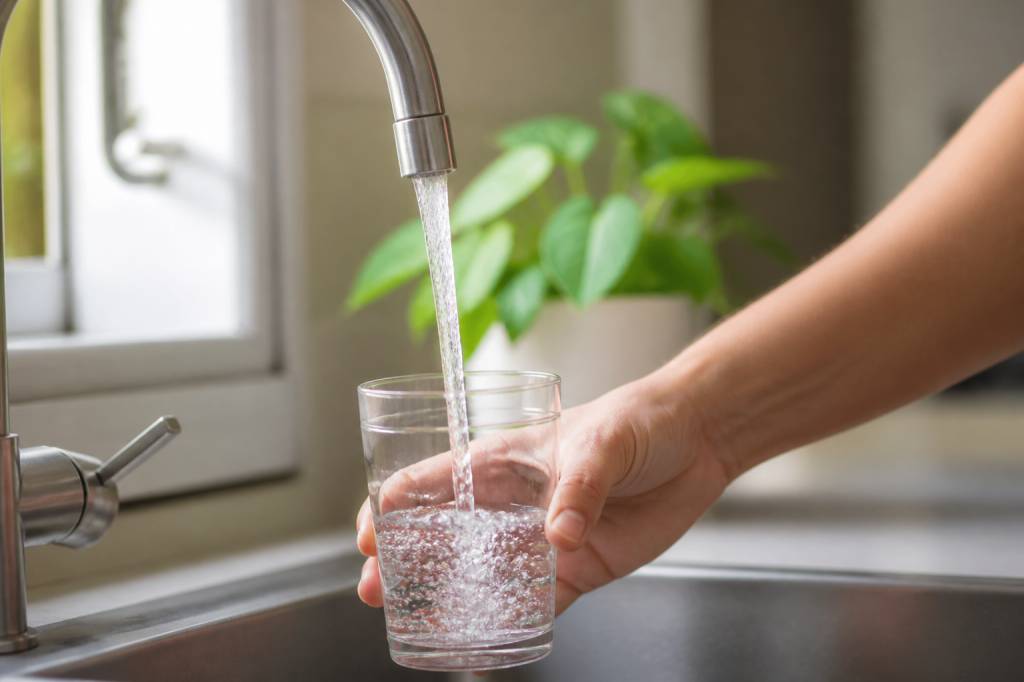
For many people in the UK, turning on the tap is an automatic act of trust. We use drinking water to make tea, prepare food, fill children’s bottles and brush our teeth without giving its chemical history a second thought. Yet a group of persistent chemicals known as PFAS has made that trust a subject of growing public discussion.
PFAS—short for per- and polyfluoroalkyl substances—have been used for decades in products designed to resist water, oil, heat and stains. Their durability is useful in manufacturing, but it also means that many PFAS do not break down easily in the environment. Some can move through soil and groundwater, eventually reaching rivers, reservoirs and drinking-water sources.
Does this mean UK tap water is unsafe? Not necessarily. Water companies monitor supplies and treat water where required. However, PFAS contamination is a real environmental and regulatory issue, and consumers deserve to understand what is known, what is being tested and what practical steps are available.
What are PFAS?
PFAS are a large family of thousands of man-made chemicals. The best-known examples include perfluorooctane sulfonic acid, or PFOS, and perfluorooctanoic acid, or PFOA. Other compounds, such as PFHxS and PFNA, have also attracted scientific and regulatory attention.
PFAS have been used in non-stick cookware, water-repellent clothing, food packaging, stain-resistant carpets, firefighting foams, cosmetics, industrial processes and some paper products. Their carbon-fluorine bonds are exceptionally strong. This helps products resist heat and moisture—but it also makes many PFAS highly persistent once released.
Some PFAS can remain in the environment for years or decades. They may travel considerable distances through water, accumulate in sediments and enter the food chain. Certain long-chain PFAS can also remain in the human body for extended periods.
It is important to remember that PFAS are not one single substance. Their behaviour and health effects vary. Evidence from laboratory studies, epidemiological research and regulatory reviews has linked exposure to some PFAS with outcomes such as changes in immune response, altered cholesterol levels and effects on development. Research is continuing, particularly on newer replacement chemicals and exposure to multiple PFAS at the same time.
How can PFAS enter UK water supplies?
PFAS contamination usually has a local source rather than appearing uniformly across the entire water network. Potential sources include:
- Firefighting foams used at airports, military sites, industrial facilities and training grounds.
- Industrial sites involved in metal plating, textiles, electronics, paper treatment or chemical manufacturing.
- Landfill sites, where PFAS-containing products can break down and release chemicals into leachate.
- Wastewater treatment works, which are not generally designed to remove every PFAS compound.
- Run-off from contaminated soil, industrial estates or areas where firefighting foam was historically used.
PFAS can enter both surface water and groundwater. Groundwater is particularly important because it may feed public water supplies or private wells. Once contamination is identified, water companies may change abstraction points, blend water sources, install treatment or increase monitoring.
A contaminated site does not automatically mean that nearby household taps contain unsafe levels. The distance from the source, the type of PFAS, local geology, dilution and treatment processes all matter. Risk must be assessed using actual sampling data—not headlines alone.
How is drinking water regulated in the UK?
Drinking-water regulation is devolved, so the precise rules and monitoring arrangements differ between England, Wales, Scotland and Northern Ireland. Regulators include the Drinking Water Inspectorate in England and Wales, the Drinking Water Quality Regulator for Scotland and the Drinking Water Inspectorate for Northern Ireland.
UK water suppliers are required to monitor drinking water and comply with legal standards. In England, Wales and Northern Ireland, regulatory guidance has included a value of 0.1 micrograms per litre for individual PFAS and 0.5 micrograms per litre for the sum of a defined group of PFAS. These values should not be interpreted as a universal measure of “zero risk”. They are regulatory thresholds used within a wider risk-management system, and requirements can change as scientific evidence develops.
Scotland has its own regulatory framework and monitoring approach. Consumers should therefore check information published by the relevant national regulator and their local water supplier rather than relying on a general statement about “UK limits”.
Public water suppliers routinely test treated water. If monitoring identifies a concern, companies may investigate the source, increase sampling, notify regulators and take steps to reduce concentrations. They may also issue specific advice to affected customers. A temporary notice from a water company is more useful than broad online speculation because it is based on local measurements and an assessed exposure pathway.
Should consumers be worried about their tap water?
For most consumers connected to a regulated public supply, there is no reason to stop drinking tap water simply because PFAS have been detected somewhere in the UK. Detection is not the same as a breach, and a result below a regulatory value is not equivalent to an immediate health emergency.
At the same time, “it is regulated” does not mean the issue can be dismissed. PFAS are persistent, exposure can occur through several routes and some communities near industrial or firefighting sites may face higher concentrations than the wider population. The most sensible approach is proportionate: look for local evidence, understand official advice and avoid unsupported claims about either guaranteed safety or certain harm.
Consumers in areas with a known contamination incident should:
- Check their water company’s website for PFAS monitoring results and customer notices.
- Read updates from the relevant UK drinking-water regulator and local authority.
- Contact the water supplier directly if they are unsure whether their address is within an affected area.
- Follow any advice concerning infants, vulnerable people, food preparation or alternative supplies.
- Avoid using unverified online maps or social-media posts as a substitute for official test results.
People with specific health concerns should discuss them with a GP or qualified healthcare professional. Routine individual PFAS blood testing is not generally a standard screening tool for the public, and a result would not automatically show whether a person will develop a particular illness.
What about private wells?
Private water supplies require particular attention. Unlike public supplies, they may not receive the same continuous monitoring and treatment. A private well located near an airport, landfill, industrial site, military facility or historic firefighting-training area could warrant targeted testing.
Well owners should contact their local authority’s private-water team for advice. Testing should be carried out by a competent laboratory using a method suitable for PFAS. A general “water quality” test may not include PFAS unless the owner specifically requests it.
Boiling is not a reliable way to remove PFAS. In fact, boiling reduces water volume while leaving these chemicals behind, so concentrations may remain unchanged or potentially increase slightly. If PFAS are confirmed in a private supply, the appropriate response may involve an alternative water source, treatment or a combination of measures recommended by environmental-health professionals.
Can a home water filter remove PFAS?
Some household filtration systems can reduce PFAS, but performance depends on the technology, the specific chemicals present, the starting concentration, the flow rate and how well the unit is maintained.
- Activated carbon: Granular activated carbon and carbon-block filters can reduce many PFAS, particularly longer-chain compounds. They must be replaced on schedule because exhausted media can lose effectiveness.
- Reverse osmosis: Reverse-osmosis systems can remove a broad range of PFAS and are often more effective for shorter-chain compounds than standard carbon filters. They require maintenance and produce a wastewater stream.
- Ion-exchange systems: Specialised resins can capture PFAS, but their performance varies and spent resin must be managed responsibly.
Consumers should look for independent certification and product-specific performance data. In the United States, NSF/ANSI 53 and NSF/ANSI 58 are commonly associated with PFAS reduction claims, but certification does not mean every product removes every PFAS under all conditions. UK consumers should also check whether the product has been tested for the relevant compounds and whether the advertised results apply to normal household use.
A filter is only as good as its maintenance. Replacing cartridges late, installing a unit incorrectly or assuming that a filter removes all contaminants can create false reassurance. Keep records of installation and replacement dates, and never remove or bypass a treatment device recommended by a water supplier.
Why “forever chemicals” are difficult to manage
PFAS contamination is challenging because the chemicals are persistent and widespread, while treatment can be expensive. Removing PFAS from drinking water does not destroy them; it transfers them into concentrated waste such as spent carbon, resin or reverse-osmosis concentrate. That waste must then be handled and disposed of safely.
This is why prevention matters. Stronger controls on industrial emissions, improved management of firefighting foams, careful landfill regulation and the development of safer alternatives can reduce future contamination. Water treatment remains important, but it should not be the only line of defence.
Another challenge is the large number of PFAS compounds. Regulation often focuses on a limited list or a defined group, while manufacturers may replace restricted substances with shorter-chain or newer alternatives. A replacement is not automatically harmless simply because it is newer. Regulators and researchers are increasingly examining PFAS as a class or subgroup rather than assessing each chemical in isolation.
What should consumers ask for?
When a local PFAS concern arises, clear questions can help separate useful information from uncertainty:
- Which PFAS were detected, and at what concentrations?
- Were samples taken from the source water, treated water or household taps?
- How often is the affected area being monitored?
- Do results meet the applicable national regulatory requirements?
- What is the likely source, and is it still active?
- What treatment or alternative supply measures are being used?
- When will the next results be published?
These questions are especially relevant for residents near former industrial sites or private wells. They also encourage a more transparent conversation between communities, water companies, regulators and local authorities.
The practical message for UK households
PFAS deserve serious attention, but consumers should respond to evidence rather than alarm. Public drinking-water systems are monitored, and water suppliers have responsibilities to investigate and manage contamination. If your supplier has not issued a warning and your water comes from a regulated public supply, normal use is generally appropriate.
For households with a private well or a known local contamination source, targeted testing and professional advice are sensible. Boiling water will not solve a PFAS problem, and a cheap filter with vague marketing claims may not either. Choose treatment based on verified performance, maintain it carefully and dispose of used media according to local guidance.
The wider lesson is straightforward: safe drinking water depends not only on treatment at the tap, but also on preventing persistent chemicals from entering the environment in the first place. Consumers can stay informed, ask precise questions and support transparent monitoring—without turning every detection into a panic or every regulatory threshold into a blank cheque.
Useful sources: Drinking Water Inspectorate; UK government drinking-water guidance; the Environment Agency; the relevant national regulator for Scotland or Northern Ireland; and your local water company’s published water-quality reports.