


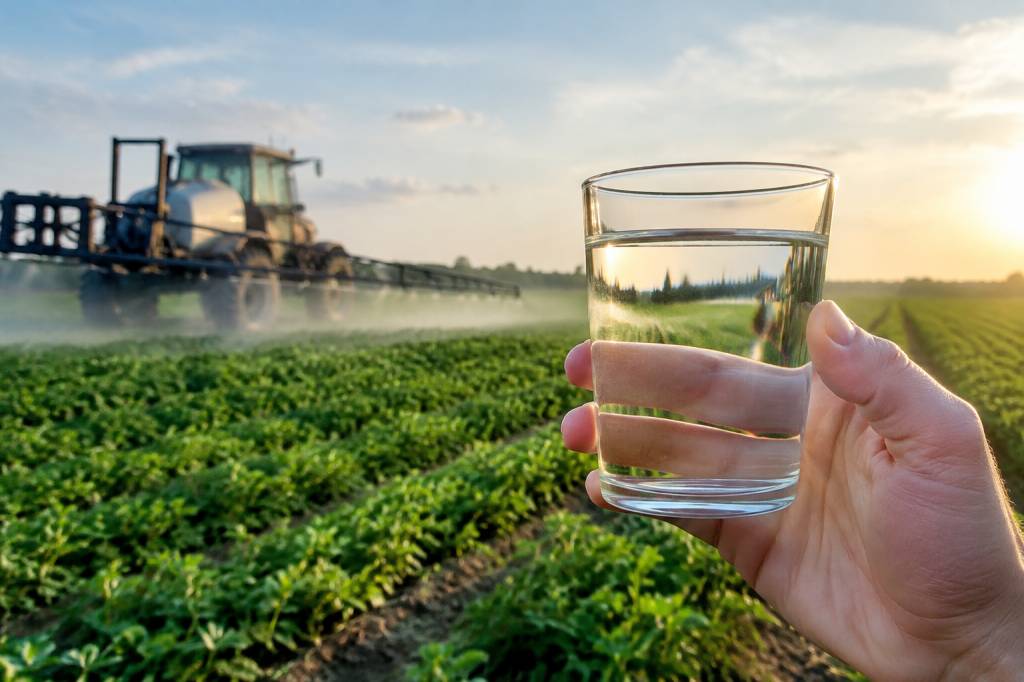
Pesticides are designed to control weeds, insects, fungi and other organisms that threaten crops. That purpose does not make them harmless once they leave the field. Rainfall, irrigation and soil erosion can carry pesticide residues into rivers, reservoirs and groundwater—the same sources many communities rely on for drinking water.
For most people, exposure through drinking water is not the largest source of pesticide intake. Food, household use and occupational contact can also contribute. However, drinking water matters because exposure may occur every day, often for years, and because treatment plants must manage mixtures of chemicals rather than a single, predictable contaminant.
What are the real risks? How tightly are pesticides regulated? And can home filtration systems make a meaningful difference? The answers depend on the specific substance, its concentration, the source of the contamination and the technology used to remove it.
How pesticides reach drinking water
Pesticide contamination does not require a major spill. It can develop gradually across an agricultural catchment, particularly when chemicals are applied before heavy rain or on vulnerable soils.
There are several common pathways:
-
Surface runoff: Rain can wash pesticides from fields into streams, rivers and reservoirs.
-
Leaching: Some compounds move through soil and reach groundwater, especially in sandy or highly permeable soils.
-
Spray drift: Wind can carry droplets beyond the intended application area.
-
Urban use: Pesticides applied to gardens, parks, roadsides and golf courses can enter drainage systems.
-
Improper storage or disposal: Spills, discarded containers and equipment washings can create concentrated local contamination.
The risk is influenced by a pesticide’s chemical properties. Persistent compounds may remain in soil or sediment for long periods. Water-soluble chemicals can travel more easily into groundwater, while substances that bind strongly to soil may be transported with suspended particles during erosion.
Climate change adds another layer of uncertainty. More intense rainfall can increase runoff, while drought can reduce river flows and make existing contamination less diluted. Warmer conditions may also change pest pressures and influence how often certain products are used.
Why pesticide contamination is difficult to manage
“Pesticides” is not one chemical category with one behaviour. It includes herbicides, insecticides, fungicides, fungicides and plant growth regulators, each with different properties and health profiles. Environmental authorities may also detect breakdown products, known as metabolites, which can persist longer than the original active ingredient.
A water sample may contain several substances at very low concentrations. Individually, each may be below a regulatory limit. The scientific challenge is assessing repeated exposure to mixtures, including chemicals that may affect similar biological systems.
Monitoring can also miss short-lived contamination events. A sample collected on one day may not capture a spike following rainfall or seasonal application. This is why water suppliers often use risk-based monitoring, catchment investigations and treatment barriers rather than relying exclusively on occasional testing at the treatment plant.
Potential health effects
The health impact of a pesticide depends on the compound, dose, duration of exposure and individual susceptibility. Acute poisoning can cause symptoms such as nausea, dizziness, breathing difficulties, confusion or neurological effects, but this is generally associated with high exposure rather than the trace concentrations typically found in treated drinking water.
Long-term exposure is more difficult to study. Research has investigated possible links between certain pesticides and:
-
Hormonal and reproductive disruption
-
Effects on fetal and childhood development
-
Neurological outcomes
-
Liver and kidney damage
-
Immune system effects
-
Some forms of cancer
These findings do not mean that every detection will cause illness. Risk assessment is based on toxicology, exposure modelling and safety margins. It is also important to distinguish between a chemical’s hazard—the ability to cause harm—and the actual risk, which depends on how much exposure occurs.
Infants, children, pregnant people, older adults and individuals with certain medical conditions may be more vulnerable to environmental contaminants. Even when concentrations comply with legal standards, reducing avoidable exposure remains a sensible public health objective.
What UK regulations require
In the United Kingdom, drinking water is regulated through strict quality standards. In England and Wales, the Drinking Water Inspectorate (DWI) oversees compliance, while Scotland and Northern Ireland operate under their respective regulatory systems.
Under the UK drinking water framework, pesticides and related products are generally subject to a very low parameter value of 0.1 micrograms per litre for an individual pesticide. The total concentration of pesticides is typically limited to 0.5 micrograms per litre. These values are often described as precautionary standards and are not simple thresholds at which a chemical suddenly becomes dangerous.
The definition can include active substances, relevant metabolites and degradation products. Water companies must monitor supplies, investigate failures and take remedial action when standards are exceeded or when there is a risk to consumers.
Regulation also extends beyond treatment plants. The most effective protection often begins in the catchment. Water companies may work with farmers, agronomists and landowners to change application practices, create buffer zones, reduce soil erosion and prevent chemicals from reaching watercourses in the first place.
Rules differ between countries and can change as scientific evidence develops. Consumers should therefore consult current guidance from the DWI, the UK Health Security Agency, local water suppliers and national regulators rather than relying on outdated product claims or social media advice.
How water suppliers remove pesticides
Conventional drinking water treatment can remove some pesticide residues, but performance varies considerably. A standard process may include coagulation, sedimentation, filtration and disinfection. These steps are valuable for removing particles, microorganisms and some organic matter, yet they are not designed to eliminate every dissolved pesticide.
Water suppliers may add more targeted treatment where monitoring shows a persistent problem.
-
Granular activated carbon: Activated carbon has a large internal surface area that can adsorb many organic contaminants. It is widely used for pesticide removal, although its performance depends on the chemical, contact time, carbon quality and competing organic matter.
-
Powdered activated carbon: This can be dosed during treatment when seasonal or short-term contamination is expected. The used carbon must then be managed correctly.
-
Ozonation: Ozone can break down some pesticides and other organic compounds. However, treatment may create transformation products that require further assessment.
-
Advanced oxidation: Processes combining oxidants and ultraviolet light can degrade difficult contaminants, but they require careful control and significant energy.
-
Membrane filtration: Nanofiltration and reverse osmosis can remove a broad range of dissolved substances. They are effective but expensive and produce a concentrated waste stream.
No treatment process should be judged by a marketing label alone. “Filters impurities” is not the same as “certified to reduce a named pesticide.” The relevant question is whether the system has been independently tested for the specific contaminant and operating conditions involved.
Can a household water filter help?
For households concerned about pesticide residues, activated carbon filters are often the first option considered. They can reduce many organic chemicals, unpleasant tastes and odours, but their effectiveness depends on design and maintenance.
Before buying a filter, check the following:
-
Certification: Look for independent testing against the relevant standard and contaminant. In the UK, claims should be supported by transparent technical documentation rather than vague statements about “chemical-free” water.
-
Contaminant coverage: A filter designed to reduce chlorine may not remove pesticides. Reverse osmosis systems can address a wider range of dissolved contaminants, but not all systems perform identically.
-
Flow rate and contact time: Water passing too quickly through activated carbon may receive inadequate treatment.
-
Replacement intervals: Once carbon becomes saturated, performance can decline. In neglected systems, trapped organic matter may also support bacterial growth.
-
Installation and plumbing: A point-of-use filter at the kitchen tap treats drinking and cooking water. A whole-house system treats more water but costs more and requires more maintenance.
-
Waste and energy: Reverse osmosis can reject a substantial volume of water and uses more energy than a simple carbon filter.
Boiling is not a reliable solution for pesticide contamination. Heat can kill many microorganisms, but it does not generally remove dissolved pesticides. In some circumstances, boiling may concentrate non-volatile contaminants as water evaporates.
PFAS and pesticides: related concerns, not the same problem
Some pesticides contain fluorinated chemistry, and certain pesticide-related substances may be discussed alongside PFAS. However, pesticide contamination and PFAS contamination are not interchangeable terms.
PFAS are a large family of highly persistent fluorinated chemicals used in products ranging from firefighting foams to stain-resistant materials. Some pesticides may meet a broad chemical definition of PFAS, depending on the framework being used, but most pesticide monitoring programmes and PFAS monitoring programmes are designed around different lists and regulatory objectives.
This distinction matters when choosing filtration. A cartridge certified for pesticide reduction may not be tested for PFAS, and a filter marketed for PFAS may not remove every herbicide or insecticide. Always identify the actual contaminant before selecting treatment.
What households can do when contamination is suspected
If a local authority or water supplier issues advice, follow it first. Do not assume that a jug filter is sufficient, and do not switch to bottled water indefinitely without understanding the reason for the contamination. Bottled water is regulated, but it is not automatically free from every trace contaminant and creates additional packaging waste.
Useful steps include:
-
Check your water supplier’s quality reports and current public notices.
-
Ask which pesticide was detected, at what concentration and over what period.
-
Find out whether the result applies to your water zone, private well or a wider catchment.
-
Use an accredited laboratory if testing a private water supply.
-
Choose filtration based on laboratory results rather than general concern.
-
Replace cartridges on schedule and keep records of maintenance.
Private wells require particular attention. Unlike public supplies, they may not be routinely monitored to the same standard. Agricultural activity, septic systems, fuel storage and nearby industrial sites can all affect groundwater quality. Well owners should arrange periodic testing and seek professional advice if results show pesticides, nitrates or microbial contamination.
Prevention remains the strongest treatment
Filtration is important, but preventing pesticides from entering water is usually more efficient than removing them later. Farmers can reduce risk through integrated pest management, precise application, weather-aware spraying, soil conservation and vegetated buffer strips beside watercourses.
Home gardeners also have a role. Using the smallest effective amount, avoiding application before rain, storing products securely and disposing of containers through approved channels can prevent avoidable contamination. In many cases, mechanical weed removal, mulching and biological pest controls are practical alternatives to routine chemical use.
Clean drinking water depends on several layers of protection: responsible chemical use, strong catchment management, rigorous monitoring, effective treatment and informed household maintenance. No single filter—or single regulation—can address every contaminant. The most reliable approach combines prevention with evidence-based testing and treatment designed for the specific chemicals present.
For consumers, the message is reassuring but not complacent: regulated public water supplies are closely monitored, yet pesticide pollution remains a real environmental challenge. Understanding where contamination comes from, how standards work and what filtration can genuinely achieve is the best way to make practical decisions without falling for either unnecessary alarm or overconfident marketing claims.