


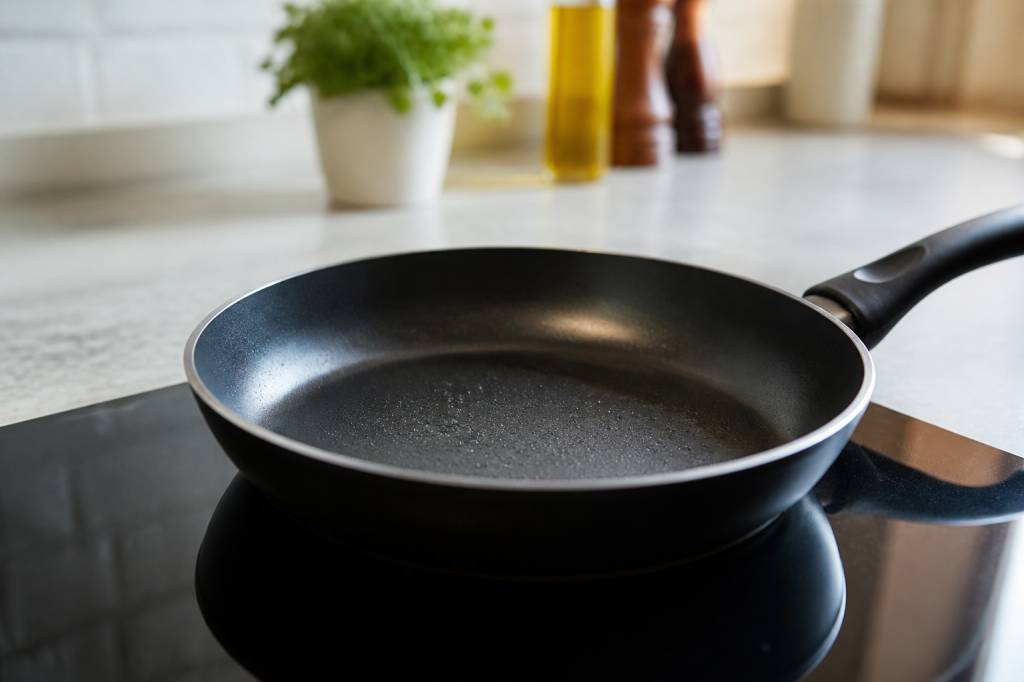
Non-stick cookware is convenient, familiar and found in millions of kitchens. A fried egg slides from the pan, cleaning takes seconds, and little or no oil is needed. But what gives these surfaces their remarkable resistance to heat, grease and water? In many cases, the answer is a fluoropolymer called polytetrafluoroethylene (PTFE), part of the large family of per- and polyfluoroalkyl substances, better known as PFAS.
PFAS have become a major environmental and public health concern because many of them persist for decades—or far longer—in the environment. Some can accumulate in people and wildlife, and exposure to certain well-studied PFAS has been associated with effects on the immune system, cholesterol levels, liver function, development and some cancers.
That does not mean every non-stick pan is an immediate health hazard. The real picture is more precise: the risks depend on the chemical used, the condition and temperature of the coating, manufacturing practices, food contact, and what happens to the product at the end of its life. Understanding those distinctions can help consumers make informed choices without unnecessary alarm.
What does “non-stick” actually mean?
“Non-stick” describes a performance characteristic, not a single material. Cookware manufacturers use several different coatings and surface treatments to prevent food from adhering to metal.
-
PTFE coatings: PTFE is a synthetic fluoropolymer with very low friction. It is commonly associated with brand names such as Teflon, although Teflon is a specific trademark rather than a generic term.
-
Ceramic coatings: These are usually sol-gel coatings made from silica-based materials. They are often marketed as PFAS-free, although the exact formulation should be checked with the manufacturer.
-
Seasoned cast iron or carbon steel: Repeatedly heating oil on the surface creates a durable layer that can provide natural non-stick properties.
-
Enamel and stainless steel: These materials are not inherently non-stick, but they are durable alternatives that do not require a fluoropolymer coating.
PTFE itself is a large, stable polymer. It is not chemically identical to smaller PFAS such as PFOA or PFOS, which have been widely studied for their persistence and toxicity. However, PTFE belongs to the broader PFAS family because it contains chains of carbon and fluorine. That distinction matters: “PFAS” is a very broad chemical category, and the potential risk cannot be assessed by treating all PFAS as if they behave in exactly the same way.
Why were PFOA and other PFAS used in non-stick manufacturing?
Historically, PFOA was used as a processing aid in the manufacture of some fluoropolymer products, including PTFE coatings. It helped with the production process but was not intended to remain as the primary non-stick surface.
PFOA attracted concern because it is extremely persistent and has been detected in human blood, wildlife and water supplies. Studies have linked exposure to PFOA with several adverse health outcomes, although scientific research continues to examine the strength and details of these associations.
In the United States, PFOA has been largely phased out of production, and many manufacturers now state that their cookware is “PFOA-free.” In the United Kingdom and European Union, PFOA is subject to strict restrictions under chemicals legislation. However, a PFOA-free label does not necessarily mean PFAS-free. A product may still contain PTFE or another fluoropolymer, and it may have been manufactured using alternative fluorinated substances.
This is one reason labels can be confusing. “PFOA-free,” “PFOS-free” and “PFAS-free” are not interchangeable claims. If avoiding the entire PFAS family is your priority, look for a clear statement that the food-contact coating contains no intentionally added PFAS or fluoropolymers.
Can a non-stick pan expose you to PFAS?
For a new, intact PTFE-coated pan used correctly, direct exposure from the coating is generally considered low. PTFE is relatively inert under normal cooking conditions, and regulatory agencies have historically permitted its use in food-contact applications when manufacturing and use requirements are met.
The main concern with PTFE cookware is overheating. When an empty pan is heated to very high temperatures, the coating can begin to degrade and release fumes. This can happen more quickly than many people realise: a lightweight empty pan on a powerful hob may become dangerously hot within minutes.
At temperatures above approximately 260°C, PTFE may begin to deteriorate, while more significant decomposition can occur at substantially higher temperatures. The exact temperature depends on the formulation, cookware design and heating conditions. Overheated PTFE can release irritating gases and particles. In humans, intense short-term exposure may cause “polymer fume fever,” a temporary flu-like illness with symptoms such as chills, fever, headache and muscle aches.
Pet birds are particularly vulnerable to fumes from overheated fluoropolymer coatings. Their highly efficient respiratory systems mean that fumes capable of causing mild symptoms in people can be fatal to birds. Never leave a non-stick pan heating unattended, especially in a home with pet birds.
Normal cooking temperatures are usually well below the point at which PTFE significantly decomposes. The practical advice is simple: avoid preheating an empty non-stick pan, use low to medium heat, and ventilate the kitchen.
What about scratches and flaking?
A scratched pan may look unpleasant, but the health implications require some perspective. Small particles of PTFE that are accidentally swallowed are generally expected to pass through the digestive system without being absorbed, because PTFE is chemically stable and biologically inert.
That does not make damaged cookware desirable. Scratches can reduce cooking performance, expose the underlying metal and make the pan more vulnerable to further deterioration. If the coating is peeling, severely scratched or visibly flaking, replacement is sensible—particularly if fragments are regularly entering food.
Do not use metal utensils on a delicate coating unless the manufacturer specifically says they are suitable. Silicone, wood or heat-resistant plastic utensils are usually gentler. Abrasive scouring pads and harsh cleaning products can also shorten the life of the surface.
A useful rule is practical rather than dramatic: a minor mark is not a reason to panic, but a badly deteriorated pan has reached the end of its useful life.
Are “PFOA-free” pans safer?
They may reduce concern about PFOA, but the label alone does not answer every question. PFOA has been restricted because of its persistence and toxicity profile, yet other fluorinated chemicals may be used in industrial processes or coatings. Some alternatives have also raised environmental and health questions.
Consumers should also remember that product labels typically describe the finished article, not every substance used throughout manufacturing. Supply chains can involve multiple chemical inputs, and regulations differ between jurisdictions.
For a more meaningful assessment, ask three questions:
-
Does the product contain PTFE or another fluoropolymer?
-
Does the manufacturer state that no PFAS are intentionally added?
-
Are care instructions provided to prevent overheating and premature coating failure?
When manufacturers are transparent about materials and testing, that is generally a better sign than a vague “green” or “chemical-free” claim. There is no genuinely chemical-free cookware: water, steel, ceramic and food itself are all made of chemicals. The relevant question is which substances are present, at what levels, and under what conditions they may be released.
Safer alternatives to PFAS-based non-stick cookware
No pan is perfect for every cooking task. The most suitable alternative depends on durability, maintenance, budget and the type of food being prepared.
Stainless steel
Stainless steel contains iron, chromium and often nickel. It does not require a fluoropolymer coating and can last for decades. Food is less likely to stick when the pan is preheated properly, oil is added at the right time, and ingredients are allowed to develop a crust before being moved.
Stainless steel is particularly useful for searing, sautéing and making pan sauces. It may require a little more technique than PTFE, but that learning curve is usually short.
Cast iron and carbon steel
Both materials can develop a natural oil-based seasoning layer. They tolerate high heat and are highly durable, although they are heavier and require drying and maintenance to prevent rust. Acidic foods can weaken seasoning, especially in a newly prepared pan.
With regular use, a well-seasoned cast iron or carbon steel pan can become surprisingly non-stick—though perhaps not quite as effortlessly as the marketing suggests.
Ceramic-coated cookware
Many ceramic-style coatings are made without PTFE and are marketed as PFAS-free. They can provide excellent release when new, but performance may decline faster than with traditional PTFE, particularly when exposed to high heat, dishwashers or abrasive cleaning.
Check the product information carefully. “Ceramic” may refer to a coating rather than a solid ceramic pan, and “PFAS-free” should ideally be supported by a clear manufacturer statement.
Glass, enamel and uncoated options
Glass and enamelled cookware are useful for baking, roasting and acidic dishes. They are not usually non-stick in the same way as PTFE, but they avoid fluoropolymer coatings and can be durable when handled correctly.
How to use non-stick cookware more safely
-
Keep cooking temperatures low to medium whenever possible.
-
Never heat an empty non-stick pan for an extended period.
-
Use an extractor fan or open a window while cooking.
-
Avoid broiling, grilling or placing PTFE cookware under a direct high-temperature grill unless the manufacturer explicitly permits it.
-
Use wooden or silicone utensils to reduce scratching.
-
Wash gently and avoid abrasive cleaners.
-
Replace pans that are peeling, badly scratched or visibly damaged.
-
Follow the manufacturer’s temperature and care instructions.
These steps reduce the likelihood of coating degradation and also extend the product’s lifespan. That matters environmentally: replacing cookware frequently creates additional demand for raw materials, manufacturing energy and transport.
What happens when non-stick cookware is thrown away?
PFAS are often called “forever chemicals” because many are highly resistant to environmental breakdown. A discarded fluoropolymer-coated pan will not simply disappear after a few months. Depending on local waste systems, it may go to landfill, metal recycling or incineration. Recycling facilities may accept the metal body but handle coatings differently, so local guidance is important.
Do not burn non-stick cookware in a domestic fire, wood burner or garden bonfire. Uncontrolled heating can generate hazardous fumes. Contact the manufacturer, local council or household waste facility for disposal instructions.
The most environmentally responsible approach is often to buy fewer, better-made pans, use them within their safe limits and repair or repurpose them where possible. A single durable stainless steel or cast iron pan may outlast several inexpensive replacements.
PFAS in cookware and PFAS in drinking water are different exposure routes
It is important not to confuse cookware advice with the separate issue of PFAS contamination in drinking water. People can be exposed to PFAS through food packaging, household dust, consumer products and contaminated water. In communities affected by industrial pollution, firefighting foam or historic waste disposal, drinking water may be a significant exposure pathway.
Boiling water does not remove PFAS. Where testing shows contamination, treatment systems using activated carbon or reverse osmosis may reduce certain PFAS, provided the system is properly certified, maintained and replaced according to the manufacturer’s schedule. A standard jug filter should not automatically be assumed to remove PFAS.
For households concerned about local water quality, the most useful first step is to check information from the water supplier or environmental regulator and seek independent testing where appropriate. Good evidence is more valuable than a panic-driven purchase of an unverified filter.
Making a practical choice
PTFE non-stick cookware is not automatically dangerous when it is intact and used at normal temperatures. The strongest reasons to consider alternatives are broader: reducing dependence on persistent fluorinated chemicals, avoiding overheating risks, improving product durability and choosing materials with more transparent end-of-life options.
If convenience is the priority, a well-maintained PTFE pan used on moderate heat can perform safely for many kitchen tasks. If avoiding PFAS is the priority, choose uncoated stainless steel, cast iron, carbon steel, enamel or a ceramic product with a clearly documented PFAS-free formulation.
The best kitchen is not necessarily the one with the most expensive cookware. It is the one where materials are understood, equipment is used correctly and replacement is based on evidence rather than advertising. Non-stick convenience should not require a blind spot about what happens beyond the frying pan.