

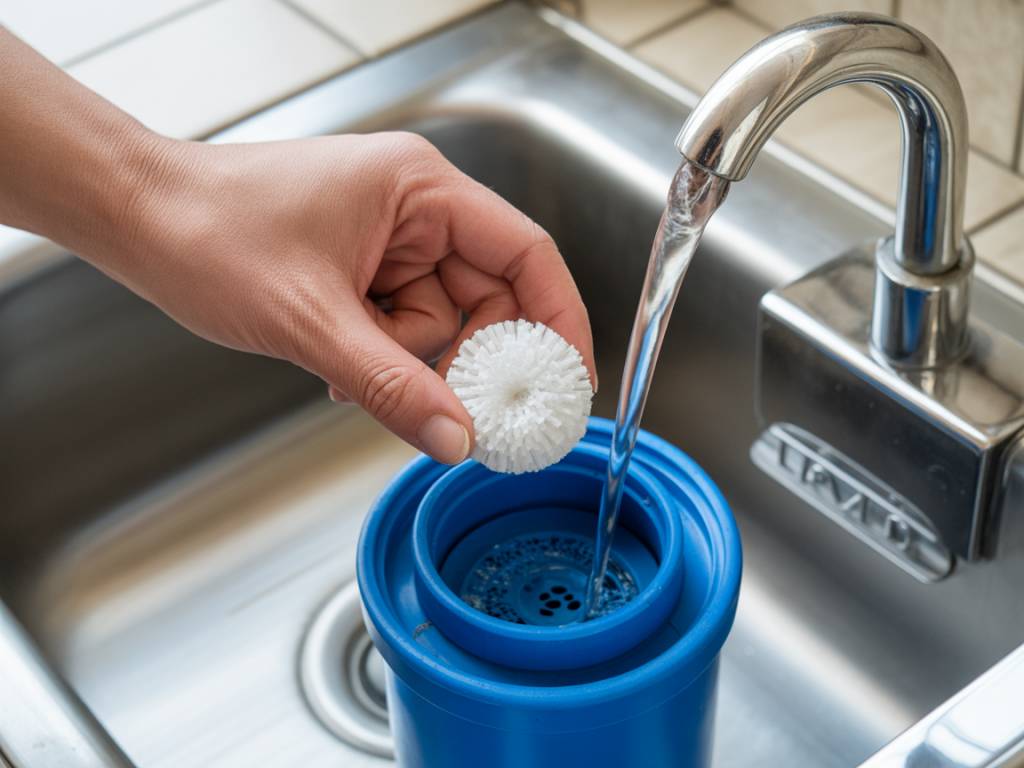
Why nitrate in drinking water is more than a farming issue
Nitrate in drinking water is often framed as a problem “out there” in fields and rivers. Yet for many households in rural and agricultural regions, it’s very much a kitchen-tap issue.
Nitrate (NO₃⁻) is a naturally occurring ion, but intensive agriculture, fertilisers, and livestock waste have pushed concentrations in many aquifers and surface waters well above background levels. In the UK and EU, the legal limit for nitrate in drinking water is typically 50 mg/L (as NO₃⁻). That threshold is largely based on the risk of infant methaemoglobinaemia (“blue baby syndrome”), but emerging research also links long-term exposure, even below legal limits, to increased risks of colorectal cancer, thyroid disease and adverse birth outcomes.
For households increasingly worried about PFAS, nitrate is another invisible contaminant with no smell, no taste, and plenty of science behind it. The good news: we have effective ways to remove nitrate from drinking water. The less-good news: not all filters work, and some methods can introduce new trade-offs.
This article unpacks the main options: filtration, ion exchange resins, and practical alternatives for keeping your water safe.
How does nitrate behave in water – and why can’t a simple carbon filter fix it?
Nitrate is fully dissolved in water as a small, negatively charged ion. This matters because it determines which treatment technologies will actually work.
Common “filter jug” or fridge filters mainly use activated carbon. Activated carbon is excellent for chlorine, tastes, odours, some pesticides and some PFAS – but it does almost nothing for nitrate. The nitrate ion is too small, too hydrophilic, and not attracted to the carbon surface.
So if you’re using a basic carbon filter and expecting it to solve a nitrate problem, you’re essentially pouring water through something that was never designed to target that contaminant. To reduce nitrate, you need technologies that either:
- Separate it physically (membranes like reverse osmosis or distillation), or
- Exchange it for another ion (ion exchange resins), or
- Convert it biologically into harmless nitrogen gas (biological denitrification).
Ion exchange resin: the workhorse for nitrate removal
Ion exchange is one of the most widely used technologies for nitrate removal, both in small point-of-use systems and municipal treatment plants.
The principle is straightforward: water passes through a bed of synthetic resin beads. These beads carry positively charged sites that hold onto negatively charged ions (anions). As nitrate-rich water flows through, the resin releases one ion (often chloride) and captures nitrate instead. Over time, the bed becomes saturated with nitrate and must be regenerated.
Types of nitrate-selective resins
For domestic drinking water, you will most commonly encounter:
- Standard anion exchange resins – remove a range of anions (sulfate, nitrate, bicarbonate, etc.), but may not prioritise nitrate. Efficiency can be lower where sulfate is high, because sulfate competes for the same sites.
- Nitrate-selective resins – specifically engineered to preferentially remove nitrate over sulfate and other anions. These are often labelled as “nitrate removal” or “de-nitrate” resins and are usually the better choice for private wells with high nitrate.
Benefits and limitations of ion exchange for households
Advantages:
- High removal efficiency: Properly designed systems can reduce nitrate by 80–95% or more.
- Compact systems: Under-sink cartridges or small pressure vessels are relatively easy to install.
- Continuous supply: Unlike batch distillation, treated water flows on demand.
Limitations and trade-offs:
- Chloride increase: Most nitrate resins exchange chloride for nitrate. As nitrate goes down, chloride goes up. For most users this is not a health issue, but it can increase corrosion in plumbing and add to environmental chloride loads.
- Brine waste during regeneration: Regeneration requires a salt solution (often sodium chloride). The waste brine carries concentrated nitrate to drains or septic systems, which can be problematic in sensitive areas.
- Maintenance: Resins must be regenerated or replaced periodically. Neglected systems quickly lose performance.
- Co-contaminants: Standard nitrate resins do not address bacteria, PFAS, heavy metals or microplastics. Additional treatment stages may be needed if your water contains multiple contaminants.
In short, ion exchange is effective and widely used, but it shifts nitrate and salts elsewhere in the system. For large-scale use, disposal of regeneration waste is a significant environmental question. For small domestic use, the priority is correct sizing, responsible regeneration and regular monitoring.
Reverse osmosis: broad-spectrum removal including nitrate
Reverse osmosis (RO) is a membrane process that forces water through a semi-permeable membrane at pressure. Many dissolved ions, including nitrate, are rejected, while water molecules pass through.
RO is already popular among households concerned about PFAS, as modern RO membranes can significantly reduce many PFAS compounds when combined with pre-filtration. The same system often provides strong nitrate reduction as a “bonus”.
How effective is RO for nitrate?
Well-designed household RO units can typically remove 80–95% of nitrate, depending on membrane type, pressure, temperature and the overall water chemistry. For a private well with 60 mg/L nitrate, RO might reduce levels to below 10 mg/L, often lower than common regulatory limits.
Advantages of RO for nitrate and beyond
- Multi-contaminant treatment: Alongside nitrate, RO can reduce many other ions (arsenic, lead, fluoride), plus some organic contaminants and PFAS.
- Point-of-use protection: Under-sink RO provides safe water specifically for drinking and cooking, where exposure matters most.
- No chemical regeneration: Unlike ion exchange, there is no brine regeneration step at home. The “waste” brine is continuously flushed to drain as part of normal operation.
Limitations of RO systems
- Wastewater production: Typical household RO units discharge 2–4 litres of concentrate for every litre of treated water, depending on design and pressure. More efficient systems exist, but some water wastage is unavoidable.
- Lower flow rates: RO is slower than simple filtration, often requiring a small storage tank to meet peak demand.
- Mineral removal: RO removes beneficial minerals alongside contaminants. This is not usually a health issue in a normal diet, but can slightly affect taste and corrosion potential. Some systems add remineralisation stages to restore taste and pH.
- Maintenance and monitoring: Membranes and pre-filters must be replaced on schedule, and occasional nitrate testing is needed to verify performance.
Distillation: effective but energy-hungry
Water distillers heat water to produce steam, then condense the steam to form purified water. Nitrate, being non-volatile, stays behind in the boiling chamber along with most other dissolved solids.
Pros:
- Very high removal of nitrate and most other inorganic contaminants.
- Simple principle with few sophisticated components.
Cons:
- Slow production rates; typically suited to small volumes of drinking water only.
- High energy consumption compared to RO or ion exchange.
- Not ideal for households seeking low-carbon solutions unless paired with renewable electricity.
In practice, distillation can be a robust option for very remote homes or situations where a portable, stand-alone system is needed, but it is rarely the first choice in typical UK households.
Biological denitrification: powerful, but mostly communal
In biological denitrification systems, specialised bacteria convert nitrate (NO₃⁻) to nitrogen gas (N₂), which then diffuses harmlessly to the atmosphere. This is how many natural wetlands, and some engineered treatment plants, reduce nitrate loads.
There are two main approaches:
- Heterotrophic denitrification: Bacteria use an organic carbon source (e.g. methanol, ethanol or biodegradable media) to drive the reaction.
- Autotrophic denitrification: Bacteria use inorganic compounds (e.g. sulphur) as an energy source, avoiding the addition of organic carbon.
Biological systems are common in larger-scale water treatment because they actually destroy nitrate instead of simply transferring it elsewhere. However, they require careful control of conditions (oxygen levels, carbon dosing, retention time) and post-treatment disinfection.
For individual households, reliable off-the-shelf biological denitrification units are still relatively uncommon in the UK. Where they do exist, they are typically used for:
- Small community water supplies, or
- Private systems run by users willing to manage a more complex treatment process.
Looking ahead, biological solutions may see more attention as regulators push for sustainable, low-chemical treatment of both nitrate and other nutrients at catchment scale.
What about “nitrate filters” sold online?
A quick search reveals many products claiming to “remove nitrate” from tap or well water. Some are effective, others less so. A few points to keep in mind:
- Check the technology: If a product is just activated carbon, it will not significantly reduce nitrate. Look for ion exchange, RO, distillation, or explicitly engineered multi-stage systems.
- Look for performance data: Reputable manufacturers provide certified test results showing percentage reduction under specific conditions. Vague phrases like “helps reduce nitrate” are a red flag.
- Watch the capacity: Nitrate resins have a finite capacity. A small cartridge may treat only a few hundred litres before performance drops. Overselling capacity is a common issue.
- Consider co-contaminants: If your water also has PFAS, bacteria, or metals, choose a system designed for multi-contaminant removal, or use a staged approach (e.g. sediment + carbon + RO).
Safe alternatives when treatment is not yet in place
If your water has elevated nitrate and you can’t install a full treatment system immediately, there are temporary strategies to reduce exposure.
Use alternative water sources for vulnerable groups
- Use bottled water with verified low nitrate levels for infant formula preparation, pregnant people and immunocompromised individuals until treatment is operational.
- Check labels or supplier data where possible; in Europe, many bottled waters report typical nitrate levels.
Use mains water where possible
If your main concern is a private well but you also have access to a municipal supply that meets standards, use the mains water for drinking and cooking, and reserve well water for non-ingestive uses such as washing or irrigation.
Avoid assumptions about boiling
Boiling water does not remove nitrate; it concentrates it as water evaporates. For nitrate, boiling makes the problem slightly worse, not better.
Source control: addressing nitrate before it reaches your tap
While household treatment protects your family, it does nothing to address the upstream drivers of nitrate contamination. As with PFAS, long-term solutions require changes in production, use and discharge.
At catchment and policy level, effective measures include:
- Better fertiliser management: Optimising application timing and quantity, using precision agriculture technologies to match crop needs.
- Buffer strips and constructed wetlands: Vegetated strips along watercourses and engineered wetlands can capture and biologically transform nitrate before it enters aquifers and rivers.
- Manure storage and handling improvements: Preventing leaks and runoff from slurry pits and livestock housing.
- Regulation of vulnerable zones: Nitrate Vulnerable Zones (NVZs) and similar frameworks can restrict high-risk practices in sensitive catchments.
For communities already struggling with both PFAS and nitrate, integrated catchment management is essential. Otherwise, households end up layering ever more complex treatment at the tap while the underlying pressures remain unchanged.
Testing: the starting point for any nitrate strategy
Nitrate management without testing is guesswork. A sensible approach includes:
- Laboratory analysis: For private wells, annual or biannual lab tests for nitrate, nitrite, microbial indicators, and (where relevant) PFAS provide a robust baseline.
- On-site screening kits: Simple colourimetric test strips or handheld kits can provide rapid checks, useful between full lab analyses or for monitoring treatment performance.
- Data interpretation: Don’t just compare to the legal limit. Consider emerging evidence for health impacts at lower levels, especially for sensitive groups.
Nitrate levels can vary seasonally, especially in shallow wells influenced by rainfall and agricultural cycles. If testing after heavy rain shows spikes, treatment design should account for these peaks, not just annual averages.
Choosing the right solution for your home
There is no single “best” nitrate removal method for every situation. The appropriate choice depends on:
- Nitrate concentration and variability: Mild exceedances may be addressed with a small RO or nitrate-selective cartridge; very high levels may require more robust systems or multiple stages.
- Other contaminants present: If you also face PFAS, metals or pathogens, multi-barrier approaches – for example, sediment + carbon + RO + UV – are usually more appropriate.
- Household water use patterns: Point-of-use systems under the kitchen sink are often sufficient, as ingestion is the primary exposure route. Whole-house systems may be justified if nitrate is combined with other issues affecting pipes, appliances or bathing water.
- Energy, waste and environmental priorities: Those seeking lower energy use may prefer ion exchange over distillation; those concerned about salt discharge may lean towards RO or community-scale biological options.
Key takeaways for households facing nitrate in drinking water
Nitrate in drinking water is no longer just a concern for agricultural scientists. It is a live issue for many households, with clear parallels to the PFAS story: persistent, mobile, invisible and strongly linked to upstream practices.
For individual homes, practical steps include:
- Test your water regularly, especially if you rely on a private well or live in an intensive farming area.
- Do not rely on simple carbon filters for nitrate removal; they are excellent for many contaminants, but not for this one.
- Consider ion exchange resin or reverse osmosis as primary tools for nitrate reduction at the tap, backed by verifiable performance data.
- Use safe alternative sources – mains water or bottled water – for infants and vulnerable people until treatment is in place.
- Engage with local water authorities and catchment initiatives that address nitrate at source, not just at the kitchen sink.
Managing nitrate effectively means taking care of both the glass in your hand and the landscape beyond your window. The more we align those two perspectives, the less often households will have to choose between complex filtration systems and the basic right to safe drinking water.