


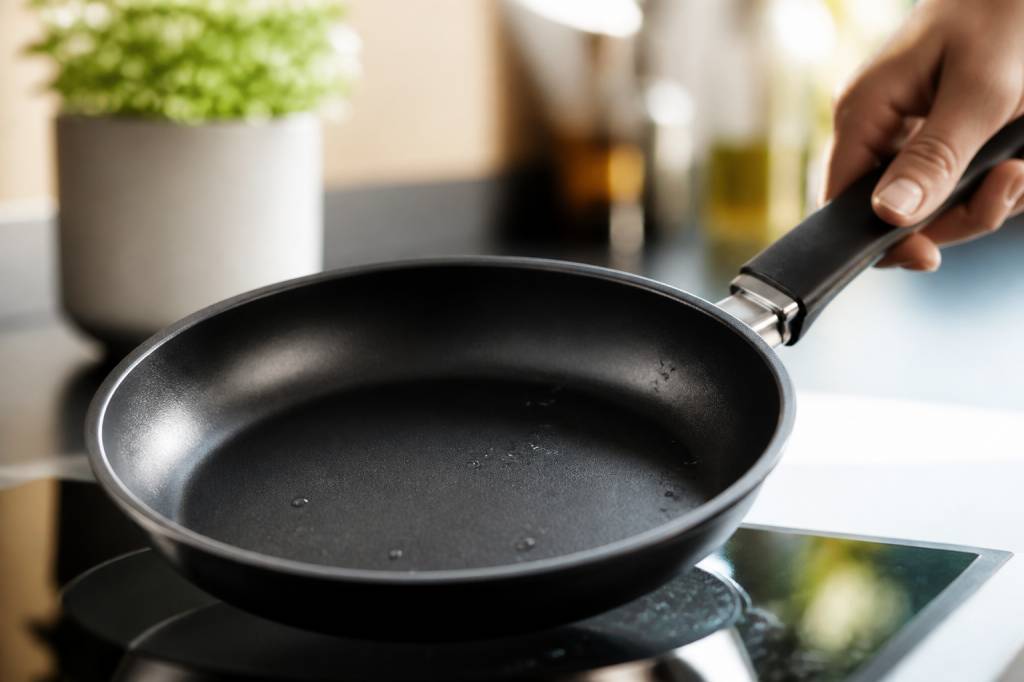
Non-stick cookware is convenient: food releases easily, cleaning takes seconds, and a delicate omelette is less likely to become a scrambled disaster. But the smooth coating on many non-stick pans has also raised an important question: is non-stick coating toxic?
The short answer is nuanced. Modern non-stick cookware is generally considered safe when it is used correctly and kept below extreme temperatures. However, many traditional non-stick coatings belong to the wider family of PFAS—persistent chemicals associated with environmental contamination and potential health risks. The coating itself is not the same thing as drinking PFAS-contaminated water, but its manufacture, disposal and overheating can still raise legitimate concerns.
Understanding the difference between the chemicals used to make a coating, the finished coating on a pan and the fumes produced by severe overheating is essential. So is knowing which alternatives offer a lower-PFAS approach to cooking.
What is non-stick coating made of?
Most conventional non-stick pans use polytetrafluoroethylene, commonly known as PTFE. PTFE is a synthetic fluoropolymer valued for its resistance to heat, water and chemical reactions. It is often associated with the brand name Teflon, although Teflon is a trademark and not a generic name for every non-stick product.
PTFE is made using carbon and fluorine atoms arranged in a highly stable structure. This stability gives the surface its low-friction properties: food is less likely to stick, and the pan is easier to clean.
PTFE is also part of the broader PFAS family. PFAS, or per- and polyfluoroalkyl substances, includes thousands of chemicals with different structures and uses. They are often called “forever chemicals” because many persist in the environment for years or decades and can be difficult to break down.
That does not mean every PFAS behaves identically, or that touching a PTFE pan automatically creates a dangerous exposure. Risk depends on the specific substance, the route of exposure, the dose and the duration of contact. This distinction matters, particularly when discussions about PFAS become simplified into a single “safe” or “toxic” label.
Is the finished coating toxic during normal use?
When a PTFE coating is intact and used at ordinary cooking temperatures, very little of the material is expected to migrate into food. The polymer is highly stable under these conditions, and regulatory authorities in several countries have generally considered properly manufactured PTFE cookware safe for normal use.
Small flakes from a scratched coating are also not thought to be significantly absorbed by the human body. They are likely to pass through the digestive system. That does not make a damaged pan desirable: flaking surfaces can affect cooking performance, expose the underlying metal and indicate that the cookware has reached the end of its useful life.
The more important concern is severe overheating. PTFE can begin to degrade at high temperatures, producing fumes that may cause temporary flu-like symptoms in humans. This condition is sometimes referred to as “polymer fume fever”. Symptoms can include headache, chills, fever, chest tightness and body aches, usually developing several hours after exposure and resolving within a relatively short period.
Birds are far more vulnerable to these fumes than humans. Their highly efficient respiratory systems mean that fumes from an overheated non-stick pan can be fatal. A pan should never be heated empty for a prolonged period in a poorly ventilated kitchen, particularly in a home with pet birds.
How hot is too hot?
There is no single universal temperature at which every pan suddenly becomes hazardous. The precise threshold depends on the coating, the pan’s construction and how rapidly it is heated. However, empty cookware can become dangerously hot much faster than many people realise.
Cooking temperatures for frying and sautéing are usually well below the temperatures associated with significant PTFE decomposition. Problems are more likely when a pan is left empty on a high flame or electric hob, especially if nobody is nearby to notice smoke or an unusual odour.
- Do not preheat a non-stick pan while it is empty for long periods.
- Use low to medium heat unless the manufacturer specifically permits higher temperatures.
- Never place non-stick cookware under a grill or broiler unless it is clearly designed for that use.
- Keep kitchen ventilation running when cooking at high temperatures.
- If a pan overheats and begins to smoke, turn off the heat, leave the area and ventilate the room.
- Do not pour water into an extremely hot pan, as the sudden temperature change can cause burns or damage.
Modern induction hobs deserve particular attention. They can heat compatible cookware very quickly, making it easier to exceed the coating’s recommended temperature if an empty pan is left unattended.
What about PFOA?
Much of the public concern around non-stick cookware relates to perfluorooctanoic acid, or PFOA. PFOA was historically used as a processing aid in the manufacture of some fluoropolymer products. It has been linked to environmental persistence and health concerns, including effects observed in occupational and community exposure studies.
PFOA has been phased out or heavily restricted in many countries, including the United Kingdom, the European Union and the United States. However, “PFOA-free” does not necessarily mean “PFAS-free”. Manufacturers may use alternative processing aids or different fluorinated substances, and product labelling is not always detailed enough to identify every chemical involved.
It is also important to distinguish between historical PFOA contamination associated with industrial production and the PTFE surface on a finished pan. A compliant modern product should not be assumed to contain meaningful amounts of PFOA simply because it uses a PTFE coating.
For consumers trying to reduce PFAS use, the most useful question is often broader than “Is this PFOA-free?” Look for cookware described as PFAS-free, and check whether the manufacturer explains what coating technology is used. If the information is vague, contacting the company directly is more informative than relying on marketing language alone.
Why are PFAS health risks a wider issue?
Non-stick cookware is only one small part of the PFAS story. These chemicals have been used in water-resistant textiles, food packaging, industrial processes, firefighting foams and stain-resistant treatments. Because some PFAS move through soil and groundwater, contamination can affect drinking-water supplies far from the original source.
Research on certain well-studied PFAS, particularly PFOA and PFOS, has associated higher exposure with outcomes such as increased cholesterol, altered immune response, reduced vaccine response in children and effects on liver function. Some studies have also reported associations with pregnancy-related effects and certain cancers. Associations do not prove that every exposure causes disease, and researchers continue to investigate differences between individual PFAS.
Exposure can occur through contaminated food and water, consumer products, workplace settings and household dust. For most people, drinking water and food are more significant exposure pathways than an intact PTFE pan used at normal temperatures.
This is why the environmental dimension matters. PFAS do not simply disappear when a product is thrown away. They can enter waste streams, persist in landfill leachate and complicate water treatment. Preventing unnecessary use and improving industrial controls are more effective strategies than treating one kitchen pan as the entire problem.
Safer alternatives to traditional non-stick cookware
No cookware material is perfect. The best choice depends on cooking habits, maintenance preferences and the information provided by the manufacturer. Several alternatives can reduce reliance on fluorinated coatings.
Stainless steel
Stainless steel is durable, widely available and free from synthetic non-stick coatings. Food can stick if the pan is cold, dry or overheated, but technique makes a significant difference: preheat the pan gradually, add oil before the food and avoid moving ingredients too soon.
Stainless steel is particularly useful for browning meat and vegetables because the browned residue can be deglazed to create a sauce. It is not always the easiest material for eggs or delicate fish, but it can last for decades with proper care.
Cast iron
Cast iron offers excellent heat retention and can develop a naturally more release-friendly surface when seasoned with cooking oil. It contains no PTFE coating and is highly durable. Its disadvantages are weight, slower heating and the need to keep the surface dry and lightly oiled to prevent rust.
Cast iron can also increase the iron content of some foods. This may be useful for some people but inappropriate for others with conditions involving iron accumulation, so personal medical advice matters.
Carbon steel
Carbon steel is lighter than cast iron and can also be seasoned. It heats quickly and works well for stir-frying, searing and high-heat cooking. Like cast iron, it requires maintenance and may react with very acidic foods until the seasoning is well established.
Enamelled cookware
Enamelled cast iron and enamelled steel use a glass-like surface bonded to the underlying metal. They are generally easy to clean and do not rely on a PTFE coating. Chipping or cracking should be treated seriously, particularly if the underlying metal becomes exposed.
Ceramic-coated pans
“Ceramic non-stick” cookware is often made with a sol-gel coating rather than PTFE. Many products are marketed as PFAS-free, but the label should be checked carefully because “ceramic” can describe the finish without providing a complete chemical specification.
Ceramic coatings can lose their non-stick performance faster than PTFE, especially when exposed to high heat, abrasive cleaning or cooking sprays that leave a sticky residue. They are not automatically risk-free simply because they are marketed as a more natural option.
How to use and replace non-stick cookware responsibly
If your current pan is in good condition, there is no need to discard it immediately solely because it contains PTFE. Replacing every pan at once can create unnecessary waste. Instead, use it within the manufacturer’s temperature limits and plan a gradual transition if you prefer PFAS-free cookware.
- Use wooden, silicone or other utensils recommended for coated surfaces.
- Avoid metal scourers, abrasive powders and aggressive scraping.
- Wash according to the manufacturer’s instructions rather than assuming dishwasher use is harmless.
- Do not stack pans without protection if this may scratch the coating.
- Replace cookware when the surface is extensively peeling, blistered, deeply scratched or visibly deteriorated.
- Check local recycling and waste guidance before disposal, as coated pans may not belong in household recycling bins.
One practical strategy is to reserve a PFAS-coated pan for low-to-medium-heat tasks such as eggs, pancakes or delicate fish, while using stainless steel, cast iron or carbon steel for high-heat cooking. This reduces overheating risk and can extend the useful life of the pan.
What should shoppers look for?
Marketing claims can be confusing. “PFOA-free” addresses one chemical, not the entire PFAS family. “Non-toxic” is broad and difficult to interpret without test methods or a clear material description. “PFAS-free” is more relevant for people seeking to avoid fluorinated coatings, but independent verification and transparent manufacturer information remain valuable.
Before buying, look for:
- A clear description of the coating material.
- Specific temperature limits and care instructions.
- An explicit PFAS-free statement rather than only a PFOA-free claim.
- Information about independent testing or recognised regulatory compliance.
- Durable construction that reduces the need for frequent replacement.
For anyone concerned about PFAS exposure more broadly, cookware is only one step. Testing private well water, using an appropriately certified water filter where contamination is confirmed and following local public-health advice may have a greater effect on reducing exposure than replacing a single frying pan.
A practical answer to the non-stick question
Is non-stick coating toxic? Used correctly, an intact modern PTFE coating is not generally expected to be a major source of dietary exposure. The key risks are severe overheating, degraded cookware, historical or poorly controlled manufacturing and the wider persistence of PFAS in the environment.
If you want to minimise PFAS in your kitchen, choose clearly labelled PFAS-free alternatives, use stainless steel or seasoned iron for high-heat cooking and retire damaged pans. The goal is not kitchen panic. It is informed, proportionate decision-making—because safer cooking should not require turning breakfast into a chemistry experiment.
Sources: UK Health Security Agency guidance on PFAS; European Food Safety Authority, “Risk to human health related to the presence of perfluoroalkyl substances in food”; U.S. Food and Drug Administration information on PFAS in food contact applications; U.S. Environmental Protection Agency information on PFAS and health effects; Agency for Toxic Substances and Disease Registry, toxicological profiles for PFOA and PFOS.