


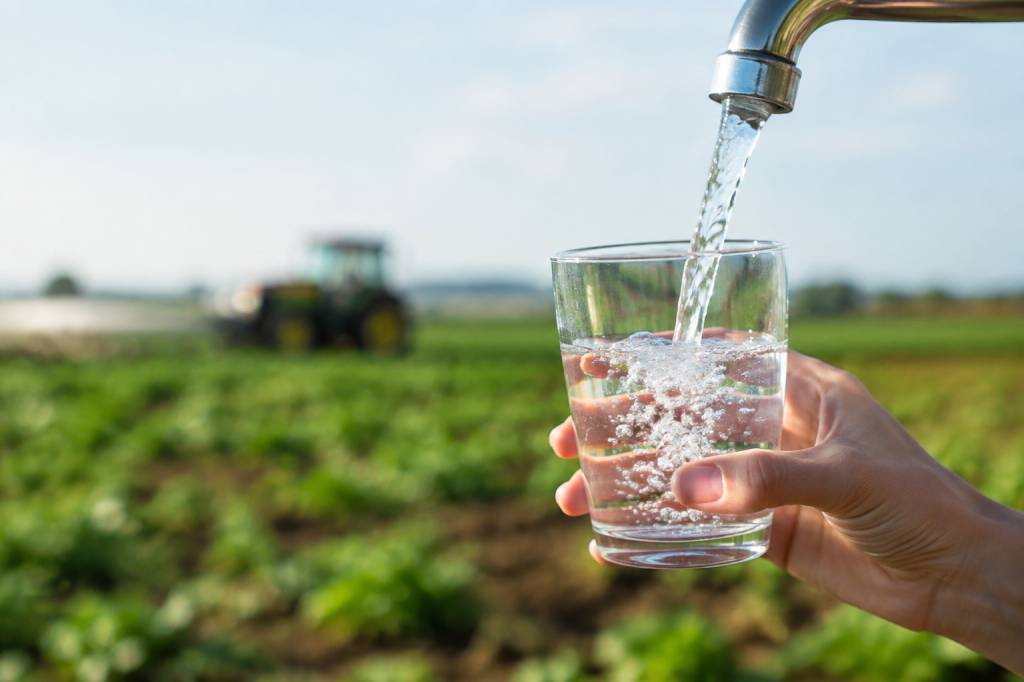
Glyphosate is one of the most widely used herbicides in the world. It is applied in agriculture, on roadsides, in parks and gardens, and in many non-crop areas to control unwanted vegetation. Because it is used so extensively, small amounts can sometimes be detected in soil, food, surface water and, in some cases, drinking-water sources.
That raises an understandable question: is glyphosate safe in drinking water?
The short answer is not simply “yes” or “no”. The scientific evidence depends on the level of exposure, the duration of exposure, the formulation involved and the way risk is assessed. Regulatory agencies do not all interpret the evidence in exactly the same way, particularly when it comes to cancer hazard. However, most agencies agree that the concentrations typically found in treated drinking water are far below established health-based guidance values.
Here is what the science currently tells us—and where important uncertainties remain.
What is glyphosate?
Glyphosate is a broad-spectrum herbicide. It works by blocking an enzyme pathway called the shikimate pathway, which plants and some microorganisms need to produce essential amino acids. Humans do not possess this pathway, which is one reason glyphosate was initially considered to have relatively low toxicity to people.
Glyphosate is commonly used in products such as weedkillers, but these products are not made of glyphosate alone. They may contain surfactants and other ingredients that help the herbicide spread across plant leaves or penetrate plant tissues. Some studies have found that a complete commercial formulation can be more toxic to aquatic organisms or cells than glyphosate on its own.
This distinction matters. When researchers assess “glyphosate safety”, they may be studying the active ingredient, a commercial formulation or real-world exposure to a mixture of chemicals. Those are not always equivalent.
How does glyphosate reach water?
Glyphosate binds strongly to many soil particles, which can limit its movement through certain soils. It is also broken down by microorganisms, mainly into a compound called aminomethylphosphonic acid, or AMPA.
Despite this binding behaviour, glyphosate can still reach rivers, reservoirs and groundwater. Heavy rainfall may wash recently applied herbicide from fields into nearby watercourses. Erosion can carry glyphosate attached to soil particles. Poor application practices, spills and urban use can also contribute.
Surface water is generally more vulnerable than deep groundwater because it receives direct runoff from surrounding land. Water companies therefore monitor vulnerable catchments, particularly after periods of intense rainfall or during seasons when herbicide use is highest.
Detection does not necessarily mean that water is unsafe. Modern analytical methods can identify extremely small concentrations—sometimes at levels comparable to finding a few drops in an Olympic-sized swimming pool. The important questions are: how much is present, how often is it detected and how does that amount compare with health-based guidance?
What do drinking-water results show?
Glyphosate has been detected in some drinking-water sources, but reported concentrations are usually low. In treated public supplies, detections are often below laboratory reporting limits or well below regulatory parameters.
In the United Kingdom, glyphosate is treated as a pesticide under drinking-water regulations. The regulatory limit for an individual pesticide is generally 0.1 micrograms per litre, while the total concentration of pesticides is limited to 0.5 micrograms per litre. These values are precautionary legal standards rather than toxicological thresholds. In other words, they are not a direct statement that water above 0.1 micrograms per litre will cause illness.
Health-based guideline values can be considerably higher. The World Health Organization has previously established a guideline value of 0.9 milligrams per litre for glyphosate in drinking water. That is 9,000 times higher than 0.1 micrograms per litre. The difference illustrates an important point: legal drinking-water standards and health-based limits may be designed for different purposes.
UK water companies must investigate and manage pesticide detections, even when concentrations are far below levels associated with toxic effects in laboratory studies. This approach provides an additional layer of protection and encourages prevention at the source.
What does the cancer research say?
The most widely discussed disagreement concerns cancer.
In 2015, the International Agency for Research on Cancer, part of the World Health Organization, classified glyphosate as “probably carcinogenic to humans”, or Group 2A. IARC’s classification is a hazard assessment. It asks whether a substance has the potential to cause cancer under some circumstances—not whether normal exposure to a particular concentration is likely to cause cancer.
IARC considered evidence from human studies, animal experiments and mechanistic research. It identified limited evidence of an association between glyphosate exposure and non-Hodgkin lymphoma in humans, as well as sufficient evidence in experimental animals.
Other major regulatory reviews have reached different conclusions about the risk posed by authorised uses. The European Food Safety Authority, the European Chemicals Agency and the United States Environmental Protection Agency have generally found no convincing evidence that glyphosate, when used according to approved conditions, presents a carcinogenic risk to people. In 2023, the European Commission renewed glyphosate approval for ten years, subject to restrictions and conditions.
Why do reputable organisations disagree? One reason is that they use different methods and questions. IARC places significant emphasis on identifying a potential hazard, including evidence from occupational exposure. Regulatory agencies assess risk by considering hazard together with realistic exposure levels, use patterns, protective equipment and exposure duration.
That distinction can sound technical, but it is central to interpreting the evidence. A substance may be capable of causing harm at a sufficiently high dose without posing the same risk at the much lower concentrations found in treated drinking water.
Does glyphosate affect hormones, reproduction or development?
Research has investigated whether glyphosate may affect the endocrine system, fertility, pregnancy outcomes or childhood development. Some laboratory and observational studies have reported possible associations, while others have not found consistent effects.
Interpretation is difficult because people are exposed to mixtures of pesticides and other environmental chemicals. Exposure is also challenging to measure accurately: a single urine sample may not represent exposure over months or years. Studies may also differ in the formulations examined, the populations included and the methods used to account for other risk factors.
Regulatory reviews have generally concluded that the available evidence does not demonstrate a clear causal link between approved glyphosate uses and reproductive or developmental harm at anticipated exposure levels. Nevertheless, research continues, particularly on repeated low-dose exposure and the possible effects of commercial formulations rather than pure glyphosate.
For drinking water, the practical priority remains exposure reduction. When a water supplier detects glyphosate, it can increase monitoring, adjust treatment, blend water sources or work with farmers and land managers to reduce runoff.
What about the gut microbiome?
Because the shikimate pathway exists in bacteria, scientists have questioned whether glyphosate could influence the human gut microbiome. This is biologically plausible, but plausibility is not proof of harm.
Laboratory studies have produced mixed findings. Some suggest that glyphosate or certain formulations can affect bacterial growth, while others indicate that concentrations reaching the gut after normal dietary exposure may be too low to produce a meaningful effect. The human microbiome is also highly variable and influenced by diet, medication, illness, age and many other factors.
At present, there is no clear evidence that glyphosate in drinking water at concentrations typically detected in regulated supplies causes clinically significant microbiome disruption. It remains an active area of research rather than a settled explanation for health problems.
Can normal drinking-water treatment remove glyphosate?
Conventional treatment can reduce glyphosate, but performance depends on the water source and the treatment process. Coagulation and filtration may remove glyphosate attached to suspended particles. Chlorination and other disinfectants may contribute to degradation, although treatment chemistry and by-products must be carefully controlled.
More advanced technologies can provide additional removal:
- Activated carbon can adsorb many organic contaminants, although effectiveness depends on carbon type, contact time and water chemistry.
- Granular activated carbon is used in some full-scale treatment systems and may require regular replacement or regeneration.
- Powdered activated carbon can be added temporarily when contamination is seasonal or unexpected.
- Reverse osmosis can remove a broad range of dissolved contaminants, but it uses significant energy and produces a concentrated waste stream.
- Membrane filtration and advanced oxidation may support treatment strategies, although they require careful design and monitoring.
There is no universal “best” treatment. The appropriate approach depends on concentration, catchment characteristics, other contaminants and the existing treatment works. Prevention is usually more sustainable than relying entirely on treatment at the end of the pipe.
Glyphosate is not the same as PFAS
Readers familiar with PFAS may wonder whether glyphosate behaves in the same way as “forever chemicals”. It does not.
Many PFAS are extremely persistent and can remain in the environment for decades or longer. Glyphosate can be broken down by microorganisms, although its degradation rate varies with soil, temperature, microbial activity and other environmental conditions. Glyphosate and PFAS also differ in their chemical structures, transport behaviour and treatment requirements.
That does not make glyphosate harmless. It means that each contaminant must be assessed using the evidence and treatment methods appropriate to its chemistry. Grouping every detected chemical under the same label can obscure rather than clarify the risk.
Who may face higher exposure?
For the general population, diet is often a more relevant exposure route than drinking water, particularly where glyphosate is widely used in agriculture. People who apply glyphosate professionally, work in treated areas or handle concentrates may experience higher exposure than consumers.
Occupational safety measures remain important. Product labels should be followed carefully, including instructions on protective clothing, equipment, application rates and re-entry periods. Children and pets should be kept away from recently treated areas according to the product instructions.
People concerned about private wells should arrange testing through an accredited laboratory, especially if the well is close to agricultural land or has a history of pesticide use. Boiling water is not a reliable method for removing glyphosate and may concentrate non-volatile substances as water evaporates.
What should consumers do?
For customers connected to a regulated public water supply, there is generally no reason to stop drinking tap water solely because glyphosate has been detected at a compliant level. Water suppliers are required to monitor pesticide risks and take action when standards are exceeded or a potential risk is identified.
If you use a private well, obtain current test results rather than relying on assumptions about local land use. A household filter should not be selected based on marketing claims alone. Look for independent performance data showing removal of glyphosate specifically, and follow the manufacturer’s instructions for cartridge replacement.
The broader solution is source protection. Buffer zones near streams, careful application timing, integrated weed management and responsible land management can all reduce pesticide movement into water. In many catchments, working with farmers to prevent contamination is more efficient than removing it after it has entered a reservoir.
How should we interpret the evidence?
The current evidence does not support the claim that glyphosate in properly regulated drinking water is a demonstrated cause of illness. At the same time, the scientific debate about long-term exposure, formulations, occupational risks and environmental effects is not meaningless—and it should not be dismissed.
A sensible reading of the research involves three questions:
- What concentration was detected?
- Was the study examining hazard or real-world risk?
- Did it assess glyphosate alone, or a complete commercial formulation and wider mixture of chemicals?
Glyphosate is neither a harmless substance to be ignored nor proof that every detection represents an immediate health emergency. Risk depends on dose, exposure route and duration. Reliable monitoring, transparent reporting, independent research and preventative land management are the most effective ways to protect drinking water while the evidence continues to develop.
Sources and further reading
- International Agency for Research on Cancer, Some Organophosphate Insecticides and Herbicides.
- European Food Safety Authority, peer review of the pesticide risk assessment of the active substance glyphosate.
- European Chemicals Agency, harmonised classification and labelling information for glyphosate.
- World Health Organization, guidelines and background information on glyphosate in drinking water.
- UK Drinking Water Inspectorate, guidance on pesticides and drinking-water standards.
- US Environmental Protection Agency, glyphosate registration review and human-health assessment.