


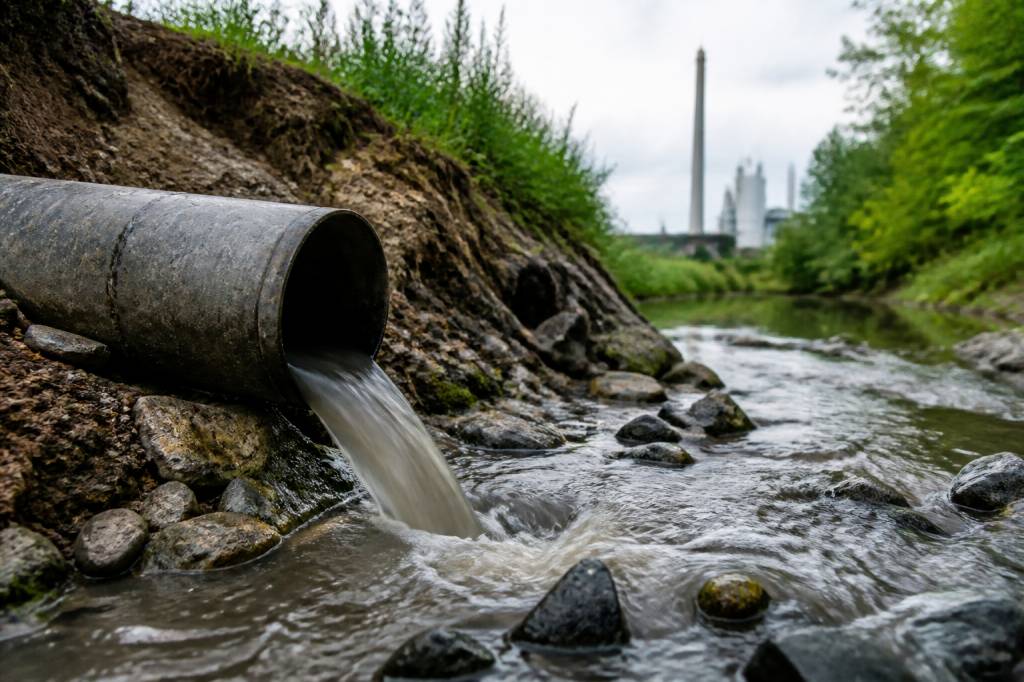
“Forever chemicals” is the name often used for a large family of synthetic substances known as per- and polyfluoroalkyl substances, or PFAS. The term is memorable because it captures a central problem: many PFAS do not readily break down once they enter water, soil, wildlife or the human body.
PFAS have been used for decades because they are highly resistant to heat, oil, grease, stains and water. Those same properties make them useful in products ranging from non-stick cookware and waterproof clothing to firefighting foams and industrial coatings. They also make environmental contamination difficult to control.
So what does “forever chemicals” really mean? Why do PFAS persist in water and the environment, and what can be done to reduce exposure?
What are “forever chemicals”?
“Forever chemicals” is not a formal scientific classification. It is a public-facing term used mainly for PFAS that resist natural degradation and remain in the environment for long periods.
PFAS are a group of thousands of man-made chemicals with a shared chemical feature: chains of carbon atoms bonded to fluorine. The carbon–fluorine bond is one of the strongest in organic chemistry. It is highly stable under conditions that break down many other chemicals, including heat, water and biological activity.
Not every PFAS behaves in exactly the same way. Some are short-chain substances, while others have longer carbon chains. They also differ in how they move through water, sediment, air and living organisms. However, many are persistent, mobile or capable of accumulating in people and wildlife.
This means that a PFAS released today may remain relevant for decades. Even when a manufacturer stops using one substance, older contamination can continue to move through the environment or transform into other PFAS compounds.
Why are PFAS so resistant to breakdown?
The persistence of PFAS begins with their molecular structure. Fluorine atoms form a protective “shield” around the carbon backbone of many PFAS molecules. This shield makes it difficult for microorganisms, sunlight, oxygen and chemical reactions to break the molecule apart.
Many common environmental contaminants degrade through natural processes. Bacteria may consume organic compounds, sunlight may split chemical bonds, or oxygen may cause oxidation. PFAS are much less responsive to these processes.
In simple terms, nature has many tools for dismantling ordinary chemical structures. PFAS are engineered to resist those tools.
The same stability that made PFAS valuable in industrial applications also creates a long-term waste problem. A waterproof coating may perform well for years, but once PFAS-containing materials are discarded, the chemicals do not simply disappear with the product.
How PFAS enter water supplies
PFAS can reach rivers, lakes, groundwater and drinking-water sources through a variety of pathways. Important sources include:
- Firefighting foams used at airports, military sites, refineries and training grounds.
- Industrial facilities that manufacture or use PFAS.
- Landfills receiving PFAS-containing consumer products and industrial waste.
- Wastewater treatment plants, which are not generally designed to destroy PFAS.
- Contaminated biosolids applied to agricultural land.
- Runoff from sites where PFAS-containing materials were used or stored.
- Household products, including some textiles, cosmetics, food packaging and cleaning products.
Wastewater treatment is an important example. Conventional treatment can remove many pollutants, but PFAS often pass through the process or are transferred from the water into sludge. If that sludge is later managed incorrectly, contamination may spread to land and water.
PFAS can also travel considerable distances. Some compounds dissolve easily in water and move through groundwater. Others attach to sediment or soil before being released gradually. This makes contamination difficult to map: the source may be far from the point where PFAS are detected.
Why PFAS persist in rivers, lakes and groundwater
PFAS persistence in water is not only a question of chemical stability. Their environmental behaviour also depends on their ability to move between water, soil, sediment and living organisms.
Some PFAS remain dissolved in water and can travel with groundwater flows. Short-chain PFAS are often particularly mobile because they are less likely to bind strongly to soil and sediment. Longer-chain PFAS may attach more readily to particles and accumulate in organic-rich areas, but they can still be transported over time.
Groundwater contamination is especially challenging. Groundwater moves slowly through underground formations, and monitoring wells may detect contamination years after the original release. Once PFAS enter an aquifer, natural dilution may reduce concentrations but does not remove the chemicals. The contaminated plume can continue to migrate.
Surface water can also act as both a transport route and a temporary storage area. Rainfall may wash PFAS from soil into streams. Flooding can disturb contaminated sediment and redistribute it downstream. Seasonal changes in water levels may alter where PFAS are found.
There is no single environmental “fate” for all PFAS. Their behaviour depends on the specific compound, local geology, soil chemistry, temperature, organic matter and the presence of other contaminants.
PFAS can circulate through the environment
PFAS contamination is not limited to one medium. Chemicals can move between water, air, soil and organisms in a continuing cycle.
For example, PFAS in a landfill may leach into wastewater. Wastewater treatment may concentrate some PFAS in sludge. That sludge may be spread on agricultural land, where rainfall can carry PFAS into surface water or groundwater. Plants, insects and other organisms may then be exposed, creating opportunities for movement through the food web.
Some PFAS can also travel through the atmosphere, either attached to particles or in gaseous form. Air emissions from industrial processes, manufacturing sites and the use of certain products may contribute to wider distribution.
This circulation helps explain why PFAS can be found far from their original point of use. Researchers have detected PFAS in remote environments, including Arctic regions where local industrial use is limited. Long-range transport, ocean currents and the movement of contaminated wildlife all contribute to global distribution.
What does “bioaccumulation” mean?
Bioaccumulation occurs when a chemical builds up in an organism faster than the organism can eliminate it. PFAS can bind to proteins in blood and tissues rather than behaving like conventional pollutants that collect mainly in body fat.
In humans, exposure may occur through drinking water, food, indoor dust, consumer products and contaminated soil. Certain PFAS can remain in the body for years, although the time varies substantially between compounds.
PFAS have also been detected in fish, birds, mammals and other wildlife. Aquatic organisms can be exposed directly through contaminated water and sediment. Predators may then receive PFAS by consuming contaminated prey.
Bioaccumulation and persistence are separate concepts, but they can reinforce each other. A chemical that remains in water for a long time has more opportunity to enter organisms. A chemical that remains in an organism for an extended period can contribute to ongoing exposure even when environmental concentrations change.
Why legacy PFAS still matter
Two of the best-known PFAS are perfluorooctanoic acid, or PFOA, and perfluorooctanesulfonic acid, or PFOS. Their production and use have been restricted or phased out in many countries because of concerns about persistence, exposure and potential health effects.
However, stopping the use of a chemical does not remove historical contamination. PFOA and PFOS may remain in soil, sediment, groundwater, landfill leachate and older products. Contaminated sites can continue releasing them for many years.
There is also a risk of regrettable substitution. When a long-chain PFAS is restricted, a manufacturer may replace it with a shorter-chain or newer PFAS that performs a similar function. The replacement may leave the body more quickly, but it can still be persistent and mobile in the environment. In some cases, manufacturers may use precursor substances that break down into more persistent PFAS.
This is one reason regulators and scientists increasingly examine PFAS as a broad class rather than focusing only on individual chemicals.
Are PFAS destroyed by boiling water?
No. Boiling water does not reliably destroy PFAS. In fact, boiling can reduce the volume of water while leaving PFAS behind, potentially increasing their concentration.
Standard household water filters also vary considerably in performance. Activated carbon filters can reduce certain PFAS when correctly selected, maintained and replaced. Reverse osmosis systems can remove a wider range of PFAS, although they produce a concentrated waste stream that must be managed responsibly.
Consumers should check independent performance data rather than relying on broad claims such as “removes chemicals”. Useful questions include:
- Which specific PFAS does the system reduce?
- Has the product been tested by an independent body?
- What is the expected filter life?
- Does performance change as the filter becomes saturated?
- How should the spent filter or concentrate be disposed of?
Water treatment technologies are developing rapidly. Researchers are investigating high-pressure membranes, specialised adsorbents, electrochemical treatment, plasma processes and advanced oxidation methods. The challenge is not simply to move PFAS from water to another waste material. Effective treatment must also address the concentrated PFAS waste and, where possible, destroy the molecules.
What are regulators doing?
Regulatory approaches differ between countries and continue to evolve as monitoring data improves. Some authorities set limits for individual PFAS, while others regulate groups of substances or apply a total PFAS limit.
In the United Kingdom, drinking-water providers monitor and manage risks under national drinking-water regulations and guidance. The precise requirements can change as scientific evidence and policy develop. Local water companies and environmental regulators remain the most appropriate sources for current information about a specific supply.
Regulation is becoming more difficult because PFAS are present in thousands of different substances, while routine testing may cover only a limited selection. A sample can test negative for several well-known PFAS and still contain other compounds that are not included in the analysis.
Improved regulation therefore depends on several measures: better chemical transparency, stronger controls on industrial discharges, restrictions on non-essential uses, comprehensive site monitoring and investment in treatment technologies.
Can the “forever” problem be solved?
“Forever” should not be interpreted as meaning that every PFAS molecule is literally indestructible. It means that many PFAS persist for extremely long periods under normal environmental conditions. Specialised technologies may break them down, but these processes require energy, equipment and careful control.
The most effective strategy is to prevent unnecessary releases in the first place. This includes replacing PFAS where safer alternatives are available, improving industrial containment, managing firefighting foams responsibly and stopping contaminated waste from entering water systems.
For communities, reliable testing is essential. Sampling drinking water, groundwater, rivers, sediment and wildlife can identify contamination and guide action. For households, reducing exposure may involve using certified filtration equipment, following local drinking-water advice and avoiding products that make vague claims about stain, grease or water resistance.
PFAS are a reminder that chemical durability has an environmental cost. The qualities that made these substances useful—stability, resistance and persistence—also allow them to remain in water and ecosystems long after their original use has ended. Understanding that connection is the first step toward better regulation, safer product design and more effective water protection.
Sources and further reading
- UK Environment Agency, information on persistent organic pollutants and chemical pollution.
- UK Drinking Water Inspectorate, guidance and regulatory information for drinking-water quality.
- U.S. Environmental Protection Agency, research and regulatory resources on PFAS.
- European Environment Agency, reports on PFAS contamination and environmental risks.
- Organisation for Economic Co-operation and Development, global information on PFAS terminology and uses.