


Fluoropolymers are among the most technically useful materials ever developed. They resist heat, chemicals, friction and water, making them valuable in medical devices, electronics, renewable energy systems, industrial equipment and everyday products. Their performance is impressive—but it also raises a difficult environmental question: what happens when these highly persistent materials are produced, used and discarded?
The answer is not straightforward. Fluoropolymers are part of the broader PFAS family, yet they do not behave in the environment in exactly the same way as smaller, more mobile PFAS such as PFOA or PFOS. Understanding that distinction is essential for assessing their benefits, risks and regulation.
What are fluoropolymers?
Fluoropolymers are plastics whose carbon chains contain fluorine atoms. The carbon–fluorine bond is exceptionally strong, which gives these materials their characteristic durability and chemical resistance.
The best-known example is polytetrafluoroethylene, or PTFE—the material commonly associated with non-stick cookware and the brand name Teflon. Other important fluoropolymers include:
- PVDF (polyvinylidene fluoride): used in batteries, membranes, chemical-processing equipment and water-treatment systems.
- FEP (fluorinated ethylene propylene): valued for its transparency, flexibility and resistance to corrosive chemicals.
- PFA (perfluoroalkoxy alkane): used in high-purity laboratory, semiconductor and pharmaceutical applications.
- ETFE (ethylene tetrafluoroethylene): used in architectural films, cables and protective coatings.
- ECTFE (ethylene chlorotrifluoroethylene): used where strong chemical and corrosion resistance is required.
These substances are often described as “high-performance plastics”. They can operate in environments where many conventional materials would soften, corrode or break down. That reliability can extend product lifetimes and reduce maintenance. However, durability is a double-edged sword: a material that lasts for decades in service may also persist for decades after disposal.
Why are fluoropolymers considered PFAS?
PFAS, or per- and polyfluoroalkyl substances, are a large group of fluorinated chemicals. The Organisation for Economic Co-operation and Development (OECD) has used a broad definition that includes substances containing at least one fully fluorinated methyl or methylene carbon group.
Under this broad scientific definition, many fluoropolymers fall within the PFAS category. This does not mean that every PFAS has the same toxicity, mobility or environmental behaviour. The PFAS family includes thousands of substances with very different structures and uses.
Small, non-polymeric PFAS can move readily through water and may accumulate in people or wildlife. Some, including PFOA and PFOS, have been associated with harmful effects and are now heavily restricted in many jurisdictions. Fluoropolymers, by contrast, are large, solid polymers with very low solubility and limited ability to cross biological membranes under normal conditions.
That difference matters. It would be misleading to treat a solid PTFE component as environmentally identical to dissolved PFOS. At the same time, describing fluoropolymers as entirely risk-free ignores the impacts associated with their production, processing, additives, waste and potential breakdown products.
Where are fluoropolymers used?
Their unusual combination of chemical stability, low friction and temperature resistance makes fluoropolymers difficult to replace in some applications.
- Healthcare: catheter components, tubing, implantable devices and pharmaceutical-processing equipment.
- Water treatment: membranes, seals, gaskets, pump components and chemical-resistant linings.
- Electronics: insulation, semiconductor manufacturing equipment and high-frequency cables.
- Energy technologies: lithium-ion batteries, fuel cells, solar installations and hydrogen systems.
- Food processing: non-stick surfaces, seals and equipment designed to withstand repeated cleaning.
- Transport: wiring, fuel-system components, aircraft systems and electric-vehicle technologies.
- Industrial manufacturing: pipes, valves, coatings and vessels exposed to aggressive chemicals.
In some cases, replacing a fluoropolymer with a less durable alternative could increase failures, leakage or energy consumption. A damaged medical device or corroded industrial pipe is not a minor inconvenience. The environmental assessment therefore needs to consider the whole product life cycle, not simply the presence of fluorine.
Are fluoropolymers toxic?
The toxicity of a fluoropolymer depends on its exact chemistry, physical form, manufacturing process and exposure route. Intact, high-molecular-weight fluoropolymers such as PTFE are generally considered biologically inert during normal use. They do not dissolve easily in water, and they are not expected to behave like mobile PFAS in drinking-water supplies.
However, “chemically inert” does not mean “without any possible risk”. Several issues require attention:
- Processing emissions: overheating fluoropolymer materials can generate hazardous fumes. PTFE, for example, should not be exposed to extreme temperatures, and manufacturers must control workplace emissions.
- Manufacturing chemicals: some fluoropolymer production processes have historically used processing aids such as PFOA or related substances. These chemicals have been phased out or restricted in many applications, but contamination from legacy use remains relevant.
- Residual substances: catalysts, surfactants, monomers, pigments and other additives may be present depending on the product and manufacturing method.
- Fine particles: cutting, sanding or mechanical wear can generate dust and particles. The health effects of different fluoropolymer particles are still an area of research.
- Thermal decomposition: incineration or accidental overheating can create hazardous fluorinated compounds, including hydrogen fluoride and other emissions, unless the process is carefully controlled.
For consumers, normal use of a compliant fluoropolymer product is generally very different from occupational exposure in a manufacturing facility. The greatest risks are often concentrated around production, high-temperature processing, waste treatment and poorly controlled industrial releases.
The environmental persistence problem
The defining environmental feature of fluoropolymers is persistence. The same carbon–fluorine bonds that provide durability also make these materials difficult to break down through natural biological or chemical processes.
A fluoropolymer product may remain physically stable for a very long time in landfill or the wider environment. It may not dissolve and spread as readily as smaller PFAS, but persistence still creates a waste-management challenge. Landfill conditions do not reliably destroy these materials, while conventional recycling systems are usually not designed to process them.
Mechanical recycling is possible for some fluoropolymers, particularly where waste streams are clean and well separated. In practice, however, products are often mixed with metals, adhesives, fillers or other plastics. Sorting and decontamination can be expensive. This is one reason why many fluoropolymer-containing products are currently sent to landfill or thermal treatment rather than recycled into new materials.
Thermal treatment requires equal care. Fluoropolymers should not simply be burned in uncontrolled conditions. High-temperature incineration with appropriate pollution controls can reduce some persistent organic material, but it must manage acidic gases and other fluorinated emissions. Facilities also need systems for treating contaminated residues and wastewater.
How fluoropolymer production can affect water
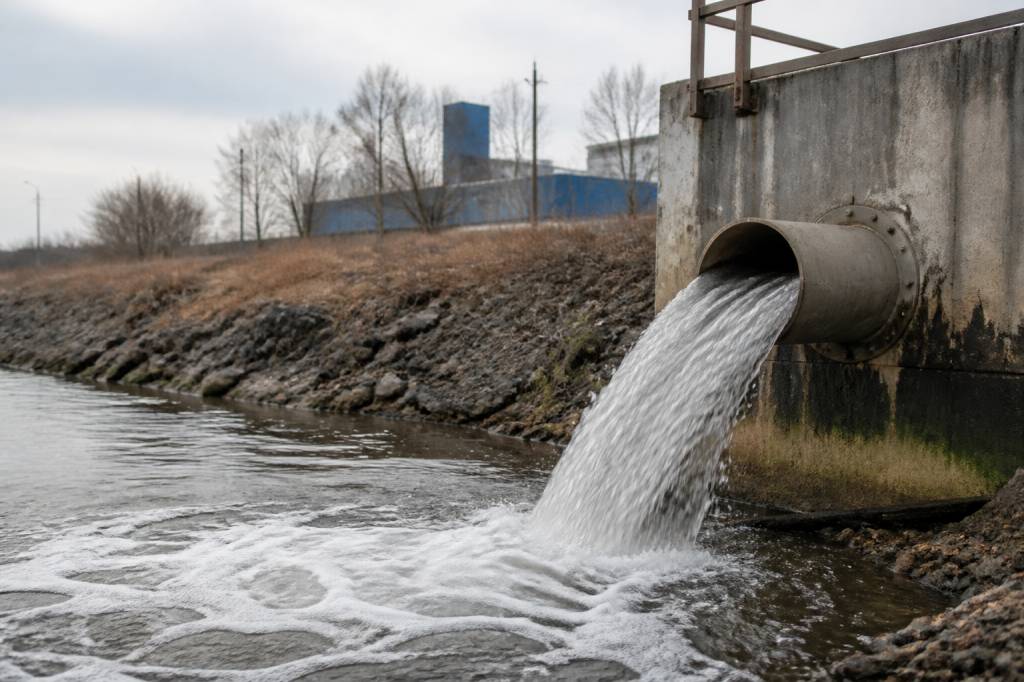
Water contamination associated with fluoropolymers is usually linked less to the finished polymer than to its manufacture and processing. Production sites may handle fluorinated surfactants, monomers, processing aids and cleaning chemicals. Accidental releases, leaks, waste streams or inadequate treatment can allow PFAS to enter surface water or groundwater.
This distinction is important for communities located near industrial facilities. Testing only for one or two well-known chemicals may fail to identify the full range of substances present. Modern monitoring increasingly considers broader PFAS groups, precursor compounds and total or extractable organic fluorine, although no single test provides a complete picture.
Drinking-water treatment can remove many PFAS, but performance depends on the substance involved and the treatment technology. Granular activated carbon, ion-exchange resins and reverse osmosis can be effective in the right conditions. They do not destroy the contamination; they transfer it into spent media, concentrate or waste streams that require responsible disposal.
For this reason, preventing releases at the source is usually more effective than relying on treatment after contamination has occurred. Industrial operators should maintain closed systems, inspect storage and pipework, monitor effluent and use the least hazardous processing aids available.
Fluoropolymers and the climate question
The environmental footprint of fluoropolymers also includes energy use and greenhouse-gas emissions. Manufacturing high-performance polymers can require significant energy, while some fluorinated gases used in industrial processes have very high global warming potentials.
Not every fluoropolymer has the same climate profile, and product-level data are not always publicly available. A life-cycle assessment should consider:
- the energy and raw materials required for production;
- emissions from monomers, processing aids and manufacturing equipment;
- transport and installation;
- the product’s service life and maintenance requirements;
- recycling, incineration or landfill at the end of life.
A long-lasting fluoropolymer component may reduce replacement frequency and prevent leaks, which can provide environmental benefits. But those benefits should be demonstrated rather than assumed. “Long-lasting” is not automatically equivalent to “sustainable”.
What are regulators doing?
PFAS regulation is changing rapidly. The European Union has been considering a broad restriction proposal covering PFAS under REACH, with potential exemptions or conditions for uses where alternatives are not currently available. The proposal has prompted extensive debate about essential uses, socioeconomic impacts, medical equipment, energy technologies and industrial transition.
In the United Kingdom, PFAS management involves a combination of chemical controls, environmental permitting, drinking-water standards and product-specific requirements. The UK’s regulatory position continues to develop, and businesses must monitor updates from bodies such as the Environment Agency, the Health and Safety Executive and relevant devolved administrations.
Regulation is particularly challenging for fluoropolymers because a blanket approach may treat very different substances as though they present identical risks. Policymakers must balance precaution with exposure, emissions, technical necessity and the availability of safer alternatives.
For manufacturers and users, practical compliance steps include:
- mapping every PFAS-containing material and process across the supply chain;
- requesting detailed composition and emissions data from suppliers;
- identifying whether processing aids or residual monomers are present;
- preventing releases through containment, filtration and wastewater controls;
- keeping records that demonstrate why a particular use is technically necessary;
- planning for collection, recycling or controlled disposal at end of life.
Can fluoropolymers be replaced?
Sometimes. Alternatives include stainless steel, ceramics, glass, silicone, thermoplastics and non-fluorinated coatings. The right choice depends on temperature, chemical exposure, pressure, flexibility, purity requirements and expected lifespan.
In a domestic kitchen, replacing a worn non-stick pan may be relatively simple. In a pharmaceutical plant or a hydrogen electrolyser, the decision is more complex. An alternative that fails prematurely could create additional waste or introduce safety risks.
The most credible approach is not to demand one universal replacement. It is to apply a hierarchy:
- eliminate the fluoropolymer where the function is unnecessary;
- replace it where a safer material can perform reliably;
- reduce quantities and prevent avoidable waste;
- improve containment and monitoring where continued use is essential;
- design products for repair, recovery and controlled end-of-life treatment.
What should consumers know?
Consumers are unlikely to control industrial emissions, but they can make informed choices. Avoid overheating non-stick cookware, follow manufacturer instructions and replace damaged items when the coating is visibly deteriorating. Do not burn fluoropolymer-containing products or dispose of industrial materials in household waste unless the manufacturer specifically confirms that this is appropriate.
It is also worth being cautious about broad marketing claims. “PFOA-free” does not necessarily mean “PFAS-free”, and “fluorine-free” claims should be supported by credible testing. Product labels are improving, but supply-chain transparency remains inconsistent.
A more precise way to assess fluoropolymer risk
Fluoropolymers are neither harmless by definition nor identical to every other PFAS. Their risks depend on the complete life cycle: the chemicals used during manufacture, emissions from facilities, conditions of use, product degradation, worker exposure and end-of-life treatment.
The immediate priority is to prevent releases of mobile and hazardous PFAS associated with production. At the same time, industries should invest in safer materials, cleaner processing aids, better waste systems and reliable recycling routes. Researchers also need to fill important data gaps, particularly around polymer particles, degradation under environmental conditions and the real-world performance of proposed alternatives.
Fluoropolymers have helped make modern healthcare, electronics and clean-energy technologies possible. That is precisely why their environmental footprint deserves careful scrutiny rather than simplistic answers. The goal is not to judge a material by its name, but to understand where it is necessary, where it can be replaced and how its risks can be controlled from factory floor to final disposal.
Sources: OECD, “Reconciling Terminology of the Universe of Per- and Polyfluoroalkyl Substances”; European Chemicals Agency (ECHA), PFAS restriction proposal; UK Health Security Agency, PFAS information and assessment work; US Environmental Protection Agency, PFAS and fluoropolymer-related guidance; European Environment Agency, reports on PFAS pollution and prevention.