


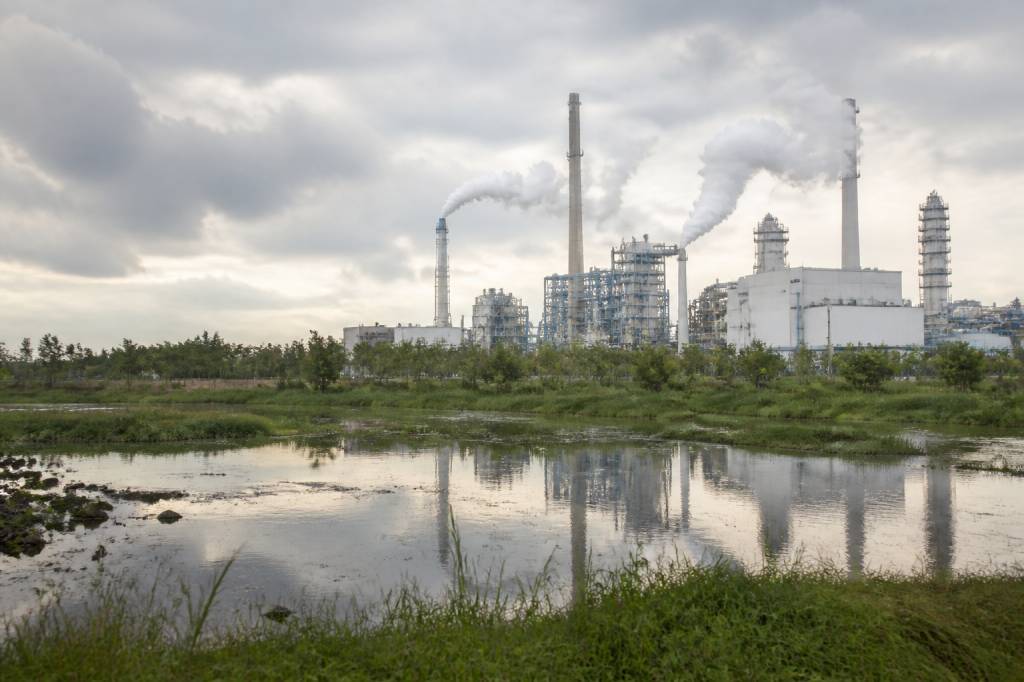
Fluorinated gases are often discussed in the context of climate change, refrigeration and industrial emissions. Water quality may seem like a separate issue, but the connection is closer than it first appears. Some fluorinated gases can contribute to atmospheric degradation, form persistent transformation products, or originate from industrial activities that also release fluorinated chemicals into soil and water.
This matters because “fluorinated gases” is a broad term. It includes hydrofluorocarbons (HFCs), perfluorocarbons (PFCs), sulphur hexafluoride (SF6), nitrogen trifluoride (NF3) and other compounds used in refrigeration, electronics, electrical equipment and manufacturing. They are not all equally persistent, and they do not all create the same risks. However, their shared carbon–fluorine chemistry can make many fluorinated substances exceptionally stable in the environment.
For communities monitoring PFAS and emerging contaminants, understanding these gases is important. The same industrial sectors may handle both volatile fluorinated gases and non-volatile PFAS used in coatings, foams and processing aids. Air emissions, waste streams and accidental releases can therefore form part of a larger contamination pathway.
What are fluorinated gases?
Fluorinated gases are man-made gases containing fluorine. Unlike carbon dioxide, methane and nitrous oxide, many of them occur only in very small concentrations in the atmosphere. Their climate impact, however, can be extremely high because they absorb infrared radiation efficiently and may remain in the atmosphere for years, decades or even thousands of years.
The main groups include:
- Hydrofluorocarbons (HFCs): widely used as refrigerants and in air-conditioning, heat pumps, aerosols and foam production. They do not contain chlorine, so they do not directly deplete the ozone layer, but several have a high global warming potential.
- Perfluorocarbons (PFCs): used in industries such as semiconductor manufacturing and aluminium production. They are highly stable and can have atmospheric lifetimes measured in thousands of years.
- Sulphur hexafluoride (SF6): used as an insulating and arc-quenching gas in high-voltage electrical equipment. It is one of the most powerful greenhouse gases known.
- Nitrogen trifluoride (NF3): used mainly in electronics and display manufacturing. It is a potent greenhouse gas with a long atmospheric lifetime.
- Hydrochlorofluorocarbons (HCFCs): older refrigerants that contain chlorine and can contribute to ozone depletion as well as climate change. Their use is being phased out under international agreements.
Fluorinated gases should not be treated as synonymous with PFAS. PFAS are a large family of per- and polyfluoroalkyl substances, many of which are liquids or solids rather than gases. Some fluorinated gases can break down into persistent fluorinated compounds, but this does not mean every fluorinated gas behaves like PFOA or PFOS in water. The chemistry and exposure pathway must be assessed compound by compound.
Where do fluorinated gases come from?
Refrigeration and air conditioning are among the most familiar sources. Supermarkets, cold-storage facilities, offices, vehicles and homes may contain equipment charged with HFC refrigerants. Leaks can occur during operation, maintenance, transport or disposal. Older systems may also contain HCFCs, particularly hydrochlorofluorocarbon-22, commonly known as R-22.
Leakage is not always dramatic. A small defect in a valve or pipe can release gas slowly over months. In a large commercial refrigeration system, these losses can add up. Poor recovery practices at the end of a system’s working life can release the remaining refrigerant directly into the atmosphere.
Industrial manufacturing is another important source. Semiconductor production uses gases such as NF3, SF6 and certain PFCs to clean chambers and etch materials. Aluminium production can generate PFC emissions during anode effects, brief but intense disturbances in the electrolysis process. Electrical utilities use SF6 in switchgear because it is chemically stable and highly effective at preventing electrical arcs.
Fluorinated gases may also be found in:
- Foam-blowing agents used in insulation and building materials
- Aerosol and technical spray applications
- Fire suppression systems
- Medical and laboratory equipment
- Magnesium processing and other specialised industrial operations
- Waste treatment and the disposal of fluorinated products
Natural sources are generally minor compared with industrial emissions, although some fluorinated compounds can be produced through atmospheric reactions or high-temperature processes. The overwhelming concern is the release, use and disposal of manufactured gases.
Why are they a climate concern?
Global warming potential, or GWP, compares the heat-trapping effect of a gas with that of carbon dioxide over a specified period, usually 100 years. A gas with a GWP of 1,000 has approximately 1,000 times the warming effect of the same mass of carbon dioxide over that period.
Some HFCs have GWPs in the hundreds or thousands. SF6 has a 100-year GWP commonly estimated at more than 20,000, while certain PFCs have similarly substantial values. The quantities released may be far smaller than carbon dioxide emissions, but their potency and persistence make them significant.
There is also a timing issue. Carbon dioxide remains the dominant driver of human-caused climate change, but fluorinated gases can have an outsized effect per kilogram released. Preventing a refrigerant leak may therefore deliver a meaningful climate benefit, particularly when equipment is widespread and leaks are repeated.
The Kigali Amendment to the Montreal Protocol, adopted in 2016, aims to reduce the production and consumption of high-GWP HFCs. The European Union’s F-gas Regulation and the United Kingdom’s equivalent rules also impose controls on the use, servicing, recovery and reporting of fluorinated gases. These policies are encouraging a transition towards lower-GWP alternatives, improved maintenance and better recovery systems.
What happens to fluorinated gases in the atmosphere?
The atmospheric behaviour of a fluorinated gas depends on its molecular structure. Some HFCs are broken down relatively quickly by reactions with atmospheric chemicals. Others, including many PFCs and SF6, are extraordinarily persistent.
Breakdown does not necessarily mean disappearance. Atmospheric reactions can create secondary products, including acids and other fluorinated compounds. For example, some HFCs can degrade into trifluoroacetic acid (TFA), a highly mobile and persistent substance that can be transported from the atmosphere to land and surface waters through rainfall and dry deposition.
TFA is not the same as PFOA or PFOS, and evidence about its toxicity and environmental significance continues to develop. However, its persistence and mobility have raised questions about long-term accumulation in freshwater systems. Unlike larger PFAS molecules, TFA is very soluble and does not readily attach to activated carbon or soil particles. That makes conventional removal more difficult.
This is a useful reminder that environmental risk is not limited to the original emission. A gas released into the atmosphere may eventually generate substances that reach water bodies far from the original industrial site.
How can fluorinated gases affect water quality?
Direct contamination of drinking water by a volatile fluorinated gas is generally less likely than contamination by non-volatile PFAS. Many gases disperse into the atmosphere rather than dissolving and remaining in groundwater. Nevertheless, several pathways can connect fluorinated gas use with water quality risks.
Atmospheric deposition: Persistent or highly soluble degradation products can return to the surface in rain or dust. Over time, repeated deposition may increase concentrations in lakes, rivers, reservoirs and shallow groundwater.
Industrial wastewater: Facilities using fluorinated gases may also manufacture or process fluoropolymers, semiconductor materials, coatings or other products associated with PFAS. Wastewater can contain fluorinated by-products, surfactants or cleaning chemicals. The gas itself may not be the main contaminant; the wider industrial process may be.
Waste and landfill leachate: Discarded refrigeration equipment, foams, fire-suppression products and industrial materials can release fluorinated compounds during storage or disposal. Landfill leachate may carry mobile fluorinated substances into wastewater treatment systems or nearby groundwater if containment is inadequate.
Accidental releases: Firefighting incidents, equipment failures and industrial accidents can introduce complex mixtures of chemicals into the environment. Where fluorinated firefighting foams are used, PFAS contamination may represent a more immediate water quality concern than the release of a refrigerant gas.
Wastewater treatment limitations: Conventional biological treatment is not designed to destroy many PFAS or highly stable fluorinated compounds. Some substances pass through treatment plants, while others accumulate in sludge. Advanced treatment may be required, but technologies such as granular activated carbon, ion exchange and high-pressure membranes have different strengths and limitations.
The special challenge of persistent fluorinated acids
Short-chain fluorinated acids deserve particular attention because they behave differently from longer-chain PFAS. Their high water solubility means they can move rapidly through soil and groundwater. They are less likely to accumulate in sediment, but that does not make them harmless. Instead, they may be difficult to contain and remove once they enter a catchment.
Water utilities may be able to reduce some PFAS using granular activated carbon or ion exchange. However, very small and highly mobile compounds can be poorly captured, depending on the treatment design and operating conditions. Reverse osmosis and nanofiltration can achieve high removal rates, but they consume energy and generate a concentrated waste stream that still requires safe management.
Monitoring is therefore essential. Testing only for a small list of well-known PFAS may overlook degradation products or newer substances. Techniques such as total organic fluorine, extractable organic fluorine and high-resolution mass spectrometry can provide additional information, although each method has analytical limitations and should be selected according to the site and regulatory objectives.
Health and ecosystem considerations
The health effects of fluorinated gases vary considerably. Exposure to refrigerant gases at normal environmental concentrations is not generally the same type of concern as drinking water contaminated with persistent PFAS. At high concentrations, some gases can displace oxygen, cause cardiac sensitisation or produce toxic decomposition products when exposed to fire or extreme heat.
For water quality, the concern is more often chronic exposure to persistent fluorinated chemicals and their transformation products. Research on PFAS has associated certain compounds with effects on immune response, cholesterol, liver function, development and some cancers, although risk depends on the chemical, dose, duration and route of exposure. Regulatory agencies continue to review new evidence and update drinking water guidance.
Aquatic ecosystems can also be affected. Persistent fluorinated substances may move through food webs, alter reproduction or development in some species, and create long-term exposure in habitats that receive contaminated runoff. Even when concentrations are low, continual input can matter because these substances do not readily break down.
What can businesses and water managers do?
Prevention remains more effective than attempting to remove contamination later. Organisations using fluorinated gases should maintain an accurate equipment inventory, inspect systems for leaks and ensure that qualified technicians recover refrigerants during servicing and decommissioning.
- Use lower-GWP alternatives where they are technically and safely suitable.
- Install leak-detection systems in larger refrigeration and industrial installations.
- Train staff in handling, storage, recovery and emergency procedures.
- Keep complete records of purchases, losses, servicing and recovered gases.
- Assess whether fluorinated gases are used alongside PFAS-containing materials or firefighting foams.
- Test industrial wastewater, stormwater, groundwater and landfill leachate where a credible pathway exists.
- Design monitoring programmes around local hydrogeology, rainfall and discharge patterns.
- Dispose of contaminated filters, resins, sludge and concentrates through approved waste channels.
Water companies can strengthen source protection by mapping industrial users, historic fire-training areas, landfills and sites with refrigeration or electronics manufacturing. Early detection is particularly valuable for mobile contaminants because a plume can travel beyond the original property boundary before it is discovered.
Regulation is evolving
International climate agreements increasingly target high-GWP gases, while drinking water and chemical regulations are expanding their focus on PFAS and other persistent substances. In the United Kingdom, businesses must follow rules governing fluorinated greenhouse gases, including requirements for certified personnel, leak checks, recovery and reporting in relevant circumstances. Water quality requirements are also developing as regulators consider broader PFAS groups and improved monitoring methods.
Regulation does not eliminate the need for site-specific assessment. A substance may be controlled as a greenhouse gas because of its atmospheric impact, while its degradation products may be considered separately under water or chemical legislation. Environmental teams should therefore avoid treating compliance in one area as proof that all contamination risks have been addressed.
A connected pollution problem
Fluorinated gases illustrate how air, climate and water policy are connected. A leak from a cooling system begins as an atmospheric emission, but its longer-term consequences may involve climate forcing, chemical transformation and deposition to freshwater. At the same time, the industrial facilities using these gases may handle other fluorinated substances that can enter wastewater or groundwater directly.
The practical message is straightforward: identify the chemical, understand its fate and follow the pathway from source to receptor. Better refrigerant management can reduce greenhouse gas emissions. Stronger industrial controls can prevent PFAS and related compounds from reaching rivers and aquifers. And more comprehensive monitoring can help water managers detect problems before treatment becomes the only option.
Fluorine chemistry has delivered valuable technologies, from refrigeration to advanced electronics. The challenge now is ensuring that the benefits of those technologies do not create invisible, persistent costs for the atmosphere and the water on which communities depend.