


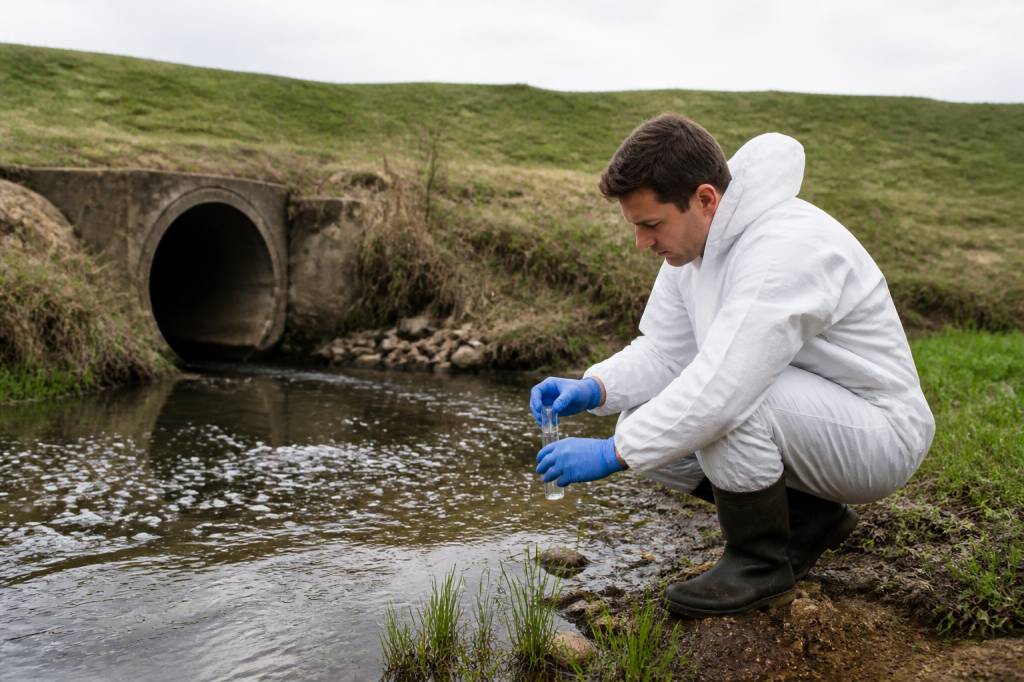
Per- and polyfluoroalkyl substances (PFAS) are often described as “forever chemicals”. The phrase is simple, but the problem is not. PFAS are a large family of thousands of synthetic chemicals used in products that need to resist water, oil, heat or stains. They have been detected in rivers, soils, wildlife, food, indoor dust and drinking water.
Research and public engagement by Fidra, a Scottish environmental charity, have helped bring this issue into sharper focus. Its work examines how PFAS move through the environment, why drinking water can become contaminated, and how better monitoring and regulation could reduce exposure.
The central message is uncomfortable but important: PFAS pollution is not limited to one industrial site or one type of product. These chemicals can travel through water systems, persist for decades and remain difficult to remove once they are widely dispersed.
What are PFAS and why do they matter?
PFAS are a broad group of fluorinated chemicals. Their carbon–fluorine bonds are among the strongest in organic chemistry, giving them exceptional resistance to heat, water, oil and chemical degradation. That durability has made them useful in many applications, including:
- Water- and stain-resistant textiles
- Non-stick cookware and food-contact materials
- Firefighting foams, particularly those used for fuel fires
- Paper and packaging treatments
- Cosmetics and personal-care products
- Industrial processes and specialist coatings
The same properties that make PFAS useful also make them environmentally persistent. Some compounds can remain in soil and water for many years. Others can move through groundwater or be transported over long distances. Certain PFAS also accumulate in people and animals, particularly in the blood, liver and kidneys.
Scientific research has linked exposure to some well-studied PFAS, including PFOA and PFOS, with effects such as changes to immune response, altered cholesterol levels and developmental impacts. The evidence is not identical for every PFAS, and risk depends on the specific chemical, the dose and the duration of exposure. However, the scale of the PFAS family makes chemical-by-chemical control increasingly difficult.
What Fidra’s research adds to the debate
Fidra’s approach is valuable because it connects laboratory science with real-world pollution. Rather than treating PFAS as an abstract chemical issue, its research and campaigns ask practical questions: Where are these substances being used? How do they enter water? Can consumers identify them? And are existing regulations strong enough to prevent contamination?
The charity has highlighted the importance of testing drinking water and understanding the limitations of current monitoring. A water supply may comply with existing legal requirements while still containing PFAS that are not routinely measured. This is partly because regulation often focuses on a limited number of individual substances, while thousands of related compounds exist.
Fidra’s work also reflects a wider concern among scientists and environmental organisations: pollution prevention is usually more effective than attempting to clean up contamination after it has spread. Once PFAS reach a river basin or aquifer, treatment becomes more expensive and technically demanding. The costs may eventually be carried by water companies, local authorities and households rather than by the original manufacturer or user.
This is one reason Fidra supports a more precautionary approach, including restrictions on non-essential uses and improved transparency throughout supply chains.
How can PFAS enter drinking water?
PFAS can reach drinking-water sources through several pathways. The route depends on local industry, land use, waste management and the characteristics of the catchment area.
- Firefighting foams: Aqueous film-forming foams have historically been used at airports, military bases, oil facilities and emergency training sites. Repeated use can contaminate soil and groundwater.
- Industrial discharges: Manufacturing and processing facilities may release PFAS in wastewater, air emissions or waste streams.
- Landfill and waste sites: PFAS-containing products can break down or leach from waste. Contaminated liquid, known as leachate, may enter groundwater if it is not effectively contained and treated.
- Wastewater treatment: Conventional treatment can transfer PFAS from water into sludge or biosolids rather than destroy them. These materials may then create further pathways to land and water.
- Urban and household runoff: Coatings, textiles, packaging and other consumer products can release PFAS during use, washing or disposal.
- Atmospheric transport: Some PFAS or precursor chemicals can travel through the atmosphere before returning to land and water through rainfall or dust.
Once PFAS enter a drinking-water catchment, they may be present at extremely low concentrations. That does not make detection unimportant. Modern analytical methods can measure parts per trillion, but results depend on which chemicals are included in the test and how the sample is collected.
Why testing drinking water is more complicated than it sounds
When people ask whether their water contains PFAS, the answer depends on what “PFAS” means in the test. A laboratory may analyse a small panel of well-known compounds, a larger targeted list or a broader indicator of total organic fluorine. Each approach has strengths and limitations.
Targeted testing can provide reliable measurements for specific chemicals, such as PFOS or PFOA. However, it may miss newer replacement compounds or degradation products. Broader screening can reveal that fluorinated substances are present, but it may not identify every individual chemical or determine its health significance.
Sampling also matters. PFAS may be present in pipes, fittings, storage tanks or treatment equipment. A single sample is therefore only a snapshot. Repeated testing at different points—from the source to the treatment works and finally the tap—can provide a much clearer picture.
Fidra’s research supports the need for more consistent monitoring and public access to information. People should be able to understand where their drinking water comes from, which PFAS have been tested for, what concentrations were found and what action is being taken when contamination is detected.
What does PFAS pollution mean for Scotland and the UK?
Scotland has many protected water environments, but protection from PFAS is not automatic. Rivers, lochs, coastal waters and groundwater can all receive contamination from diffuse and localised sources. The presence of strong environmental legislation does not remove the need for comprehensive chemical monitoring.
Across the UK, regulation has developed unevenly. Some individual PFAS are restricted or subject to environmental standards, and drinking-water guidance exists for selected substances or groups. Yet the number of chemicals in use creates an enforcement challenge. If one compound is restricted while a chemically similar alternative remains available, pollution may shift rather than disappear.
This pattern is sometimes called “regrettable substitution”. A replacement may be less studied, but not necessarily safer. Fidra and other environmental organisations argue that regulation should address groups of PFAS rather than only a few high-profile compounds, with exemptions limited to uses that are genuinely essential.
For water providers, this creates a difficult balancing act. They must protect public health, meet legal requirements and invest in advanced treatment, often without complete information about the source of contamination. For communities, the lack of consistent data can undermine confidence—even where measured levels are low.
Can water filtration remove PFAS?
Some treatment technologies can significantly reduce PFAS concentrations, but no single filter is suitable for every situation. Performance depends on the chemical, the water chemistry, contact time and the condition of the equipment.
- Granular activated carbon: This can remove many longer-chain PFAS. It requires careful design, regular monitoring and timely replacement because exhausted carbon may allow contaminants to pass through.
- Reverse osmosis: Reverse-osmosis systems can achieve high removal rates for many PFAS, although they use energy, produce a concentrated waste stream and require maintenance.
- Ion-exchange resins: These materials can be effective for particular PFAS and water conditions. As with activated carbon, the spent media must be managed responsibly.
- Conventional treatment: Standard processes such as coagulation, sedimentation and biological treatment are generally not designed to destroy PFAS and may remove them inconsistently.
Filtration is not a substitute for pollution prevention. Treating contaminated water indefinitely can be expensive, and the chemicals captured by filters still have to go somewhere. They may be concentrated in spent carbon, resin or brine, creating a secondary waste-management issue.
For households considering a point-of-use filter, certification and maintenance are essential. A product that claims to remove “chemicals” is not automatically effective against PFAS. Consumers should check whether the system has been independently tested for relevant PFAS, follow replacement instructions and avoid relying on an old or poorly maintained cartridge.
What can households do without creating unnecessary alarm?
PFAS contamination is a serious environmental issue, but individuals should not be expected to solve an industrial pollution problem from the kitchen sink. The most useful steps are practical and proportionate.
- Check your local water supplier’s published information and contact them with specific questions about PFAS monitoring.
- If you use a private well, arrange periodic testing through an accredited laboratory, particularly if the well is near an airport, industrial site, landfill or firefighting training area.
- Reduce unnecessary use of stain-resistant treatments, grease-resistant packaging and products that advertise permanent water repellency.
- Follow local guidance for disposing of chemical products, textiles and contaminated materials.
- Be cautious of unsupported claims that a bottled water brand or household filter is completely “PFAS-free”.
Boiling water is not a reliable way to remove PFAS. Because these chemicals are highly persistent, heating water may not reduce concentrations and can increase them if water evaporates while the PFAS remain behind.
From monitoring to prevention
The most important contribution of Fidra’s work is its focus on prevention, transparency and accountability. Better testing is necessary, but testing alone does not stop pollution. A meaningful response requires action across the entire life cycle of PFAS-containing products.
Manufacturers should disclose where PFAS are used and develop safer alternatives. Regulators should improve group-based controls, strengthen reporting requirements and apply the precautionary principle when evidence indicates a persistent, mobile and potentially hazardous chemical. Water companies need resources for monitoring and treatment, while contaminated sites require long-term investigation and remediation.
There is also a role for procurement. Public bodies, retailers and businesses can reduce demand by choosing products that meet performance requirements without unnecessary PFAS. In many cases, alternatives already exist. A jacket, food package or cosmetic does not automatically need a permanent fluorinated coating to perform its everyday function.
The wider lesson from Fidra’s research
PFAS pollution demonstrates how a chemical can move from a specialised industrial application into everyday environmental exposure. It also shows why environmental protection cannot rely solely on reacting after contamination is discovered.
Fidra’s research and advocacy reinforce a clear principle: clean drinking water begins with preventing pollution at source. Monitoring tells us where the problem is. Filtration can reduce exposure in certain circumstances. Stronger regulation and safer product design are what determine whether the problem continues to grow.
For readers, the practical takeaway is to stay informed, ask for clear evidence and support policies that treat PFAS as a group of persistent pollutants rather than an endless list of isolated chemicals. “Forever chemicals” do not have to remain forever in our water systems—but reducing them will require coordinated action from industry, regulators, water providers and the public.
Further reading: Fidra’s PFAS research and resources are available through fidra.org.uk. Additional scientific and regulatory information can be found through the UK Drinking Water Inspectorate, the Environment Agency, the Scottish Environment Protection Agency and the European Environment Agency.