


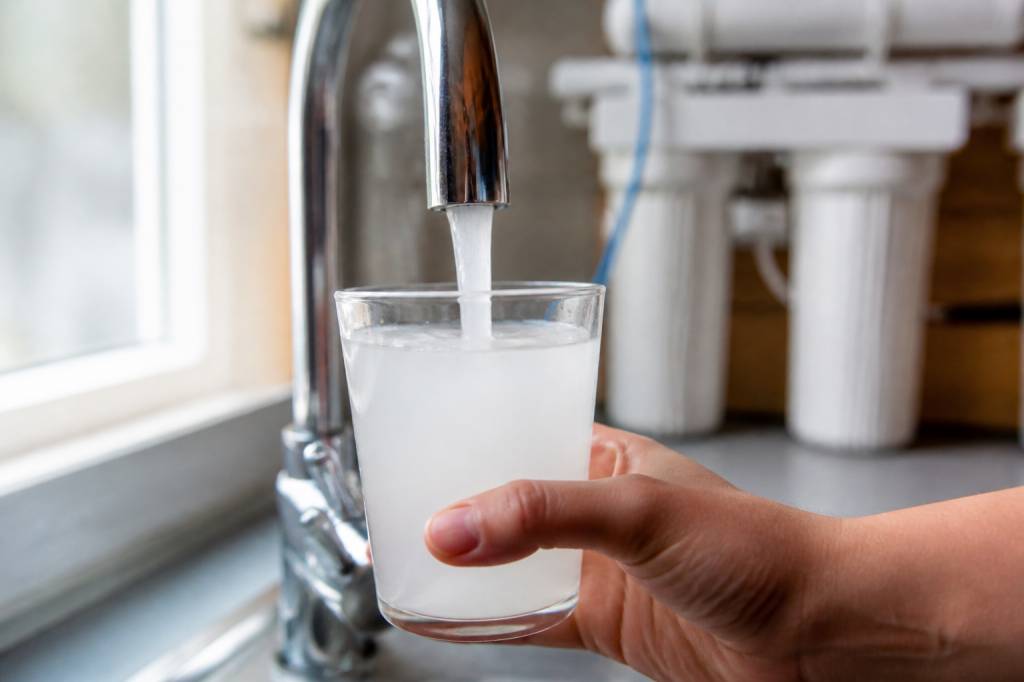
Cloudy drinking water can be unsettling. You fill a glass, hold it up to the light, and instead of seeing clear water, you get a milky, hazy appearance that makes you wonder what is actually in it. Is it air? Sediment? A sign of contamination? And more importantly, is it safe to drink?
The short answer is that cloudy water is not always dangerous, but it should never be ignored. The causes range from harmless trapped air to plumbing issues, mineral particles, bacterial growth, or a disturbance in the water supply. In some cases, cloudiness can point to a broader water quality problem that needs attention. For households already concerned about contaminants such as PFAS, it is especially important to understand that cloudy water may be a symptom of a separate issue, even if it does not directly indicate PFAS contamination.
This article breaks down the most common causes of cloudy drinking water, the potential health risks, and the filtration solutions that can help restore both clarity and confidence.
What cloudy drinking water actually means
Cloudy water is usually described as water that appears milky, hazy, or full of fine particles. In many cases, the cloudiness disappears after the water sits for a few minutes. That detail matters. If the water clears from the bottom up, the culprit is often dissolved air. If the cloudiness lingers, the cause may be something else, such as suspended sediment, mineral content, or contamination.
The visual appearance alone cannot identify the exact problem. A glass of cloudy water may look similar whether the cause is harmless air bubbles or a more serious issue in the plumbing or municipal supply. That is why it helps to observe when the cloudiness appears, whether it affects hot or cold water, and whether it happens at every tap or only one.
Common causes of cloudy water
Not all cloudy water has the same origin. Some causes are temporary and low risk, while others deserve further investigation. Here are the most common explanations.
Trapped air in the water
This is one of the most frequent reasons for cloudy tap water. When water is under pressure, tiny air bubbles can form and remain suspended as it comes out of the tap. This often happens with cold water after plumbing work, seasonal temperature changes, or pressure fluctuations in the water system.
A simple test can help: fill a clear glass and let it sit for a few minutes. If the water clears from the bottom up, it is likely just air. In most cases, this is not a health concern.
Disturbance in the municipal supply
Water main repairs, hydrant flushing, or sudden changes in pressure can stir up sediment in public water lines. That sediment may enter the household supply temporarily and create cloudy or discoloured water. This is particularly common after utility work or during periods of heavy pipe maintenance.
If your neighbours notice the same issue, the cause may be in the public supply rather than your home. In that case, the water provider should be contacted for information and guidance.
Mineral content and hard water
Water rich in calcium and magnesium can become cloudy, especially when heated. Hard water is not usually a direct health risk, but the minerals can leave scale in kettles, pipes, and appliances. In some cases, high mineral content can make water appear hazy or slightly opaque.
Hard water is common in many regions and can affect taste, appliance lifespan, and cleaning performance. It is more of a nuisance than a danger, but it may still justify treatment if the household wants clearer water and less limescale.
Sediment from pipes or plumbing
Older pipes, corroded plumbing, or disturbed sediment in a water heater can release particles into the water. This can cause cloudiness, a gritty texture, or even a metallic taste. If the issue is limited to hot water, the water heater may be involved. If it happens at one tap only, the fixture or local pipework could be the source.
Rust, scale, and debris are all signs that the plumbing deserves a closer look. While not every particle is dangerous, they can indicate ageing infrastructure or poor maintenance.
Bacterial growth or contamination
Cloudy water can sometimes signal microbial activity, especially if it is accompanied by a strange odour, slime, or an unusual taste. Bacteria, algae, or biofilm in plumbing systems may not always be visible, but cloudiness can be one of the warning signs.
This is where caution matters. If the water looks cloudy and there are additional symptoms such as illness in the household, unusual smell, or recent flooding, it is wise to stop drinking the water until it has been tested or confirmed safe by local authorities.
Chemical or industrial contamination
Some pollutants can affect the appearance of water, although many invisible contaminants do not change it at all. This is important in discussions about PFAS. PFAS are not typically responsible for cloudy water, because they are dissolved chemical compounds that are generally not visible to the naked eye. However, the presence of cloudiness does not rule out PFAS or other chemical contamination either.
In other words, clear water is not automatically safe, and cloudy water is not automatically dangerous. That is why testing matters.
Is cloudy water safe to drink?
Sometimes yes, sometimes no. It depends entirely on the cause.
If the cloudiness is caused by trapped air, the water is generally safe. If it is due to mineral content, it may still be safe, though less pleasant to drink. But if the cloudiness comes from sediment, corrosion, bacterial contamination, or an unknown source, it should be treated as a potential warning sign.
A few questions can help narrow it down:
- Does the cloudiness disappear after a few minutes?
- Is it happening in both hot and cold water?
- Is it limited to one tap or present throughout the home?
- Has there been recent plumbing work or municipal maintenance?
- Is there any smell, taste, or colour change?
If the answer suggests a temporary air issue, the risk is low. If the water looks cloudy and also smells strange, tastes metallic, or leaves residue, testing is the prudent next step.
Possible health risks linked to cloudy water
The health risks are not caused by cloudiness itself, but by what the cloudiness may represent. That distinction is essential.
Gastrointestinal illness
If cloudy water is linked to microbial contamination, the main risk is digestive illness. Symptoms may include nausea, stomach cramps, diarrhoea, or vomiting. Children, older adults, pregnant people, and anyone with a weakened immune system are more vulnerable.
Even when illness is mild, contaminated drinking water can create real disruption in a household. No one wants to spend the day guessing whether that odd glass of water was the culprit.
Exposure to metals or pipe corrosion
Cloudy water caused by plumbing corrosion can sometimes accompany exposure to metals such as lead, copper, or iron. Lead is the most serious concern because there is no safe level of exposure, particularly for children. If older properties have old service lines or internal plumbing, the issue deserves immediate attention.
Iron itself is not usually a health threat at normal levels, but it can indicate corrosion or sediment movement. Copper at elevated levels can also cause stomach irritation.
Reduced confidence in water quality
There is also a practical health aspect that is often overlooked: when people distrust their tap water, they may switch to sugary drinks or bottled water unnecessarily. That shift can increase household costs and create environmental waste. A clear understanding of the cause of cloudy water helps families make informed choices rather than reacting out of worry.
How to identify the cause at home
You do not need a lab coat to do a few basic checks. Simple observation can reveal a lot.
- Fill a clear glass and leave it undisturbed for 5 to 10 minutes.
- Watch whether the cloudiness rises, settles, or disappears.
- Compare hot and cold water.
- Check several taps in the home.
- Note any colour, odour, or taste changes.
- Ask neighbours whether they have noticed the same issue.
If only hot water is cloudy, the water heater may be involved. If only one faucet is affected, the problem may be localised to that fixture or pipe. If the entire house has cloudy water, the issue may be upstream or in the main line.
For persistent or unexplained cloudiness, water testing is the most reliable way to identify what is happening. A good test can distinguish between sediment, hardness, metals, bacteria, and chemical contaminants.
Filtration solutions that can help
The right filtration solution depends on the cause. There is no universal fix, which is why it pays to match the system to the problem rather than buying the first filter on the shelf.
Sediment filters
If the problem is visible particles, rust, or fine debris, a sediment filter is often the first line of defence. These filters remove suspended solids and can improve clarity immediately. They are useful for homes with older plumbing, well water, or a known sediment issue after utility work.
Sediment filtration is usually installed as a pre-filter, protecting other treatment systems from clogging too quickly.
Activated carbon filters
Activated carbon can improve taste and odour and may help reduce certain organic compounds and chlorine. While it will not remove sediment effectively on its own, it can be a useful part of a broader treatment setup.
For households concerned about chemical pollutants, activated carbon is often included in a more advanced system. It does not remove all contaminants, but it can play an important supporting role.
Reverse osmosis systems
Reverse osmosis, or RO, is one of the most effective options for a wide range of dissolved contaminants, including many metals and some chemical pollutants. It forces water through a semi-permeable membrane, removing particles and dissolved substances that standard filters cannot capture.
RO systems are especially valuable where water quality issues go beyond cloudiness, such as high TDS, metals, or broader contamination concerns. Many modern RO systems also include pre-filtration and post-filtration stages for better performance and taste.
Water softeners
If hard water is causing cloudiness, scale, or white residue, a water softener may help. Softeners exchange calcium and magnesium ions for sodium or potassium ions, reducing hardness and preventing mineral buildup in pipes and appliances.
They are not a solution for contamination, but they can make a noticeable difference in clarity and household maintenance where hard water is the root issue.
Whole-house filtration
For homes with recurring cloudiness at multiple taps, a whole-house filtration system may be the most practical approach. These systems treat water at the point of entry, helping ensure that all taps receive filtered water. Depending on the setup, they can target sediment, chlorine, metals, and other contaminants before the water reaches appliances and fixtures.
This is especially useful where water quality varies seasonally or where old plumbing may introduce particles after the water leaves the main supply.
When testing is the smartest next step
If cloudy water is a one-off issue that clears quickly, it may simply be trapped air or a temporary supply disturbance. But if the problem persists, worsens, or comes with taste, odour, or discolouration, testing is the most reliable way forward.
You should consider testing if:
- The cloudiness lasts more than a few days.
- Only certain taps are affected and the cause is unclear.
- There is a metallic, earthy, or chemical taste.
- Anyone in the household has unexplained stomach symptoms.
- The property has older pipes or a history of plumbing issues.
- You want to check for contaminants that are invisible, including PFAS.
Laboratory testing can identify the real problem and prevent guesswork. That matters because different contaminants require different solutions. A sediment filter will not solve bacterial contamination, and a water softener will not remove PFAS. Choosing the right treatment starts with knowing what is in the water.
How to reduce the chance of cloudy water returning
Prevention is often simpler than repeated troubleshooting. Regular maintenance can make a significant difference.
- Flush taps after plumbing work or long periods of inactivity.
- Service water heaters according to manufacturer guidance.
- Replace ageing filters on schedule.
- Inspect older pipes and fixtures for corrosion.
- Test household water periodically, especially after supply changes.
- Use the right filter for the actual problem, not just the symptom.
A clean-looking glass of water should not be left to chance. Cloudiness is often easy to explain, but when it is not, that is precisely when it deserves attention. The goal is not just clearer water. It is water you can trust.
In a world where water quality concerns range from sediment and hard water to invisible contaminants like PFAS, a cloudy glass can be the first clue that something in the system deserves a closer look. Sometimes the fix is simple. Sometimes it is a sign that testing and filtration need to be part of the household routine. Either way, the smart response is the same: identify the cause, assess the risk, and choose the treatment that actually solves the problem.