


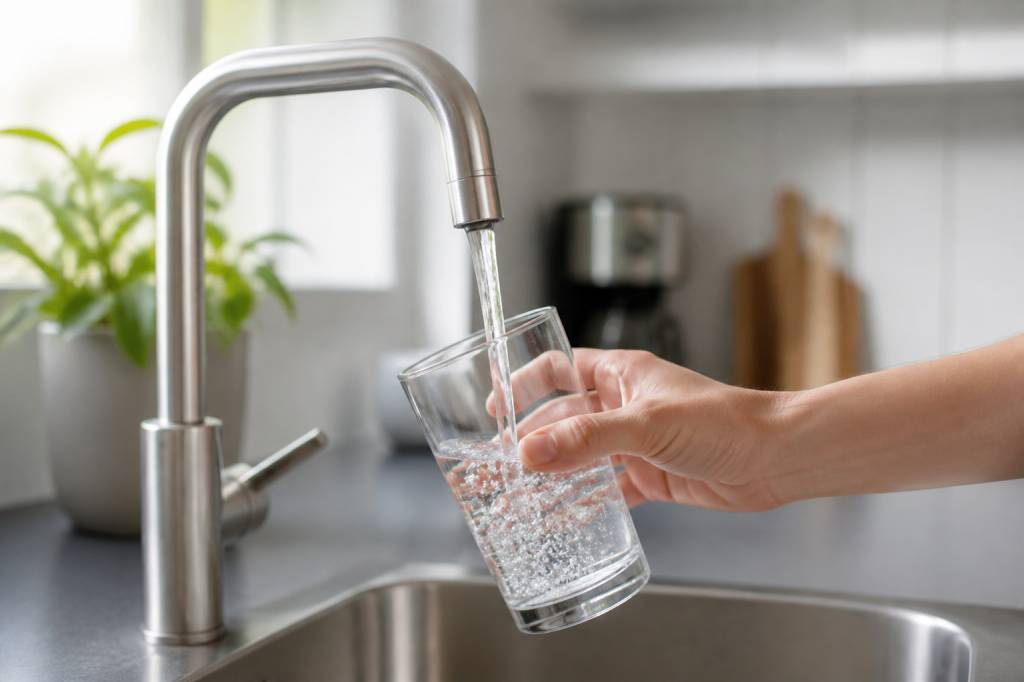
Ask a simple question like “Does UK tap water contain fluoride?” and the answer is, frustratingly, “sometimes yes, sometimes no, and it depends where you live.” That is not a very satisfying response if you just want a straight yes-or-no. But water quality in the UK rarely works that way.
Fluoride in tap water is a long-running public health topic, and one that often gets mixed up with broader concerns about drinking water safety. Some UK residents receive water with added fluoride through a local fluoridation scheme, while others drink water that contains only naturally occurring fluoride, usually at much lower levels. In a country with varied geology, multiple water suppliers, and different treatment practices, the fluoride picture is regional rather than national.
If you are trying to understand what is actually in your tap water, it helps to separate three things: naturally occurring fluoride, fluoride added by water authorities in some areas, and the difference between fluoride levels in the UK and those seen elsewhere. Let’s unpack the basics.
What fluoride is, and why it is in drinking water at all
Fluoride is a naturally occurring mineral found in soil, rocks, rivers, and groundwater. It is not a synthetic chemical invented in a lab; it is present in the environment and can dissolve into water as it moves through certain rock formations. That means some water sources contain more fluoride than others before any treatment happens.
In the UK, fluoride enters tap water in two main ways:
Water fluoridation is a public health measure designed to reduce tooth decay, particularly in children and communities with higher rates of dental problems. It has been used in the UK for decades, but it is not applied nationwide. Scotland, Wales, and Northern Ireland do not have the same fluoridation coverage as some areas in England.
That uneven approach is one reason people often assume there must be a national rule about fluoride in tap water. There isn’t. The reality is more local than that.
So, does UK tap water contain fluoride?
Yes, some UK tap water contains fluoride, but not all of it. In many areas, the fluoride level is very low and comes entirely from natural sources. In fluoridated areas, the concentration is intentionally adjusted to a target level that is considered beneficial for dental health.
In England, the commonly targeted concentration for fluoridated water is around 1 milligram per litre (1 mg/L), though operational ranges are used in practice. That is roughly equivalent to 1 part per million. The exact level can vary slightly depending on the water system.
Elsewhere in the UK, tap water may contain only trace amounts of fluoride, often much lower than in fluoridated regions. In some areas, levels are low enough that fluoride is unlikely to contribute much to dental health at all.
The key point is this: if you live in the UK, you cannot assume your water is fluoride-free, but you also cannot assume it is fluoridated. The answer depends on your supplier and your location.
Where fluoridated water is found in the UK
Artificial fluoridation is mainly associated with certain parts of England. Large-scale schemes have historically operated in areas such as the Midlands, North East England, and parts of Yorkshire, among others. Coverage is not universal, and exact boundaries can be surprisingly local.
Why such a patchwork? Because fluoridation in the UK is a policy decision rather than a technical default. It requires public health justification, infrastructure, and ongoing management. As a result, some communities receive fluoridated water while neighbouring areas do not.
If that sounds a bit like a postcode lottery, that is because it is. Water policy often follows local supply arrangements, and those arrangements do not always line up neatly with political borders or public assumptions.
For residents, the most reliable source is the local water supplier’s water quality report. These reports typically state whether fluoride is added and provide the measured level in the supply zone.
How much fluoride is in UK tap water?
The amount varies depending on where you live. In fluoridated areas, the typical target is around 1 mg/L. In non-fluoridated areas, fluoride levels are often much lower, sometimes below 0.3 mg/L, though local geology can push some groundwater supplies higher.
For context, fluoride is present in many drinking waters around the world, and the UK is not unusual in that respect. Some natural waters contain only tiny traces, while others contain enough fluoride to matter for health monitoring. The issue is not simply whether fluoride exists, but how much is present and whether that amount is within accepted safety and benefit ranges.
UK regulations require drinking water to remain within strict limits. The Water Supply (Water Quality) Regulations set a parametric value for fluoride of 1.5 mg/L, in line with wider drinking water standards. That is a safety threshold, not a target level. Fluoridated supplies are managed below that limit.
In other words, if your tap water contains fluoride, that does not automatically mean it is unsafe. It means the mineral is present, either naturally or by design, and the concentration should be monitored and controlled.
Is fluoride in tap water safe?
At the levels used in UK water supplies, fluoride is generally regarded as safe by public health authorities. The primary benefit is dental: fluoride helps strengthen tooth enamel and can reduce the risk of cavities, especially in children and people at higher risk of decay.
That said, “safe” does not mean “irrelevant.” Like any substance in drinking water, fluoride is a case of dose and context. Too little may provide no benefit. Too much can cause health concerns. The balance matters.
At recommended levels, fluoridation is intended to sit in the beneficial range. The safety debate usually focuses on long-term exposure, cumulative intake from all sources, and whether public water fluoridation is the best way to improve oral health. Those are legitimate public health questions, but they are different from saying tap water in fluoridated areas is contaminated.
It is also important to remember that fluoride exposure does not come only from drinking water. People also get fluoride from tea, food, toothpaste, dental products, and some processed beverages made with fluoridated water. That broader exposure is part of why health agencies monitor total intake rather than looking at tap water alone.
Why fluoride is still controversial
Fluoride has a peculiar public profile. On one side, it is presented as a straightforward dental-health intervention. On the other, it attracts concern from people who are wary of chemical additives in drinking water. Both reactions are understandable.
Some concerns relate to overexposure. Very high fluoride intake over time can lead to dental fluorosis, which affects the appearance of tooth enamel. At much higher levels, excessive exposure can be associated with skeletal fluorosis, though that is generally linked to naturally high fluoride water in other parts of the world rather than typical UK supply levels.
Other concerns are ethical and political. Is it appropriate to medicate water for everyone to reach a population-level health goal? Or should fluoride be a matter of personal choice, like toothpaste? These questions are part science, part public policy, and part public trust.
That tension is one reason this issue keeps resurfacing. People are not just asking about chemistry. They are asking who decides, on what basis, and with what level of transparency.
How to find out whether your tap water contains fluoride
If you want a direct answer for your home, do not rely on rumours, social media posts, or the family friend who “knows a lot about water.” Check the source.
Most UK water suppliers publish water quality information online. You can usually search by postcode or supply area and find a report that lists fluoride levels, along with other parameters such as chlorine, nitrate, and lead.
Here is the simplest way to check:
If you still cannot find the information, contact the supplier directly. They are required to provide water quality data, and they should be able to tell you whether your area is fluoridated.
If you rent, live in a shared building, or use a private supply, the situation can be more complicated. Private boreholes and wells may have very different fluoride levels from mains water, and they should be tested separately if you have concerns.
Does boiling water remove fluoride?
No. Boiling water does not remove fluoride. In fact, because boiling reduces water volume through evaporation, it can slightly concentrate fluoride rather than reduce it.
This is an important distinction because people sometimes assume that any contaminant in water can be fixed by boiling. That is true for some biological risks, but not for dissolved minerals like fluoride. The same is true for many other dissolved substances of environmental concern, including certain industrial pollutants.
If you want to reduce fluoride in drinking water, you need a treatment method designed for that purpose.
Can water filters remove fluoride?
Some can, but not all. Ordinary jug filters are usually not very effective for fluoride unless they are specifically certified for fluoride reduction. The most effective household options typically include reverse osmosis systems, activated alumina, or specialised fluoride-specific media.
However, filtration should never be treated as a guess-and-hope exercise. If fluoride reduction is your goal, check independent certification and the manufacturer’s performance data. A filter that improves taste may do very little for fluoride.
If you are already evaluating drinking water treatment for other reasons, such as PFAS, nitrate, or heavy metals, it may be worth looking at systems that address multiple contaminants. But again, not every technology tackles everything. Water treatment is not magic; it is engineering.
Fluoride and wider drinking water concerns
Fluoride often enters public discussions about water safety alongside other contaminants, from lead to PFAS. But it is worth keeping the issues separate.
Fluoride in UK tap water is usually managed as part of a regulated public health framework. PFAS, by contrast, are persistent synthetic chemicals that are raising major concerns because of their environmental persistence, potential toxicity, and difficulty of removal. Lead contamination often comes from plumbing and infrastructure. Nitrate is frequently linked to agriculture. Each problem has a different source, risk profile, and solution.
That distinction matters because water quality debates can easily become muddled. A person worried about PFAS may assume fluoride is another “man-made additive” in the same category, when in fact fluoride is naturally occurring and fluoridation is a separate policy decision. Clear terminology helps avoid unnecessary alarm while still allowing honest scrutiny.
What you should take away from this
UK tap water may contain fluoride, but whether it does depends on where you live and how your water is supplied. In some areas, fluoride is added to support dental health. In others, it occurs naturally in small amounts. In many places, the level is low enough that fluoride is present but not especially significant.
If you want to know your own situation, check your local supplier’s water quality report. That will tell you more than any generic online claim ever could.
And if you are weighing the pros and cons of fluoride, keep the discussion grounded in evidence. The real question is not whether fluoride exists in UK tap water. It does. The better question is how much is there, why it is there, and whether that level serves the public interest.
In water policy, as in environmental health more broadly, the details are where the truth lives.