


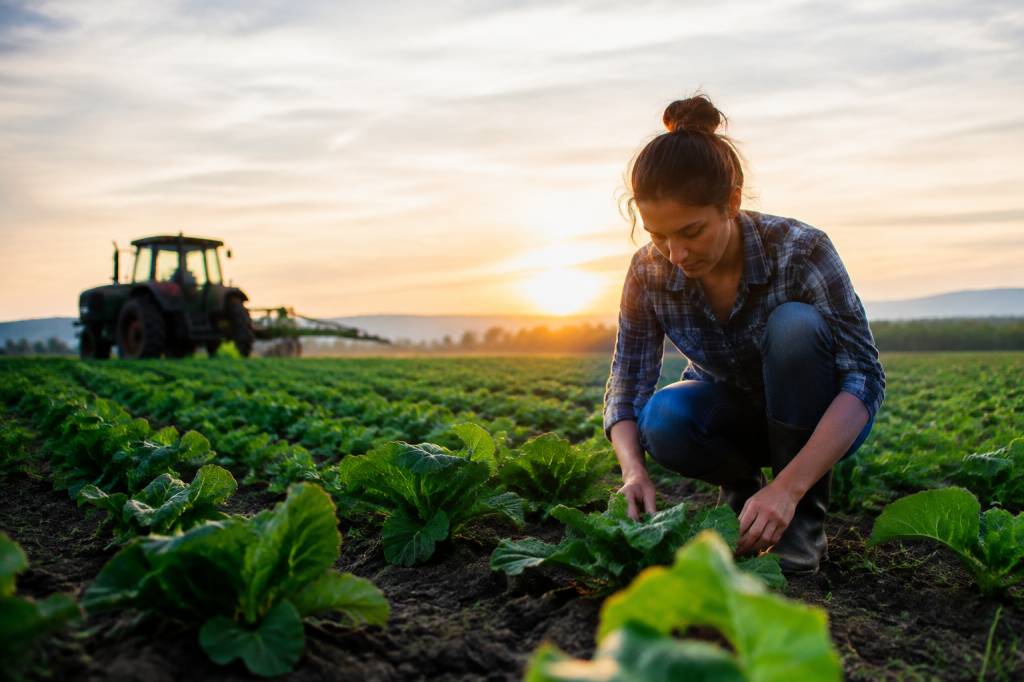
“Organic” is often taken to mean pesticide-free. It sounds reassuring: no synthetic chemicals on crops, no residues on food and no pesticides entering soil or water. But the reality is more nuanced. Organic farming can use pesticides, provided they meet the rules of the relevant organic standard. The term describes a system of production—not a guarantee that no pesticide has ever been used.
Understanding that distinction helps consumers make informed choices, and puts pesticide use in context. It also matters for environmental health: the risks associated with a pesticide depend on the substance, how it is used, how much reaches the environment and how long it persists.
What does “pesticide” actually mean?
Pesticide is a broad term for substances used to prevent, control or manage pests. These include more than insect-killing sprays. Herbicides target weeds, fungicides control fungal diseases, and insecticides target insects. Some products also control mites, slugs or other organisms that can damage crops.
Organic standards do not generally ban every substance used to protect plants. Instead, they prioritise prevention and restrict which products farmers may use. The precise rules depend on the certification scheme and country. In the UK, producers must follow the standards of an approved organic control body; Soil Association certification, for example, has its own requirements alongside the applicable organic regulations.
That means two claims are different: “grown organically” and “grown without pesticides”. The first refers to a regulated farming system. The second would require evidence that no pesticide was used—a claim that organic certification alone does not make.
How organic farms manage pests
Organic farming typically starts with reducing the conditions that allow pests and diseases to take hold. Farmers may rotate crops, select resilient varieties, encourage beneficial insects and use physical barriers or traps. Healthy soils and careful timing can also help crops cope with pressure from weeds, insects and disease.
Imagine a grower facing a recurring fungal disease in a field of vegetables. Rather than relying on a single spray, they might rotate the crop, choose a less vulnerable variety, improve airflow between plants and remove infected material. If those measures are not enough, an approved plant protection product may be considered.
This approach is often described as integrated pest management: use prevention and monitoring first, then choose an intervention suited to the problem. Organic certification strengthens that emphasis, but it does not mean that every crop can be protected by prevention alone. Weather, crop type and local pest pressure all matter.
Which pesticides can organic farmers use?
Organic standards allow only certain plant protection products, subject to conditions. Depending on the standard and the crop, permitted options may include some biological controls, minerals or substances derived from plants or microorganisms. Farmers generally need to follow rules on necessity, application and record-keeping, rather than treating approval as a licence for routine use.
It is important not to confuse “permitted in organic farming” with “risk-free”. A substance’s origin—natural or synthetic—does not, by itself, tell us how hazardous it is. Natural substances can affect non-target organisms, while the risks of any pesticide depend on its toxicity, dose, exposure route and behaviour in the environment. Approval and use conditions are meant to manage risk; they do not make risk disappear.
Conversely, a pesticide being synthetic does not automatically mean that every use presents the same level of harm. Scientific assessment considers evidence about hazards and exposure, and regulators set restrictions where products are authorised. The useful question is not simply “natural or chemical?” but “which substance, used how, and with what consequences?”
Does organic food have pesticide residues?
It can. Residues may occur if an approved product has been used correctly, if a prohibited pesticide reaches a crop from nearby land through spray drift, or if contamination comes from soil, water, storage or handling. Some chemicals can also persist in the environment long after their use has ended.
Residue monitoring in the UK and Europe regularly tests food for pesticide residues. Detection does not automatically mean that a product is unsafe: laboratories can identify very small amounts, and regulators compare results with legal maximum residue levels. A maximum residue level is a legal limit for residues in food, not a direct line between “safe” and “poisonous”. Risk assessment also considers how much of a substance people are likely to consume.
Organic certification reduces the range of pesticides that can be deliberately used in production, but it cannot guarantee a residue-free result. Equally, finding a residue does not, on its own, prove that the organic rules were broken. Investigators need to establish what substance was found, at what level and how it may have arrived there.
For consumers, washing fruit and vegetables under clean running water can remove dirt and some surface residues. Peeling may reduce residues on certain produce, although it also removes parts of the food. Neither step removes every pesticide, especially substances that have moved inside the plant.
What does “organic” mean for the environment?
Organic farming can offer environmental benefits, including supporting soil health and biodiversity when practices such as crop rotation, mixed habitats and reduced reliance on certain inputs are used effectively. But outcomes vary with the farm, landscape and crop. Organic status alone cannot tell you exactly how a particular field affects wildlife, soil or water.
Pesticides can move beyond the crop they are intended to protect. Wind may carry spray droplets, rain can wash residues into drains and waterways, and soil organisms or aquatic life may be exposed. These pathways are why application methods, weather conditions, buffer zones and product-specific restrictions matter. Organic production can reduce reliance on many synthetic pesticides, but allowed products and accidental contamination still need careful management.
There is also a wider question of land use. Organic yields can be lower for some crops in some conditions, though the difference varies substantially. Comparing systems fairly means considering not only pesticide use per hectare, but also yield, biodiversity, soil effects, emissions and the amount of land needed to produce food.
Where do PFAS fit into the pesticide question?
PFAS are a large group of highly persistent chemicals, sometimes called “forever chemicals”. They have been used in many applications, and some PFAS-related compounds have been associated with certain pesticides or pesticide products. That does not mean all pesticides contain PFAS, or that all organic crops are free from PFAS.
PFAS contamination can reach farmland through multiple routes, including contaminated water, industrial pollution, some firefighting foams and contaminated materials. Persistent chemicals may remain in soil or water after the original source has disappeared. In such cases, certification describes the farm’s production practices; it cannot instantly remove legacy pollution from the surrounding environment.
It is therefore misleading to use “organic” as a proxy for “PFAS-free”. Testing and source investigation are needed to assess contamination. For people concerned about exposure, the relevant evidence includes local water-quality data, food monitoring and information about known pollution sources—not the organic label alone.
How to read organic claims with confidence
-
Look for certification. A recognised organic logo or certification details provide more assurance than an unverified “natural” or “eco” claim.
-
Remember what the label covers. Organic certification sets rules for production; it does not promise zero pesticide use or zero environmental contamination.
-
Check the source of broad claims. “Pesticide-free” and “chemical-free” are not the same as certified organic, and they can be difficult to verify without clear evidence.
-
Consider the whole farming system. Crop rotation, habitat, soil management and water protection all contribute to environmental outcomes.
Organic food can be a meaningful choice for people who want to support a system with tighter restrictions on pesticide use and a strong focus on prevention. But the label is not a magic shield against every chemical, every residue or every pollutant. The most accurate answer to “Does organic mean no pesticides?” is no: it means pesticides are restricted, not eliminated.
That distinction is not a reason to dismiss organic farming. It is a reason to ask better questions—about which substances are permitted, how they are used, what monitoring finds and how farms protect the wider environment. Those details give consumers a clearer picture than a simple “natural versus chemical” divide.