


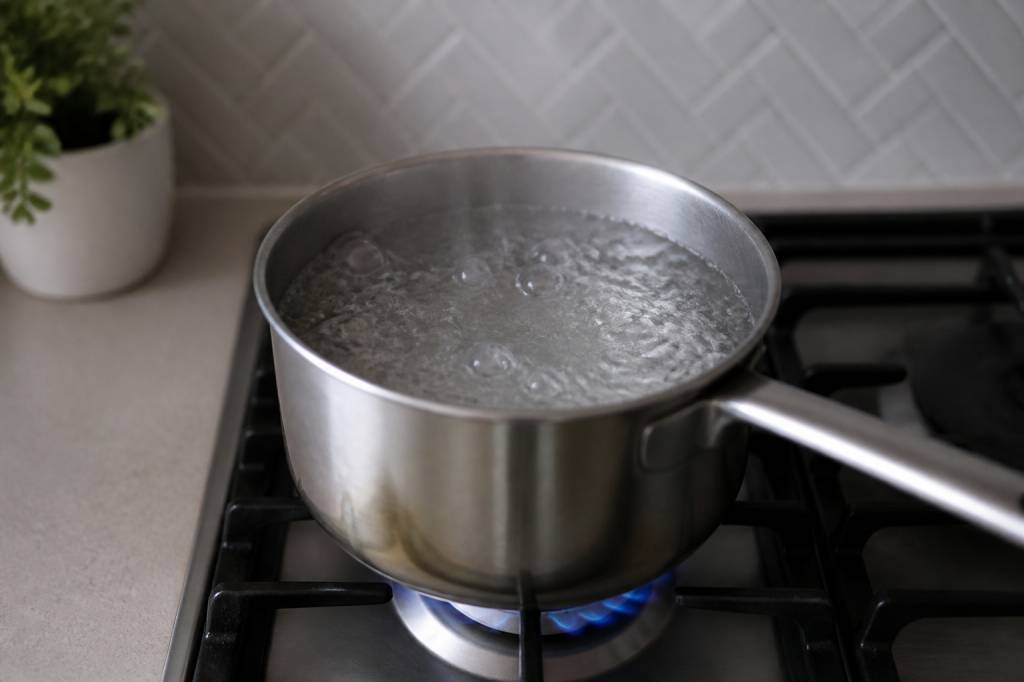
Boiling water is one of those home remedies that feels almost instinctive. If water looks suspicious, heat it. If you are unsure about safety, boil it. It is simple, cheap, and has been passed down for generations. But does boiling water actually kill germs, and more importantly, does it make water safe to drink in every situation?
The short answer is yes, boiling can kill many disease-causing microorganisms. The longer answer is more important: boiling is effective for microbiological risks, but it does not solve every water quality problem. In particular, it does not remove chemical contaminants such as PFAS, heavy metals, nitrates, or pesticide residues. That distinction matters, especially in a world where water pollution is increasingly complex.
If you are dealing with a boil-water advisory, contaminated private well, emergency outage, or uncertain tap water quality, understanding what boiling does and does not do can help you avoid false confidence. Let’s break it down clearly.
What boiling water actually kills
Boiling water is highly effective against most harmful microorganisms. When water reaches a rolling boil, the high temperature damages the structure of bacteria, viruses, and parasites, making them inactive or destroying them. In practical terms, this means boiling can reduce the risk of waterborne illness from pathogens such as:
-
Bacteria such as E. coli, Salmonella, and Campylobacter
-
Viruses such as norovirus and hepatitis A
-
Parasites such as Giardia and Cryptosporidium, although some parasites are more heat-resistant and may require longer boiling times
This is why public health agencies often recommend boiling water after floods, mains breaks, treatment failures, or contamination events. In those situations, the main concern is usually biological contamination, not chemical pollution.
A key point: boiling is about disinfection, not purification in the broad sense. It kills germs, but it does not “clean” water from every possible contaminant. That difference is easy to miss, and it can lead to risky assumptions.
How long should you boil water?
For most everyday guidance, bringing water to a rolling boil for at least one minute is enough to kill common pathogens. At higher altitudes, where water boils at a lower temperature, public health agencies often advise boiling for three minutes to be safe.
That said, if you are following a local boil-water notice, always follow the exact instructions from your water supplier or health authority. Recommendations can vary depending on the nature of the contamination event, especially if the concern involves specific organisms or unusual conditions.
Here is the practical rule of thumb:
-
At sea level or low altitude: boil for at least 1 minute
-
At higher altitude: boil for at least 3 minutes
-
If local guidance says otherwise: follow the official advice first
And yes, “rolling boil” means actual bubbling, not the gentle steam that looks reassuring but may not be enough. Water is not impressed by wishful thinking.
What boiling does not remove
This is where things get more complicated. Boiling water is very good at inactivating germs, but it does not remove dissolved chemical contaminants. In some cases, boiling can even make certain substances more concentrated because some water evaporates during heating.
Boiling does not remove:
-
PFAS (“forever chemicals”)
-
Lead or other heavy metals
-
Nitrate
-
Pesticides and industrial chemicals
-
Salts and minerals that are dissolved in the water
This matters because many households assume that boiling makes water universally safer. It does not. If the contamination is chemical rather than biological, boiling may do nothing useful at all.
For PFAS specifically, boiling is not a treatment method. These persistent chemicals are designed to resist breakdown, which is why they are so problematic in drinking water and the environment. Heating water in a kettle will not destroy them. In fact, if steam escapes and some water evaporates, the concentration of PFAS left behind can increase slightly in the remaining water.
Why boiling can be misleading in chemical contamination cases
One reason boiling persists as a “fix” is that it has a real, visible effect. Water bubbles, pathogens are neutralized, and the action feels decisive. But chemical contamination is a different problem.
Imagine a household on a private well with elevated PFAS levels. If the water is boiled for tea or pasta, the microbes may be less of a concern, but the PFAS remain. That means the risk from long-term exposure still exists. The same logic applies to lead: boiling water does not remove it, and in some cases it can make exposure worse by concentrating the contaminant as water evaporates.
So if the issue is microbial contamination, boiling can be a lifesaver. If the issue is chemical contamination, boiling is not a solution. The difference is not academic; it is the difference between temporary relief and a false sense of safety.
When boiling water is a good idea
Boiling is useful in many situations, especially when the concern is short-term microbial contamination. Common examples include:
-
After a flood has affected drinking water systems
-
During a boil-water advisory issued by your local authority
-
After a mains break or loss of pressure in the water supply
-
When using untreated surface water for emergency drinking
-
While travelling in places where tap water safety is uncertain
In those settings, boiling can be one of the most effective immediate safeguards available. It is especially useful when you do not have access to bottled water or certified treatment equipment.
For households relying on private wells, the situation is a little different. Wells can be vulnerable to both microbial and chemical contamination. If your well water tests positive for bacteria after heavy rain or flooding, boiling may help in the short term. But if the concern is PFAS, nitrate, arsenic, or lead, you need a different treatment approach.
How boiling compares with filtration
Boiling and filtration are often discussed as if they are interchangeable. They are not. They solve different problems.
Boiling is a disinfection method. It targets living organisms such as bacteria, viruses, and parasites.
Filtration, depending on the technology, can remove particles, some microbes, and certain chemical contaminants. But not every filter is equal. A basic jug filter may improve taste and reduce chlorine, while advanced systems such as reverse osmosis or activated carbon units can target a much broader range of contaminants.
For PFAS, not all filtration methods are effective. Some systems are specifically designed to reduce these compounds, while others will do little or nothing. If PFAS is the concern, it is important to check whether a filter is independently tested and certified for PFAS reduction.
Here is the practical takeaway:
-
Boiling helps with germs
-
Standard filtration may help with some particles and chlorine
-
Specialist treatment systems are needed for contaminants like PFAS, lead, or nitrate
Choosing the wrong tool for the problem can waste time and create avoidable risk.
Does boiling make tap water taste better?
Sometimes, yes. Boiling can reduce temporary odors caused by certain dissolved gases, and it may make some water taste less “flat” after cooling. But boiling can also do the opposite in some cases. If water contains minerals or contaminants that do not evaporate, evaporation can concentrate them and make the taste worse.
If your tap water tastes odd because of chlorine, boiling may reduce that smell. But if the taste issue is linked to metals, contamination, or ageing plumbing, boiling will not solve the underlying problem. In that case, the taste is often a clue, not a nuisance to ignore.
Is boiled water always safe to drink?
No. Boiled water is safer in some situations, but not automatically safe in all situations.
Boiled water may still be unsafe if it contains:
-
Chemical contaminants such as PFAS, lead, or pesticides
-
Very high levels of dissolved salts or minerals
-
Contaminants introduced after boiling, such as dirty containers
-
Heat-stable toxins, depending on the contaminant and exposure
Another overlooked issue is recontamination. If you boil water and then store it in an unclean jug or open container, you can undo the benefit almost immediately. Clean storage matters. The safest option is to use a disinfected, covered container and avoid dipping cups or hands into the water.
What to do if you are unsure about your water
If you do not know what is in your water, start by identifying the likely type of problem. That one step can save a lot of confusion.
-
If there is a boil-water notice: follow it and boil as instructed
-
If the water came from a flood or surface source: assume microbial risk unless tested
-
If you are on a private well: test for both microbial and chemical contaminants regularly
-
If PFAS are a concern: look for certified treatment options rather than boiling
-
If water tastes metallic, bitter, or unusual: do not assume boiling will fix it
Testing is often the most reliable first step. Without it, people tend to treat symptoms instead of causes. A cloudy glass of water may be a sign of sediment, air bubbles, or contamination. Boiling may address one of those possibilities, but not the others.
The bigger picture: why this question matters
“Does boiling water kill germs?” sounds like a simple household question, but it opens the door to a much broader issue: how we think about water safety in an age of overlapping contamination risks.
In the past, water safety conversations were often dominated by microbes. Today, water can contain a mix of bacterial contamination, industrial chemicals, agricultural runoff, heavy metals, and emerging pollutants such as PFAS. That means a single method cannot solve every problem.
Boiling still has an important role. It is accessible, immediate, and effective against many infectious threats. But it should be seen as one tool among many, not a universal fix. If we want safer drinking water, especially in communities affected by persistent chemical pollution, we need better testing, smarter treatment, and clearer public guidance.
So yes, boiling water kills germs. It can protect you during a contamination event and is often the right short-term response to microbial risk. But if the issue is chemical contamination, especially PFAS, boiling is not enough. Knowing the difference is what turns a habit into an informed safety measure.