


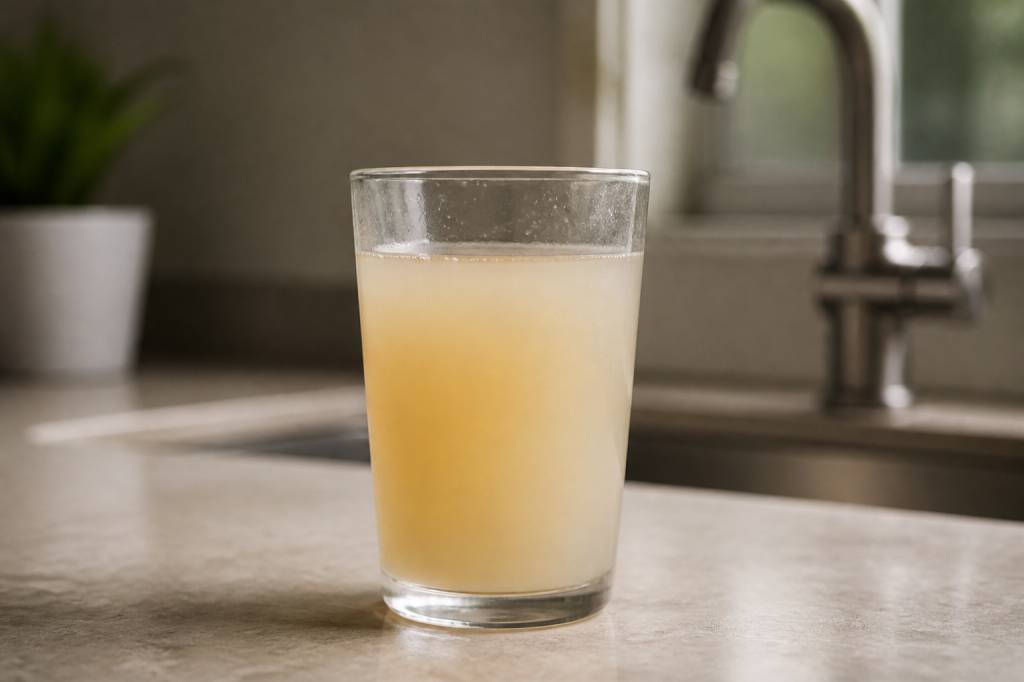
Turn on the tap and notice that the water looks yellow, brown, cloudy, or even slightly green? Discolored water is unsettling, especially when you don’t know whether it is a temporary plumbing issue or a sign of something more serious. In many cases, the cause is harmless and short-lived. In others, it can point to corrosion, sediment, bacterial growth, or contamination that deserves immediate attention.
For households and businesses alike, discolored water raises two key questions: is it safe to use, and what should be done about it? The answer depends on the source of the discoloration. Some causes affect taste and appearance only, while others may carry health or infrastructure risks. And although color alone does not always mean contamination, it should never be ignored.
Here’s what discolored water can tell you, what risks it may carry, and which filtration solutions are most effective when the problem is coming from your water supply rather than your pipes.
What discolored water actually means
Water should be clear. When it is not, the color usually reflects particles, dissolved metals, organic material, or microbial activity. Common colors can reveal different issues:
- Brown or red water often suggests rust, iron, or disturbed sediment.
- Yellow water can indicate dissolved organic matter, aging pipes, or corrosion.
- Cloudy or milky water is often caused by trapped air, fine particles, or high mineral content.
- Greenish water may point to algae, copper corrosion, or chemical reactions in plumbing systems.
- Black water can be linked to manganese, iron sulfide, or deteriorating pipes.
In other words, water color is a clue, not a diagnosis. Think of it as your tap’s way of saying, “Something in the system changed.” The real task is identifying where that change happened.
Common causes of discolored water
There are several reasons water may come out tinted or murky. Some are related to the municipal supply, while others begin inside the home or building.
Corroded pipes and plumbing fixtures
One of the most common causes of brown, yellow, or reddish water is corrosion in older pipes. As metal pipes age, iron or steel can rust and release particles into the water. Copper pipes can also corrode, sometimes producing a blue-green tint.
This is especially likely in older buildings, properties with outdated plumbing, or systems where water chemistry encourages corrosion. Low pH, high oxygen exposure, and fluctuating water pressure can all speed up the process.
Disturbed sediment in the water mains
If nearby construction, hydrant use, or a water-main break stirs up sediment, discolored water may enter your home temporarily. This is common after maintenance work or changes in the municipal distribution network. The water may look brown, cloudy, or rusty, but usually clears once the system flushes itself out.
That said, repeated episodes of discoloration can indicate a more persistent infrastructure problem. If the water stays colored for more than a short period, it is worth reporting to the utility.
Iron and manganese in source water
Iron and manganese are naturally occurring metals found in many groundwater sources. In small amounts they are not usually a direct health concern, but they can discolor water, stain sinks and laundry, and affect taste.
Iron often causes orange or reddish staining, while manganese may produce brown or black discoloration. These metals are particularly noticeable when concentrations increase, when water sits in pipes for a long time, or when treatment systems are not working properly.
Organic matter and seasonal changes
Surface water can contain natural organic matter from decaying vegetation. After heavy rain or seasonal shifts, this material can increase, making water appear yellow or tea-colored. It may also react with disinfectants used by water suppliers, creating by-products that require careful control.
This kind of discoloration is not unusual in river or reservoir-fed systems, but it still deserves attention if it is sudden, persistent, or accompanied by strange odors or taste changes.
Algae and microbial growth
Greenish or cloudy water can sometimes be linked to algae in reservoirs or to microbial growth in stagnant plumbing. While treated municipal water should not contain harmful levels of microbes, localized growth in storage tanks, stagnant pipes, or neglected systems can affect water quality.
If water looks unusual and also smells earthy, musty, or rotten, microbial activity may be involved. In those cases, filtration alone may not solve the problem unless the root cause is addressed first.
When discolored water becomes a health concern
Not every case of discolored water is dangerous. Clear water can still be contaminated, and discolored water can sometimes be harmless. Still, certain types of discoloration are associated with health risks, especially when they reflect chemical contamination or aging infrastructure.
Metal exposure
When discoloration is caused by corroding pipes, the concern is not just appearance. Rust itself is usually more of a nuisance than a toxic hazard, but corrosion can also release lead, copper, nickel, or other metals depending on the plumbing materials involved.
Lead is the most serious concern. It has no safe level of exposure, and it can affect neurological development in children, cardiovascular health, and kidney function in adults. Older buildings are especially vulnerable if lead pipes, lead solder, or brass fixtures are present.
Copper exposure can also become a problem at elevated levels, potentially causing gastrointestinal symptoms. Manganese is another metal of concern, particularly for infants and young children when exposure is prolonged.
Microbial contamination
Discoloration caused by biofilm, algae, or stagnant water may be accompanied by microbial contamination. While color alone doesn’t prove the presence of pathogens, a change in appearance can be a warning sign that the system is not functioning properly.
If water is cloudy and there has been a boil-water advisory, a plumbing issue, or recent flooding, the risk profile changes. In those situations, prompt testing and proper treatment are essential.
Chemical contamination and industrial pollution
Some discoloration can result from chemical contamination in the source water, including runoff from industrial activity, landfill leachate, or failing treatment processes. This matters because many hazardous contaminants are invisible, but some may alter water color or interact with minerals and organic matter in ways that become visible.
PFAS, for example, are not typically detected by color, smell, or taste. But if water quality issues are already present, it can be a reminder that visual inspection is never enough to assess safety. Water can look “fine” and still contain problematic chemicals, including persistent contaminants that require lab testing to identify.
Is discolored water safe to drink?
The short answer is: sometimes, but don’t assume so.
If the discoloration is caused by trapped air, a brief pipe disturbance, or harmless mineral content, the water may not pose an immediate health threat. However, if the color is due to corrosion, sediment from infrastructure work, microbial growth, or contamination from a private well, caution is warranted.
Here are some practical red flags:
- The discoloration is persistent rather than temporary.
- The water has a metallic, earthy, sewage-like, or chemical odor.
- It leaves stains on sinks, tubs, or laundry.
- Only one tap is affected, suggesting a plumbing issue.
- There has been recent flooding, construction, or pipe work.
- Children, older adults, or immunocompromised people use the water.
If in doubt, avoid using the water for drinking or cooking until you know what is causing the change. Boiling can kill some microbes, but it will not remove metals, sediment, or PFAS. In fact, boiling can concentrate certain contaminants if water evaporates.
What to do first when your water changes color
Before buying a filter, take a step back and troubleshoot the source. A filter is only effective when it addresses the actual problem.
- Check whether the issue affects one tap or the entire property.
- Run cold water for a few minutes and see if it clears.
- Ask neighbors whether they have the same issue.
- Inspect for recent plumbing work, hydrant flushing, or water-main repairs.
- Look for staining, leaks, or visible corrosion around pipes and fixtures.
- Contact your water utility if the issue appears to come from the public supply.
- Test the water if the discoloration persists or if there are health concerns.
For private wells, testing becomes even more important. Well water is not monitored in the same way as municipal supplies, so changes in color can signal a local problem such as sediment intrusion, corrosion, or contamination from the surrounding environment.
Which water filtration solutions help with discolored water?
The right filtration system depends on what is causing the discoloration. There is no universal fix, and “best” depends on whether the problem is sediment, metals, microbes, or broader contamination.
Sediment filters
If your water contains visible particles, a sediment filter is often the first line of defense. These filters trap rust flakes, silt, sand, and other suspended solids before they reach taps or appliances.
Sediment filtration can improve clarity and protect more advanced filters downstream. It is especially useful after pipe maintenance, in homes with older plumbing, and in well systems where particles are more common.
Activated carbon filters
Activated carbon is effective for improving taste and odor, and it can reduce certain organic compounds and chlorine by-products. It won’t remove dissolved metals or many inorganic contaminants, but it can be valuable when discoloration comes with a chemical or musty taste.
Carbon is often used in combination with other technologies, because it works best as part of a broader treatment setup rather than as a standalone solution.
Iron and manganese removal systems
When orange, brown, or black water is caused by dissolved iron or manganese, specialized filters are needed. These systems may use oxidation, catalytic media, or ion exchange to remove the metals before they stain fixtures or alter water quality.
In many homes, especially those on well water, this type of treatment makes a dramatic difference not only in appearance but also in household maintenance. Fewer stains, less buildup, and less frustration with every laundry cycle.
Reverse osmosis systems
Reverse osmosis is one of the most effective point-of-use treatments for a wide range of contaminants. It can reduce dissolved solids, many metals, and numerous other impurities. For drinking water, it is often a strong choice when the goal is to improve quality at a single tap.
However, reverse osmosis does not solve every problem. It is not designed for large volumes, and it is not a substitute for fixing corroded plumbing or disinfecting contaminated systems. But when paired with sediment and carbon prefiltration, it can be highly effective.
UV disinfection
If discoloration is tied to microbial contamination in a private well or storage system, ultraviolet disinfection can help inactivate bacteria, viruses, and other microorganisms. UV does not remove particles or chemicals, so it usually needs to be combined with filtration that clears the water first.
Think of UV as the microbial safeguard, not the cleanup crew for rust or sediment.
Whole-house filtration
When the problem affects every tap, a whole-house system may be the most practical option. This can combine sediment, carbon, and specialty filters depending on what the water test reveals. Whole-house filtration helps protect showers, sinks, appliances, and laundry, not just drinking water.
For homes with recurring discoloration, a whole-house setup may be more cost-effective over time than trying to solve the issue at only one faucet.
Why testing should come before treatment
Buying a filter without testing the water is a bit like prescribing glasses without checking eyesight. You might help, but you might also miss the real issue.
Water testing can identify iron, manganese, lead, copper, bacteria, sediment, hardness, chlorine levels, and other potential causes. If PFAS are a concern in your area, targeted testing is especially important because these contaminants require specific analytical methods and are not visible in the water.
Testing also helps avoid over-treating water that doesn’t need a particular filter. That matters for both cost and maintenance. A system that is too small, too weak, or simply wrong for the contamination will not provide reliable protection.
How to reduce the chance of discolored water in the future
Once the immediate issue is under control, prevention becomes the next priority. A few habits can reduce repeat problems:
- Flush rarely used taps regularly to reduce stagnation.
- Replace aging plumbing components before they fail.
- Service filtration systems on schedule.
- Keep an eye on water pressure changes and new stains.
- Test private well water at least annually, and after heavy rain or flooding.
- Report sudden changes to your utility quickly.
Good water quality management is not just about installing equipment. It’s about noticing changes early and responding before small issues become expensive repairs or avoidable exposure.
Clear water is not the only goal
Discolored water is often the most visible sign of a deeper issue. Sometimes it is a temporary plumbing nuisance. Sometimes it is a warning about corrosion, metals, or contamination that needs immediate action. And sometimes it is the tip of the iceberg, with the real problem sitting well below the surface and invisible to the eye.
If your water changes color, don’t brush it off. Identify the source, test when necessary, and choose filtration based on evidence rather than guesswork. That approach protects not only water clarity, but also health, appliances, and peace of mind.
Because when it comes to the water you drink, “looks okay” is not the same as “is okay.”