

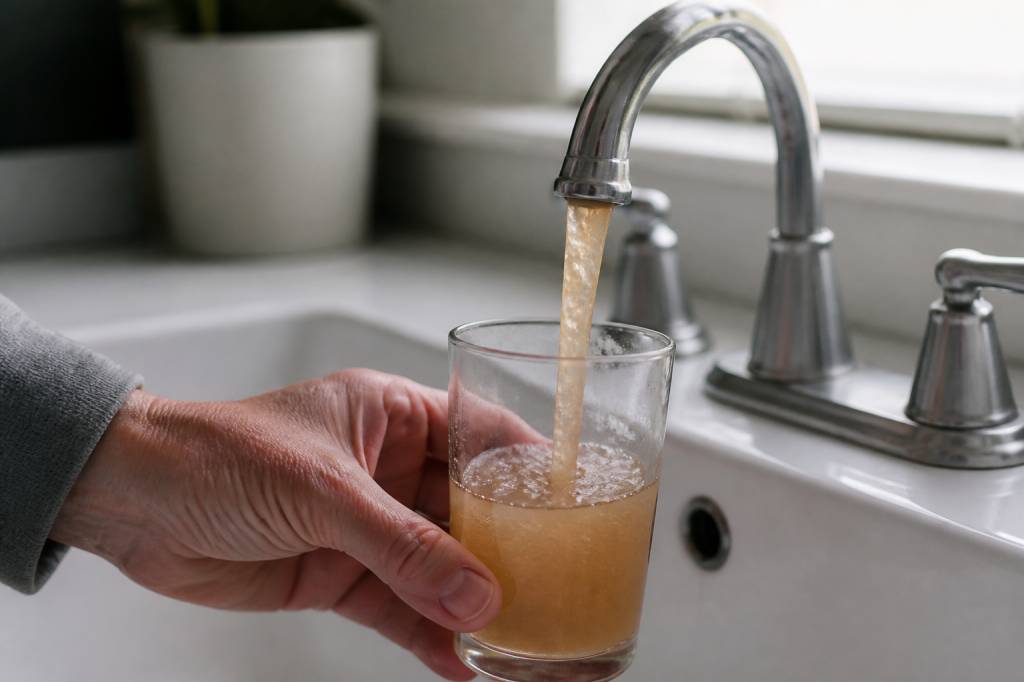
Turning on the tap and seeing cloudy, discolored, or odd-smelling water is unsettling. Most of us expect tap water to be clear, neutral, and safe. When it is not, the first reaction is usually practical: Is it dangerous? Can I still drink it? And what on earth is causing it?
“Dirty” tap water can mean different things. Sometimes it is a temporary plumbing issue after maintenance work. Sometimes it points to aging infrastructure, corrosion in home pipes, or contamination in the local water supply. In other cases, it may involve contaminants that are invisible to the eye, including heavy metals, pesticides, bacteria, or PFAS. That last category matters because water can look clean and still contain chemicals of concern.
This article breaks down the most common causes of dirty tap water, the possible health risks, and the filtration options that can help reduce exposure. If your water has ever made you pause before taking a sip, this guide is for you.
What “dirty” tap water can actually mean
Dirty tap water is not a scientific term, but it is a useful one in everyday life. It usually refers to water that looks, smells, or tastes unusual, or water that may contain unwanted contaminants.
Common signs include:
- Brown, yellow, or rust-colored water
- Cloudy or milky appearance
- Strong chlorine smell
- Musty, earthy, metallic, or sulfur-like taste and odor
- Sediment or particles in the water
- Visible staining in sinks, tubs, or on laundry
Not every strange-looking glass means a serious contamination event. Sometimes the issue is temporary and low-risk. But persistent changes in water quality should never be ignored, especially if the problem affects more than one tap or continues for days.
Common causes of dirty tap water
The source of the problem can be in the municipal system, inside the home, or both. Understanding the difference helps narrow down what to do next.
1. Aging pipes and corrosion
Old plumbing is one of the most common causes of discolored tap water. As pipes corrode, they can release rust, iron, lead, or other materials into the water. This is especially relevant in older homes and buildings where plumbing has not been fully updated.
Rusty water often appears after water has been sitting in pipes overnight or during periods of low use. If the discoloration clears after running the tap for a minute or two, corrosion or disturbed sediment may be the issue. That does not automatically mean the water is safe, though. If lead service lines or lead-containing fixtures are present, the concern is more serious because lead is hazardous even at low levels.
2. Disturbance in the municipal supply
Water mains are occasionally flushed, repaired, or replaced. That work can stir up sediment and cause temporary cloudiness or discoloration. Heavy rainfall, flooding, or pressure changes in the distribution system can also move particles through the network.
This type of problem is often temporary, but it can still affect water quality. If your local utility issues a notice about maintenance or water main work, that may explain the change. In those cases, running cold water for a short period or checking official guidance is usually the first step.
3. Sediment, minerals, and naturally occurring compounds
Groundwater can contain naturally occurring minerals such as calcium, magnesium, iron, and manganese. These are not always harmful, but they can affect taste, staining, and appearance. Hard water, for example, is not usually a health threat, but it can leave scale on fixtures and make soap less effective.
Some naturally occurring substances are more concerning. Arsenic, for instance, can be found in certain geological regions and may contaminate groundwater. Because many of these contaminants are invisible, the water may look normal even when it is not ideal for long-term consumption.
4. Microbial contamination
Bacteria, viruses, and parasites are less common in well-managed municipal systems, but they can still enter water supplies through leaks, cross-connections, flooding, or failures in treatment. Private wells are particularly vulnerable because they are not monitored as frequently as public systems.
Microbial contamination is usually associated with gastrointestinal illness. If tap water suddenly tastes or smells unusual after a storm or plumbing issue, it is worth taking seriously, especially if anyone in the household is immunocompromised, elderly, pregnant, or very young.
5. Chemical contamination, including PFAS
Some of the most concerning contaminants are the ones you cannot see, smell, or taste. PFAS, often called “forever chemicals,” are a family of synthetic compounds used in products such as non-stick coatings, water-repellent fabrics, firefighting foams, and industrial applications.
PFAS can enter drinking water through industrial discharge, landfill runoff, wastewater, and contaminated sites. The challenge is that water containing PFAS often looks perfectly normal. That means a clear glass does not guarantee a clean glass.
Research has linked PFAS exposure to several health concerns, including impacts on the immune system, thyroid function, cholesterol levels, and in some cases certain cancers. Regulatory limits are becoming stricter in many countries, but contamination remains a real issue in numerous communities.
Health risks linked to dirty tap water
The risks depend entirely on what is in the water. Cloudy water is not always dangerous, while invisible contamination can be significant. Here is how different contaminants can affect health.
Short-term risks
Short-term exposure to contaminated water can lead to immediate symptoms, such as:
- Stomach cramps
- Diarrhea
- Nausea or vomiting
- Skin irritation
- Headaches
These symptoms are more likely when water contains microbes or chemical pollutants at elevated levels. If several people in the home become ill at the same time after drinking the tap water, contamination should be considered a possibility.
Long-term risks
Long-term exposure is where the issue becomes more serious for contaminants such as lead, arsenic, nitrates, and PFAS. These substances may not cause immediate symptoms, but repeated exposure over months or years can affect health in ways that are harder to detect.
For example, lead exposure is associated with neurological harm, especially in children, where even low levels can affect development and learning. Nitrate contamination can be particularly dangerous for infants. PFAS exposure has been associated with immune effects and other chronic health concerns.
The key point is simple: if the contamination is chemical rather than microbial, the lack of obvious symptoms does not mean the risk is negligible.
When dirty tap water is an emergency
Some situations require immediate action. If the water is suddenly very brown, smells strongly of fuel or chemicals, or if your local utility issues a boil-water or do-not-drink advisory, do not assume it will resolve on its own.
Take the issue seriously if you notice:
- Sudden widespread discoloration across multiple taps
- Oily film, chemical odor, or unusual foam
- Boil-water notice or contamination alert
- Flooding near your well or water source
- Symptoms appearing after drinking tap water
If you suspect a serious issue, use bottled water or an approved alternative until testing confirms the water is safe. For private well owners, testing is especially important because contamination can go unnoticed for longer.
What to do if your tap water looks or smells off
The first step is to identify whether the issue is isolated or widespread.
- Check whether the problem affects only one tap or the entire home.
- Ask neighbors whether they have the same issue.
- Look for local utility notices about maintenance or water quality incidents.
- Run cold water for a few minutes to see if the appearance improves.
- Do not use hot water for cooking or drinking if contamination is suspected, since hot water can leach more metals from pipes and water heaters.
If the problem persists, water testing is the most reliable next step. A basic test can reveal issues such as pH, hardness, chlorine, iron, nitrate, lead, and microbial contamination. For PFAS, you need a targeted test because standard home kits usually do not detect them.
Why standard water appearance is not enough
One of the biggest misconceptions about tap water is that clear means safe. In reality, many contaminants are invisible. PFAS, lead, arsenic, and many pesticides do not necessarily change the look or smell of water.
That is why relying on sight and taste alone can be misleading. A glass of water can be crystal clear and still fail to meet health-based standards. It is a bit like judging a book by its cover, except the book may be full of chemicals you would rather not read.
Water filtration solutions that can help
Not every filter removes every contaminant. Choosing the right system depends on what is in your water. The best solution is the one matched to the problem, not the one with the boldest marketing claim.
Activated carbon filters
Activated carbon is common in pitcher filters, faucet filters, and under-sink systems. It is effective at reducing chlorine, improving taste and odor, and lowering some organic compounds.
Some activated carbon systems can reduce certain PFAS, but performance varies widely depending on the design, contact time, and filter quality. Look for independently tested products rather than assuming all carbon filters are equivalent.
Reverse osmosis systems
Reverse osmosis, or RO, is one of the most effective household filtration methods for a broad range of contaminants. It can reduce many dissolved substances, including lead, nitrate, arsenic, and a significant portion of PFAS, depending on the system.
RO units are often installed under the sink and provide high-quality drinking water. The trade-off is that they require more maintenance and can waste some water during the filtration process. Still, for households concerned about multiple contaminants, they are often a strong option.
Whole-house filtration
Whole-house systems treat water as it enters the home. These are useful when contamination is broad, or when you want cleaner water for showering, laundry, and general household use.
Different configurations exist, including sediment pre-filters, carbon tanks, and specialized media for metals or PFAS. Whole-house systems are more expensive, but they provide wider protection than a single tap filter.
UV disinfection
Ultraviolet systems are designed to inactivate bacteria, viruses, and other microbes. They do not remove chemicals, metals, or PFAS, so they are best used alongside another filtration stage.
If your water concern is microbial rather than chemical, UV can be a useful part of the solution. For well water especially, it is often paired with sediment and carbon filtration.
How to choose the right filter
The right filter starts with the right problem. Before buying anything, ask two questions: What is in my water, and what do I want to remove?
A practical approach looks like this:
- If the issue is taste, odor, or chlorine: activated carbon may be enough.
- If the concern is lead, PFAS, nitrates, or a mix of contaminants: consider reverse osmosis.
- If bacteria are the issue: add UV or another disinfection method.
- If the water is very sediment-heavy: install a sediment pre-filter first.
Also check for third-party certification. Independent testing is important because marketing claims can be vague. Look for standards relevant to the contaminant of concern, and verify that the system is certified for the specific substances you want removed.
Maintenance matters more than people think
Even a good filter becomes ineffective if it is not maintained properly. Clogged cartridges, expired media, and poor installation can reduce performance dramatically. In some cases, an old filter can even become a source of contamination.
To keep filtration effective:
- Replace filters on schedule
- Follow the manufacturer’s flow rate and installation instructions
- Sanitize systems when recommended
- Retest water periodically, especially after plumbing work or contamination alerts
A filter is not a “set it and forget it” device. It is more like a safety tool that needs regular care to keep doing its job.
Why testing is the smartest first move
If you only remember one thing from this article, let it be this: test before you guess. Water testing removes uncertainty and helps you avoid spending money on the wrong fix.
For homeowners, testing is especially useful if you live in an older property, use a private well, or suspect contamination from PFAS, lead, or agricultural runoff. For tenants, testing can also provide documentation if the issue needs to be reported to a landlord or local authority.
Dirty tap water is not just a plumbing nuisance. It can be a sign of aging infrastructure, environmental contamination, or hidden chemical exposure. The good news is that with the right information, you can respond quickly and choose a filtration system that actually addresses the problem.
Clean water should not be a guessing game. If your tap water looks, tastes, or smells off, take it seriously, test it properly, and choose a solution based on evidence, not hope.