


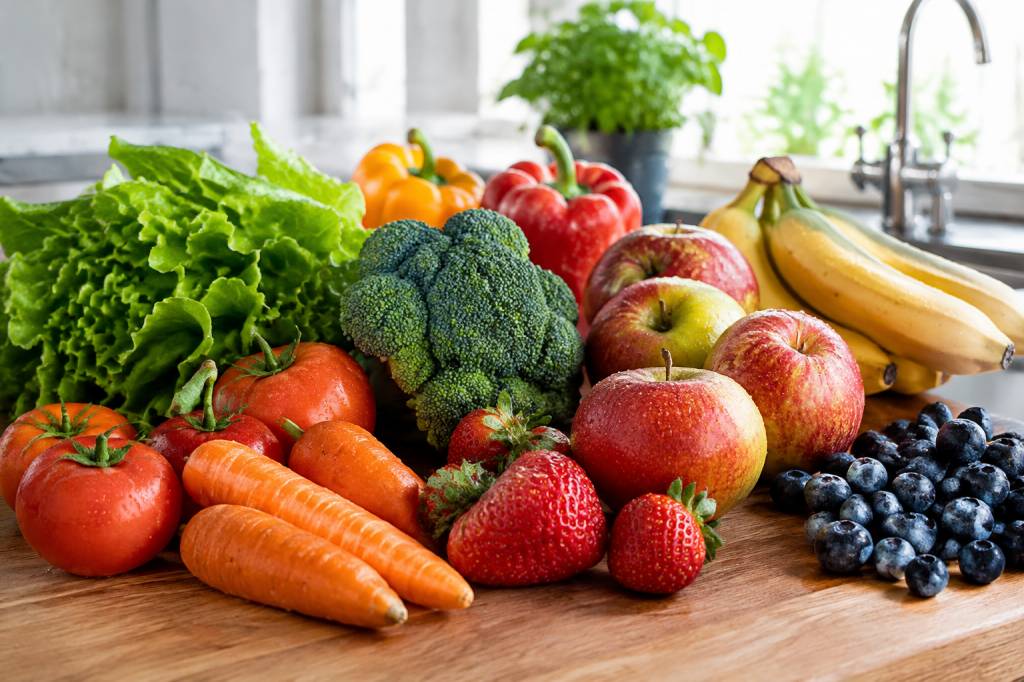
Strawberries, spinach, grapes and apples are often celebrated as everyday essentials of a healthy diet. Yet these foods also appear regularly on the Environmental Working Group’s (EWG) annual “Dirty Dozen” list, which ranks conventionally grown fruit and vegetables with the highest frequency or concentration of detected pesticide residues.
The list attracts attention because it turns a complicated scientific issue into a simple shopping guide. But what does it actually mean for your health? Should you stop buying strawberries? Is organic produce the only safe option? And can washing remove the chemicals that remain on the surface?
The short answer is more nuanced than a twelve-item ranking suggests. Pesticide residues are worth understanding, particularly for children, pregnant people and agricultural workers. At the same time, the health benefits of eating fruit and vegetables remain clear. Avoiding produce altogether would be a far greater nutritional mistake than buying a conventional apple.
What is the Dirty Dozen?
The Dirty Dozen is published each year by the Environmental Working Group, a US-based environmental organisation. Its ranking is based primarily on results from the US Department of Agriculture’s Pesticide Data Program, which tests samples of fruit and vegetables for chemical residues.
The list commonly includes produce such as:
- Strawberries
- Spinach and other leafy greens
- Kale, collard and mustard greens
- Grapes
- Peaches
- Pears
- Nectarines
- Apples
- Cherries
- Blueberries
- Green beans
- Bell peppers
The exact order can change from year to year, as farming practices, weather conditions, sampling methods and pesticide use change. The ranking is not a list of foods that are poisonous, nor does it mean that every sample contains a dangerous level of contamination.
It is better understood as a signal: some types of produce are more likely than others to carry detectable residues after harvesting and preparation.
Detected does not automatically mean dangerous
This distinction is essential. Modern analytical laboratories can detect extremely small quantities of chemicals—sometimes at parts-per-billion concentrations. Finding a residue does not, by itself, prove that eating the food will cause harm.
Regulators establish maximum residue levels, or MRLs, for approved pesticides. These limits are designed to represent the highest concentration expected when a product is used according to its label. Risk assessments typically consider how much of a food people eat, how often they eat it and how toxic the chemical is.
In the United States, the Environmental Protection Agency evaluates pesticide risks before approving uses, while the Food and Drug Administration and the USDA monitor residues in food. In the UK, pesticide approvals and residue limits are managed through national systems that reflect retained UK and international scientific standards.
However, compliance with a legal residue limit is not the same as proving that every possible exposure is harmless. Scientific uncertainty remains around combined exposure to multiple chemicals, long-term low-dose exposure and the effects of pesticides on particularly vulnerable groups.
This is one reason the subject remains controversial. A food may comply with legal limits and still deserve careful monitoring, especially when exposure occurs repeatedly over many years.
Why might pesticide residues matter for health?
Pesticides are biologically active by design. They are used to kill, repel or control insects, fungi, weeds and other organisms that threaten crops. Some affect the nervous system; others interfere with hormones, cell division or reproductive processes.
Health effects depend on the specific substance, the dose and the route of exposure. A person who eats a peach with a very small residue is not exposed in the same way as a farm worker who handles concentrated pesticide products. Occupational exposure is generally much higher and is linked with greater concern.
Research has associated certain pesticide exposures with possible effects including:
- Neurological and developmental changes
- Hormonal or endocrine disruption
- Reproductive effects
- Respiratory irritation
- Effects on the immune system
- Increased risk of some chronic diseases
These findings do not mean that every residue causes one of these outcomes. Studies differ in design and quality, and observational research cannot always prove direct cause and effect. Nevertheless, the evidence supports reducing unnecessary exposure where practical—without discouraging people from eating nutritious produce.
Children may be more vulnerable
Children eat more food relative to their body weight than adults and their organs and nervous systems are still developing. This can make exposure to certain chemicals more significant during early life.
Pregnancy is another period when exposure deserves attention. Some pesticides can cross the placenta, and research has examined possible associations between prenatal exposure and developmental or birth outcomes. The evidence is not identical for every chemical, but it is sensible to follow advice from public health authorities and reduce avoidable exposure.
People who work in farming, horticulture, pest control or food processing may face a different level of risk from consumers. Protective equipment, training, ventilation and strict handling procedures are therefore important parts of pesticide safety. The burden of exposure should not be placed entirely on shoppers who are simply trying to feed their families.
Does washing remove pesticide residues?
Washing fruit and vegetables under running water is one of the simplest ways to reduce surface residues, dirt and microbes. Rub firm produce with clean hands or a produce brush, and wash leafy greens carefully under running water.
Washing can remove some pesticides, particularly those that remain on the surface. It cannot reliably eliminate chemicals that have been absorbed into plant tissues. Peeling may remove additional residues, but it also removes fibre and nutrients found in the skin.
Do not wash produce with soap, detergent or household disinfectant. These products are not designed for food and may leave their own residues or irritate the digestive system.
Useful preparation habits include:
- Wash produce before cutting or eating it, even when the skin will be removed.
- Keep raw produce away from chemicals used for cleaning or gardening.
- Wash your hands before preparing food.
- Remove damaged or bruised sections where contamination may be concentrated.
- Store fruit and vegetables according to food-safety guidance.
Washing is not a magic eraser, but it is still worthwhile. A few seconds under the tap can reduce contaminants without compromising the nutritional value of most foods.
Is organic produce safer?
Organic farming restricts the use of many synthetic pesticides, but “organic” does not mean pesticide-free. Organic farmers can use approved natural or mineral-based substances, and residues may also reach crops through soil, water drift or environmental contamination.
Research generally finds that organic produce has lower average levels of synthetic pesticide residues. Some studies also suggest that switching to an organic diet can reduce pesticide metabolites measured in urine. However, the long-term health advantage of choosing organic food remains difficult to quantify, partly because diet, income, occupation and lifestyle often differ between people who buy organic and conventional food.
Cost is another important factor. Organic produce can be more expensive and less accessible, particularly for households already facing food insecurity. A diet made up of conventional fruit and vegetables is usually healthier than a diet with too little produce because organic options are unaffordable.
If your budget allows, you might prioritise organic versions of the fruit and vegetables your household eats most often, particularly those that are eaten with their skin. Alternatively, buy seasonal produce, compare prices and use frozen or tinned options. Frozen vegetables can be highly nutritious and are often more affordable.
The Clean Fifteen and practical compromises
The EWG also publishes a “Clean Fifteen” list, identifying produce that tends to have fewer detectable pesticide residues. It has commonly included items such as avocados, sweetcorn, pineapples, onions, papayas, asparagus, cabbage, kiwi and mushrooms.
As with the Dirty Dozen, this is a consumer guide rather than a regulatory safety classification. A food on the Clean Fifteen is not necessarily residue-free, and a food on the Dirty Dozen is not automatically unsafe.
The most practical approach is to use both lists as budgeting tools rather than strict rules. For example, you might buy organic strawberries when they are affordable but choose conventionally grown onions or cabbage. You can also vary your diet, which reduces repeated exposure to any single pesticide and increases the range of nutrients you consume.
What about pesticides in water?
Food is not the only possible route of exposure. Pesticides can move from agricultural land into rivers, reservoirs and groundwater through runoff, drainage and leaching. Drinking-water treatment can remove many contaminants, but performance depends on the chemical, its concentration and the treatment process in place.
This is where pesticide pollution overlaps with the wider concerns often associated with PFAS and other persistent chemicals. Some contaminants are highly mobile, remain in the environment for long periods or are difficult to remove using conventional treatment. Monitoring is therefore crucial, especially in areas close to intensive agriculture or sites where chemicals have been stored or used.
Household water filters are not interchangeable. Activated carbon can reduce some pesticides and organic chemicals, while reverse osmosis may remove a broader range of dissolved contaminants. Effectiveness depends on the filter design, certification, maintenance and the specific substance being targeted.
Consumers should check independent certification, replace cartridges on schedule and avoid assuming that a filter marketed for taste or chlorine will remove pesticides or PFAS. If local water quality is a concern, consult the latest supplier report or contact the relevant water authority before choosing treatment equipment.
What should shoppers do?
The most evidence-based response is not to avoid the Dirty Dozen. It is to keep eating a varied diet while taking reasonable steps to reduce exposure.
- Eat a wide variety of fruit and vegetables throughout the week.
- Wash fresh produce thoroughly under running water.
- Choose organic when it is affordable and fits your priorities.
- Consider frozen, tinned or seasonal alternatives.
- Peel produce when appropriate, while remembering that skins contain valuable fibre and nutrients.
- Follow food-safety advice for children and pregnant people.
- Support stronger monitoring and safer farming practices.
There is also a wider environmental question. Individual shopping decisions matter, but responsibility cannot rest solely with consumers. Reducing pesticide exposure requires integrated pest management, better agricultural practices, transparent residue testing and effective regulation. Farmers need access to alternatives that work economically, not just instructions to use fewer chemicals.
A useful guide, not a reason to fear fruit
The Dirty Dozen has helped bring pesticide residues into public discussion, but rankings can easily create unnecessary alarm. A strawberry with a detectable residue is not the same as a toxic dose, and a legally compliant food is not automatically beyond scientific scrutiny.
The sensible message is balanced: pesticide exposure should be reduced where practical, vulnerable groups deserve particular protection, and monitoring must continue. But fruit and vegetables remain among the most important foods for long-term health.
Wash them, vary them, buy organic when you can—and keep them on the menu. The bigger risk may be allowing fear of a residue to push nutritious food off your plate.