

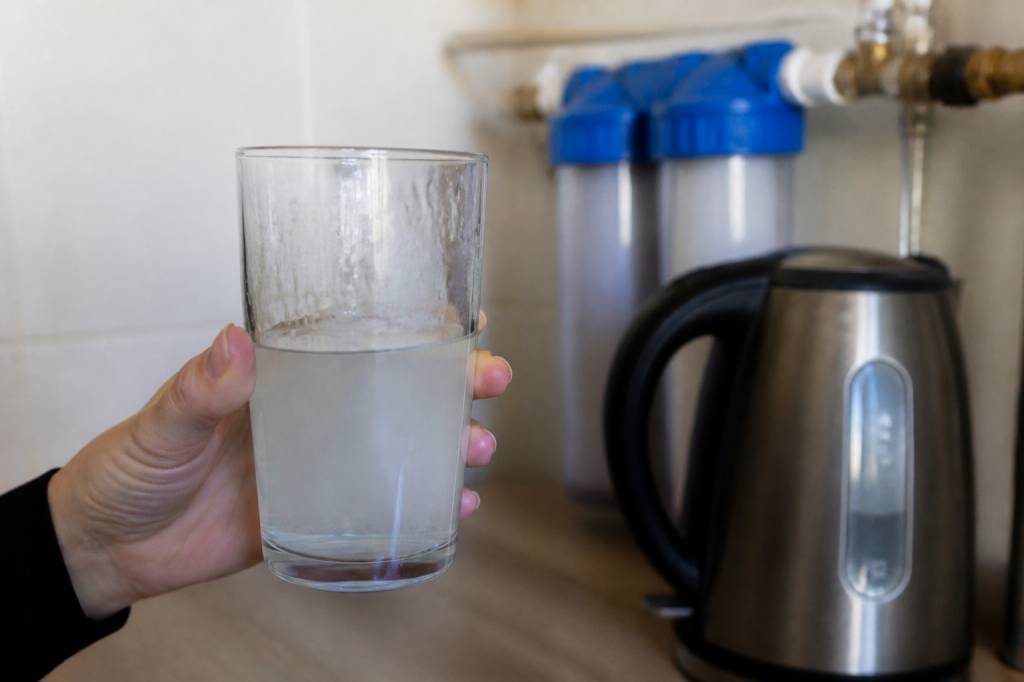
Hard water is one of those everyday water quality issues that can be surprisingly easy to notice and strangely hard to define. You may see soap that refuses to lather, limescale building up around taps, or a kettle that seems to age in fast-forward. But what does “hardness” in water actually mean?
At its core, water hardness refers to the concentration of dissolved minerals, mainly calcium and magnesium. These minerals are not harmful in the way PFAS or heavy metals can be, but they do affect how water behaves in homes, industries, and ecosystems. Understanding hardness matters because it influences plumbing performance, appliance lifespan, cleaning efficiency, and even how some water treatment systems operate.
If you have ever wondered why one area has stubborn scale on shower screens while another does not, the answer often comes down to local geology. Hard water is not random; it is usually a direct reflection of the rocks and soils water passes through on its journey to your tap.
What does water hardness actually mean?
Water hardness is a measure of the amount of dissolved calcium and magnesium ions in water. These minerals are picked up naturally as rainwater and groundwater move through limestone, chalk, gypsum, and other mineral-rich formations.
There are two main ways hardness is described:
- Temporary hardness, which is mainly caused by dissolved bicarbonates of calcium and magnesium and can be reduced by boiling.
- Permanent hardness, which is caused by sulphates and chlorides of calcium and magnesium and does not disappear when water is boiled.
In practical terms, hardness is usually reported in milligrams per litre (mg/L) as calcium carbonate, or sometimes in degrees of hardness depending on the country and testing method used. The higher the concentration, the harder the water.
Soft water has relatively low mineral content. Hard water has higher levels. Neither is automatically “better” in every situation, but they behave very differently.
Why is some water hard and other water soft?
The main reason is geology. Water hardness is largely determined by the rocks and sediments water encounters before it reaches your home or workplace.
Areas with limestone or chalk tend to have harder water because these rocks contain calcium carbonate, which dissolves more easily into water. By contrast, water from upland regions with granite or sandstone often contains fewer hardness-causing minerals, making it softer.
Climate and water source also play a role. Groundwater generally has more time to dissolve minerals from surrounding rock, so it is often harder than surface water from rivers and reservoirs. That is why two neighbouring towns can have noticeably different water quality even if they share the same general climate.
Hardness can also change through water treatment and blending. Water utilities may mix sources to balance mineral content, improve taste, or reduce scaling in the distribution network. In other words, the water in your tap is not always a simple reflection of nature; it is sometimes a carefully managed compromise.
What causes water hardness at a chemical level?
From a chemistry perspective, hardness is caused by the presence of positively charged ions, especially calcium (Ca2+) and magnesium (Mg2+). These ions interact with soap, detergents, pipes, and heating systems in ways that make them very noticeable in daily life.
When hard water is heated, dissolved calcium bicarbonate can decompose and form calcium carbonate scale. This is the chalky white residue many people find on kettles, taps, boiler elements, and shower heads. It is not just unsightly; it can reduce energy efficiency and increase maintenance costs.
Hard water also affects cleaning because calcium and magnesium bind with soap molecules, forming insoluble compounds. This means more soap is needed to create foam and remove dirt. If you have ever used half a bottle of shampoo and still felt like your hair was in a bureaucratic dispute with the water, hardness may be part of the problem.
Is hard water bad for health?
For most people, hard water is not considered a health risk. In fact, calcium and magnesium are essential minerals, and drinking water can contribute a small amount to daily intake. The World Health Organization has noted that water hardness is not typically linked to adverse health effects at levels commonly found in drinking water.
That said, hardness is still important because it can interact with plumbing and water treatment systems. Scale build-up can reduce the efficiency of heating systems and create conditions where maintenance issues become more likely.
It is also worth separating hardness from contamination concerns. Hard water is not the same thing as polluted water. A water sample can be hard but otherwise clean, or soft but contaminated with substances such as PFAS, lead, pesticides, or microbial pathogens. Hardness is a quality characteristic, not a safety verdict.
What problems can hard water cause?
Most people notice hard water through everyday inconvenience rather than obvious damage. Over time, however, the effects can add up.
- Limescale in kettles and boilers: Mineral deposits can form on heating surfaces, reducing efficiency.
- Reduced soap performance: More detergent may be needed for washing dishes, clothes, and skin.
- Blocked pipework: In severe cases, scale can narrow pipes and reduce flow.
- Shorter appliance lifespan: Washing machines, dishwashers, and water heaters may wear out faster.
- Spotting on glassware and fixtures: Hard water often leaves residue after drying.
For households, this usually means higher cleaning effort and more frequent descaling. For businesses, especially those relying on heated water or precision equipment, hardness can create real operational costs.
In industrial settings, hardness is a critical parameter because scale formation can damage boilers, cooling systems, and manufacturing processes. Even a thin layer of scale can reduce heat transfer efficiency and increase energy use. That is why water hardness is closely monitored in sectors ranging from food production to power generation.
How do you know if you have hard water?
There are several signs that water may be hard, although none of them are as reliable as proper testing.
- White or crusty deposits on taps, kettles, or showerheads
- Soap scum in sinks, baths, and shower trays
- Clothes feeling stiff after washing
- Hair feeling dull or difficult to rinse
- Reduced lather from soap and shampoo
These clues can be useful, but they are not a substitute for measurement. Some soft water systems create similar cleaning issues for other reasons, and not all scale is caused by hardness alone.
If you want a clearer answer, testing is the next step.
Testing methods for water hardness
There are several ways to test water hardness, ranging from quick home kits to more accurate laboratory analysis. The right method depends on how precise you need the result to be.
Home test strips
Test strips are one of the simplest methods. You dip a strip into the water, wait a short time, and compare the colour change with a chart provided by the manufacturer. They are fast, inexpensive, and useful for a basic estimate.
However, strips are less precise than laboratory testing. They are best for getting a general sense of whether water is soft, moderately hard, or very hard.
Titration kits
Titration kits are more accurate and are often used by water professionals, laboratories, and technically minded homeowners. In a typical hardness titration, a sample of water is mixed with a reagent that changes colour when calcium and magnesium have been fully complexed or reacted. The amount of reagent used indicates the hardness level.
These kits are more reliable than test strips and can provide measurements in specific units. They are a strong option if you want useful data without sending a sample to a lab.
Professional laboratory analysis
For the most accurate result, laboratory testing is the best choice. Labs use calibrated equipment and standard methods to measure calcium, magnesium, and total hardness. They can also distinguish between different forms of hardness and provide results that are suitable for technical reports or compliance work.
This is especially important if hardness data will be used for water treatment design, industrial process control, or troubleshooting scaling problems. It is also the best route when hardness needs to be assessed alongside other water quality parameters.
Digital meters and probes
Some water quality meters can estimate hardness indirectly, though these are less common for routine hardness testing than for parameters such as conductivity or pH. Their usefulness depends on the type of meter and whether it is specifically calibrated for hardness-related measurements.
As with any instrument, the accuracy depends on calibration, maintenance, and correct use. A flashy device is not a substitute for understanding what it is actually measuring.
How to interpret hardness results
Different countries and organisations use slightly different hardness scales, which can make comparisons confusing. A result may be reported in mg/L as calcium carbonate, parts per million, or degrees of hardness. It helps to check the unit before drawing conclusions.
As a general guide, water is often classified along these lines:
- Soft: low mineral content
- Moderately hard: noticeable mineral content, some scale formation possible
- Hard: significant scale and soap interaction
- Very hard: high likelihood of deposits and appliance issues
These categories are useful for everyday understanding, but the exact thresholds vary by region. If you are comparing sources or planning treatment, always use the classification system tied to the testing method or local standards.
Can water hardness be reduced?
Yes, though the method depends on the application. For household use, water softeners are common. These systems typically use ion exchange to replace calcium and magnesium with sodium or potassium ions. This reduces scale formation and improves soap performance.
Other treatment approaches include:
- Boiling: helps with temporary hardness only
- Ion exchange softeners: effective for domestic and industrial use
- Reverse osmosis: removes many dissolved minerals, including hardness ions
- Blending: mixing harder and softer sources to reach a target level
Each option has trade-offs. Softening can protect appliances and improve cleaning, but it may not be necessary everywhere. In some cases, moderate hardness is acceptable and even preferred for taste or corrosion control. The key is to match treatment to the actual problem, not just the label “hard water.”
Why hardness matters in water management
Hardness is not usually treated as a pollution crisis, but it is a meaningful water quality factor. It affects infrastructure, energy use, consumer experience, and treatment strategy. In an environmental context, that matters because inefficient heating and premature appliance failure can increase resource use and waste.
In water systems designed to remove contaminants such as PFAS, hardness can also influence performance. While hardness itself is not the main target of advanced filtration, knowing the mineral profile of source water helps operators choose the right treatment train and avoid unexpected issues with scaling or system maintenance.
That is why water hardness belongs in the broader conversation about water quality. It may not make dramatic headlines, but it shapes how water moves through homes, treatment systems, and industrial networks every single day.
What should you do if you suspect hard water?
If you think your water is hard, start with a simple test. A strip test or titration kit can give you a useful first reading. If you need dependable data for a household system, building management plan, or technical assessment, laboratory analysis is the better choice.
Once you know the hardness level, you can decide whether action is necessary. In some homes, mild scale and reduced lather are mostly an annoyance. In others, hard water may justify a softening system or targeted maintenance to protect appliances and reduce cleaning time.
The most important thing is to base the decision on evidence rather than guesswork. Water quality issues are often easier to manage when they are measured properly from the start.
Hardness may not be the most alarming water issue out there, but it is one of the most common and practical to understand. A little mineral content can tell you a great deal about where your water comes from, how it behaves, and what kind of care your plumbing and appliances may need.