


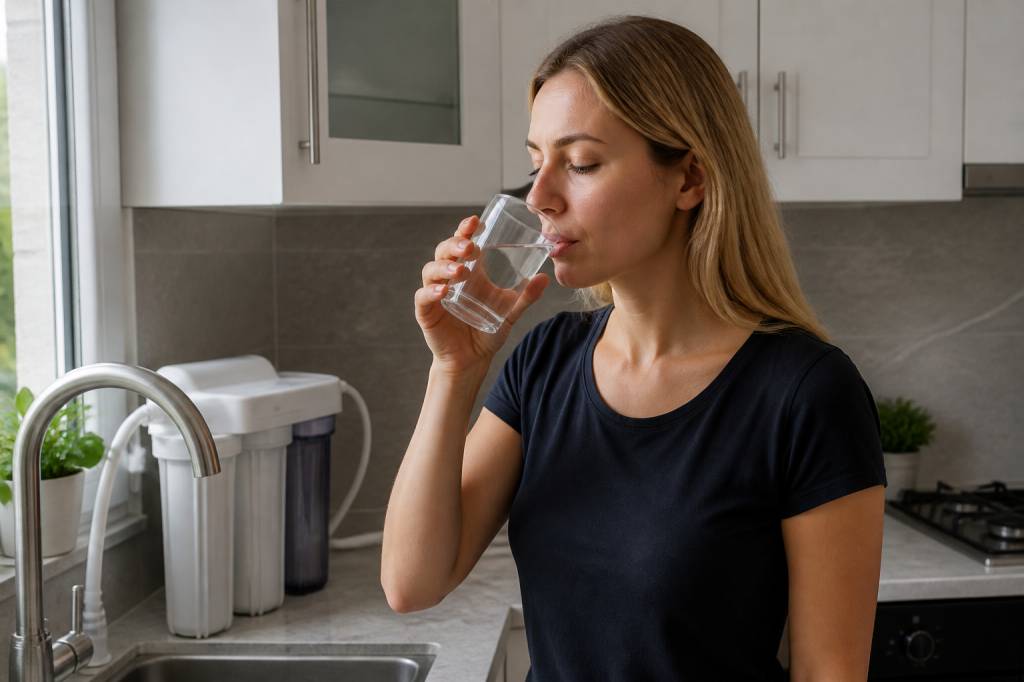
What counts as a contaminant in drinking water?
When people hear “contaminated water,” they often picture a dramatic spill or a visibly dirty tap. In reality, many of the most concerning drinking water contaminants are invisible, tasteless, and odourless. That is what makes them so easy to ignore and so important to understand.
In simple terms, a contaminant is any substance present in water that should not be there, or that is present at levels that may pose a risk to human health or the environment. Some contaminants occur naturally. Others are introduced by human activity, often through industry, agriculture, wastewater, or ageing infrastructure.
Not every contaminant is immediately dangerous. In fact, some are regulated at very low levels because long-term exposure can matter more than short-term exposure. That is particularly true for chemicals that accumulate in the body or persist in the environment for years.
The main types of contaminants found in tap water
Drinking water contaminants usually fall into a few broad groups. Understanding them helps explain why water quality is not just a local issue, but a public health one.
- Microbiological contaminants: bacteria, viruses, and parasites such as E. coli, Giardia, and Cryptosporidium.
- Inorganic contaminants: metals and minerals like lead, arsenic, nitrate, and copper.
- Organic chemicals: pesticides, solvents, industrial compounds, and fuel-related pollutants.
- Disinfection by-products: chemicals formed when chlorine or other disinfectants react with organic matter in water.
- Emerging contaminants: substances such as PFAS, pharmaceuticals, hormone-disrupting chemicals, and microplastics.
Each category has its own source, behaviour, and health profile. A private well in a rural area may face very different risks from a municipal supply in a densely populated city. But neither should be assumed safe without testing or monitoring.
Why contaminants get into drinking water
Water is remarkably efficient at carrying things. That is useful when those things are essential minerals; less so when they are toxic compounds. Contaminants enter drinking water through a mix of natural processes and human activities.
Natural sources include minerals leaching from rocks and soil. For example, arsenic can enter groundwater in certain geological settings. In other cases, contamination comes from agriculture, industry, household products, landfills, road runoff, or wastewater discharge.
Some of the most persistent problems come from legacy pollution. A factory may have closed decades ago, but the chemicals released into soil and groundwater can continue migrating for years. Similarly, old lead pipes can still leach lead into drinking water long after the original installation.
Climate change is also making the problem harder to manage. Heavy rainfall can overwhelm drainage systems and carry pollutants into surface water. Drought can concentrate contaminants in rivers, reservoirs, and groundwater. In other words, water quality is not standing still.
Health risks: why low-level exposure still matters
Many drinking water contaminants are regulated because even small exposures can matter over time. The risk is not always immediate, which makes the issue easy to underestimate. But chronic exposure to certain chemicals has been linked to serious health outcomes.
Lead is one of the clearest examples. There is no safe level of lead exposure for children. It can affect brain development, learning, and behaviour. In adults, it may contribute to high blood pressure and kidney problems.
Nitrate contamination, often associated with fertiliser runoff and livestock operations, is another concern. High nitrate levels are especially dangerous for infants and can reduce the blood’s ability to carry oxygen. That is not a theoretical problem; it is why safe water guidance is particularly strict for baby formula preparation.
PFAS deserve special attention because they combine persistence, mobility, and widespread use. These “forever chemicals” have been detected in drinking water supplies around the world. Research has linked some PFAS exposures to changes in cholesterol, immune response, liver function, and certain cancers. The exact level of risk depends on the compound, dose, and duration of exposure, but the broader message is clear: reducing exposure is prudent.
Microbiological contaminants can cause immediate illness, including diarrhoea, vomiting, and more severe infections in vulnerable populations. While treatment systems are designed to control these risks, disruptions in treatment or contamination after treatment can still occur.
Contaminants that often fly under the radar
Some pollutants receive regular attention because their effects are well known. Others are less visible but still important. These are the contaminants that often surprise people when they appear in monitoring reports.
PFAS: Used in non-stick, stain-resistant, and water-repellent products, PFAS persist for decades and can travel through water systems. They do not break down easily, which is exactly why they are such a long-term challenge.
Pharmaceutical residues: Trace amounts of medications can enter water through wastewater. These levels are usually low, but the long-term ecological and health implications are still being studied.
Microplastics: Tiny plastic particles have been detected in drinking water. The science is evolving, but their presence reflects the broader reality that plastic pollution is now part of the water cycle.
Disinfection by-products: Chlorine helps kill pathogens, but it can also react with organic material to form compounds such as trihalomethanes. Water treatment is therefore a balancing act: remove pathogens without creating new risks.
Industrial solvents and VOCs: Chemicals like trichloroethylene or benzene can enter groundwater from manufacturing, fuel leaks, or improper disposal. These substances are a serious concern because they may evaporate, migrate, or persist underground for long periods.
How to know what is in your water
If water comes out of a tap, it is easy to assume someone has already checked it. In many places, that is partly true. Public water suppliers are typically required to monitor and report on water quality. But the details matter, and the system is not always perfect.
The first step is to look at your local water quality report, sometimes called a Consumer Confidence Report. This document should list detected contaminants, their concentrations, and whether they meet regulatory limits. It is useful, but it has limitations. It may not include every contaminant of concern, especially emerging pollutants such as PFAS if they are not yet fully monitored in your area.
If you use a private well, the responsibility is much more direct. Wells are not usually monitored by a public utility, so testing is essential. At a minimum, consider testing for bacteria, nitrates, lead, arsenic, and region-specific contaminants such as PFAS or pesticides if there is a known source nearby.
Testing should be repeated periodically, not just once. Water quality changes with seasons, infrastructure work, flooding, and land use changes. A clean result last year does not guarantee a clean result today.
Reducing exposure at home
The good news is that there are practical ways to reduce exposure, and not all of them require a major renovation. The best option depends on the contaminant, the source water, and the treatment system already in place.
Start with the basics:
- Use only cold water for cooking and drinking, especially if pipes may contain lead.
- Let the tap run briefly after water has been sitting in the pipes overnight, if lead or copper is a concern.
- Clean faucet aerators regularly, as they can trap sediment.
- Use certified filters where appropriate, and replace cartridges on schedule.
- Do not assume that boiling makes water safer. Boiling kills germs but does not remove metals, PFAS, or most chemical contaminants. In some cases, it can even concentrate them.
If your water is at risk from specific contaminants, choose a treatment method that matches the problem. A carbon filter may help with chlorine, taste, odour, and some organic chemicals. Reverse osmosis can reduce a broader range of contaminants, including many dissolved solids and certain PFAS. Ion exchange and specialised adsorption media may be useful for specific metals or PFAS removal.
That said, no single filter does everything. A pitcher filter that improves taste is not necessarily removing lead. A sticker on the box is not the same as certification. Look for independent verification from recognised standards bodies, and check the exact contaminants the system is designed to reduce.
What to look for in a water filter
Choosing a water filter can feel like shopping in a maze of technical claims. “Advanced filtration” sounds impressive, but advanced for what exactly?
When evaluating a filter, pay attention to these points:
- Certification: Look for independent certifications that verify contaminant reduction claims.
- Target contaminants: Confirm that the filter is tested for the specific pollutant you want to reduce.
- Flow rate and capacity: A highly effective filter is not very useful if it is too slow or saturates quickly.
- Maintenance requirements: Filters only work when maintained correctly.
- Installation context: Point-of-use systems protect one tap; whole-house systems treat water entering the property.
For households worried about PFAS, a dedicated system tested for PFAS reduction is often more appropriate than a general-purpose filter. For lead, point-of-use treatment at the kitchen tap can be a practical protection layer. For microbiological contamination in a private well, disinfection or a more robust treatment setup may be necessary.
There is no universal solution because there is no universal contaminant profile. That is frustrating, but it is also manageable once you know what you are dealing with.
Reducing exposure at the source is even better
Home filtration helps, but it is only one part of the picture. The most effective protection is preventing contaminants from entering water in the first place. That means stronger regulation, better industrial controls, improved wastewater treatment, and smarter land management.
For PFAS, this includes phasing out unnecessary uses, tightening discharge limits, and investing in remediation for contaminated sites. For lead, it means replacing old service lines and controlling corrosion in distribution systems. For agricultural pollution, it means reducing nutrient runoff and improving manure and fertiliser management.
This is why water contamination is not just a household issue. It is a policy issue, an infrastructure issue, and a science issue. If the supply is polluted upstream, no filter under the sink should be expected to carry the whole burden forever.
Everyday habits that help lower risk
Some exposure reduction steps are surprisingly simple. They will not solve every contamination problem, but they can reduce risk while longer-term solutions are put in place.
- Check whether your home has lead pipes or lead solder, especially if it was built before the late 20th century.
- Have private wells tested regularly and after flooding or nearby construction.
- Use certified drinking water treatment systems when contamination is known or suspected.
- Pay attention to local advisories, especially after infrastructure failures or pollution incidents.
- Dispose of chemicals, oils, and medicines properly so they do not end up in drains or groundwater.
Small actions add up. They do not replace regulation, but they do buy time and reduce avoidable exposure.
The bigger picture: why this matters now
Water contamination is no longer a niche environmental issue. It affects public health, household budgets, and trust in infrastructure. As new contaminants are identified and older systems continue to age, the challenge is becoming more complex, not less.
That is why awareness matters. People cannot reduce exposure to what they do not know exists. And while the science can be technical, the practical message is straightforward: test water where needed, understand the specific risks, and use treatment methods that match the contaminant.
In the end, safe drinking water should not depend on luck, geography, or how recently a pipe was replaced. It should depend on evidence, monitoring, and action. Until that is consistently true, knowing what may be in your water remains one of the most useful forms of protection.